
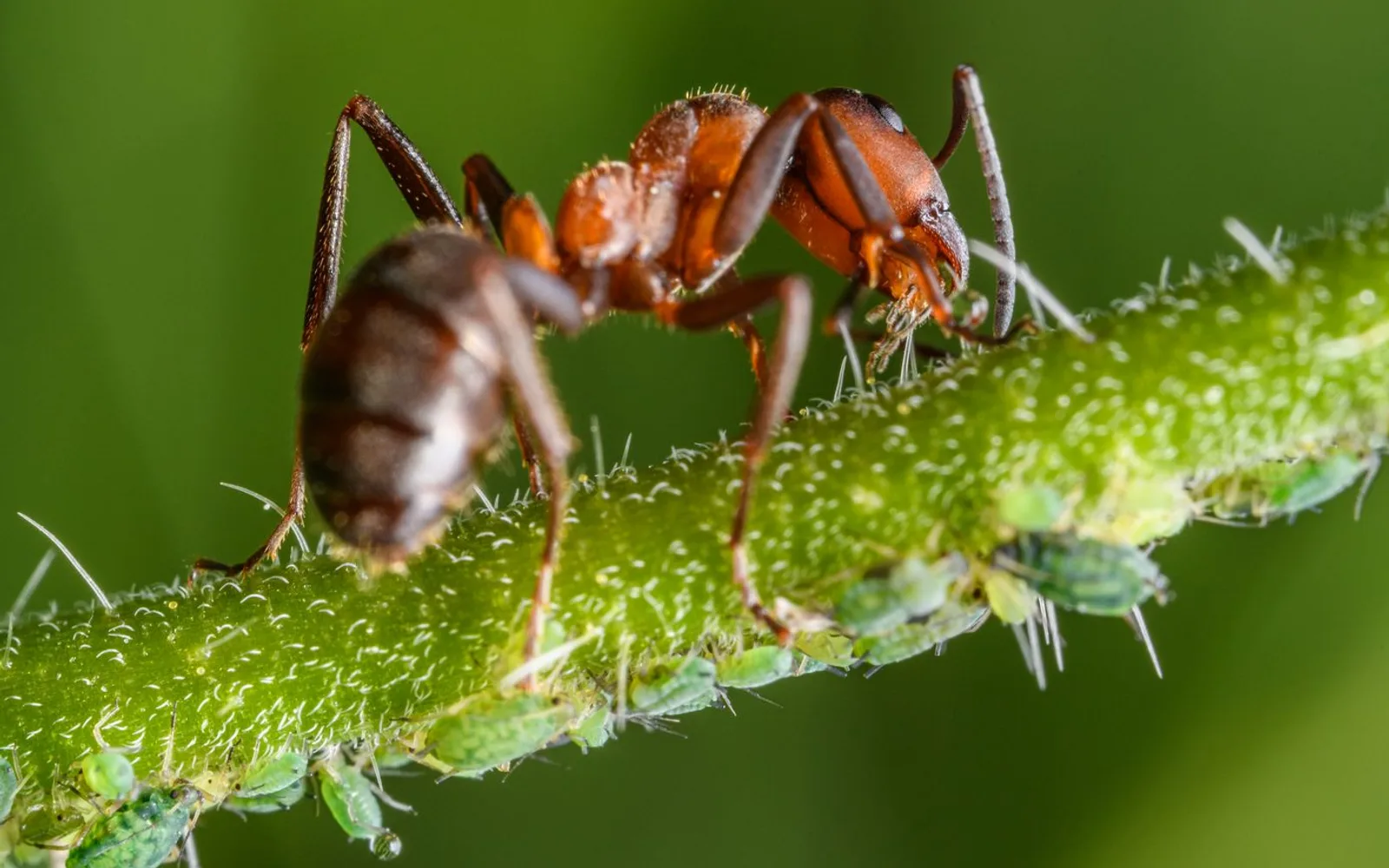
Ant control in West Al Baghdadiyah Jeddah
West Al Baghdadiyah is the seaward edge of the neighbourhood, facing the corniche and the Arbaeen lagoon, housing apartment blocks and older buildings from an earlier era. High sea humidity and salt air surround the district year round, keeping timber and walls permanently damp. Ants here do not merely search for food but settle comfortably in damp wood and salt-laden, water-saturated foundations.
-
Targeted, not broadcast
Product goes into cracks and runways, never sprayed across open surfaces.
-
Told before we start
What we will use, where it goes, and what to cover or move before we arrive.
-
A follow-up visit
We return after the first treatment, because what survives it does not show on the day.
-
Homes and businesses
Apartments and villas, and kitchens and stores that need a record of each visit.
Why they keep coming back in West Al Baghdadiyah
Residents in West Al Baghdadiyah know that humidity is a permanent problem in timber and structures, but may not know that this very humidity is what makes ants thrive inside the walls. The method is set out in full on how we approach Ant control.
Sea humidity and permanently damp timber
Salt laden air and sea humidity remain high year round on the coast. Timber in buildings, furniture and ceilings stays perpetually moist. Ants are less interested in food than in damp wood that provides both water and building material.
Old foundations and salt deposits
Old buildings on the coast have salt embedded in foundations from seawater seepage over decades. This salt and moisture together create a unique environment. Ants are drawn to foundations that are salt saturated and water logged.
Arbaeen Lagoon and continuous moisture rise
The Arbaeen lagoon beside the district provides continuous moisture that rises into the buildings. Salt saturated air enters walls and gaps. This means moisture is not temporary but permanent and supports ants year round.
The character of West Al Baghdadiyah
Coastal area: high humidity and salt air through the year
West Al Baghdadiyah being coastal means humidity is the primary problem rather than food. Ants seek damp timber, salt and water. Treating the home alone will not solve the problem if walls stay permanently damp.
The species and the trail decide the bait
West Al Baghdadiyah lies between Madinah Road and Port Bridge Road on the coast itself, with the Arbaeen lagoon beside it, and sea humidity remains high year round, affecting every building.

The sweet feeders
Sweet feeders in West Al Baghdadiyah may be less prominent than timber ants that seek moisture and structure.
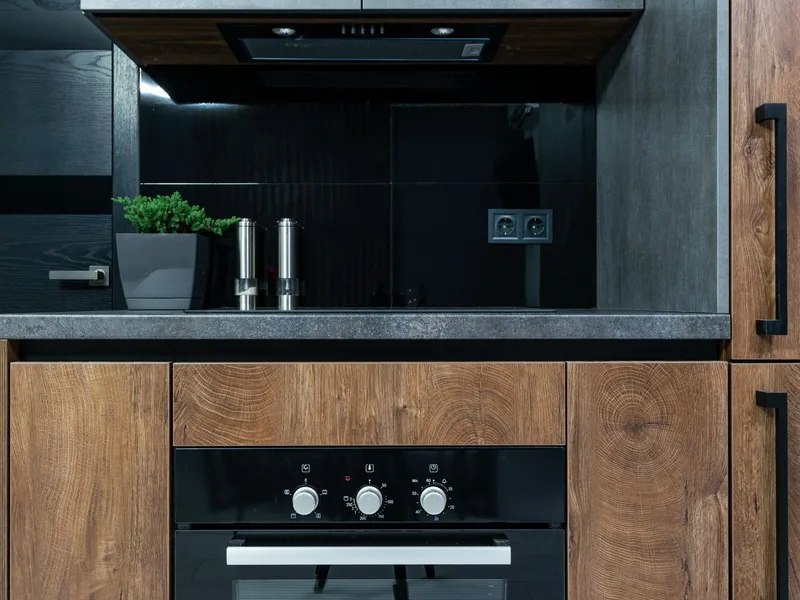
The grease and protein feeders
Grease feeders spread in damp gaps inside walls and foundations saturated with salt and water.
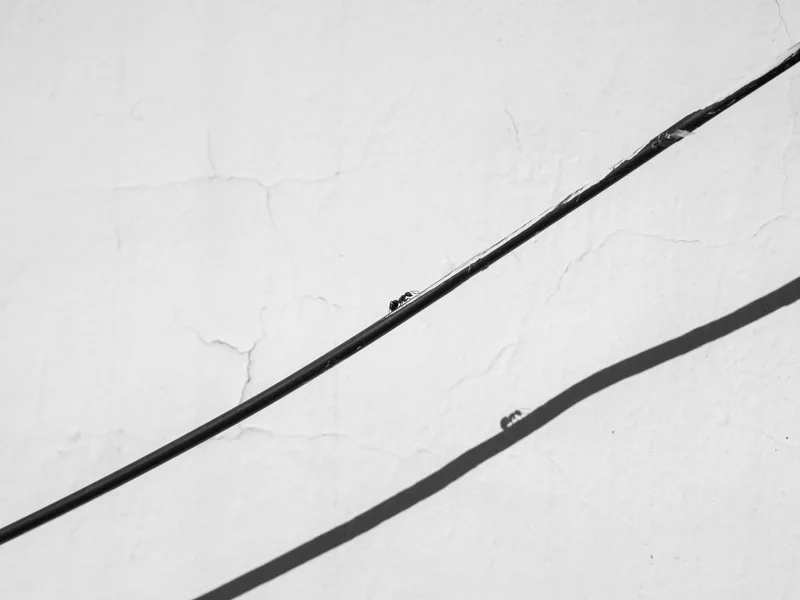
The trail and its direction
The trail in coastal areas follows moisture rather than food necessarily, rising through damp walls and decaying timber.
Moisture before food
Moisture on the coast is not seasonal but continuous year round, providing permanent conditions for ants and dampness together.
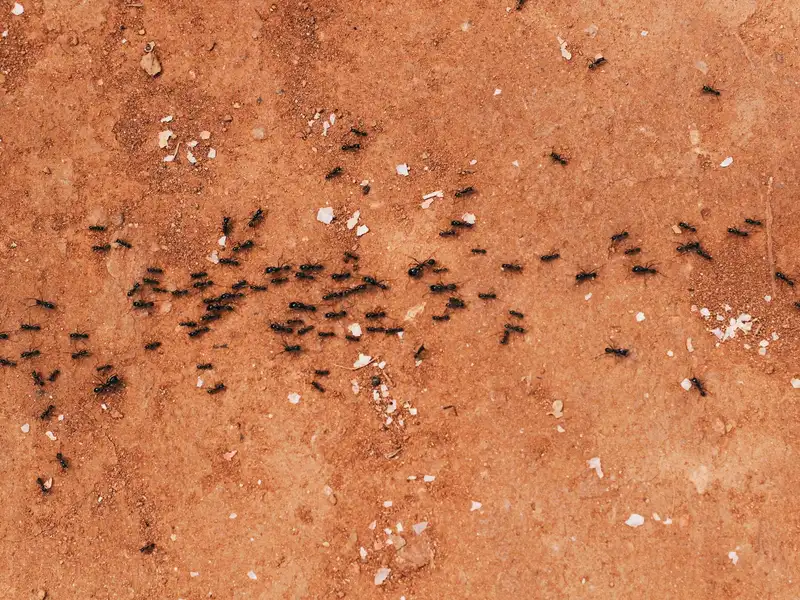
The nest outside the building
The nest often sits in damp timber of roofs, interior walls and old floorboards, not necessarily in soil beneath the foundation.
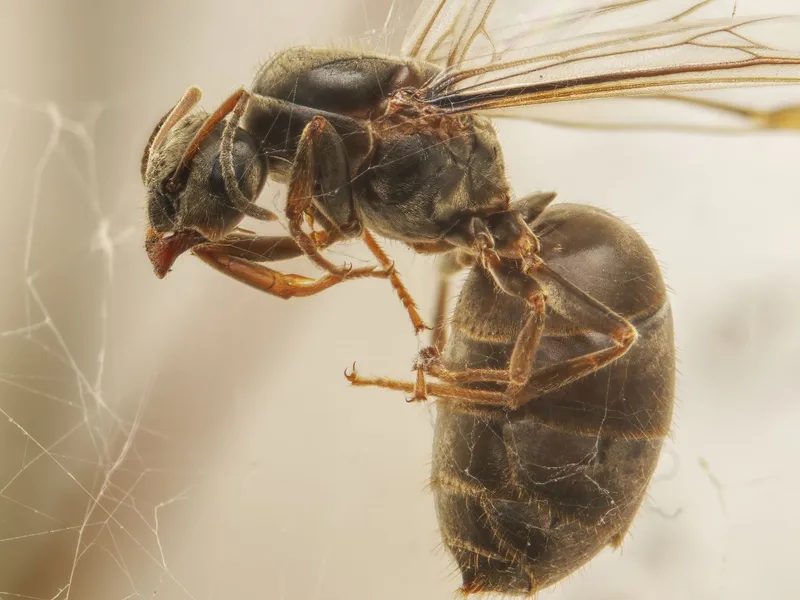
Winged ants
Winged ants may appear year round in coastal areas because humidity and warmth allow continuous activity and rapid colony maturity.
How we work
-
1
Inspect and follow the trail
We follow the line from where you see it to where it enters, and establish the species, what it is feeding on and the moisture keeping the nest close.
-
2
Matched bait placed on the trail
We choose the matrix from the feeding preference and place it on the trail itself, leaving the trail intact so the workers carry it to the queen and the brood.
-
3
Treat the perimeter and close the ways in
An external treatment at the wall base and the openings, and we point out the cracks, pipe entries and any branch touching the building.
-
4
The follow-up visit
We come back once the bait has worked through the nest, check the trail is gone, and look for a satellite nest if a new line has appeared.
What ant control includes
-

Following the trail to its source
Species, entry point and the direction of the nest, established before anything is applied.
-

Bait matched to the colony
Sugar or protein according to what the workers are carrying, placed on the trail rather than near it.
-

An external perimeter treatment
A band at the wall base and the outside openings, with the indoor trail left unsprayed so it keeps carrying bait.
-

Moisture points and entries
Condensate lines, sink surrounds, weep holes and pipe entries, which are what keeps a nest against the building.
-

Aftercare instructions
What not to wipe until the bait has been taken, what to cover, and when normal cleaning can resume.
-

A scheduled follow-up
A set date to check the nest and re-bait anywhere still active.
Landmarks of West Al Baghdadiyah
In West Al Baghdadiyah, work is organised around proximity to the Arbaeen Lagoon and the Al Hamra Corniche along the coast. Tracing ant problems begins from the Arbaeen Lagoon where humidity is highest, and extends to the buildings beside the corniche and coastal streets.
- Arbaeen Lagoon
- Al Hamra Corniche
- Madinah Road
- Port Bridge Road
- Al Juffali Mosque
Questions about this district
Is ant activity in West Al Baghdadiyah different from inland districts?
It may be. Continuous moisture and salt make the environment different. Ants here are drawn more to timber and moisture than food. We may need a different strategy.
Does high sea humidity make the ant problem worse?
Yes, absolutely. High humidity provides an ideal environment for ants. Treating the home alone will not solve the problem if walls and timber stay perpetually damp.
Should buildings be dried before treatment in Al Baghdadiyah?
Buildings on the coast cannot be dried completely. Instead we focus on strong treatment, better ventilation and sealing gaps around foundations.
Do special timber coatings protect against ants?
Certain coatings may help, but they do not solve the problem fully. Ants may find other routes. Chemical treatment of foundations and gaps is more effective.
Is more frequent treatment necessary in West Al Baghdadiyah?
Yes, permanent moisture means treatment protection weakens quickly. We recommend stronger treatment and repeat every six to eight weeks rather than three months.
Are old buildings in Al Baghdadiyah more affected than new ones?
Yes, old buildings have concentrated salt and moisture in foundations over decades. But even new buildings on the coast face the same challenge from continuous moisture.
How much does ant control in West Al Baghdadiyah cost?
It is set after the inspection, because the price follows the type of infestation, the size of the space, how far it has spread and the number of visits it needs. Send a photo and a description on WhatsApp and we will give you an estimate before we reach West Al Baghdadiyah.
Nearby districts we cover
Other services in West Al Baghdadiyah
Other services we provide to residents of West Al Baghdadiyah.
-
 Residential
Cockroach control
Residential
Cockroach control
-
 Residential
Bed bug control
Residential
Bed bug control
-
 Residential
Termite control
Residential
Termite control
-
 Residential
Rodents and mice
Residential
Rodents and mice
-
 Residential
Mosquito control
Residential
Mosquito control
-
 Residential
Fly control
Residential
Fly control
-
 Residential
Gecko control
Residential
Gecko control
-
 Residential
Scorpion control
Residential
Scorpion control
-
 Residential
Snake control
Residential
Snake control
-
 Residential
Flea control
Residential
Flea control
-
 Residential
Bird and pigeon control
Residential
Bird and pigeon control
-
 Residential
Preventive treatment
Residential
Preventive treatment
-
 Residential
Disinfection
Residential
Disinfection
-
 Commercial
Annual contracts
Commercial
Annual contracts
-
 Commercial
Restaurants and cafes
Commercial
Restaurants and cafes
-
 Commercial
Hotels and apartments
Commercial
Hotels and apartments
-
 Commercial
Warehouses and factories
Commercial
Warehouses and factories
-
 Commercial
Schools and nurseries
Commercial
Schools and nurseries
-
 Commercial
Retail and malls
Commercial
Retail and malls
-
 Commercial
Rest houses and farms
Commercial
Rest houses and farms
-
 Commercial
Fumigation
Commercial
Fumigation
-
 Water tanks
Water tank cleaning
Water tanks
Water tank cleaning
-
 Water tanks
Water tank sterilization
Water tanks
Water tank sterilization
-
 Water tanks
Water tank sealing
Water tanks
Water tank sealing
-
 Water tanks
Tank leak repair
Water tanks
Tank leak repair
Need ant control in West Al Baghdadiyah? Tell us what you saw and we will tell you what it needs
We reach West Al Baghdadiyah at a time we agree, and you get the full cost before we start.