
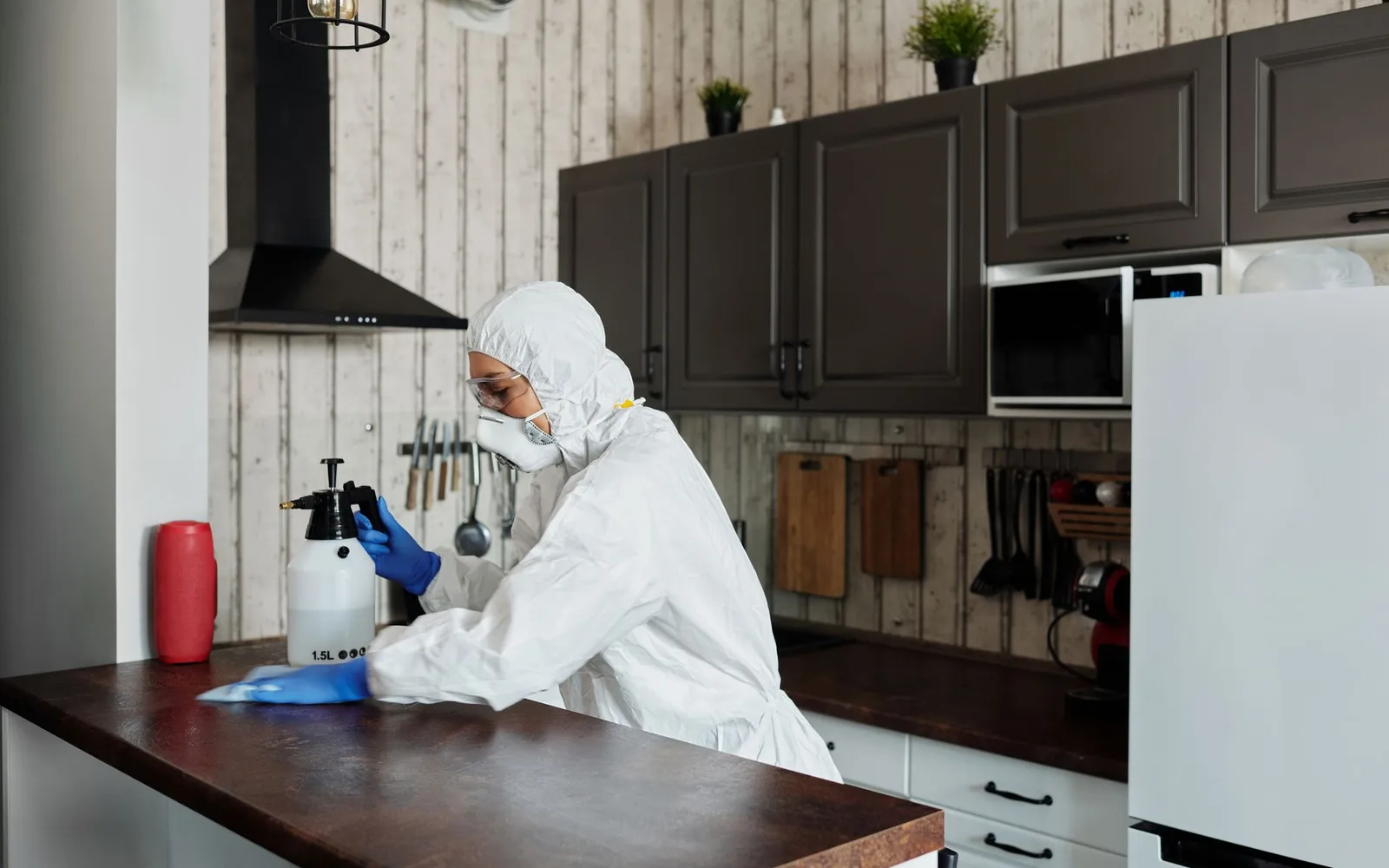
Disinfection in Al Khansa Makkah
Al Khansa is a densely packed district between Al Hajj Street and Al Abtah with old popular houses and modern apartment blocks woven together, the Al Adl cemetery on its edge, and a history of property expropriation for road widening. The high density and tangled old pipes mean disinfection is not an isolated job: contaminants return from neighbours through shared cracks and interconnected drainage that no individual flat can treat alone.
-
Targeted, not broadcast
Product goes into cracks and runways, never sprayed across open surfaces.
-
Told before we start
What we will use, where it goes, and what to cover or move before we arrive.
-
A follow-up visit
We return after the first treatment, because what survives it does not show on the day.
-
Homes and businesses
Apartments and villas, and kitchens and stores that need a record of each visit.
Why they keep coming back in Al Khansa
Flats in the old popular houses suffer recurring odours and bacterial regrowth because the drainage systems are interlinked with neighbouring units in ways that individual treatment cannot address. The method is set out in full on what Disinfection involves.
Old houses have tangled pipes shared between neighbours
The older popular buildings in the district were constructed before modern building codes, and the pipes do not run cleanly separated. Drainage from a neighbour's unit can enter your flat through weak joints and small gaps. Disinfecting your flat alone does nothing if the pathways between units are not sealed. Within days, contamination re-enters from next door through the same routes.
High density means contaminants travel between homes very quickly
The buildings are pressed close together and cracks and gaps between units are numerous. Air, humidity, insects and bacteria pass between flats with ease. What you treat today may return tomorrow from the neighbour's side, and the only answer is a continuous preventive programme, not a single treatment. Isolation of your flat is nearly impossible in a closely built block.
Cracks in old walls provide pathways bacteria use to spread
Historic clay and old plaster walls contain fine deep cracks invisible to the eye but sufficient for bacteria, viruses and insects to travel through. A disinfectant here needs higher concentration and targeted injection into larger fissures. Treatment takes longer than in modern buildings because the pathways are less predictable.
Al Khansa on the map
Al Khansa sits about 1 km from Rai Adhakhir and about 1.5 km from Al Maabdah.
Open in Google MapsWhat we look at before the product is chosen
The district lies between Al Hajj Street and Al Abtah close to the Grand Mosque precinct, with Al Maabdah Street linking it to surrounding areas. Its main thoroughfares have undergone repeated development phases over decades.
The touch points
Touch points in a tightly packed flat are exposed to contaminants from neighbours through air and small gaps, and they need more frequent disinfection than detached or loosely spaced homes.
Porous surfaces
Porous surfaces of clay and old plaster walls absorb moisture and smells deeply, requiring higher product concentration and much longer contact time than modern surfaces.
The finish itself
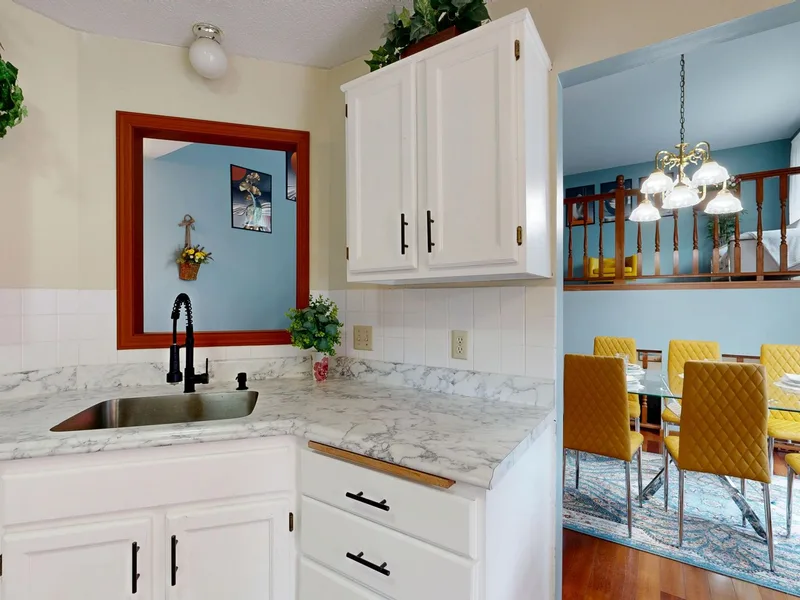
Floors in old buildings are often uneven and have cracks around drain openings, requiring deep cleaning before disinfection can be effective.
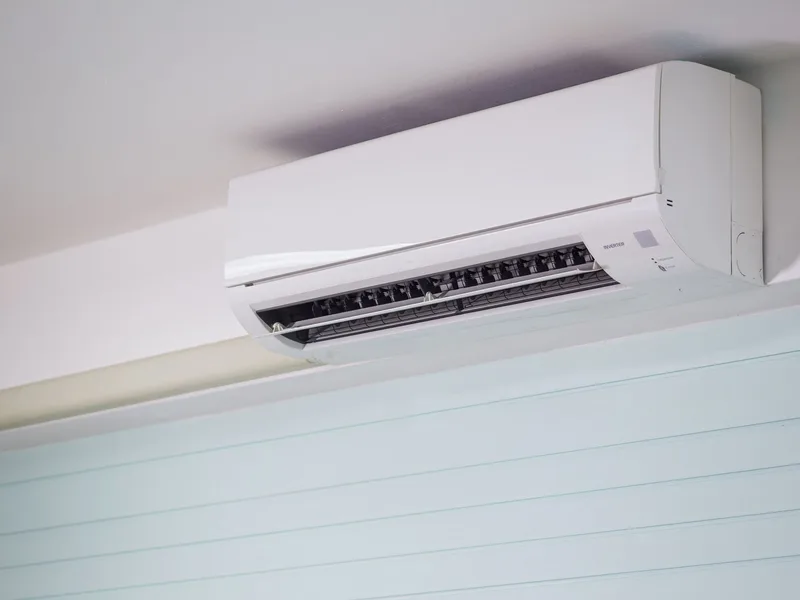
The air conditioning unit
Old or shared air conditioning units can transfer contaminants between flats, so careful cleaning of the unit is essential before general disinfection.
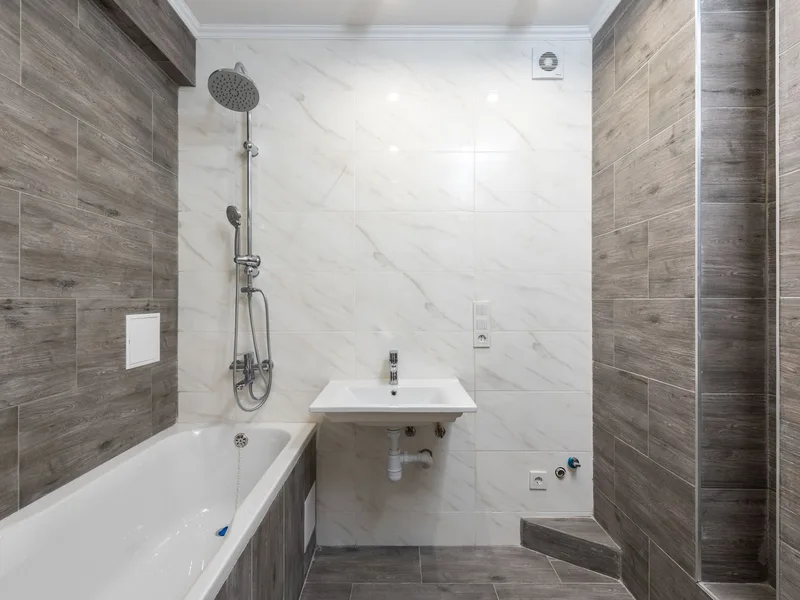
Floor traps
Floor drains in old buildings are often shared or positioned very close together, and deep regular treatment is necessary because odours return quickly.
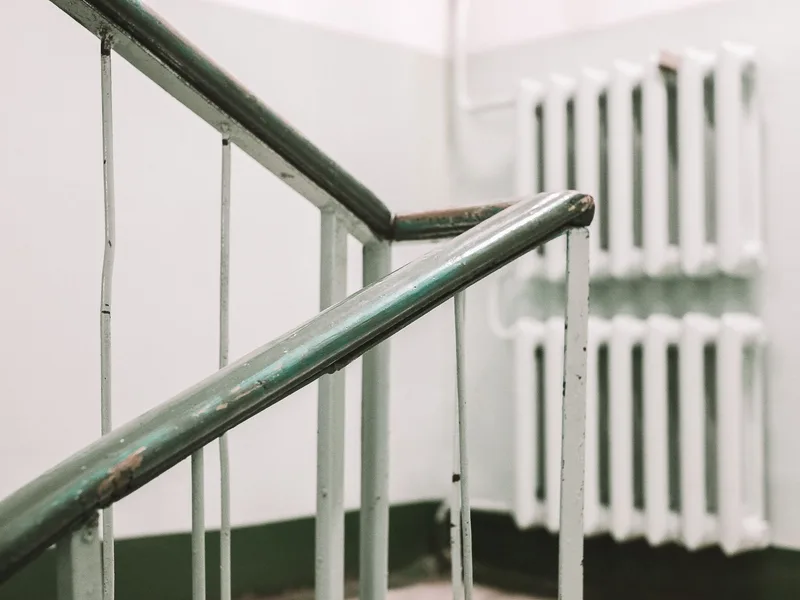
Shared entrances and stairs
Shared stairs and entrances in densely packed old apartment blocks suffer from high humidity and persistent smell, and weekly disinfection works better than monthly cycles.
How we work
-
1
Walk the space and list the surfaces
We go through the rooms and mark the touch points, the porous surfaces and the finishes, then ask what prompted the call: illness at home, moving into a new place, building work, or a smell that arrived out of nowhere.
-
2
Clean what we are about to treat
We take the film of dust and grease off the surfaces that are in scope, so the product reaches the surface itself. This is preparation for the treatment, not general house cleaning.
-
3
Apply it, and hold the contact time
Hand work on the touch points, a product matched to each surface, and the surface left visibly wet for as long as that material needs before it is dried off. Cold fogging comes last, for what a cloth cannot reach.
-
4
Ventilate and hand back
We open the place up, rinse food preparation surfaces with water, and tell you when each room goes back into use. We give you that timing on the call, because it changes with the product and the space.
What a disinfection visit includes
-

A surface and touch point survey
What gets treated, and with what, settled before anything is opened.
-

Soil off first, then the disinfectant
The greasy film comes off first, then a product that stays wet for the contact time it needs.
-

Floor traps and the air conditioning drain
Floor traps, sink outlets and the drain tray, which is where most smells actually begin.
-
Cold fogging for the space
For upward faces and corners a cloth never reaches, done as the last thing before we leave a room.
-

Ventilation and use instructions
What gets rinsed with water, what is left alone, and when each room goes back into use.
-

A scheduled repeat when it is needed
For shared entrances and places people pass through every day, because a disinfectant leaves nothing behind to stop the next contact.
Landmarks of Al Khansa
The district is positioned between Al Hajj Street, which connects it to shopping and administrative hubs, and Al Maabdah Street, which leads directly towards the Grand Mosque. Entering via either route reveals immediately the high density and tightly built old houses that define the neighbourhood.
- Al Hajj Street
- Al Abtah Street
- Al Adl Cemetery
- Al Maabdah Street
- Rai Al Hadadah
Questions about this district
Every time I disinfect the flat, the smell comes back from the neighbour. What should I do?
The odour enters through shared pipes and gaps between flats, so the solution requires co-operation with the neighbour. We recommend disinfecting both flats at the same time, sealing gaps and cracks with engineering sealant, and treating any shared drainage traps if they exist. Treating one flat in isolation has limited lasting effect.
The old house is very damp and the disinfectant dries quickly. Is that normal?
High humidity in old buildings speeds up the drying time of the product and reduces how long it stays wet on the surface. We recommend using fans to dry out the room first, then applying the disinfectant, and keeping ventilation minimal while it works so it does not dry too fast.
Do the small cracks in the old walls need separate treatment?
Yes, fine cracks trap bacteria and fungi deep inside. We clean them first with a soft brush and water, then inject concentrated disinfectant into the larger ones with a small syringe, and allow them to dry slowly. A general surface treatment does not reach inside the cracks.
The old pipes in the building are corroded. Will disinfection improve the smell?
Disinfection kills bacteria temporarily, but corroded pipes provide ideal conditions for very rapid regrowth. We recommend having the pipes inspected and what can be repaired, then fortnightly preventive disinfection. In severe cases, stronger preventive treatment may be needed.
How often should a flat in Al Khansa be disinfected? Weekly or monthly?
The district is very densely built and contaminants return quickly. We recommend monthly disinfection at minimum, and fortnightly if there is persistent smell or young children. A preventive programme works better than waiting for problems to appear.
Does disinfectant kill the fungi growing on damp walls?
The disinfectant kills fungi, but if the underlying moisture is not addressed the fungi grow back quickly. We recommend treating moisture first with ventilation and drying, then applying concentrated disinfectant to affected areas. Ongoing treatment is needed if humidity remains high.
How much does disinfection in Al Khansa cost?
It is set after the inspection, because the price follows the type of infestation, the size of the space, how far it has spread and the number of visits it needs. Send a photo and a description on WhatsApp and we will give you an estimate before we reach Al Khansa.
Nearby districts we cover
Other services in Al Khansa
Other services we provide to residents of Al Khansa.
-
 Residential
Cockroach control
Residential
Cockroach control
-
 Residential
Bed bug control
Residential
Bed bug control
-
 Residential
Termite control
Residential
Termite control
-
 Residential
Rodents and mice
Residential
Rodents and mice
-
 Residential
Mosquito control
Residential
Mosquito control
-
 Residential
Fly control
Residential
Fly control
-
 Residential
Ant control
Residential
Ant control
-
 Residential
Gecko control
Residential
Gecko control
-
 Residential
Scorpion control
Residential
Scorpion control
-
 Residential
Snake control
Residential
Snake control
-
 Residential
Flea control
Residential
Flea control
-
 Residential
Bird and pigeon control
Residential
Bird and pigeon control
-
 Residential
Preventive treatment
Residential
Preventive treatment
-
 Commercial
Annual contracts
Commercial
Annual contracts
-
 Commercial
Restaurants and cafes
Commercial
Restaurants and cafes
-
 Commercial
Hotels and apartments
Commercial
Hotels and apartments
-
 Commercial
Warehouses and factories
Commercial
Warehouses and factories
-
 Commercial
Schools and nurseries
Commercial
Schools and nurseries
-
 Commercial
Retail and malls
Commercial
Retail and malls
-
 Commercial
Rest houses and farms
Commercial
Rest houses and farms
-
 Commercial
Fumigation
Commercial
Fumigation
-
 Water tanks
Water tank cleaning
Water tanks
Water tank cleaning
-
 Water tanks
Water tank sterilization
Water tanks
Water tank sterilization
-
 Water tanks
Water tank sealing
Water tanks
Water tank sealing
-
 Water tanks
Tank leak repair
Water tanks
Tank leak repair
Need disinfection in Al Khansa? Tell us what you saw and we will tell you what it needs
We reach Al Khansa at a time we agree, and you get the full cost before we start.