
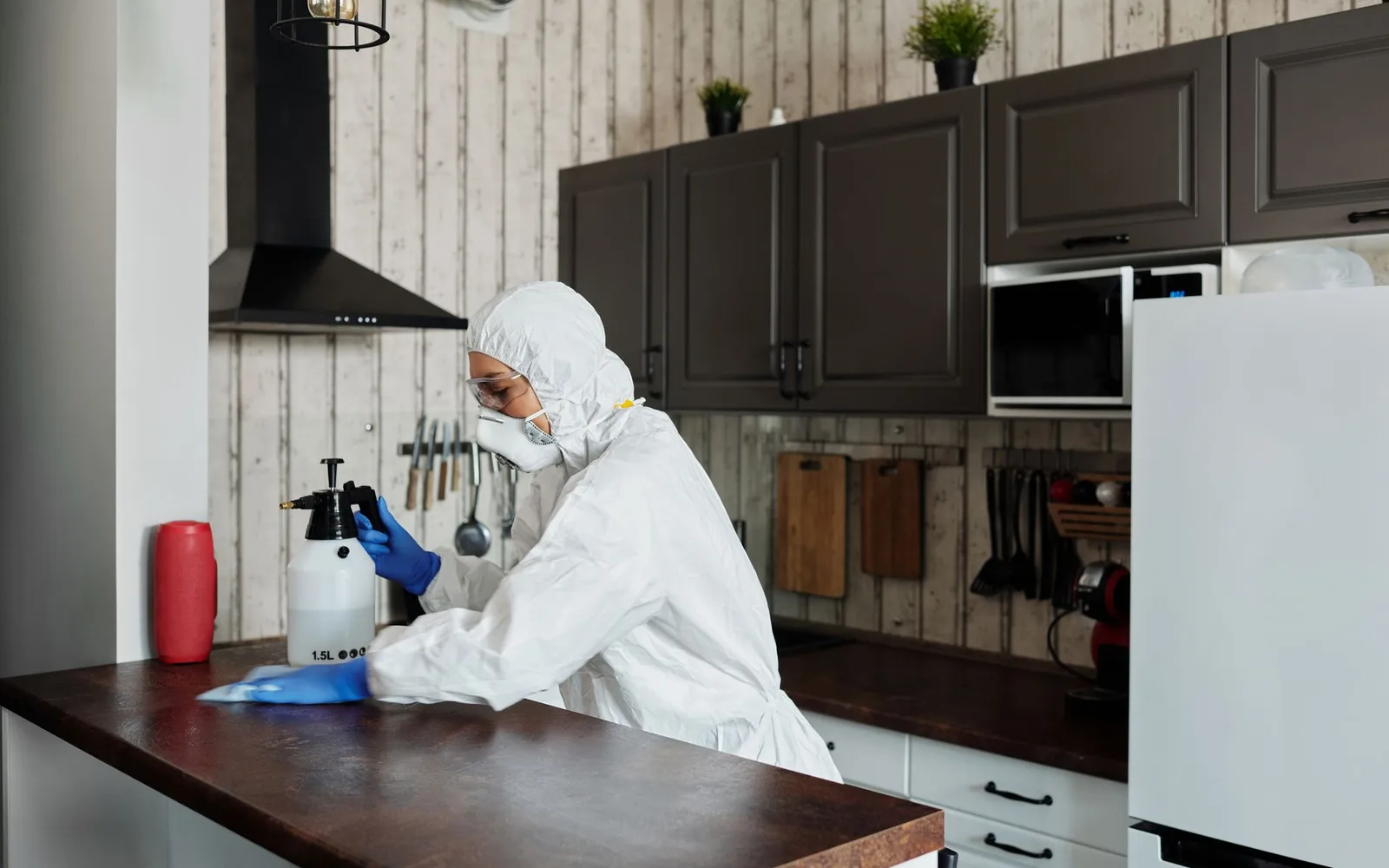
Disinfection in Al Quraiyat Jeddah
Al Quraiyat is an old popular district in south Jeddah where high density housing means close-set apartment blocks with shared entrances need precise, targeted treatment. Disinfection here focuses on the touch points where residents gather, the stairs and passages that see constant movement, and surfaces that hold the sea-borne humidity drifting from the port and refinery to the west.
-
Targeted, not broadcast
Product goes into cracks and runways, never sprayed across open surfaces.
-
Told before we start
What we will use, where it goes, and what to cover or move before we arrive.
-
A follow-up visit
We return after the first treatment, because what survives it does not show on the day.
-
Homes and businesses
Apartments and villas, and kitchens and stores that need a record of each visit.
Why they keep coming back in Al Quraiyat
Shared stairs and narrow passages in old buildings need repeated treatment because daily foot traffic and trapped moisture provide a continuous environment for microbes and odours to take hold. The method is set out in full on our Disinfection service.
Shared entrances, narrow stairs and lift access
Multiple flats share one entry and the stairs are tight, collecting moisture and condensation. Disinfection targets every step edge, lift doors and wall surfaces where hands make contact constantly. These areas receive heavier foot traffic than any other part of the building and they are the gateway where street contaminants enter.
Sea humidity sinking into porous older walls
Older stone and cement absorb moisture from the humid air coming from the port and refinery side. This creates a damp layer beneath the surface where microbes hide. The disinfectant needs longer contact time to penetrate these layers and reach the contaminants beneath, not just those on top of the plaster.
Floor traps and weak drainage networks
Low-lying streets hold standing water after rain, and the old pipes in the building carry moisture and odours upwards. Treatment of floor traps and sewage drains is essential in this district, because returning smells often rise from below, not from the surfaces themselves.
Landmarks of Al Quraiyat
We reach the district via King Khalid Road and Al Falah Road, working close to the College of Telecommunications and Electronics and Al Kulliyah Mosque, where these landmarks help us identify buildings and coordinate visits with residents and building managers efficiently.
- College of Telecommunications and Electronics
- Al Kulliyah Mosque
- King Khalid Road
- Al Falah Road
What we look at before the product is chosen
Ageing buildings with older drainage networks trap moisture, and the low flat ground holds rainwater in narrow streets, creating conditions where contaminants multiply in shared spaces and damp corners.
The touch points
Entrances, stairs and lift doors must be the first areas to receive disinfection in a building block, as they are the highest bacterial and viral load points due to constant resident and visitor movement.
Porous surfaces
Stone and cement walls in older buildings absorb moisture deeply, so we leave them wet with disinfectant for a longer contact time than modern plastered surfaces require to achieve proper penetration.
The finish itself
Door handles, lift buttons and wooden or metal fittings in old buildings need careful handling because high humidity can accelerate metal corrosion or damage timber, though proper disinfection technique avoids this entirely.
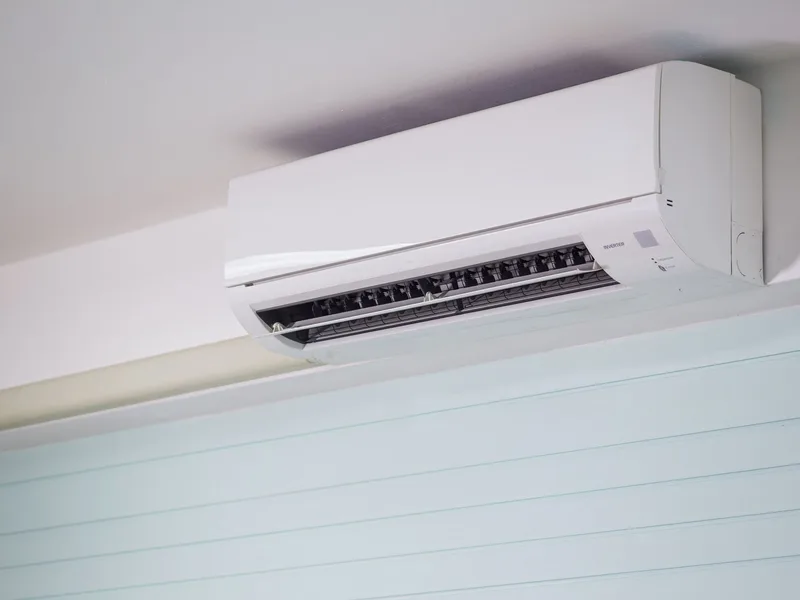
The air conditioning unit
Central air conditioning in older blocks may spread contaminants from passages to some flats, so we inspect it and apply disinfectant to the main outlet and visible ductwork to prevent cross-contamination.
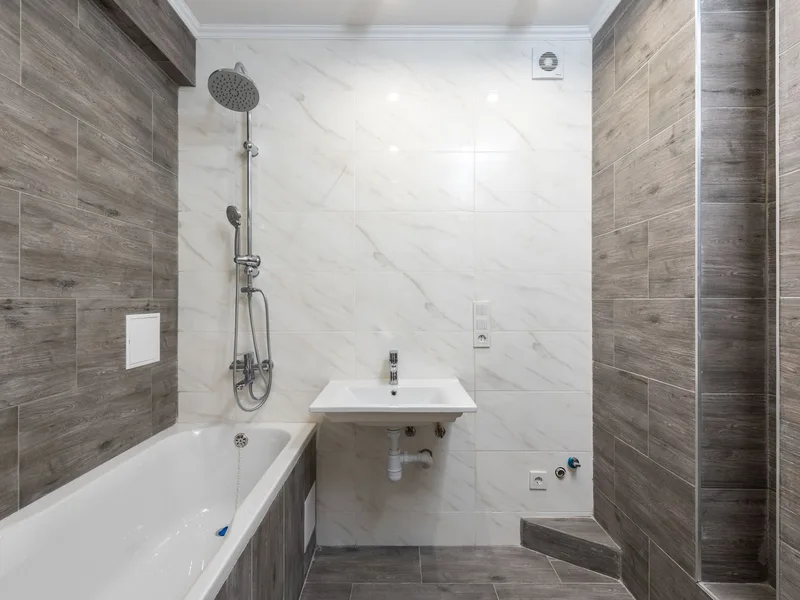
Floor traps
Floor traps in passages and tight courtyards hold moisture and odours persistently, and their treatment is a non-negotiable part of successful disinfection in this type of densely built district.
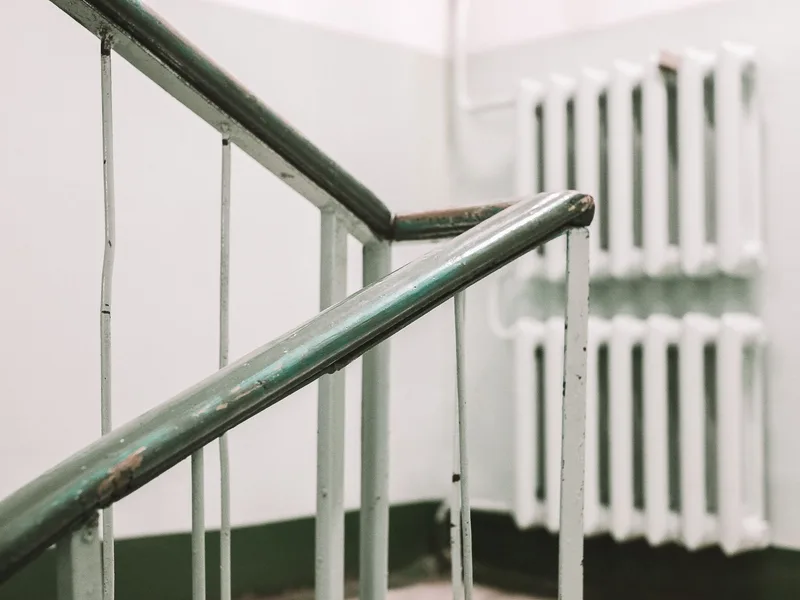
Shared entrances and stairs
Shared stairs and the main entrance need more frequent disinfection than internal passages, because they are the first contamination entry point from the street into the whole building.
How we work
-
1
Walk the space and list the surfaces
We go through the rooms and mark the touch points, the porous surfaces and the finishes, then ask what prompted the call: illness at home, moving into a new place, building work, or a smell that arrived out of nowhere.
-
2
Clean what we are about to treat
We take the film of dust and grease off the surfaces that are in scope, so the product reaches the surface itself. This is preparation for the treatment, not general house cleaning.
-
3
Apply it, and hold the contact time
Hand work on the touch points, a product matched to each surface, and the surface left visibly wet for as long as that material needs before it is dried off. Cold fogging comes last, for what a cloth cannot reach.
-
4
Ventilate and hand back
We open the place up, rinse food preparation surfaces with water, and tell you when each room goes back into use. We give you that timing on the call, because it changes with the product and the space.
What a disinfection visit includes
-

A surface and touch point survey
What gets treated, and with what, settled before anything is opened.
-

Soil off first, then the disinfectant
The greasy film comes off first, then a product that stays wet for the contact time it needs.
-

Floor traps and the air conditioning drain
Floor traps, sink outlets and the drain tray, which is where most smells actually begin.
-
Cold fogging for the space
For upward faces and corners a cloth never reaches, done as the last thing before we leave a room.
-

Ventilation and use instructions
What gets rinsed with water, what is left alone, and when each room goes back into use.
-

A scheduled repeat when it is needed
For shared entrances and places people pass through every day, because a disinfectant leaves nothing behind to stop the next contact.
What is different about Al Jamiah Sub-Municipality
Al Jamiah sub municipality spans the older south of Jeddah. Planned districts such as Al Fayha, Al Thaghr and Madain Al Fahd sit beside crowded popular quarters like the Nazlahs and Al Quraiyat, and beside cleared or clearing land in Ghulail, Petromin and Al Thaalibah awaiting redevelopment. Apartment buildings stand close together above dense runs of shops and restaurants along Old Makkah Road and Prince Majid Road. Drainage in the popular quarters is ageing, humid air drifts in from the port and refinery side to the west, and the flat low lying ground holds rainwater in narrow streets.
Questions about this district
Does disinfection need to be different depending on which floor the flat is on?
Yes. Flats nearer the shared stairs need more intensive treatment because they face greater exposure to movement from all residents passing. We concentrate on doors and walls facing the passages, because contaminants enter the flat from shared areas much more than from outside.
When rainwater stands in the street, does high humidity in the flat affect how disinfection works?
High humidity slows the drying time of the disinfectant, but does not cancel its effect if we leave it wet for the full required time. On days of extreme humidity we may need additional days before surfaces dry completely and the flat can return to normal use.
Old building walls are always damp from the ground, does this stop the disinfectant reaching deep enough?
Damp stone walls need longer contact time in disinfection. We apply the product to a lightly damp but cleaned surface first, because dust and dried mud on the wall isolate the surface from the active ingredients and prevent proper penetration.
How often per year do residents in an old apartment block need preventive disinfection?
In a dense district like Al Quraiyat, quarterly disinfection is better than annual treatment, because constant movement and trapped moisture mean contaminants accumulate faster here than in newer or less densely occupied neighbourhoods.
The shared passages and stairs, must they be disinfected separately from the flat itself?
Yes. Passages and stairs need separate and more frequent treatment because they accumulate contaminants from the heavy daily flow of residents and visitors. They collect far more microbial load per square metre than any single flat can.
The old lift in the building smells stale and damp, can disinfection alone fix the odour?
The smell often comes from drain pipes within the lift shaft or from damp walls inside. We disinfect the lift and passages, but a specialist clean of pipes and tight corners may be needed first to remove the source, not just mask it.
How much does disinfection in Al Quraiyat cost?
It is set after the inspection, because the price follows the type of infestation, the size of the space, how far it has spread and the number of visits it needs. Send a photo and a description on WhatsApp and we will give you an estimate before we reach Al Quraiyat.
Nearby districts we cover
Other services in Al Quraiyat
Other services we provide to residents of Al Quraiyat.
-
 Residential
Cockroach control
Residential
Cockroach control
-
 Residential
Bed bug control
Residential
Bed bug control
-
 Residential
Termite control
Residential
Termite control
-
 Residential
Rodents and mice
Residential
Rodents and mice
-
 Residential
Mosquito control
Residential
Mosquito control
-
 Residential
Fly control
Residential
Fly control
-
 Residential
Ant control
Residential
Ant control
-
 Residential
Gecko control
Residential
Gecko control
-
 Residential
Scorpion control
Residential
Scorpion control
-
 Residential
Snake control
Residential
Snake control
-
 Residential
Flea control
Residential
Flea control
-
 Residential
Bird and pigeon control
Residential
Bird and pigeon control
-
 Residential
Preventive treatment
Residential
Preventive treatment
-
 Commercial
Annual contracts
Commercial
Annual contracts
-
 Commercial
Restaurants and cafes
Commercial
Restaurants and cafes
-
 Commercial
Hotels and apartments
Commercial
Hotels and apartments
-
 Commercial
Warehouses and factories
Commercial
Warehouses and factories
-
 Commercial
Schools and nurseries
Commercial
Schools and nurseries
-
 Commercial
Retail and malls
Commercial
Retail and malls
-
 Commercial
Rest houses and farms
Commercial
Rest houses and farms
-
 Commercial
Fumigation
Commercial
Fumigation
-
 Water tanks
Water tank cleaning
Water tanks
Water tank cleaning
-
 Water tanks
Water tank sterilization
Water tanks
Water tank sterilization
-
 Water tanks
Water tank sealing
Water tanks
Water tank sealing
-
 Water tanks
Tank leak repair
Water tanks
Tank leak repair
Need disinfection in Al Quraiyat? Tell us what you saw and we will tell you what it needs
We reach Al Quraiyat at a time we agree, and you get the full cost before we start.