
Fly control in Al Hajlah Al Jadid Makkah
Al Hajlah Al Jadid is a developing district set among scattered building sites and vacant plots, where standing water and construction debris draw multiple fly populations. Each excavation, foundation pit and temporary drainage channel becomes a separate breeding source, so control here means treating not one house but the small ecosystem around it.
-
Targeted, not broadcast
Product goes into cracks and runways, never sprayed across open surfaces.
-
Told before we start
What we will use, where it goes, and what to cover or move before we arrive.
-
A follow-up visit
We return after the first treatment, because what survives it does not show on the day.
-
Homes and businesses
Apartments and villas, and kitchens and stores that need a record of each visit.
Why they keep coming back in Al Hajlah Al Jadid
Flies here move freely between multiple scattered sources across empty land, rather than concentrating in one building, which means they do not reappear from a single untreated origin but from several. The method is set out in full on our Fly control service.
Foundation pits and trenches hold water for weeks
Deep excavations and drainage trenches dug for new buildings often remain open or partially open for months, pooling construction water and groundwater seepage. This standing water becomes a fly pupation ground, producing new adults from a single pit for the entire construction phase.
Building materials and rubble hide adult flies
Piles of fill, broken brick, timber offcuts and packaging scattered across the site provide daytime shelter and nighttime resting places. Flies hide in these materials during heat and predation pressure, then disperse at dusk to nearby homes to feed and lay eggs.
Multiple sources prevent single-point solution
Treating only the flat is ineffective when the flies originate from five different construction features around it. Control requires identifying and addressing each temporary breeding site, not just the home's interior and perimeter.
The character of Al Hajlah Al Jadid
New development: ongoing construction and vacant plots between the homes
In a developing district, fly presence signals the construction phase itself rather than poor housekeeping. Management depends on tackling temporary water sources as building proceeds, not waiting for the district to finish.
Where the flies are actually coming from
The location on Wadi Uranah where Ibrahim Al Khalil Road crosses creates low points that trap water after rain in foundation trenches, building sump pits and the ground itself, keeping conditions damp for extended periods.
House fly
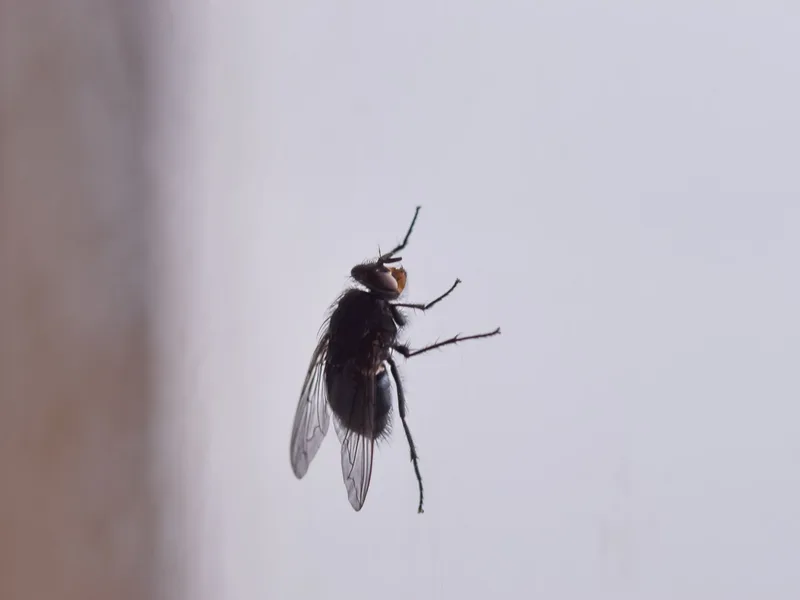
House flies here congregate around water more than food, clustering at foundation pits and temporary channels rather than kitchens.
Blow fly
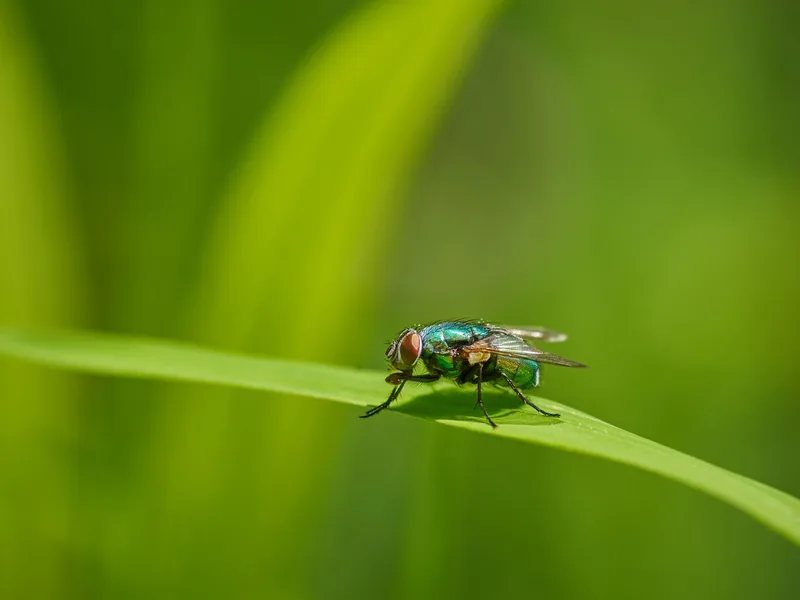
Blow flies arrive from open ground and untidy work sites, moving into adjacent homes as the temperature rises each afternoon.
Fermenting residue
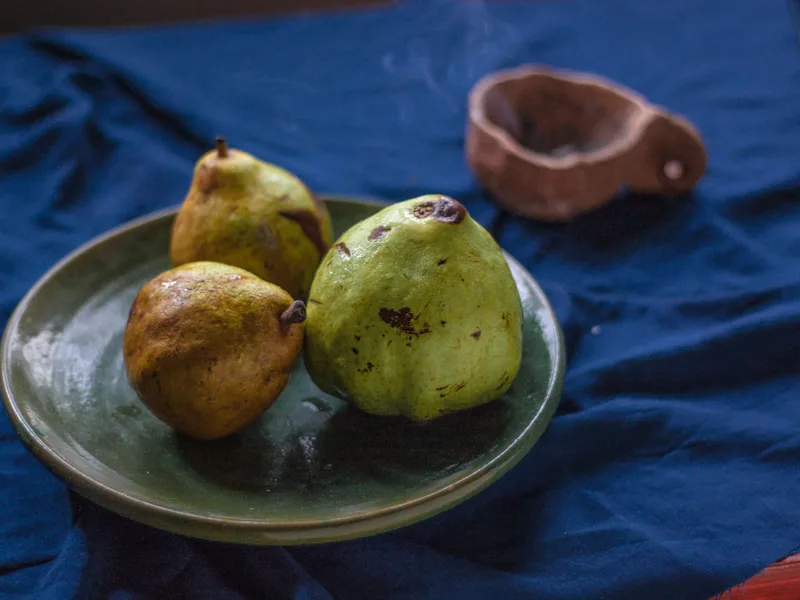
Building waste mixed with damp soil creates ideal fermentation conditions for larval development to accelerate.
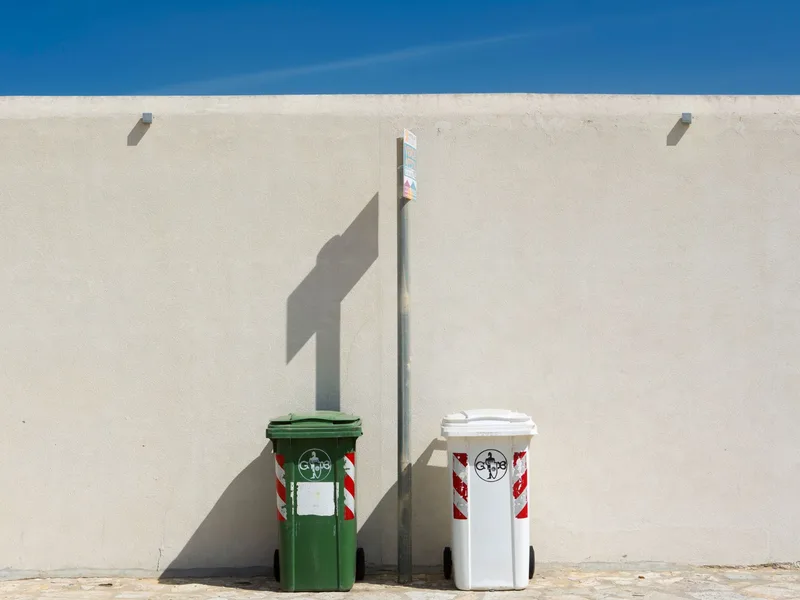
The bin base
Temporary pits and trenches become debris sump points, lacking regular cleaning and exposure to sun.
The film inside a drain
Incomplete drain lines leak directly into surrounding soil, maintaining dampness around new building bases for weeks.
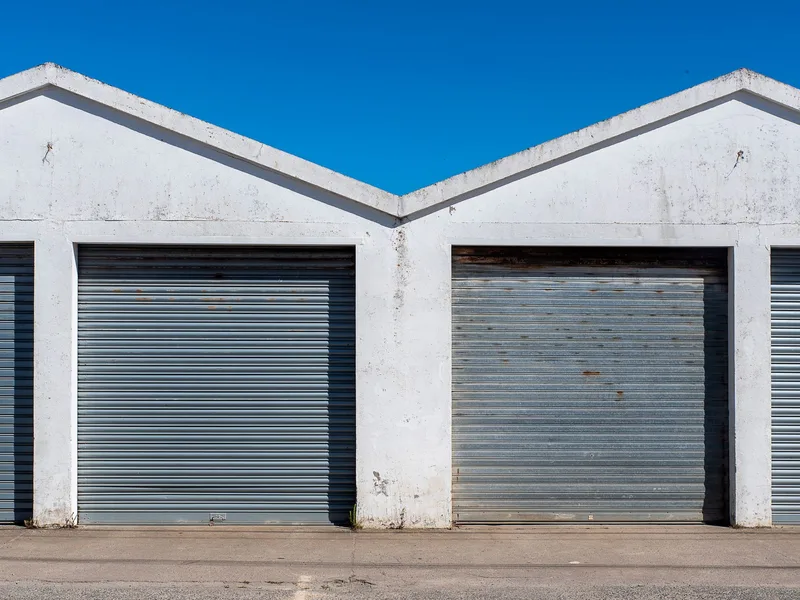
The service door and its mesh
Gaps around new villa and apartment entrances often exceed standard sizes, allowing large fly entry until seals are adjusted.
How we work
-
1
Inspect and trace the source
We trace the flies back to their medium: waste and the bin area, floor traps, drain runs and any standing organic wetness, and we identify the species from its size, its flight and where it settles.
-
2
Treat the breeding medium
Washing and scouring bin bases and floor traps, and a foam that treats the film inside the pipe, because removing the medium is the only thing that stops production.
-
3
Treat the resting surfaces
A fly spends most of its time settled on ceilings, cables, the tops of walls and the sunlit wall outside the door, and that is where the residual and the bait go, not into the air.
-
4
Proofing and the follow-up
We close the ways in and sort out the screens and the doors, then come back on a date matching the emergence of the pupae that were already in the medium on the first visit.
What fly control includes
-

A source tracing inspection
The species, the breeding medium and the route in, established before anything is applied.
-

Drains and floor traps
Scouring the film stuck inside the pipe and treating it with foam, which is where drain flies come from and almost nowhere else.
-

Residual on the resting surfaces
Ceilings, cables, the tops of walls and the sunlit wall outside the door, kept off food preparation surfaces.
-

Fly bait in protected positions
An attractant bait set at bin areas and service entrances, out of reach of children and pets and away from food.
-

Aftercare instructions
Ventilation, what to cover, and what needs a screen, an air curtain or a different waste routine.
-

A scheduled follow-up
A set date matching the emergence of the pupae, and re-treatment of any source still producing.
What is different about South Makkah Sub-Municipality
South Makkah sub municipality is the belt of Crown Prince schemes south of Al Ukayshiyah, along the Al Laith road and the extension of Ibrahim Al Khalil Road to the Fifth Ring Road and the Non Muslims bypass. Most of it is still bare: granted plots awaiting houses, new villas standing alone, open building sites and unfinished paving and drainage. Wadi Uranah and its tributaries cross the low ground and hold water after rain, hills close it in, and rodents, reptiles and scorpions shelter in stacked materials and foundation pits before the neighbourhoods fill up.
Questions about this district
Will the flies stop once construction finishes and streets are laid?
Most will, but during active building, new sources appear constantly. Interim control during construction relies on regular monitoring of temporary water retention and coordination with site management to drain pits and manage spoil.
Water pools in the foundation trenches after rain. Is that the root cause?
Yes, it is a major source. Pits should be drained promptly after rain or covered temporarily. This alone will cut the population significantly, but surface treatment of the home's surrounds is still needed to prevent flies entering from passing over the site.
The vacant land around us is enormous. Can treatment cover all of it?
No, treatment focuses on the fly routes into your home, the resting places they use on your property, and the immediate perimeter. The open plots beyond are not the target, only the edge where they meet your boundary.
The district is new and services are incomplete. Does this change the type of work?
Yes. Incomplete drainage and water mains mean temporary seepage points. Treatment emphasizes temporary water sources and construction-phase breeding grounds more than it would in a finished neighbourhood.
Flies are coming from building sites far north of us. Can they reach here?
Flies travel short distances readily, but the sources immediately around your plot dominate the population you see. Treating your perimeter and stopping entry is more effective than worrying about distant sources.
Is treating just my new villa enough, or do I need wider protection?
The villa itself needs exterior and interior protection, but with active construction nearby, monitoring nearby vacant plots and the site edges is wise. Treatment can be widened if population pressure remains high.
How much does fly control in Al Hajlah Al Jadid cost?
It is set after the inspection, because the price follows the type of infestation, the size of the space, how far it has spread and the number of visits it needs. Send a photo and a description on WhatsApp and we will give you an estimate before we reach Al Hajlah Al Jadid.
Nearby districts we cover
Other services in Al Hajlah Al Jadid
Other services we provide to residents of Al Hajlah Al Jadid.
-
 Residential
Cockroach control
Residential
Cockroach control
-
 Residential
Bed bug control
Residential
Bed bug control
-
 Residential
Termite control
Residential
Termite control
-
 Residential
Rodents and mice
Residential
Rodents and mice
-
 Residential
Mosquito control
Residential
Mosquito control
-
 Residential
Ant control
Residential
Ant control
-
 Residential
Gecko control
Residential
Gecko control
-
 Residential
Scorpion control
Residential
Scorpion control
-
 Residential
Snake control
Residential
Snake control
-
 Residential
Flea control
Residential
Flea control
-
 Residential
Bird and pigeon control
Residential
Bird and pigeon control
-
 Residential
Preventive treatment
Residential
Preventive treatment
-
 Residential
Disinfection
Residential
Disinfection
-
 Commercial
Annual contracts
Commercial
Annual contracts
-
 Commercial
Restaurants and cafes
Commercial
Restaurants and cafes
-
 Commercial
Hotels and apartments
Commercial
Hotels and apartments
-
 Commercial
Warehouses and factories
Commercial
Warehouses and factories
-
 Commercial
Schools and nurseries
Commercial
Schools and nurseries
-
 Commercial
Retail and malls
Commercial
Retail and malls
-
 Commercial
Rest houses and farms
Commercial
Rest houses and farms
-
 Commercial
Fumigation
Commercial
Fumigation
-
 Water tanks
Water tank cleaning
Water tanks
Water tank cleaning
-
 Water tanks
Water tank sterilization
Water tanks
Water tank sterilization
-
 Water tanks
Water tank sealing
Water tanks
Water tank sealing
-
 Water tanks
Tank leak repair
Water tanks
Tank leak repair
Need fly control in Al Hajlah Al Jadid? Tell us what you saw and we will tell you what it needs
We reach Al Hajlah Al Jadid at a time we agree, and you get the full cost before we start.