

Bird and pigeon control in Al Hamra Umm Al Jud Makkah
Al Hamra Umm Al Jud spreads westward along the old Jeddah road as a landscape of villas and larger estates, where wadis collect standing water and garden drainage attracts birds directly to exposed roofs and ledges. A villa here means a full boundary perimeter and an unobstructed roof, so deterrents must secure every exposed edge against birds approaching from any direction.
-
Targeted, not broadcast
Product goes into cracks and runways, never sprayed across open surfaces.
-
Told before we start
What we will use, where it goes, and what to cover or move before we arrive.
-
A follow-up visit
We return after the first treatment, because what survives it does not show on the day.
-
Homes and businesses
Apartments and villas, and kitchens and stores that need a record of each visit.
Why they keep coming back in Al Hamra Umm Al Jud
The large plots here support permanent garden irrigation, and standing water in basins and drainage lines from the system supply birds with drinking and bathing water year round. The method is set out in full on our Bird and pigeon control service.
Long ledges and fully open roofs
Each villa stands behind its own boundary wall with a roof that rises unbroken above the garden. Ledge length multiplies nesting positions, and the absence of natural barriers leaves the entire roof exposed to birds approaching from any direction, requiring deterrent coverage on both perimeter edges.
Permanent irrigation and drainage moisture
Gardens are watered regularly and standing water in basins and from the supply lines provides an unbroken water source. Higher ground drains slowly toward neighbouring gardens, sustaining the humid conditions birds prefer for nesting.
Estate scale and multiple structures
Larger estates have multiple roofs, annexes and towers that create gaps and angles standard deterrents cannot reach. Each section requires assessment and tailored closure, as pigeons exploit faults that pass unnoticed on smaller buildings.
The character of Al Hamra Umm Al Jud
Villa district: private plots, gardens and a boundary wall to every house
A villa is not just a roof but a complete boundary envelope, and birds work the side walls and balconies as readily as the top. Deterrents must cover every point around the perimeter wall, not the roof surface alone, because birds approach from the street and from adjoining plots.
The building decides which deterrent works
The district is bounded by Al Malik Fahd to the south and An Nuzhah to the east, with the expressway and Fourth Ring Road passing close, and home to university buildings, gardens and the public park at Al Shumaisi.
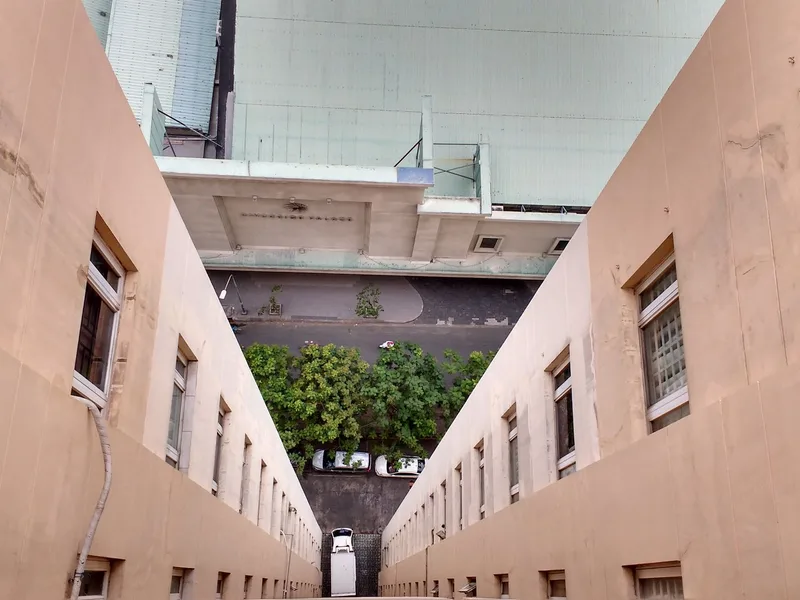
Ledge width
The ledges here are quite wide and often smooth, so heavy or very tall deterrents appear out of proportion and need careful selection to match the width visually.
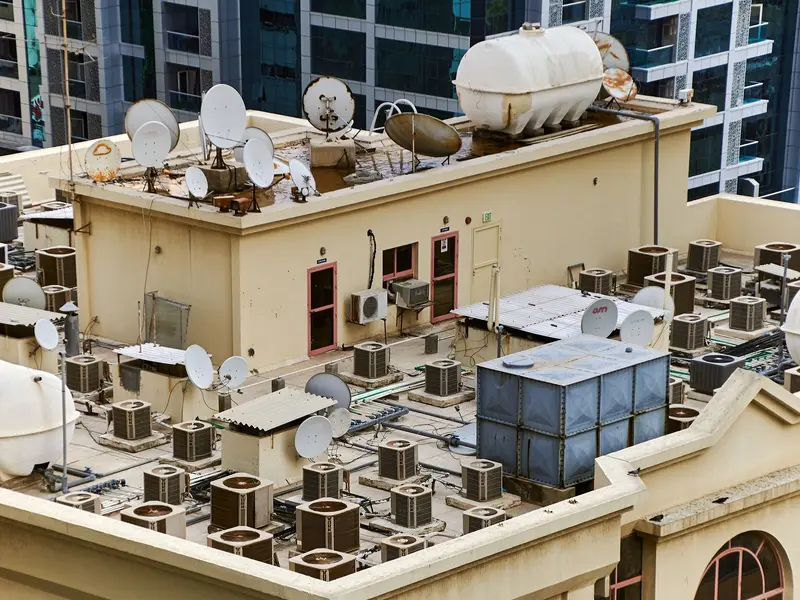
Air conditioning platforms
Air conditioning units on large estates sit on solid concrete pads set back from the main ledge, which simplifies fitting round them without having to move the base.
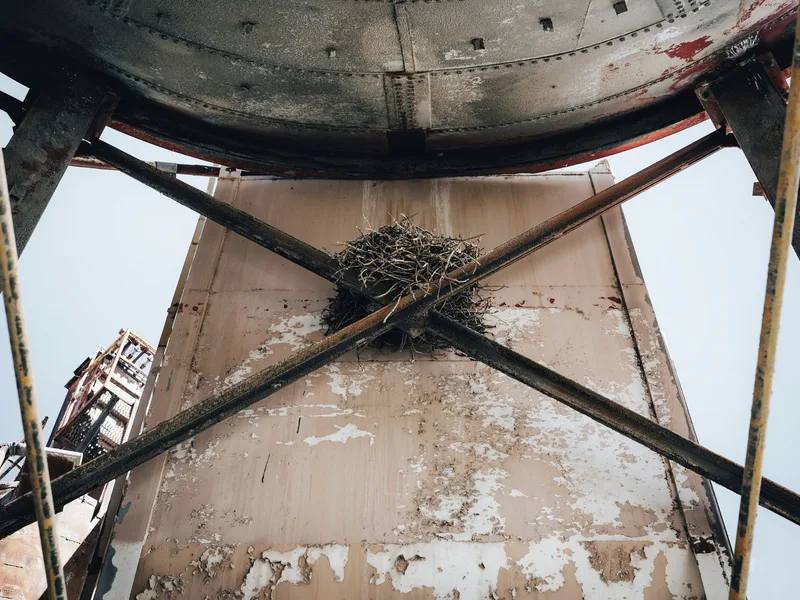
The nest itself
Nests here are substantial because villas shelter birds from wind, and a nest may house successive generations if it is not removed in good time.
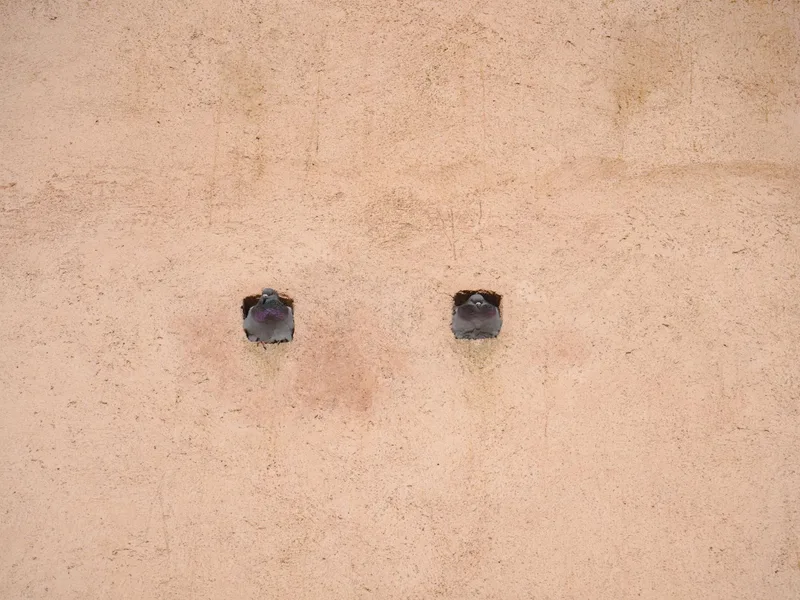
The droppings pattern
Droppings accumulate heavily on the main roofs and surrounding balconies because of bird density, and damp waste attracts tiny parasitic insects and mites that migrate indoors.
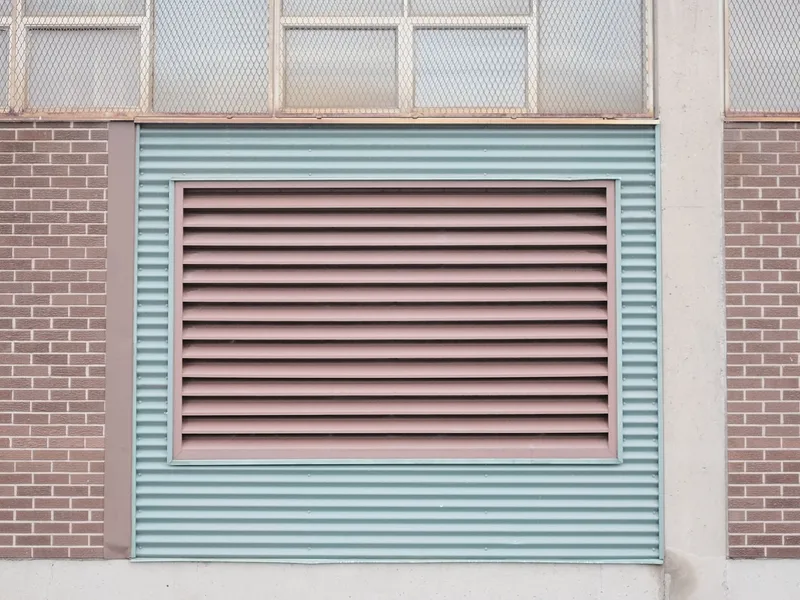
Openings and shafts
Openings are numerous on large estates and roof vents and high windows provide escape routes for birds that have entered, requiring additional fine mesh screening.
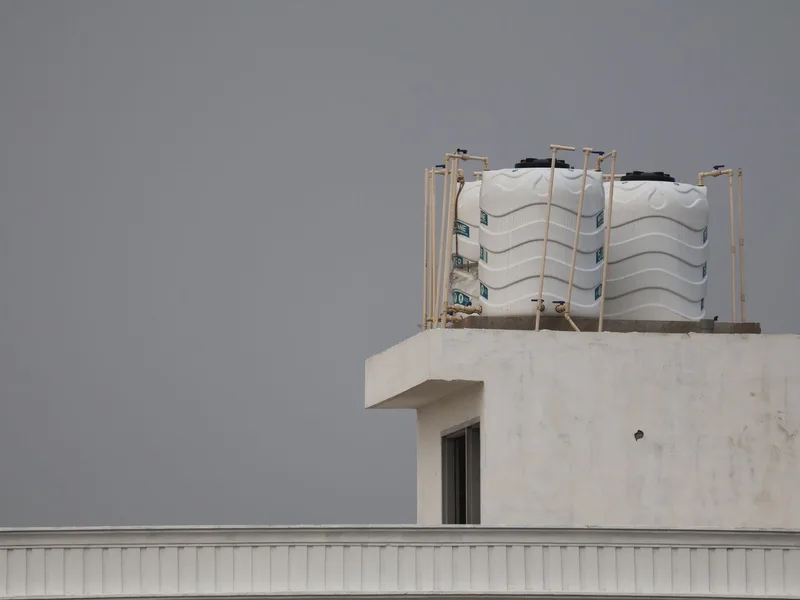
Around the roof tank
Water tanks on estate roofs are large and pigeons stand on them constantly with droppings falling directly beside them, so the whole perimeter of the tank requires full treatment.
How we work
-
1
Survey the roof and the facade
We walk the roof, the projections, the condenser platforms and the shafts, separate the nesting positions from the perching ones, and measure and photograph every ledge.
-
2
Strip the nests and treat the parasites
Droppings are wetted before they are lifted so nothing goes airborne dry, bagged closed, and the nest position is treated for ticks and mites before the surface is sanitised.
-
3
Close and fit
Netting tensioned on a perimeter wire with no gap at the corners, spikes or wire on the narrow projections, metal mesh across vents and shafts, and the roof drains freed of the nest material packing them.
-
4
The follow-up visit
We come back to check the tension, the corners and any position the flock has moved to, and correct what has slackened before a bird finds it.
What bird and pigeon control includes
-

A recorded survey
Every ledge, condenser platform and shaft, photographed, with nesting separated from perching before anything is chosen.
-

Nest removal and drain clearing
Lifted wet rather than swept dry, bagged closed, and the roof drains freed of the nest material packing them.
-

Parasite treatment and sanitising
The nest position treated for ticks and mites, then the surface the droppings sat on sanitised.
-

Sealing and fitting the deterrents
Netting tensioned on a perimeter wire, spikes or wire on narrow projections, and metal mesh across ventilation openings.
-

Aftercare instructions
The condensate water, food left on the roof, and what should not sit beside a ledge if the attraction is to stay gone.
-

A follow-up on tension and corners
Netting slackens and corners open over time; the visit corrects that and closes any new position.
What is different about Al Umrah Sub-Municipality
Al Umrah sub municipality covers the north west of Makkah along the Madinah road and the old Jeddah road, from At Tanim and Masjid Aisha to An Nawwariyah. Its districts are the city's newest, villas and apartment blocks raised on wide schemes where large tracts in Al Umrah Al Jadidah, Al Fayha and Al Buhayrat remain vacant or under construction. Wadi Saraf and Wadi At Tanim run through it and rainwater gathers on unfinished schemes, ihram shops, restaurants and coach stops along the Madinah road serve a constant flow of pilgrims, and villas fill Al Hamra and Umm Al Jud.
Questions about this district
The garden is filled with tall trees and birds gather there constantly. Do they nest on the roof immediately?
The trees serve as an intermediate staging post, and birds reconnoitre nearby elevated surfaces before settling. Exposed ledges and visible water accelerate choice, so a nest may appear within a single season after the first survey of the roof.
Our estate is brand new, the roof is completely clean, and we are elevated higher than nearby villas. Why us?
New clean roofs are highly attractive because they are free from old nests and parasites. Height and open space mean clear sightlines and protection from ground predators, and if your garden is irrigated you are offering everything a nesting bird requires.
We are beside the expressway and traffic noise is constant. Does this scare pigeons away or make them less cautious?
Noise does not deter pigeons; it does reduce their wariness of ground observers. The expressway means perpetual movement but the roof remains a safe refuge far from foot traffic and animals, which makes it more attractive, not less.
Our corner villa has a western wall in full sun and moisture from the garden. Does this draw birds to it?
Warm sun-facing walls provide shelter, and garden moisture means water is available for drinking and bathing nearby. The corner itself offers protection from one prevailing wind direction, which makes it a favoured nesting choice.
The housing complex next door fitted deterrents and they failed within months. Will pigeons just move to our roof instead?
Pigeons do not migrate to seek alternatives simply because one site is blocked; rather, if deterrents failed there the underlying conditions are likely present at your property too. Close inspection of the product and fitting method at the neighbouring site prevents repeating the same mistake.
Will a fitted deterrent be visible from the street and spoil the appearance of the estate from a distance?
Modern deterrents are thin and black or silver and become invisible from the street at distance. Fitting along the top ledge alone creates a fine line that disappears in shadow and perspective from the road.
How much does bird and pigeon control in Al Hamra Umm Al Jud cost?
It is set after the inspection, because the price follows the type of infestation, the size of the space, how far it has spread and the number of visits it needs. Send a photo and a description on WhatsApp and we will give you an estimate before we reach Al Hamra Umm Al Jud.
Nearby districts we cover
Other services in Al Hamra Umm Al Jud
Other services we provide to residents of Al Hamra Umm Al Jud.
-
 Residential
Cockroach control
Residential
Cockroach control
-
 Residential
Bed bug control
Residential
Bed bug control
-
 Residential
Termite control
Residential
Termite control
-
 Residential
Rodents and mice
Residential
Rodents and mice
-
 Residential
Mosquito control
Residential
Mosquito control
-
 Residential
Fly control
Residential
Fly control
-
 Residential
Ant control
Residential
Ant control
-
 Residential
Gecko control
Residential
Gecko control
-
 Residential
Scorpion control
Residential
Scorpion control
-
 Residential
Snake control
Residential
Snake control
-
 Residential
Flea control
Residential
Flea control
-
 Residential
Preventive treatment
Residential
Preventive treatment
-
 Residential
Disinfection
Residential
Disinfection
-
 Commercial
Annual contracts
Commercial
Annual contracts
-
 Commercial
Restaurants and cafes
Commercial
Restaurants and cafes
-
 Commercial
Hotels and apartments
Commercial
Hotels and apartments
-
 Commercial
Warehouses and factories
Commercial
Warehouses and factories
-
 Commercial
Schools and nurseries
Commercial
Schools and nurseries
-
 Commercial
Retail and malls
Commercial
Retail and malls
-
 Commercial
Rest houses and farms
Commercial
Rest houses and farms
-
 Commercial
Fumigation
Commercial
Fumigation
-
 Water tanks
Water tank cleaning
Water tanks
Water tank cleaning
-
 Water tanks
Water tank sterilization
Water tanks
Water tank sterilization
-
 Water tanks
Water tank sealing
Water tanks
Water tank sealing
-
 Water tanks
Tank leak repair
Water tanks
Tank leak repair
Need bird and pigeon control in Al Hamra Umm Al Jud? Tell us what you saw and we will tell you what it needs
We reach Al Hamra Umm Al Jud at a time we agree, and you get the full cost before we start.