
Bird and pigeon control in Al Hindawiyah Makkah
Al Hindawiyah is a densely crowded commercial quarter packed with hundreds of small shops and storage rooms where rooftops sit low and openings stay exposed. Pigeons find abundant food from discarded merchandise and exposed stock, and safe nesting on old, low roofs. Shops operate all day with doors and windows open, making it simple for birds to move in and out constantly. The scale of the commercial activity means pigeons feed and nest simultaneously across dozens of connected rooftops.
-
Targeted, not broadcast
Product goes into cracks and runways, never sprayed across open surfaces.
-
Told before we start
What we will use, where it goes, and what to cover or move before we arrive.
-
A follow-up visit
We return after the first treatment, because what survives it does not show on the day.
-
Homes and businesses
Apartments and villas, and kitchens and stores that need a record of each visit.
Why they keep coming back in Al Hindawiyah
Rooftops in this area vary in height and condition and many are shared between multiple shops, so pigeons move easily between one roof and the next. The method is set out in full on what Bird and pigeon control involves.
Hundreds of shops and constantly exposed openings
Small shops fill ground and upper storeys, each with a door or window left open through trading hours. Displayed merchandise and scattered waste supply pigeons with unbroken food sources. They nest directly above the shops and fly to and from them hundreds of times daily without obstruction.
Old shared roofs in poor condition
Shop rooftops are old, their surfaces cracked with gaps and holes everywhere, and one roof often serves ten or more shops. Nesting in corners and fissures makes treatment complicated and requires coordination between multiple shop owners before work can start.
Crowded unplanned layout with scattered extensions
The district is unplanned, streets are narrow and buildings were erected without regulation, creating isolated pockets that are hard to reach. Informal extensions added new roofs at different heights, each one a separate nesting site disconnected from neighbours.
The character of Al Hindawiyah
Commercial area: offices, showrooms and small stores
Small commercial shops leave openings exposed all day and display goods that attract pigeons, making protection require cooperation between multiple shop owners and acceptance of work during set hours when the shops can be closed briefly.
The building decides which deterrent works
A high density district with ageing unplanned buildings bounded by Al Mansour to the east, Al Khalidiyah to the south, Al Rusayfah and Al Nuzha to the west and Al Utaibiyah to the north, with popular markets that draw bargain shoppers from across the city.
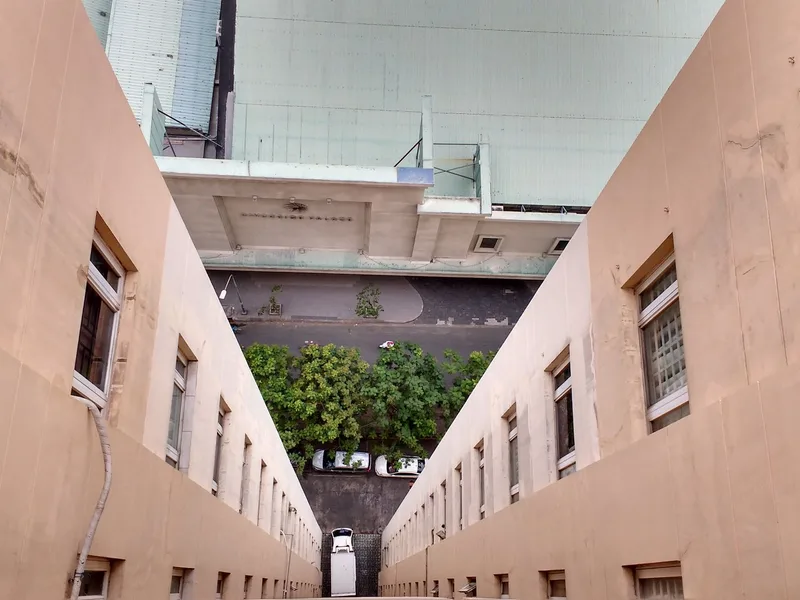
Ledge width
Shop ledges range from simple to decorated or broken edges, and height varies depending on the shop storey level and internal ceiling height in each unit.
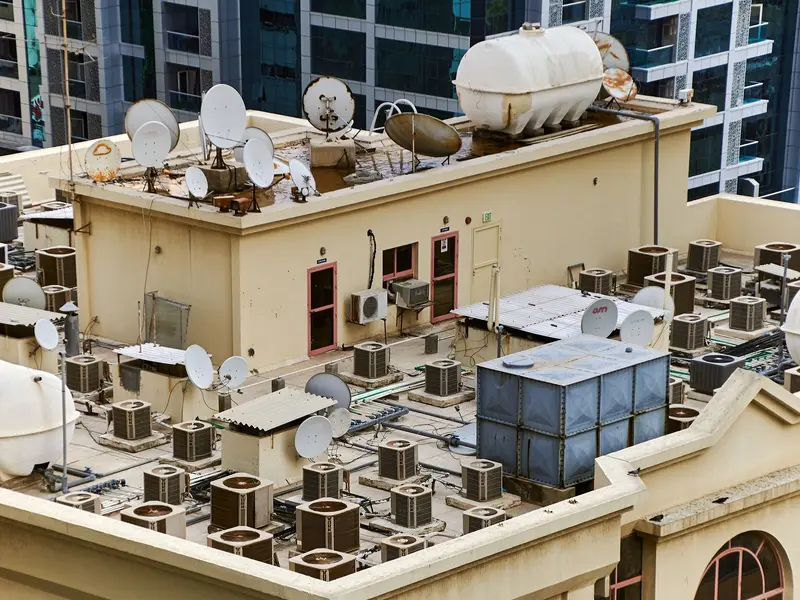
Air conditioning platforms
Air conditioning units are rare on small shops or mounted directly on the external wall, and gaps around the unit provide nesting points for pigeons.
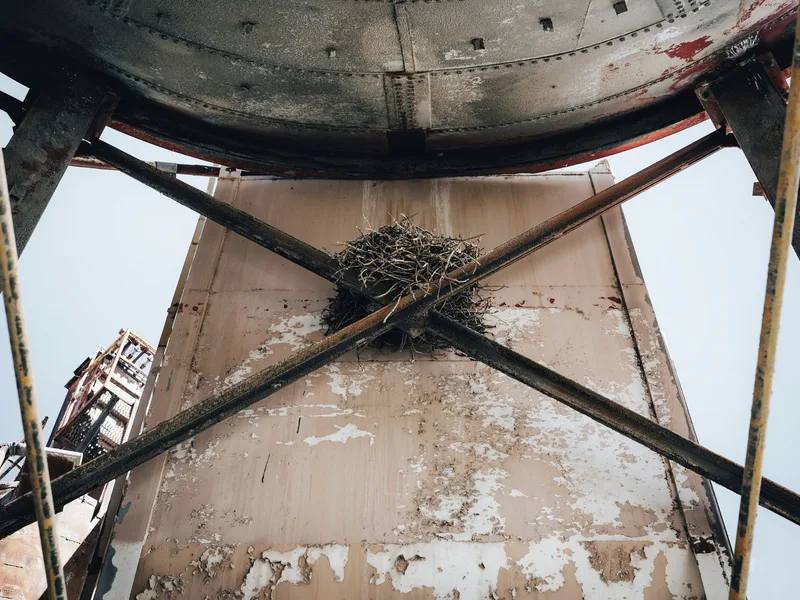
The nest itself
Nests occur in corners, cracks and gaps between shops rather than always on the main ledge, making them harder to spot and remove.
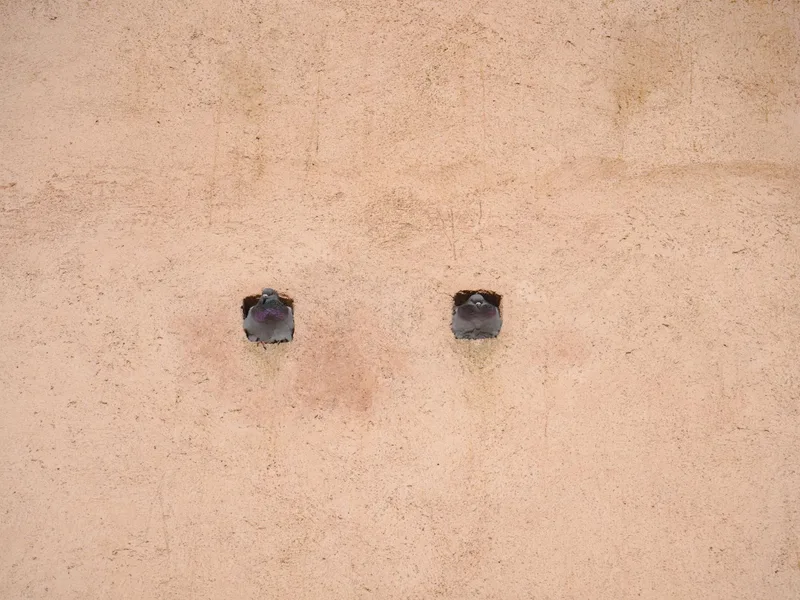
The droppings pattern
Droppings accumulate rapidly from discarded merchandise and exposed goods, attracting small insects quickly.
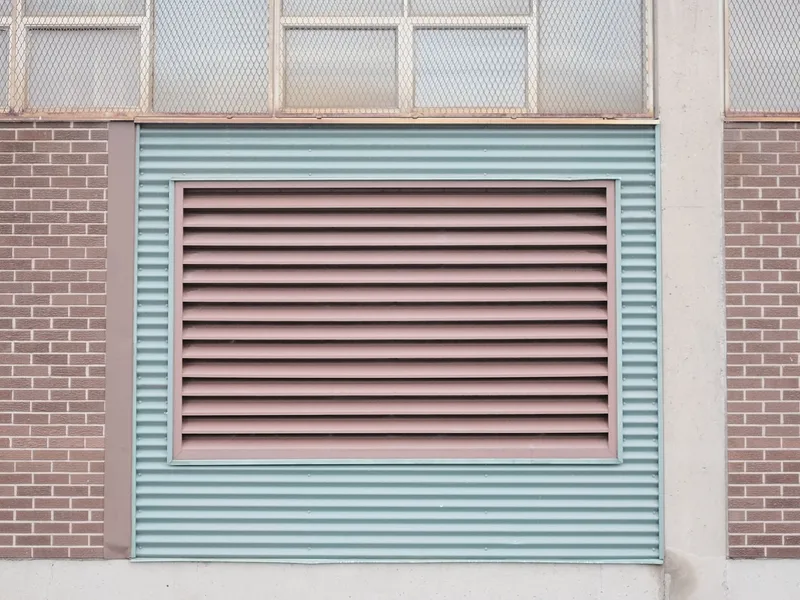
Openings and shafts
Openings are plentiful: doors, windows and ventilation shafts that stay unprotected, many left open throughout working hours.
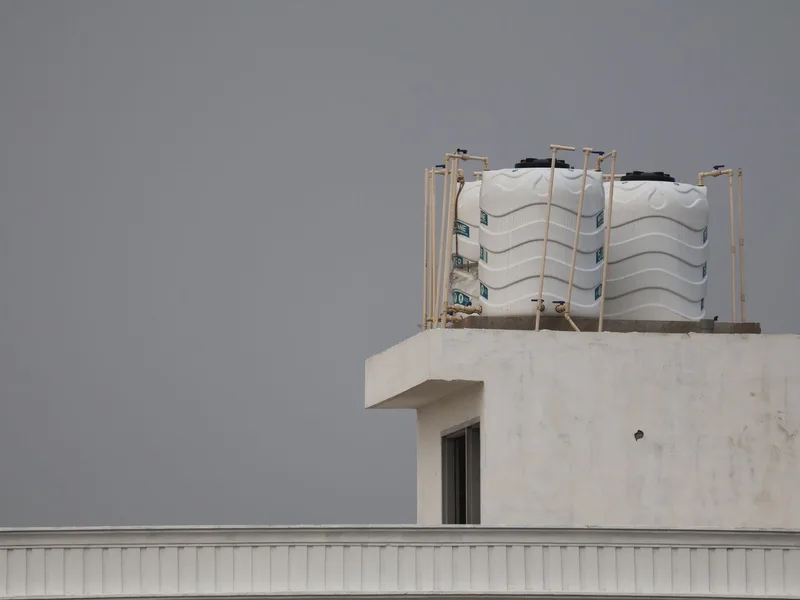
Around the roof tank
Water tanks are rare on small shop roofs, but water seeping from air units and rainfall provides drinking sources.
How we work
-
1
Survey the roof and the facade
We walk the roof, the projections, the condenser platforms and the shafts, separate the nesting positions from the perching ones, and measure and photograph every ledge.
-
2
Strip the nests and treat the parasites
Droppings are wetted before they are lifted so nothing goes airborne dry, bagged closed, and the nest position is treated for ticks and mites before the surface is sanitised.
-
3
Close and fit
Netting tensioned on a perimeter wire with no gap at the corners, spikes or wire on the narrow projections, metal mesh across vents and shafts, and the roof drains freed of the nest material packing them.
-
4
The follow-up visit
We come back to check the tension, the corners and any position the flock has moved to, and correct what has slackened before a bird finds it.
What bird and pigeon control includes
-

A recorded survey
Every ledge, condenser platform and shaft, photographed, with nesting separated from perching before anything is chosen.
-

Nest removal and drain clearing
Lifted wet rather than swept dry, bagged closed, and the roof drains freed of the nest material packing them.
-

Parasite treatment and sanitising
The nest position treated for ticks and mites, then the surface the droppings sat on sanitised.
-

Sealing and fitting the deterrents
Netting tensioned on a perimeter wire, spikes or wire on narrow projections, and metal mesh across ventilation openings.
-

Aftercare instructions
The condensate water, food left on the roof, and what should not sit beside a ledge if the attraction is to stay gone.
-

A follow-up on tension and corners
Netting slackens and corners open over time; the visit corrects that and closes any new position.
Landmarks of Al Hindawiyah
The district spreads along Prince Mansour Street and between the Second and Third Ring Roads, where dense popular markets keep pigeons heavily settled on shop rooftops. The work requires coordination with shop owners distributed across the full length of the commercial strips.
- Prince Mansour Street
- Umm Al Qura Road
- Second Ring Road
- Third Ring Road
Questions about this district
Our shop is open all day and pigeons fly in and out freely, how do we seal it?
We fit metal mesh over main openings and windows whilst allowing the shop to stay ventilated. Pigeons will not enter if openings are properly protected, and the shop keeps natural airflow needed for goods and customers.
Several shops share one roof, do we need permission from every owner?
Yes, because pigeons move between shops across the shared roof. We help send a formal notice to all shop owners explaining that shared protection benefits everyone by eliminating birds and insects that affect all the shops equally.
The Second Ring Road runs beside our shop, do pigeons arrive from the road?
Ring roads provide flight corridors and may attract other bird species, but city pigeons prefer safe rooftops and shops offering direct food access over fast roads. Rooftop nesting matters more than the nearby road traffic.
Our roof space is very small, can we still fit deterrents?
Even the smallest roofs can be protected. We assess the space and height and select lightweight deterrents that do not overload the structure. Mesh is a safe and effective option for small roof areas.
Will the work damage our goods or affect shop operations?
Work is entirely external on roofs and outer windows. The job does not spoil stock or require workers inside the shop except for measuring openings.
We run several shops along Prince Mansour Street, is unified treatment simpler?
Treating neighbouring shops together is more effective and economical because one team covers several close roofs with higher efficiency. Coordinating between your shops saves time and labour.
How much does bird and pigeon control in Al Hindawiyah cost?
It is set after the inspection, because the price follows the type of infestation, the size of the space, how far it has spread and the number of visits it needs. Send a photo and a description on WhatsApp and we will give you an estimate before we reach Al Hindawiyah.
Nearby districts we cover
Other services in Al Hindawiyah
Other services we provide to residents of Al Hindawiyah.
-
 Residential
Cockroach control
Residential
Cockroach control
-
 Residential
Bed bug control
Residential
Bed bug control
-
 Residential
Termite control
Residential
Termite control
-
 Residential
Rodents and mice
Residential
Rodents and mice
-
 Residential
Mosquito control
Residential
Mosquito control
-
 Residential
Fly control
Residential
Fly control
-
 Residential
Ant control
Residential
Ant control
-
 Residential
Gecko control
Residential
Gecko control
-
 Residential
Scorpion control
Residential
Scorpion control
-
 Residential
Snake control
Residential
Snake control
-
 Residential
Flea control
Residential
Flea control
-
 Residential
Preventive treatment
Residential
Preventive treatment
-
 Residential
Disinfection
Residential
Disinfection
-
 Commercial
Annual contracts
Commercial
Annual contracts
-
 Commercial
Restaurants and cafes
Commercial
Restaurants and cafes
-
 Commercial
Hotels and apartments
Commercial
Hotels and apartments
-
 Commercial
Warehouses and factories
Commercial
Warehouses and factories
-
 Commercial
Schools and nurseries
Commercial
Schools and nurseries
-
 Commercial
Retail and malls
Commercial
Retail and malls
-
 Commercial
Rest houses and farms
Commercial
Rest houses and farms
-
 Commercial
Fumigation
Commercial
Fumigation
-
 Water tanks
Water tank cleaning
Water tanks
Water tank cleaning
-
 Water tanks
Water tank sterilization
Water tanks
Water tank sterilization
-
 Water tanks
Water tank sealing
Water tanks
Water tank sealing
-
 Water tanks
Tank leak repair
Water tanks
Tank leak repair
Need bird and pigeon control in Al Hindawiyah? Tell us what you saw and we will tell you what it needs
We reach Al Hindawiyah at a time we agree, and you get the full cost before we start.