
Bird and pigeon control in Al Salihiyah Jeddah
Al Salihiyah is a new district east of Al Hamdaniyah where building work continues and vacant plots lie scattered between homes. Pigeons exploit bare foundations, scaffolding and incomplete roofs to nest without disturbance. The work here differs from established districts because nesting sites shift with each building phase.
-
Targeted, not broadcast
Product goes into cracks and runways, never sprayed across open surfaces.
-
Told before we start
What we will use, where it goes, and what to cover or move before we arrive.
-
A follow-up visit
We return after the first treatment, because what survives it does not show on the day.
-
Homes and businesses
Apartments and villas, and kitchens and stores that need a record of each visit.
Why they keep coming back in Al Salihiyah
Pigeons settle on bare concrete bases and scaffolding faster than they do on finished ledges in older settled quarters, and they leave the moment one phase ends and another begins. The method is set out in full on what Bird and pigeon control involves.
Scaffolding and exposed concrete foundations
Metal scaffolding and incomplete concrete bases shelter nesting birds from wind and weather far better than finished ledges do. Each time the building moves to the next phase, new sites appear. The deterrent must be adjusted as work progresses, and makeshift barriers often fail because they cannot adapt to the constant change.
Incomplete floor slabs and open ceilings
New villas and flats in Al Salihiyah often have uncovered early storeys with large openings that let pigeons enter and nest inside the frames before the walls close. This means interior and exterior treatment at the same time, not external barriers alone.
New nesting sites with each building phase
When one building stage ends and holes are sealed, the next phase opens new gaps. Pigeons return because the site itself remains attractive, so residents need continuous watch and fresh deterrents every time building advances. A single installation does not see the job through.
The character of Al Salihiyah
New development: ongoing construction and vacant plots between the homes
In a newly developing district like Al Salihiyah, pigeons do not seek established old roosts but any temporary shelter. This means the deterrent must evolve with the building itself, adapting to each new phase rather than staying fixed in place.
The building decides which deterrent works
Active construction sites, exposed concrete bases, metal scaffolding and new villas and apartment buildings surrounded by building materials and open ground.
Ledge width
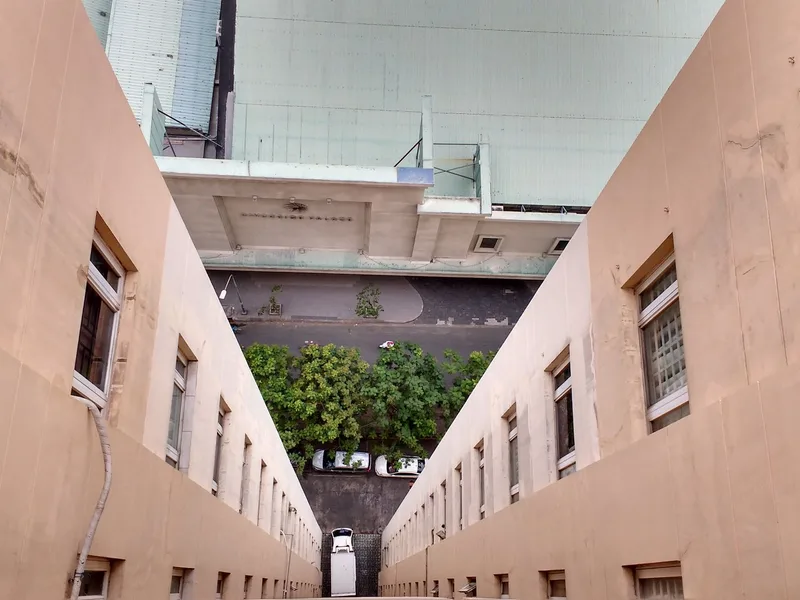
Ledges on new villas and flats are narrow and flat, offering pigeons a foothold that is limited but sufficient to perch and nest on.
Air conditioning platforms
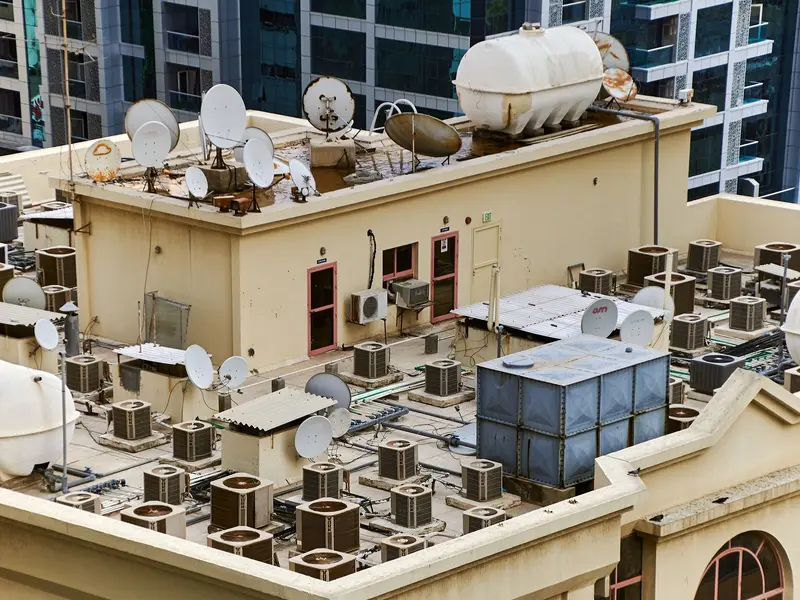
Air conditioning platforms in early building phases are often still bare awaiting units, leaving empty exposed plinths that attract perching birds.
The nest itself
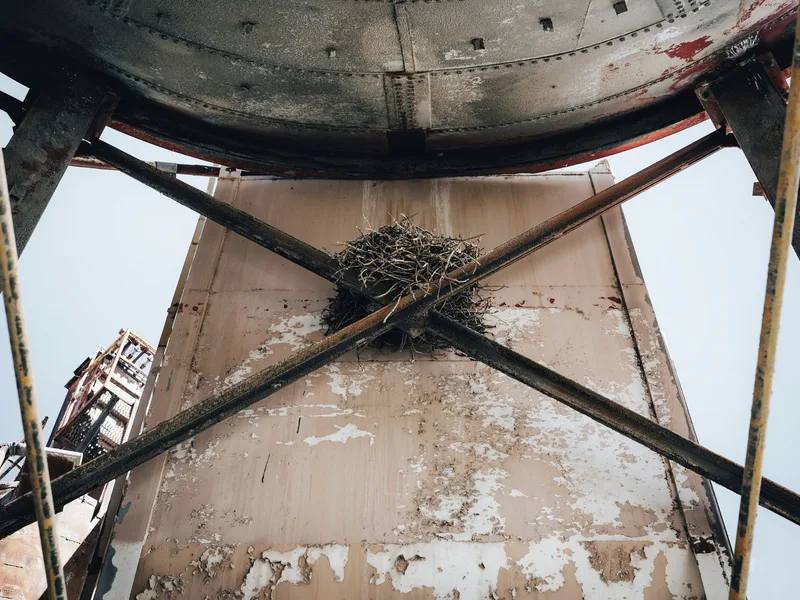
Nests in Al Salihiyah form quickly because building materials and scaffolding provide shelter. Old nests are rare here because most building is recent.
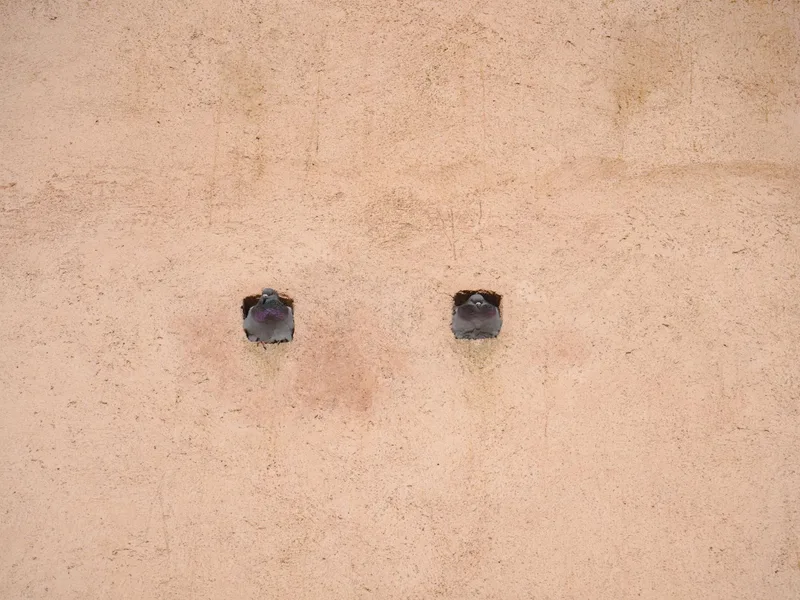
The droppings pattern
Droppings from new nests are fresh and easy to remove, but rich soil and high moisture in vacant land encourage rapid breeding of biting parasites.
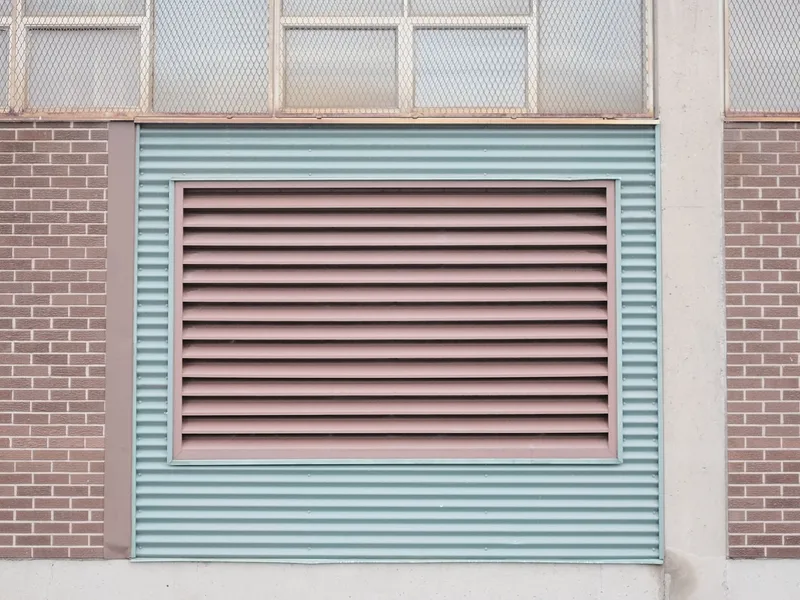
Openings and shafts
Openings in incomplete frames are wider than usual, and pigeons enter readily and nest inside flats and villas before closure, making interior and exterior treatment essential.
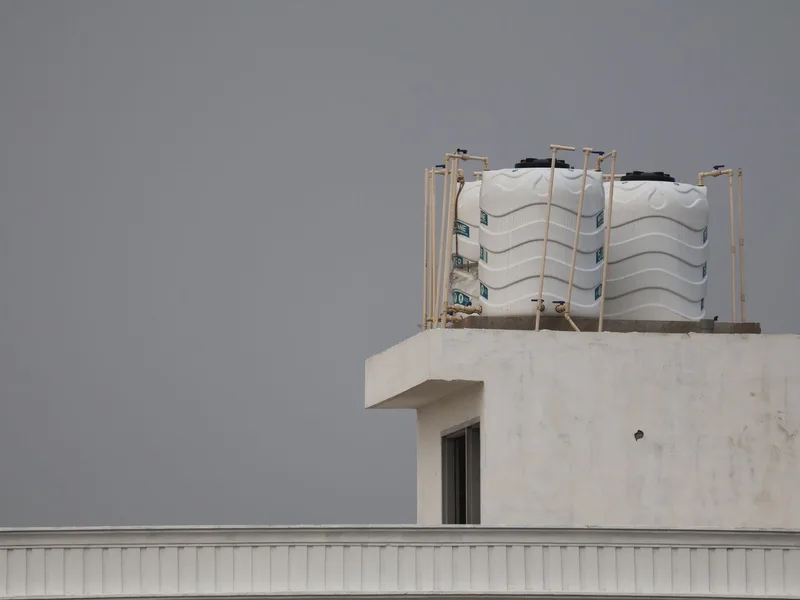
Around the roof tank
Water tanks on incomplete roofs are exposed to contamination from perching pigeons because surrounding ledges are unfinished and access is simple.
How we work
-
1
Survey the roof and the facade
We walk the roof, the projections, the condenser platforms and the shafts, separate the nesting positions from the perching ones, and measure and photograph every ledge.
-
2
Strip the nests and treat the parasites
Droppings are wetted before they are lifted so nothing goes airborne dry, bagged closed, and the nest position is treated for ticks and mites before the surface is sanitised.
-
3
Close and fit
Netting tensioned on a perimeter wire with no gap at the corners, spikes or wire on the narrow projections, metal mesh across vents and shafts, and the roof drains freed of the nest material packing them.
-
4
The follow-up visit
We come back to check the tension, the corners and any position the flock has moved to, and correct what has slackened before a bird finds it.
What bird and pigeon control includes
-

A recorded survey
Every ledge, condenser platform and shaft, photographed, with nesting separated from perching before anything is chosen.
-

Nest removal and drain clearing
Lifted wet rather than swept dry, bagged closed, and the roof drains freed of the nest material packing them.
-

Parasite treatment and sanitising
The nest position treated for ticks and mites, then the surface the droppings sat on sanitised.
-

Sealing and fitting the deterrents
Netting tensioned on a perimeter wire, spikes or wire on narrow projections, and metal mesh across ventilation openings.
-

Aftercare instructions
The condensate water, food left on the roof, and what should not sit beside a ledge if the attraction is to stay gone.
-

A follow-up on tension and corners
Netting slackens and corners open over time; the visit corrects that and closes any new position.
Landmarks of Al Salihiyah
Work in Al Salihiyah is coordinated by proximity to Al Furusiyah Street, the main spine that connects the district to northern areas, and Al Salihiyah Health Centre serves as a landmark for pinpointing locations and returning to properties.
- Al Furusiyah Street
- Al Salihiyah Health Centre
- Abdulrahman bin Awf Mosque
- Abu Bakr Al Siddiq Mosque
Questions about this district
Does active building work scare pigeons away or draw them in?
Noise drives them off temporarily, but building materials and exposed bases draw them strongly. Once each phase ends, pigeons return in larger numbers to the finished sections. Deterrents must be fitted before building ends, not after.
How do you work safely when construction is ongoing and workers are moving around?
We coordinate with the owner to work during building stoppages or outside work hours. Deterrents can be fitted to completed sections of roofs and facades even if building continues elsewhere on the site.
The concrete base gets removed once building ends. Does the deterrent stay effective after that?
We fit deterrents on permanent ledges, roofs and openings, not on temporary bases. Temporary barriers on foundations are removed before handover, and final deterrents remain through completion and beyond.
Al Furusiyah Street is very close. Do pigeons come from the street into the district?
Al Furusiyah Road is a main route with heavy commercial traffic and sizeable pigeon populations. Some birds drift from there, but most nesting in Al Salihiyah comes from vacant land and neighbouring sites.
The villa and flat are still empty. Why fit a deterrent so early?
Early fitting costs less and is simpler than removing old nests, cleaning droppings and treating parasites later. Early settlement means health risks and structural damage that becomes hard to repair.
Al Salihiyah Health Centre is nearby. Can pigeons enter the centre?
Health facilities are normally sealed for climate control, but pigeons can land on roofs and carry disease. If the centre is close to your home, deterrents on your roof lower the pressure on the centre and reduce pigeon numbers across the whole area.
How much does bird and pigeon control in Al Salihiyah cost?
It is set after the inspection, because the price follows the type of infestation, the size of the space, how far it has spread and the number of visits it needs. Send a photo and a description on WhatsApp and we will give you an estimate before we reach Al Salihiyah.
Nearby districts we cover
Other services in Al Salihiyah
Other services we provide to residents of Al Salihiyah.
-
 Residential
Cockroach control
Residential
Cockroach control
-
 Residential
Bed bug control
Residential
Bed bug control
-
 Residential
Termite control
Residential
Termite control
-
 Residential
Rodents and mice
Residential
Rodents and mice
-
 Residential
Mosquito control
Residential
Mosquito control
-
 Residential
Fly control
Residential
Fly control
-
 Residential
Ant control
Residential
Ant control
-
 Residential
Gecko control
Residential
Gecko control
-
 Residential
Scorpion control
Residential
Scorpion control
-
 Residential
Snake control
Residential
Snake control
-
 Residential
Flea control
Residential
Flea control
-
 Residential
Preventive treatment
Residential
Preventive treatment
-
 Residential
Disinfection
Residential
Disinfection
-
 Commercial
Annual contracts
Commercial
Annual contracts
-
 Commercial
Restaurants and cafes
Commercial
Restaurants and cafes
-
 Commercial
Hotels and apartments
Commercial
Hotels and apartments
-
 Commercial
Warehouses and factories
Commercial
Warehouses and factories
-
 Commercial
Schools and nurseries
Commercial
Schools and nurseries
-
 Commercial
Retail and malls
Commercial
Retail and malls
-
 Commercial
Rest houses and farms
Commercial
Rest houses and farms
-
 Commercial
Fumigation
Commercial
Fumigation
-
 Water tanks
Water tank cleaning
Water tanks
Water tank cleaning
-
 Water tanks
Water tank sterilization
Water tanks
Water tank sterilization
-
 Water tanks
Water tank sealing
Water tanks
Water tank sealing
-
 Water tanks
Tank leak repair
Water tanks
Tank leak repair
Need bird and pigeon control in Al Salihiyah? Tell us what you saw and we will tell you what it needs
We reach Al Salihiyah at a time we agree, and you get the full cost before we start.