

Bird and pigeon control in Harat Al Amir Jeddah
Harat Al Amir is a small residential quarter within the fishing town of Thuwal, with low old buildings and small shops packed on narrow streets between hillside and the main road. Sea humidity runs high all year round and salt air reaches into every corner, bringing constant pigeon and seabird presence and rapid decay of droppings. Proximity to Al Shati Mosque and the municipality building means unbroken foot traffic and confined tight spaces where birds cluster.
-
Targeted, not broadcast
Product goes into cracks and runways, never sprayed across open surfaces.
-
Told before we start
What we will use, where it goes, and what to cover or move before we arrive.
-
A follow-up visit
We return after the first treatment, because what survives it does not show on the day.
-
Homes and businesses
Apartments and villas, and kitchens and stores that need a record of each visit.
Why they keep coming back in Harat Al Amir
Salt air makes droppings decay rapidly but humidity carries salt vapour everywhere, and pigeons sense the coastal environment and breed in higher numbers than inland quarters do. The method is set out in full on what Bird and pigeon control involves.
Sea salt humidity that is relentless year round
Thuwal sits directly on the Red Sea coast and humidity never falls. Salt penetrates everything, wood and metals rust and corrode within weeks. The pigeon senses the coastal marine environment and both seabirds and pigeons breed heavily here. The deterrent must withstand salt and resist rust quickly or it fails.
Narrow streets and roofs at almost the same height
Harat Al Amir is extremely confined, buildings sit close together and roofs are nearly aligned at the same level. Pigeons move between roofs with ease and gaps are tiny. Coordinating with neighbouring houses is essential because fitting a deterrent to one house simply pushes the pigeon directly to the adjacent house next door.
Constant foot traffic from the mosque and municipality
Al Shati Mosque and the municipality building are very close and draw daily movement through the quarter. Pigeons adapt to continuous motion and nest beside it. The noise and traffic do not repel them but may actually attract them more because people leave food scraps.
Landmarks of Harat Al Amir
Work in Harat Al Amir centres on the internal streets and closely spaced roofs, and Thuwal Municipality Building is the nearest landmark, drawing foot traffic every day, while Al Shati Mosque on the main road keeps foot traffic constant and adds pressure to the quarter's tight streets that lead to it.
- Thuwal Municipality Building
- Thuwal Corniche
- Al Shati Mosque
- Jeddah Madinah Road
The building decides which deterrent works
An extremely tight coastal quarter with high humidity year round, tightly packed old mud and stone houses touching each other, streets mostly less than three metres wide with minimal clearance above.
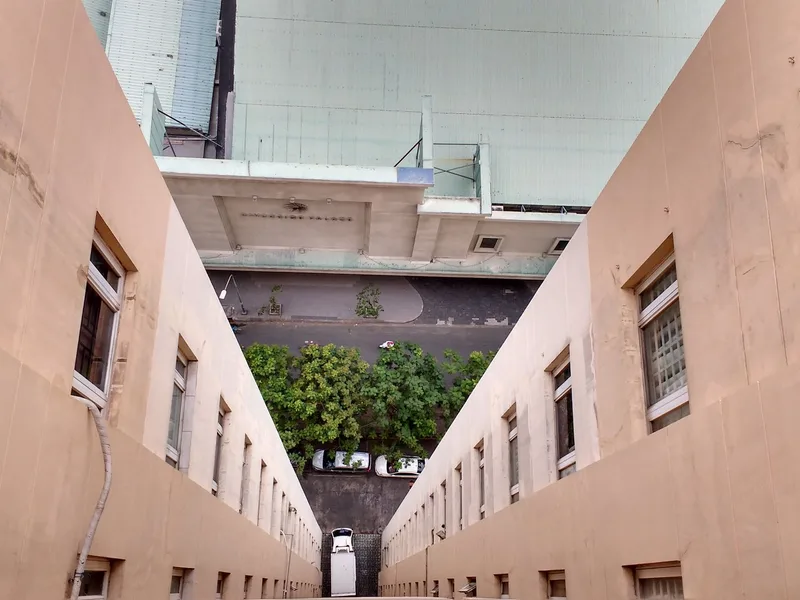
Ledge width
Ledges on old mud and stone buildings vary greatly and some are cracked, with salt attack widening cracks further.

Air conditioning platforms
Air conditioning platforms are rare on old Thuwal buildings, and any existing platforms are primitive or absent.
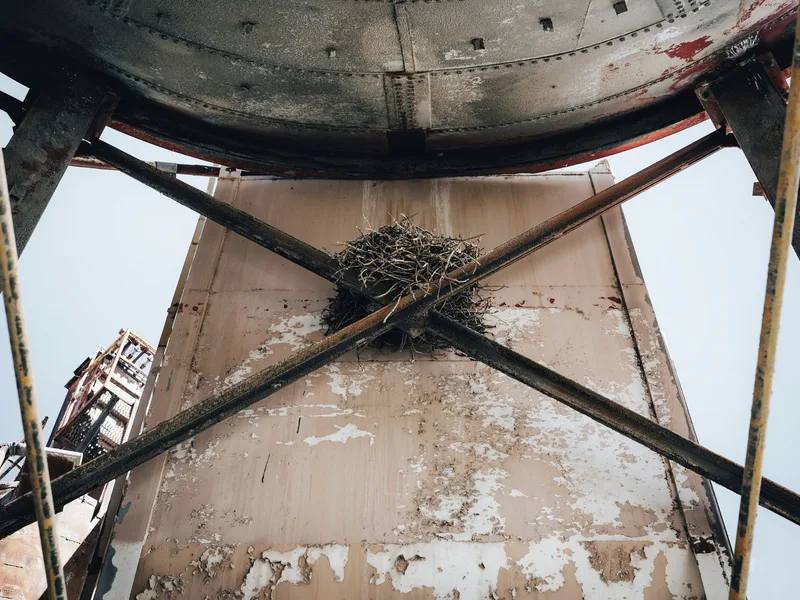
The nest itself
Nests in the narrow streets sit between closely aligned roofs and are often interconnected.
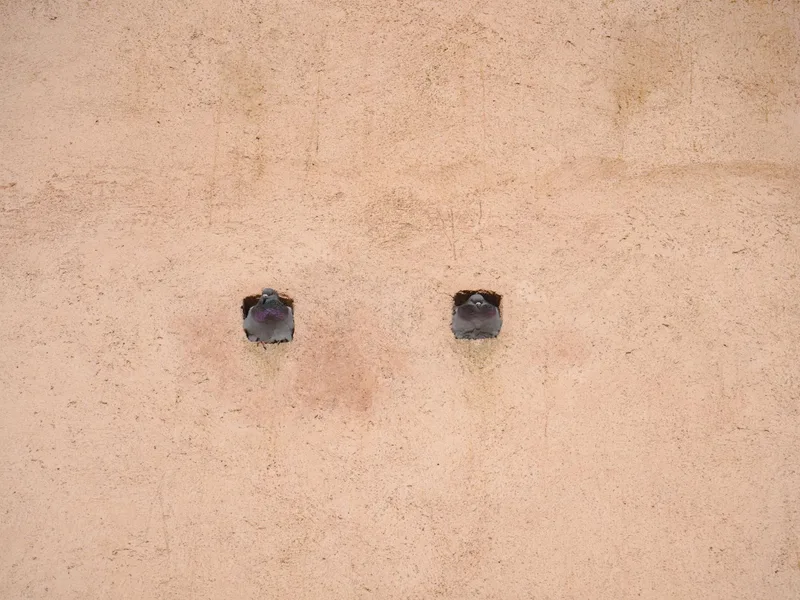
The droppings pattern
Droppings pool in the narrow streets and are not easily cleared, and salt and humidity preserve them.
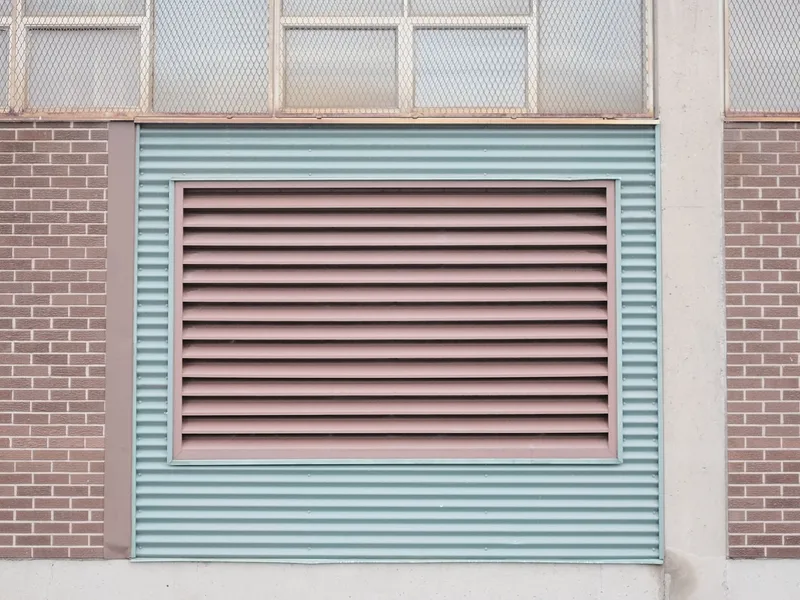
Openings and shafts
Openings in old mud buildings are numerous and pigeons use them freely to enter and shelter indoors.
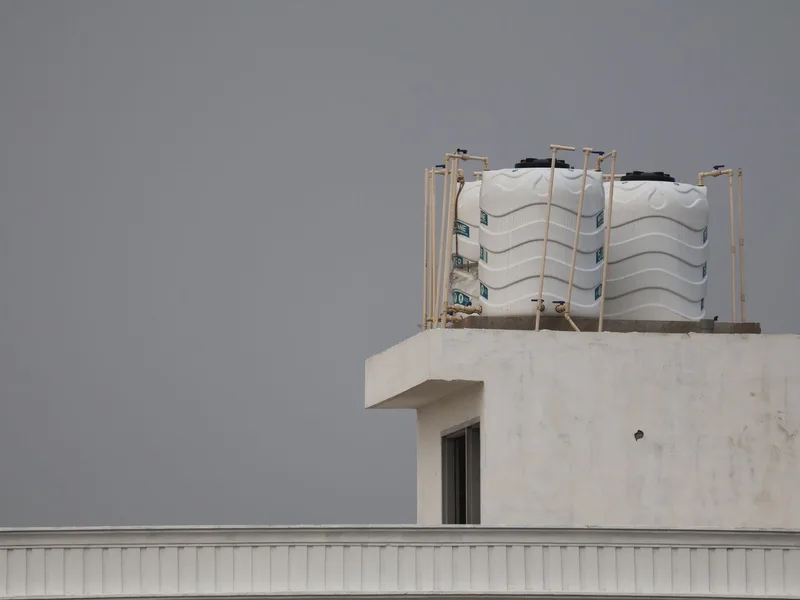
Around the roof tank
Roof tanks are old and poorly covered, and the area around them is favoured as a perching point.
How we work
-
1
Survey the roof and the facade
We walk the roof, the projections, the condenser platforms and the shafts, separate the nesting positions from the perching ones, and measure and photograph every ledge.
-
2
Strip the nests and treat the parasites
Droppings are wetted before they are lifted so nothing goes airborne dry, bagged closed, and the nest position is treated for ticks and mites before the surface is sanitised.
-
3
Close and fit
Netting tensioned on a perimeter wire with no gap at the corners, spikes or wire on the narrow projections, metal mesh across vents and shafts, and the roof drains freed of the nest material packing them.
-
4
The follow-up visit
We come back to check the tension, the corners and any position the flock has moved to, and correct what has slackened before a bird finds it.
What bird and pigeon control includes
-

A recorded survey
Every ledge, condenser platform and shaft, photographed, with nesting separated from perching before anything is chosen.
-

Nest removal and drain clearing
Lifted wet rather than swept dry, bagged closed, and the roof drains freed of the nest material packing them.
-

Parasite treatment and sanitising
The nest position treated for ticks and mites, then the surface the droppings sat on sanitised.
-

Sealing and fitting the deterrents
Netting tensioned on a perimeter wire, spikes or wire on narrow projections, and metal mesh across ventilation openings.
-

Aftercare instructions
The condensate water, food left on the roof, and what should not sit beside a ledge if the attraction is to stay gone.
-

A follow-up on tension and corners
Netting slackens and corners open over time; the visit corrects that and closes any new position.
What is different about Thuwal Sub-Municipality
Thuwal sub municipality is a small fishing town on the Red Sea coast at the far northern edge of Jeddah governorate. Its old quarters are closely packed popular and mud built houses on narrow streets, with newer low rise concrete homes from the town's development programme beside them. Sea humidity stays high all year, the fishing harbour and the corniche form its seafront, water arrives by tanker so household tanks are everywhere, and the town sits on Wadi Thuwal, ringed by open ground and by the irrigated green campus of King Abdullah University of Science and Technology.
Questions about this district
Does salt air affect which type of deterrent you choose for coastal Thuwal?
Very much. Ordinary metals rust extremely fast on a coast. We use salt resistant materials such as stainless steel or reinforced plastic and avoid ordinary iron completely.
How often do deterrents need maintenance due to salt and humidity here?
Deterrents on the coast need inspection every two to three months. Salt accumulates and humidity weakens them, but if we choose the right material, maintenance becomes less frequent.
Do small seabirds nest alongside pigeons in Harat Al Amir?
Yes, small seabirds arrive from the nearby harbour and corniche. They nest close to pigeons but follow slightly different patterns. The deterrent must address both species.
Does street activity and noise in these narrow passages drive the birds away?
No, activity and noise in an old coastal quarter do not repel pigeons. Birds adapt to traffic and noise, especially if it comes from places where people drop food.
Can some old roofs support the weight of a metal deterrent securely?
Some old roofs are weak. Before heavy installation we examine the foundation and ceiling. We may use a lighter deterrent or adopt a different fixing method.
What happens if a neighbour refuses to fit the deterrent on his side?
The problem persists because pigeons move easily. We try to convince him by showing results. If he refuses, we fit strong deterrents on the boundaries between properties to reduce movement.
How much does bird and pigeon control in Harat Al Amir cost?
It is set after the inspection, because the price follows the type of infestation, the size of the space, how far it has spread and the number of visits it needs. Send a photo and a description on WhatsApp and we will give you an estimate before we reach Harat Al Amir.
Nearby districts we cover
Other services in Harat Al Amir
Other services we provide to residents of Harat Al Amir.
-
 Residential
Cockroach control
Residential
Cockroach control
-
 Residential
Bed bug control
Residential
Bed bug control
-
 Residential
Termite control
Residential
Termite control
-
 Residential
Rodents and mice
Residential
Rodents and mice
-
 Residential
Mosquito control
Residential
Mosquito control
-
 Residential
Fly control
Residential
Fly control
-
 Residential
Ant control
Residential
Ant control
-
 Residential
Gecko control
Residential
Gecko control
-
 Residential
Scorpion control
Residential
Scorpion control
-
 Residential
Snake control
Residential
Snake control
-
 Residential
Flea control
Residential
Flea control
-
 Residential
Preventive treatment
Residential
Preventive treatment
-
 Residential
Disinfection
Residential
Disinfection
-
 Commercial
Annual contracts
Commercial
Annual contracts
-
 Commercial
Restaurants and cafes
Commercial
Restaurants and cafes
-
 Commercial
Hotels and apartments
Commercial
Hotels and apartments
-
 Commercial
Warehouses and factories
Commercial
Warehouses and factories
-
 Commercial
Schools and nurseries
Commercial
Schools and nurseries
-
 Commercial
Retail and malls
Commercial
Retail and malls
-
 Commercial
Rest houses and farms
Commercial
Rest houses and farms
-
 Commercial
Fumigation
Commercial
Fumigation
-
 Water tanks
Water tank cleaning
Water tanks
Water tank cleaning
-
 Water tanks
Water tank sterilization
Water tanks
Water tank sterilization
-
 Water tanks
Water tank sealing
Water tanks
Water tank sealing
-
 Water tanks
Tank leak repair
Water tanks
Tank leak repair
Need bird and pigeon control in Harat Al Amir? Tell us what you saw and we will tell you what it needs
We reach Harat Al Amir at a time we agree, and you get the full cost before we start.