

Bird and pigeon control in Rai Adhakhir Makkah
Rai Adhakhir sits on the north eastern slopes above the Grand Mosque, its apartment blocks stacked on a hillside cut by Wadi Al Shsheah, and the flats fill and empty with every Hajj and Umrah season. Controlling pigeons here means co-ordinating across shared entrances and neighbouring tenants on the same slope.
-
Targeted, not broadcast
Product goes into cracks and runways, never sprayed across open surfaces.
-
Told before we start
What we will use, where it goes, and what to cover or move before we arrive.
-
A follow-up visit
We return after the first treatment, because what survives it does not show on the day.
-
Homes and businesses
Apartments and villas, and kitchens and stores that need a record of each visit.
Why they keep coming back in Rai Adhakhir
The ledges here are unusually narrow and staggered. Pigeons occupy more than one position on a single building because the architecture creates different heights, setbacks and exposed sections at every storey. The method is set out in full on Bird and pigeon control in detail.
Repeated floors and shared building entrances
Most residents occupy adjacent flats entered from shared hallways. Pigeons nest on the ledges of whole residential blocks, not single villas. Treatment requires coordination between tenants on the same storey and between storeys, and every ledge and crevice must be sealed in one complete campaign or birds relocate to untreated levels above or below.
Hillside slopes and staggered heights
The land slopes steeply and buildings climb it unevenly. Ledges rise and fall without rhythm and branch into countless crevices between different tower blocks and structural elements. Pigeons select the highest, lowest and least visible positions among them.
Seasonal occupation and rotating tenancy
Flats empty and fill with the Hajj and Umrah seasons; some residents do not occupy year round. This means delayed permissions and tracking challenges after installation if we do not document the work in writing with every building owner at the start.
Rai Adhakhir on the map
Rai Adhakhir sits about 1 km from Al Khansa and about 1.5 km from Al Jumayzah.
Open in Google MapsThe building decides which deterrent works
Buildings are packed densely on a steep hillside gradient. Repeated residential floors sit on narrow, interrupted ledges at different heights, giving pigeons multiple perching levels across a single facade.
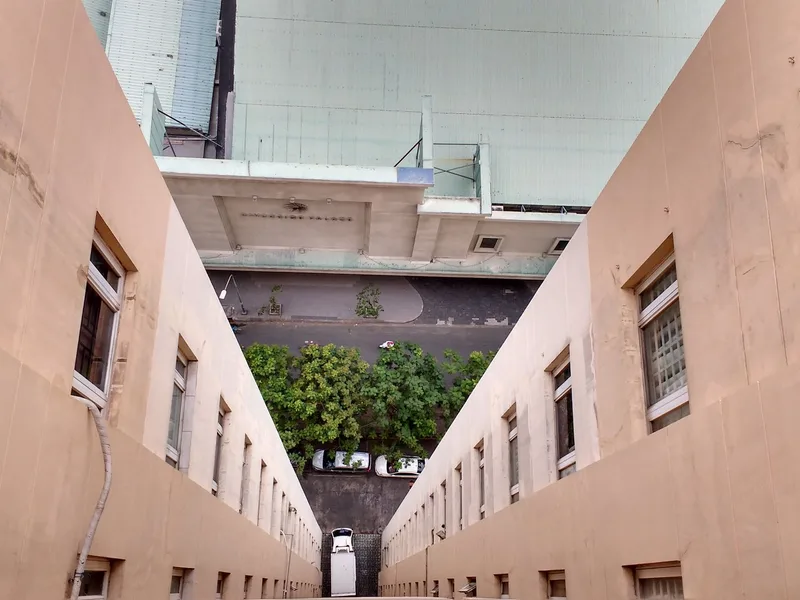
Ledge width
Ledges are narrow and interrupted by rises and falls because of the slope. Pigeons choose positions that are hardest to reach and see from below.

Air conditioning platforms
Air conditioning units crowd the roof and facades, leaving small gaps behind and beneath them where pigeons nest immediately and out of sight.
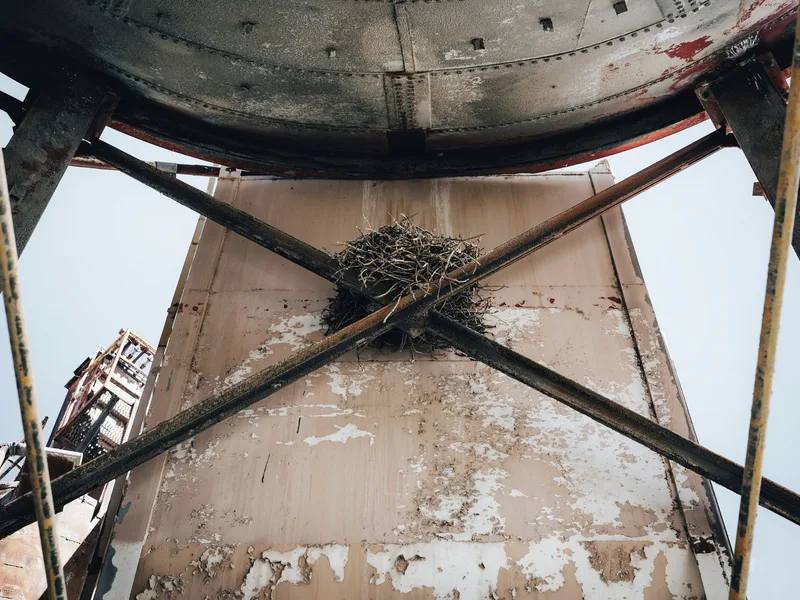
The nest itself
Nests are substantial and contain materials and waste from a previous season. Pigeons do not clear what they have built; they add to it unless we remove everything completely.
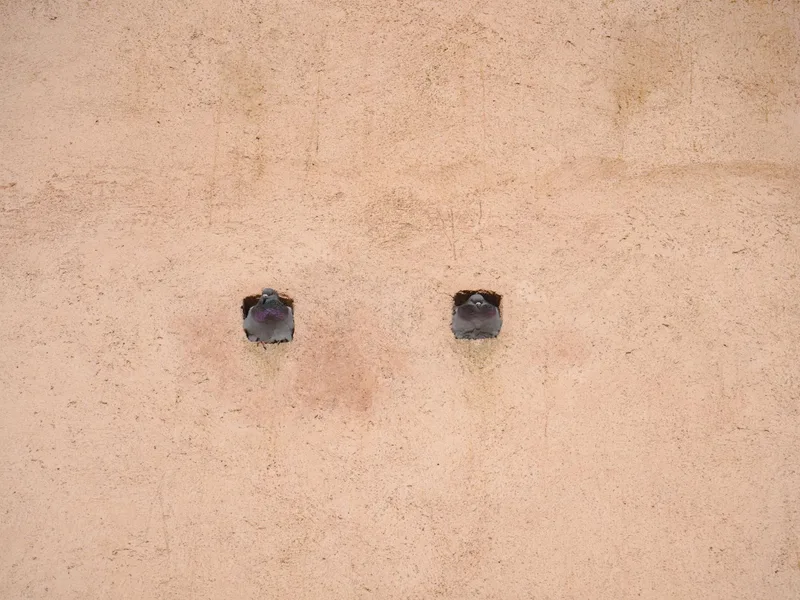
The droppings pattern
Droppings fall on flats below and the facade itself, leaving dark stains and odours on stone and render that spread downward across multiple floors.
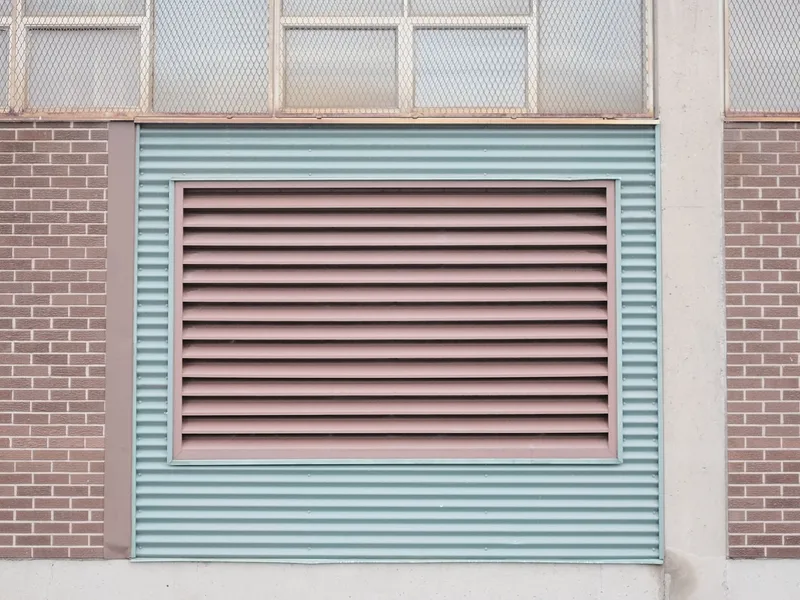
Openings and shafts
Adjacent flats have tight gaps between them. Pigeons may enter the flat through small spaces between windows, air vents and ducts that would not seem large enough for passage.
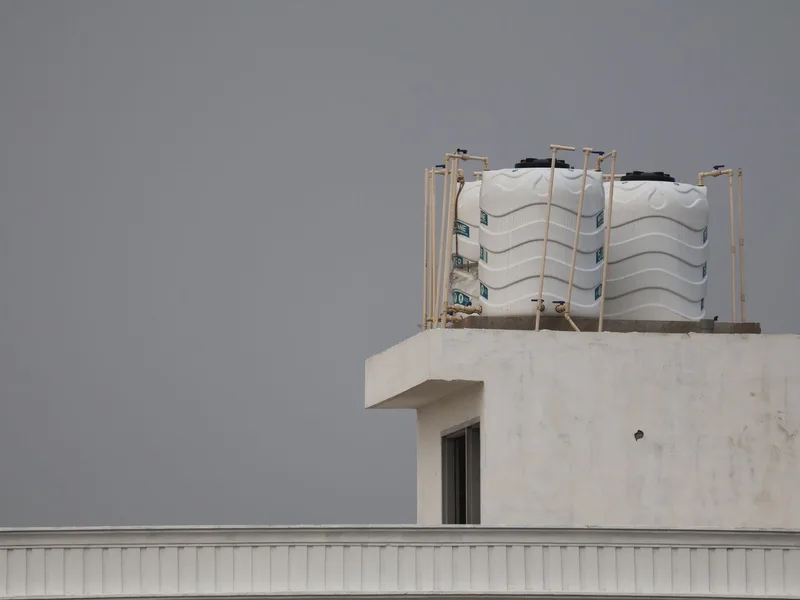
Around the roof tank
The roof water tank is shared and elevated. Pigeons stand on it or near it, and droppings fall close to the water inlet opening.
How we work
-
1
Survey the roof and the facade
We walk the roof, the projections, the condenser platforms and the shafts, separate the nesting positions from the perching ones, and measure and photograph every ledge.
-
2
Strip the nests and treat the parasites
Droppings are wetted before they are lifted so nothing goes airborne dry, bagged closed, and the nest position is treated for ticks and mites before the surface is sanitised.
-
3
Close and fit
Netting tensioned on a perimeter wire with no gap at the corners, spikes or wire on the narrow projections, metal mesh across vents and shafts, and the roof drains freed of the nest material packing them.
-
4
The follow-up visit
We come back to check the tension, the corners and any position the flock has moved to, and correct what has slackened before a bird finds it.
What bird and pigeon control includes
-

A recorded survey
Every ledge, condenser platform and shaft, photographed, with nesting separated from perching before anything is chosen.
-

Nest removal and drain clearing
Lifted wet rather than swept dry, bagged closed, and the roof drains freed of the nest material packing them.
-

Parasite treatment and sanitising
The nest position treated for ticks and mites, then the surface the droppings sat on sanitised.
-

Sealing and fitting the deterrents
Netting tensioned on a perimeter wire, spikes or wire on narrow projections, and metal mesh across ventilation openings.
-

Aftercare instructions
The condensate water, food left on the roof, and what should not sit beside a ledge if the attraction is to stay gone.
-

A follow-up on tension and corners
Netting slackens and corners open over time; the visit corrects that and closes any new position.
The character of Rai Adhakhir
Apartment district: residential blocks, repeated floors and shared entrances
Adjacent flats mean the decision does not rest with one homeowner, and the building owner may differ from the current tenants. We deal with the building owner first then notify residents of the date, and we document everything in writing because occupants change.
Questions about this district
The apartment block rents flats to pilgrims; will the owner approve?
We contact the building owner first because the decision to treat the ledges and roof rests with him. Tenants always approve because they do not want pigeons and droppings, and the owner protects his asset. We send written confirmation before we start work.
Will fitting damage the waterproofing or paint on an older building?
We choose the deterrent based on ledge and roof condition. Plastic spikes are light and leave no trace. On weak ledges we use standard separators or standard mesh that needs no heavy fixings. We inspect the condition first and tell you what suits the building.
My flat is on the first floor above a shop; do pigeons come from the shop below?
Pigeons rarely nest in the gap between flat and shop because it is narrow and receives no direct sunlight. If the shop is a restaurant or bakery they may perch on upper ledges above it and droppings fall down. We remove the nest and seal gaps from both sides.
If only half the building agrees, does treatment work?
Pigeons will move to untreated flats, and may return from those floors later. Full building treatment is best, but if not all residents agree we treat what we can and leave clear documentation for other floors so residents can see the results.
How long does fitting take on a block with twenty flats?
It depends on ledge count, roof length and facade details. A 20 flat building usually has two to four main ledges and a shared roof. We finish in one or two days depending on access difficulty and architectural complexity.
Pigeons returned after a year; did the deterrents fail?
New pigeons from elsewhere may test the ledges, or deterrents shifted in wind or rusted. We inspect and repair or replace them. If they have moved we reset them and may change the type or add extra barriers in weak spots.
How much does bird and pigeon control in Rai Adhakhir cost?
It is set after the inspection, because the price follows the type of infestation, the size of the space, how far it has spread and the number of visits it needs. Send a photo and a description on WhatsApp and we will give you an estimate before we reach Rai Adhakhir.
Nearby districts we cover
Other services in Rai Adhakhir
Other services we provide to residents of Rai Adhakhir.
-
 Residential
Cockroach control
Residential
Cockroach control
-
 Residential
Bed bug control
Residential
Bed bug control
-
 Residential
Termite control
Residential
Termite control
-
 Residential
Rodents and mice
Residential
Rodents and mice
-
 Residential
Mosquito control
Residential
Mosquito control
-
 Residential
Fly control
Residential
Fly control
-
 Residential
Ant control
Residential
Ant control
-
 Residential
Gecko control
Residential
Gecko control
-
 Residential
Scorpion control
Residential
Scorpion control
-
 Residential
Snake control
Residential
Snake control
-
 Residential
Flea control
Residential
Flea control
-
 Residential
Preventive treatment
Residential
Preventive treatment
-
 Residential
Disinfection
Residential
Disinfection
-
 Commercial
Annual contracts
Commercial
Annual contracts
-
 Commercial
Restaurants and cafes
Commercial
Restaurants and cafes
-
 Commercial
Hotels and apartments
Commercial
Hotels and apartments
-
 Commercial
Warehouses and factories
Commercial
Warehouses and factories
-
 Commercial
Schools and nurseries
Commercial
Schools and nurseries
-
 Commercial
Retail and malls
Commercial
Retail and malls
-
 Commercial
Rest houses and farms
Commercial
Rest houses and farms
-
 Commercial
Fumigation
Commercial
Fumigation
-
 Water tanks
Water tank cleaning
Water tanks
Water tank cleaning
-
 Water tanks
Water tank sterilization
Water tanks
Water tank sterilization
-
 Water tanks
Water tank sealing
Water tanks
Water tank sealing
-
 Water tanks
Tank leak repair
Water tanks
Tank leak repair
Need bird and pigeon control in Rai Adhakhir? Tell us what you saw and we will tell you what it needs
We reach Rai Adhakhir at a time we agree, and you get the full cost before we start.