
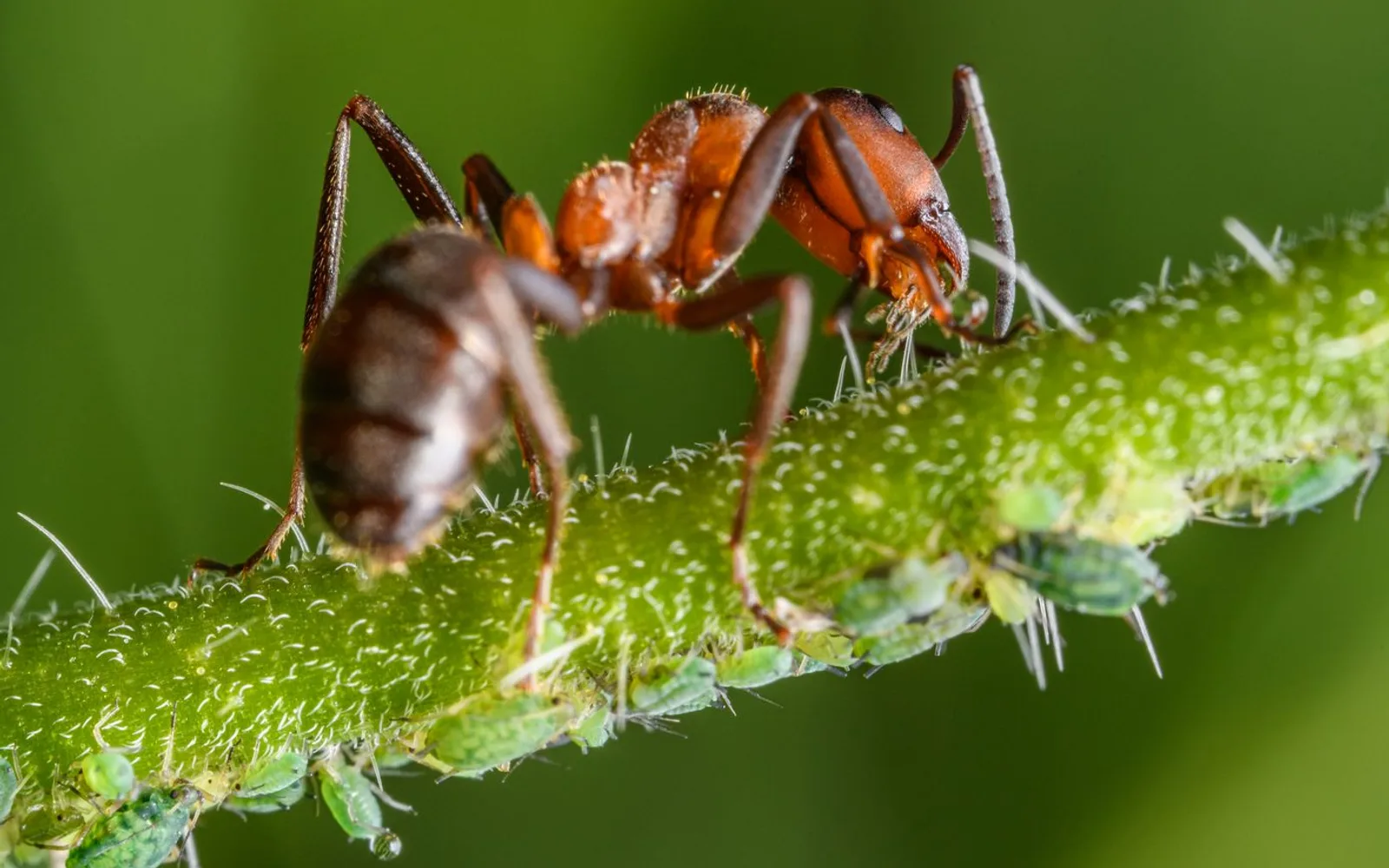
Ant control in Al Amwaj Jeddah
Al Amwaj is a coastal district that faces unique ant control challenges. The high humidity and salt air accelerate colony growth and make standard treatment less effective. New villas, recent residential compounds, and plots still under construction create an ideal environment for ants to establish and spread rapidly.
-
Targeted, not broadcast
Product goes into cracks and runways, never sprayed across open surfaces.
-
Told before we start
What we will use, where it goes, and what to cover or move before we arrive.
-
A follow-up visit
We return after the first treatment, because what survives it does not show on the day.
-
Homes and businesses
Apartments and villas, and kitchens and stores that need a record of each visit.
Why they keep coming back in Al Amwaj
Ants in Al Amwaj return faster than in inland districts because the continuous moisture supply allows colonies to recover and rebuild their numbers at an accelerated pace. The method is set out in full on the full Ant control page.
Coastal humidity accelerates colony growth rates
Salt air and high humidity year-round make Al Amwaj an ideal breeding ground. Colonies here grow faster and require more frequent monitoring than inland districts, because water is always available. The moisture allows multiple breeding cycles to overlap, creating overlapping generations of workers.
Salt and sand require different treatment approaches
Salt in the air and sandy soil change how bait and pesticides are absorbed. Coastal treatment needs a different concentration and more frequent reapplication than treatment in older districts with stable soil. Moisture levels affect how long applied products remain effective.
Ongoing construction spreads ant pathways
Vacant plots and new residential compounds create easy routes for ants to spread between villas. Digging, wind, and moisture break down soil structure, making it easier for ants to move and find new entry points. Newly built infrastructure often has small gaps that ants exploit.
The character of Al Amwaj
Coastal area: high humidity and salt air through the year
Being coastal means ant colonies here need continuous monitoring because humidity and salt accelerate their lifecycles and growth. Treatment is not a single solution but a recurring strategy adapted to the damp environment.
The species and the trail decide the bait
The coastal location exposes the district to constant humidity from the sea, which keeps ants active even during the dry summer season. Sandy soil and salt deposits affect how bait and sprays are absorbed and distributed through colonies.
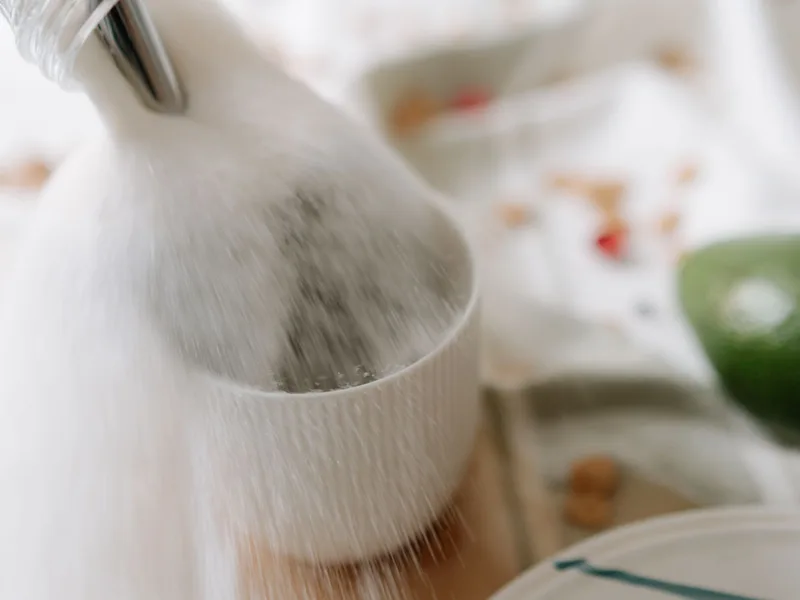
The sweet feeders
Sweet-feeding ants in Al Amwaj concentrate around new villas and beachfront restaurants, where humidity allows them to forage year-round at higher activity levels than inland colonies do.
The grease and protein feeders
Protein and grease-seeking ants spread through construction sites and excavations, where damp soil holds organic debris and food scraps longer than dry ground does.
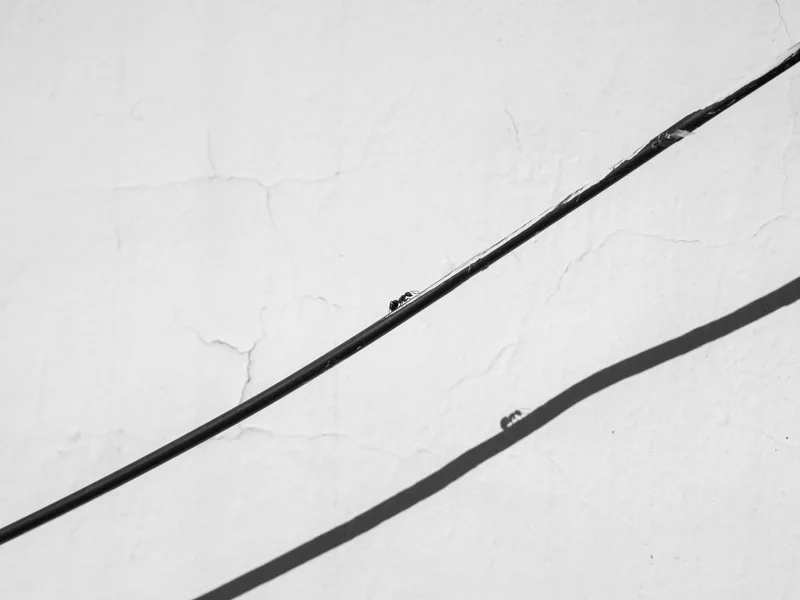
The trail and its direction
Ant trails in Al Amwaj often run vertically upward from damp soil toward villas, because moisture makes vertical movement easier and drier upper levels are more attractive to foraging workers.
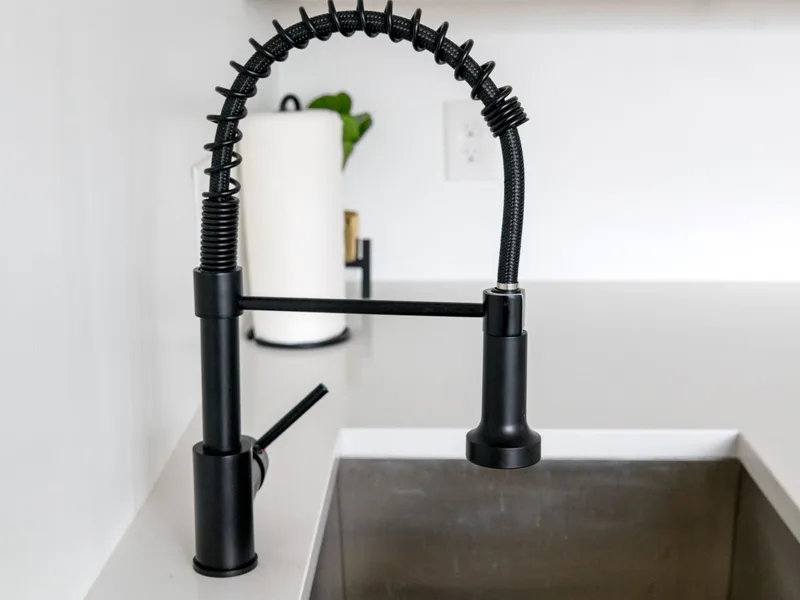
Moisture before food
Sea-air humidity drives ants to seek fresh water inside buildings, drawing them toward foundations and kitchens where moisture and food are reliably present.
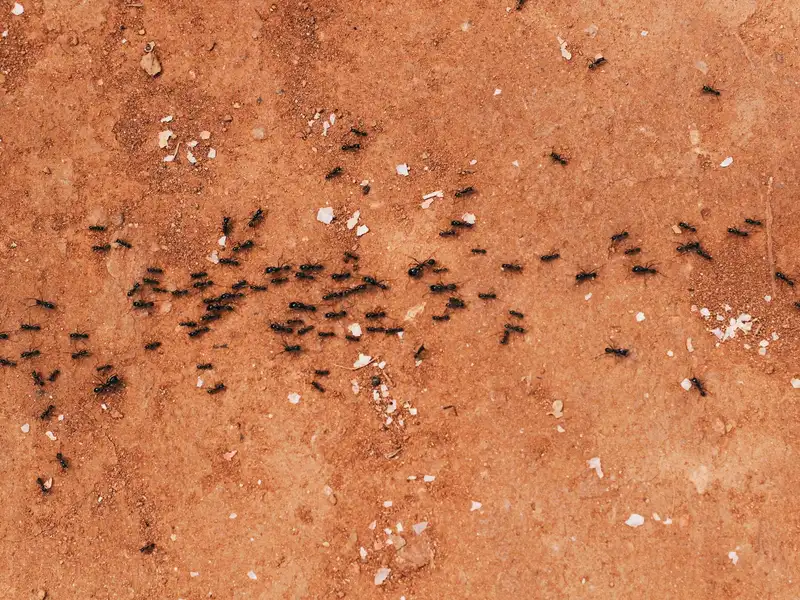
The nest outside the building
Nests outside buildings in Al Amwaj are typically buried deep or in plant roots along the coast, where persistent moisture keeps the structure stable and protects the queen.
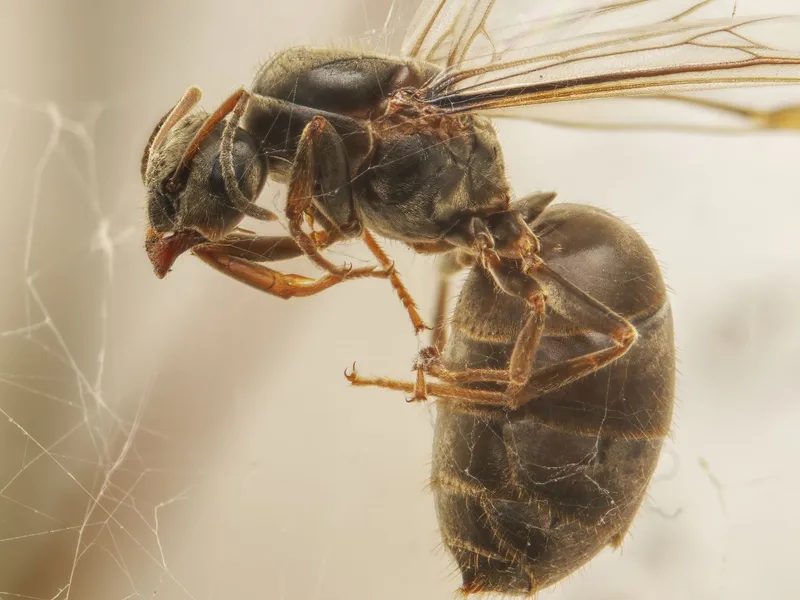
Winged ants
Winged ants appear more frequently year-round in Al Amwaj because high humidity speeds up breeding cycles and allows reproductive castes to mature faster than in drier districts.
How we work
-
1
Inspect and follow the trail
We follow the line from where you see it to where it enters, and establish the species, what it is feeding on and the moisture keeping the nest close.
-
2
Matched bait placed on the trail
We choose the matrix from the feeding preference and place it on the trail itself, leaving the trail intact so the workers carry it to the queen and the brood.
-
3
Treat the perimeter and close the ways in
An external treatment at the wall base and the openings, and we point out the cracks, pipe entries and any branch touching the building.
-
4
The follow-up visit
We come back once the bait has worked through the nest, check the trail is gone, and look for a satellite nest if a new line has appeared.
What ant control includes
-

Following the trail to its source
Species, entry point and the direction of the nest, established before anything is applied.
-

Bait matched to the colony
Sugar or protein according to what the workers are carrying, placed on the trail rather than near it.
-

An external perimeter treatment
A band at the wall base and the outside openings, with the indoor trail left unsprayed so it keeps carrying bait.
-

Moisture points and entries
Condensate lines, sink surrounds, weep holes and pipe entries, which are what keeps a nest against the building.
-

Aftercare instructions
What not to wipe until the bait has been taken, what to cover, and when normal cleaning can resume.
-

A scheduled follow-up
A set date to check the nest and re-bait anywhere still active.
Landmarks of Al Amwaj
Al Amwaj sits between Obhur Road and Prince Abdulmajeed Road, extending to SOL Beach Resort. Access from these main routes helps organise treatment schedules and divide work by coastal sectors and villa clusters.
- Obhur Road
- Prince Abdulmajeed Road
- Prince Nayef Street
- Prince Abdullah Al Faisal Street
- SOL Beach Resort
Questions about this district
Does salt in the sea air actually kill ants?
No, salt does not kill ants; instead, it increases their need for fresh water, driving them indoors to find it. High humidity compensates for salt exposure, keeping coastal colonies active throughout the year. The moisture cycle favours colony survival.
Can treatment stop ants coming from the beach itself?
Ants do not come from the sea itself, but high humidity allows nearby colonies to stay strong and expand rapidly. Treatment eliminates existing colonies, but the coastal environment permits new ones to establish later. Moisture is the constant factor supporting new invasions.
Do I need more frequent treatment than inland districts require?
Yes, Al Amwaj needs more frequent follow-ups because humidity accelerates the ant lifecycle and shortens treatment effectiveness. Regular monitoring here is more critical than in areas far from the sea. Seasonal patterns also overlap because growth never truly stops.
Do sea winds scatter colonies or strengthen them?
Sea winds do not scatter colonies but spread spores and particles that help ants find new routes and establish secondary nests. Salt spray and moisture together speed up ant exploration for fresh water sources and new territory.
Do new residential compounds offer better ant protection?
New compounds may have better sealing, but modern foundations in damp soil give ants more opportunities to enter from below ground. Precise treatment of foundation lines here is essential. Newer construction often has small gaps around pipes and utilities.
Is there one ant species in Al Amwaj or several that prefer moisture?
Al Amwaj hosts multiple species, but the moisture-loving types are most prevalent here. Identifying the exact species helps select the right bait for the specific colony. Some species thrive only in high-humidity conditions year-round.
How much does ant control in Al Amwaj cost?
It is set after the inspection, because the price follows the type of infestation, the size of the space, how far it has spread and the number of visits it needs. Send a photo and a description on WhatsApp and we will give you an estimate before we reach Al Amwaj.
Nearby districts we cover
Other services in Al Amwaj
Other services we provide to residents of Al Amwaj.
-
 Residential
Cockroach control
Residential
Cockroach control
-
 Residential
Bed bug control
Residential
Bed bug control
-
 Residential
Termite control
Residential
Termite control
-
 Residential
Rodents and mice
Residential
Rodents and mice
-
 Residential
Mosquito control
Residential
Mosquito control
-
 Residential
Fly control
Residential
Fly control
-
 Residential
Gecko control
Residential
Gecko control
-
 Residential
Scorpion control
Residential
Scorpion control
-
 Residential
Snake control
Residential
Snake control
-
 Residential
Flea control
Residential
Flea control
-
 Residential
Bird and pigeon control
Residential
Bird and pigeon control
-
 Residential
Preventive treatment
Residential
Preventive treatment
-
 Residential
Disinfection
Residential
Disinfection
-
 Commercial
Annual contracts
Commercial
Annual contracts
-
 Commercial
Restaurants and cafes
Commercial
Restaurants and cafes
-
 Commercial
Hotels and apartments
Commercial
Hotels and apartments
-
 Commercial
Warehouses and factories
Commercial
Warehouses and factories
-
 Commercial
Schools and nurseries
Commercial
Schools and nurseries
-
 Commercial
Retail and malls
Commercial
Retail and malls
-
 Commercial
Rest houses and farms
Commercial
Rest houses and farms
-
 Commercial
Fumigation
Commercial
Fumigation
-
 Water tanks
Water tank cleaning
Water tanks
Water tank cleaning
-
 Water tanks
Water tank sterilization
Water tanks
Water tank sterilization
-
 Water tanks
Water tank sealing
Water tanks
Water tank sealing
-
 Water tanks
Tank leak repair
Water tanks
Tank leak repair
Need ant control in Al Amwaj? Tell us what you saw and we will tell you what it needs
We reach Al Amwaj at a time we agree, and you get the full cost before we start.