
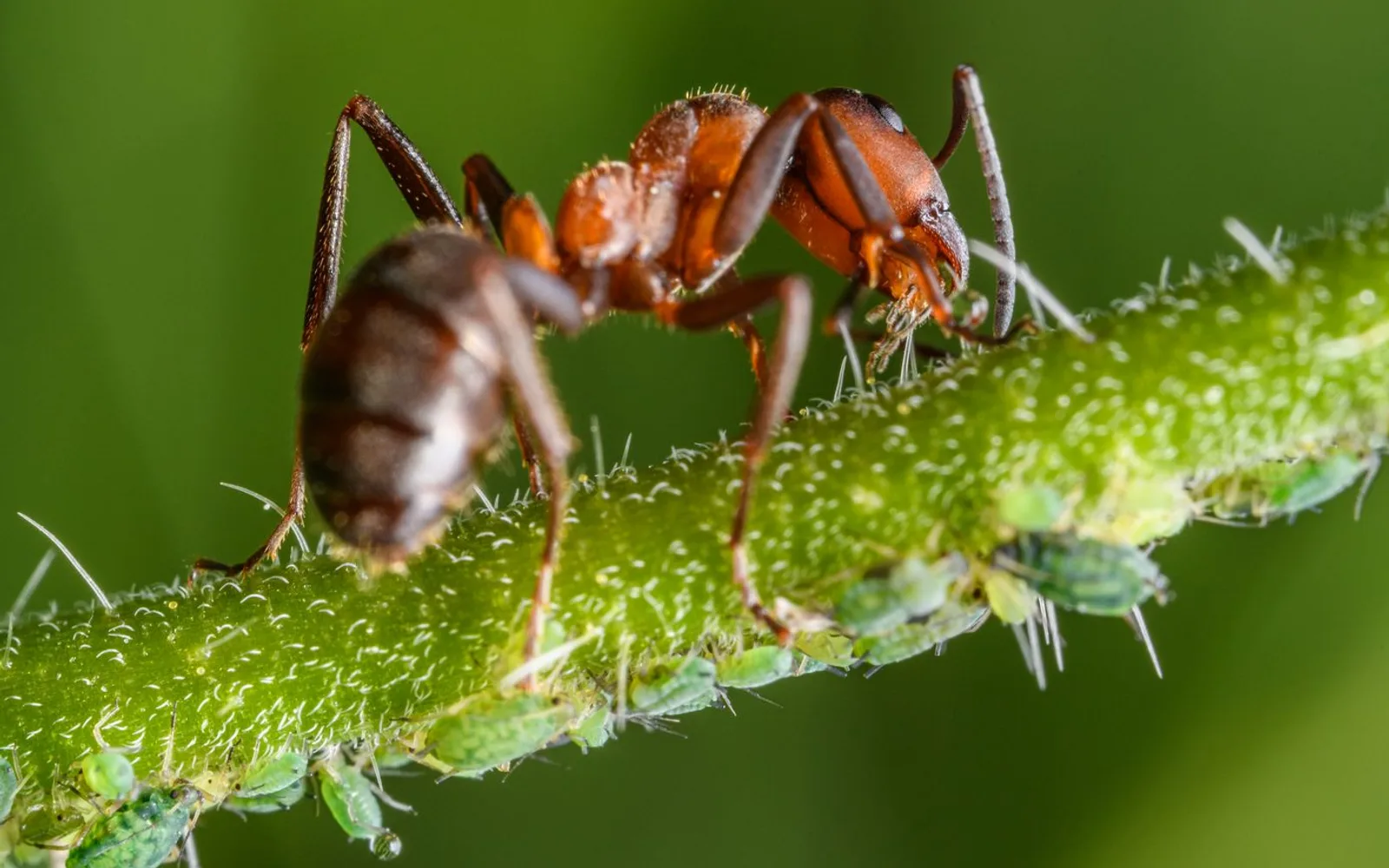
Ant control in Al Safrah Makkah
Al Safrah is a small rural fringe at the edge of Makkah, defined by open ground and soil that holds moisture, creating perfect conditions for natural nests. Ant treatment here differs fundamentally because the colonies originate in the soil itself, not in building fabric, and the scattered housing means no single treatment reaches all the sources.
-
Targeted, not broadcast
Product goes into cracks and runways, never sprayed across open surfaces.
-
Told before we start
What we will use, where it goes, and what to cover or move before we arrive.
-
A follow-up visit
We return after the first treatment, because what survives it does not show on the day.
-
Homes and businesses
Apartments and villas, and kitchens and stores that need a record of each visit.
Why they keep coming back in Al Safrah
Nests in Al Safrah lie deep in soil or in dug foundations, and their presence is easier to detect than in cities because ant columns move visibly across open ground in daylight. The method is set out in full on how we approach Ant control.
Deep soil nests thrive in damp ground
Al Safrah's lower elevation and proximity to wadis keep the soil damp even months after rain. Ant colonies establish deep underground chambers where the queen and brood remain protected from heat and dry conditions. Surface spraying does not penetrate to these depths, and the colony survives and sends foragers to houses within days of treatment.
Farms and vacant plots feed household infestations
Nearby agricultural land and open plots host robust parent colonies that feed on crop debris and roots. When these sources dwindle in late summer, or when the soil is disturbed by ploughing or clearing, ants migrate toward houses seeking moisture and stored food.
Scattered housing prevents coordinated area treatment
Each home in Al Safrah may have its own independent nest beneath or beside it, separate from those at neighbouring properties. Treating one house leaves the nests in vacant plots and farms untouched, and re-infestation begins within weeks as foragers recolonise the treated space.
The character of Al Safrah
Rural area: farms, open ground and scattered homes
Rural zoning means nests are spread through natural soil and not confined to buildings; water and moisture persist year-round. Treatment must address the soil itself, not just surface perimeters, and must identify deep colonies before any chemical application can be effective.
The species and the trail decide the bait
The soil holds moisture year-round, particularly near wadis and low points where water gathers after rain. Open land and farmland create continuous breeding habitat for ground-nesting insects and the colonies that prey on them.
The sweet feeders
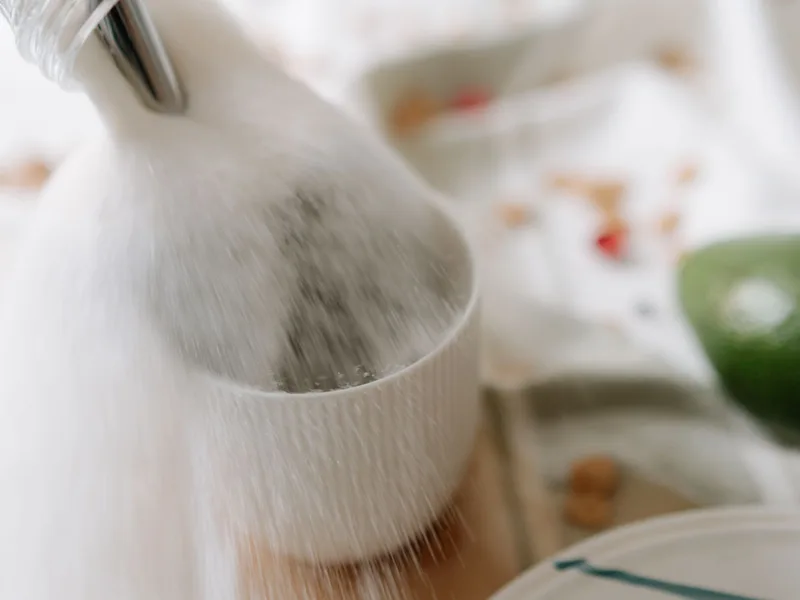
Sweet feeders in Al Safrah exploit fruit trees and flowering plants across the farms, then move into houses when stored food lies uncovered. Seasonal peaks coincide with fruit ripening and harvest season.
The grease and protein feeders
Grease and protein feeders extract nourishment from dead insects and soil fauna in the damp ground, making them the dominant species in rural Al Safrah. They are hardier in low moisture and less dependent on human food sources.

The trail and its direction
The trail emerges unpredictably from the soil surface and climbs building walls at random points, because dozens of separate nests exist in the surrounding open land, each sending its own foraging parties.
Moisture before food
Moisture is constant in Al Safrah soil, even in dry months, thanks to subsurface water and the seasonal wadis. Ants prioritise moist ground routes and forage along wet perimeters, making moisture zones the primary treatment targets.
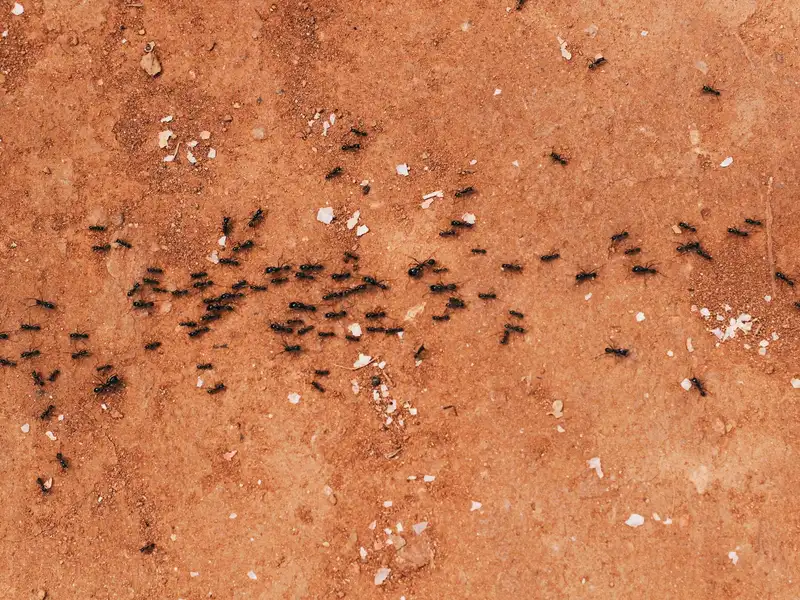
The nest outside the building
Nests outside homes are scattered across open plots, farms, wadi beds and subsurface soil layers, often at depths of 40 to 80 centimetres. Location by excavation is necessary before effective chemical treatment can begin.
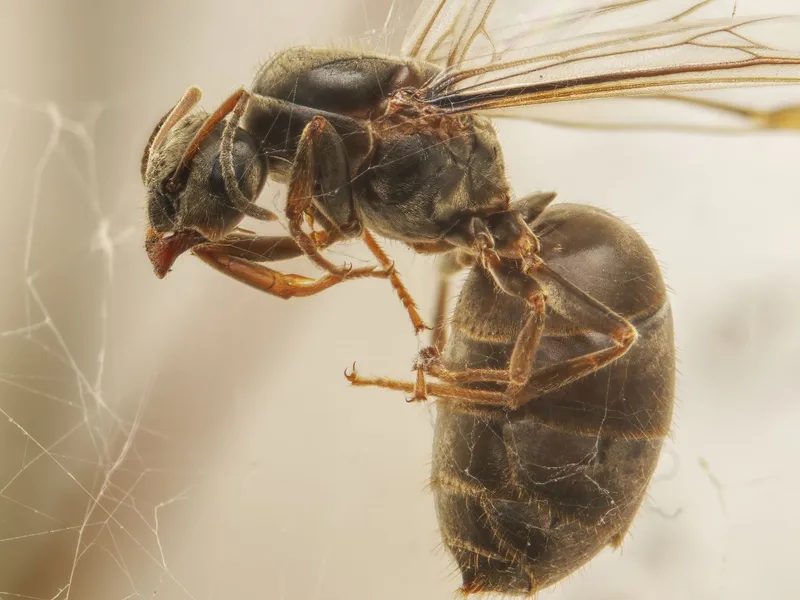
Winged ants
Winged ants emerge in large numbers during spring and autumn as underground colonies mature. Their appearance signals that parent nests are thriving and will soon send thousands of new workers across the area.
How we work
-
1
Inspect and follow the trail
We follow the line from where you see it to where it enters, and establish the species, what it is feeding on and the moisture keeping the nest close.
-
2
Matched bait placed on the trail
We choose the matrix from the feeding preference and place it on the trail itself, leaving the trail intact so the workers carry it to the queen and the brood.
-
3
Treat the perimeter and close the ways in
An external treatment at the wall base and the openings, and we point out the cracks, pipe entries and any branch touching the building.
-
4
The follow-up visit
We come back once the bait has worked through the nest, check the trail is gone, and look for a satellite nest if a new line has appeared.
What ant control includes
-

Following the trail to its source
Species, entry point and the direction of the nest, established before anything is applied.
-

Bait matched to the colony
Sugar or protein according to what the workers are carrying, placed on the trail rather than near it.
-

An external perimeter treatment
A band at the wall base and the outside openings, with the indoor trail left unsprayed so it keeps carrying bait.
-

Moisture points and entries
Condensate lines, sink surrounds, weep holes and pipe entries, which are what keeps a nest against the building.
-

Aftercare instructions
What not to wipe until the bait has been taken, what to cover, and when normal cleaning can resume.
-

A scheduled follow-up
A set date to check the nest and re-bait anywhere still active.
What is different about Al Aziziyah (Makkah) Sub-Municipality
Al Aziziyah sub municipality runs from the Bin Dawood markets to the Al Hada road and carries pilgrim traffic to Mina. Hotel towers and furnished apartment blocks fill and empty with the Hajj and Ramadan seasons, and the kitchens, restaurants and markets along Al Masjid Al Haram Road and King Abdulaziz Road leave food waste at every peak. Southwards the fabric loosens into villas and planned streets in An Naseem and Al Awali, then Al Abidiyah's campus and the old farms of Al Husayniyah, where Wadi Uranah holds water after rain and farm enclosures shelter rodents and reptiles.
Questions about this district
Does treating one home stop ants coming from the neighbouring vacant plots?
No. The vacant plots and farmland hold independent colonies. Treating the house eliminates the current internal activity, but external nests continue to send foraging parties. Re-infestation from these sources usually returns within two to four weeks.
Will drying the soil around the house permanently stop ants?
Surface drying discourages foragers but does not kill deep colonies. Effective drying requires chemical treatment of the soil itself in a perimeter zone around the building foundation to prevent ants tunnelling underneath.
How often does a scattered rural home need retreatment here?
Frequency depends on how close the external nests lie. Homes near active farms or open land may need treatment every eight to ten weeks during the active season, and less often during dry periods when colony activity slows.
Does preventive soil treatment before building protect a new house?
Soil treatment before construction reduces initial infestation risk, but nests from farms and neighbouring open plots will eventually find new entry points. Long term protection requires ongoing inspection and periodic retreatment as colonies mature nearby.
Does the Non Muslims Road bring ants from surrounding districts?
The road itself does not transport ants, but the soil disturbed during road works and the land bordering it may introduce colonies from adjacent areas. Ongoing construction or maintenance can dislodge nests and spread ant species across the region.
Does proximity to Umm Al Qura University campus increase ant activity?
The university grounds contain extensive landscaping and open soil that support large active nests. Ants from the campus forage outward toward residential areas, especially during the academic year when food waste and irrigation increase.
How much does ant control in Al Safrah cost?
It is set after the inspection, because the price follows the type of infestation, the size of the space, how far it has spread and the number of visits it needs. Send a photo and a description on WhatsApp and we will give you an estimate before we reach Al Safrah.
Nearby districts we cover
Other services in Al Safrah
Other services we provide to residents of Al Safrah.
-
 Residential
Cockroach control
Residential
Cockroach control
-
 Residential
Bed bug control
Residential
Bed bug control
-
 Residential
Termite control
Residential
Termite control
-
 Residential
Rodents and mice
Residential
Rodents and mice
-
 Residential
Mosquito control
Residential
Mosquito control
-
 Residential
Fly control
Residential
Fly control
-
 Residential
Gecko control
Residential
Gecko control
-
 Residential
Scorpion control
Residential
Scorpion control
-
 Residential
Snake control
Residential
Snake control
-
 Residential
Flea control
Residential
Flea control
-
 Residential
Bird and pigeon control
Residential
Bird and pigeon control
-
 Residential
Preventive treatment
Residential
Preventive treatment
-
 Residential
Disinfection
Residential
Disinfection
-
 Commercial
Annual contracts
Commercial
Annual contracts
-
 Commercial
Restaurants and cafes
Commercial
Restaurants and cafes
-
 Commercial
Hotels and apartments
Commercial
Hotels and apartments
-
 Commercial
Warehouses and factories
Commercial
Warehouses and factories
-
 Commercial
Schools and nurseries
Commercial
Schools and nurseries
-
 Commercial
Retail and malls
Commercial
Retail and malls
-
 Commercial
Rest houses and farms
Commercial
Rest houses and farms
-
 Commercial
Fumigation
Commercial
Fumigation
-
 Water tanks
Water tank cleaning
Water tanks
Water tank cleaning
-
 Water tanks
Water tank sterilization
Water tanks
Water tank sterilization
-
 Water tanks
Water tank sealing
Water tanks
Water tank sealing
-
 Water tanks
Tank leak repair
Water tanks
Tank leak repair
Need ant control in Al Safrah? Tell us what you saw and we will tell you what it needs
We reach Al Safrah at a time we agree, and you get the full cost before we start.