
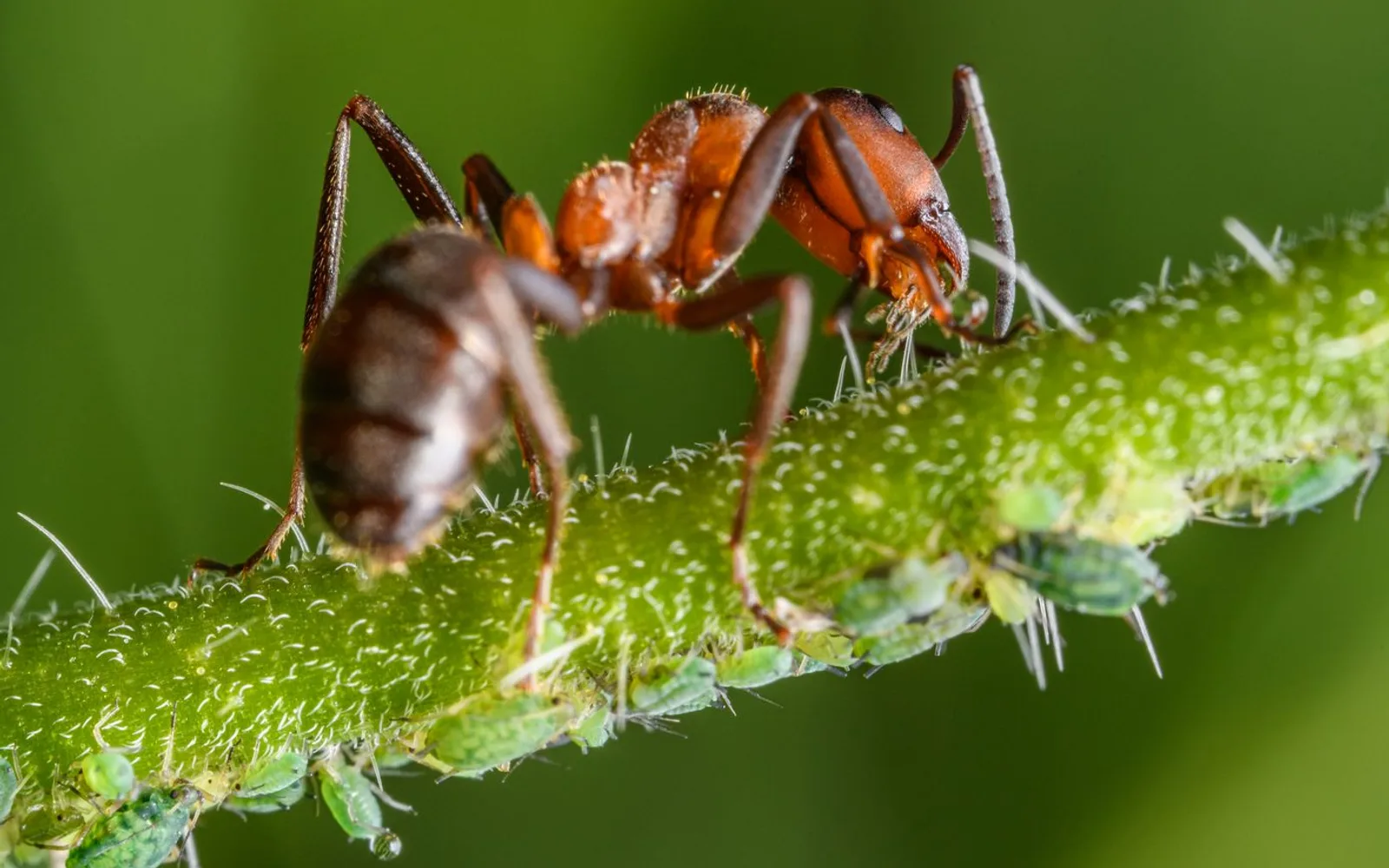
Ant control in Al Husayniyah Makkah
Al Husayniyah is a mixed district south of Makkah, once farmland and orchards that became housing schemes. It now mixes new villas and apartment blocks with modest houses, and still holds remnants of old farm enclosures. The soil itself retains moisture from decades of irrigation, changing how ants behave here.
-
Targeted, not broadcast
Product goes into cracks and runways, never sprayed across open surfaces.
-
Told before we start
What we will use, where it goes, and what to cover or move before we arrive.
-
A follow-up visit
We return after the first treatment, because what survives it does not show on the day.
-
Homes and businesses
Apartments and villas, and kitchens and stores that need a record of each visit.
Why they keep coming back in Al Husayniyah
An older house built on a former farm plot witnesses far stronger ant activity than a new house standing beside it, because the soil beneath retains moisture and organic matter from the old farming phase. The method is set out in full on how we approach Ant control.
Old farm soil holds irrigation moisture deep down
This district grew on land that was farmed for decades. The soil has retained moisture from old irrigation and organic matter from the plants, so ants find ideal conditions beneath a new house built on old farm ground, even if the building itself is brand new.
Old enclosures and farm ruins shelter the main nest
Old farmhouses still stand beside new villas and modern apartment blocks. Ants nest in the walls of these old buildings and leave them daily to enter new homes nearby, and the distance is so short the bait must reach the distant nest or treatment fails completely.
Wadi Uranah brings fresh ants right after heavy rain
The wadi that crosses the district carries flash water and silt and organic debris. After every rain, ants from the wadi enter homes seeking food and moisture, so treatment may need a follow-up within days of heavy downpours.
The character of Al Husayniyah
Mixed district: shops at street level with homes above them
A mixed district means your house may share walls and foundations with old houses never treated. Ants ignore the boundary between new and old, so treating only your house may not solve the problem completely if the rest of the district remains untreated.
The species and the trail decide the bait
Wadi Uranah crosses the district and carries flash floods after rain. The soil still bears traces of agricultural irrigation and organic matter from the farming era, keeping it damper than newly developed purely residential neighbourhoods.
The sweet feeders
Sugar-seeking ants in Al Husayniyah come from the remains of fruit trees and date palms in old enclosures, which still drop honey and organic liquids seasonally.
The grease and protein feeders
Grease and protein seekers dominate the oil stores in old houses and move between enclosures through shared foundations and walls.
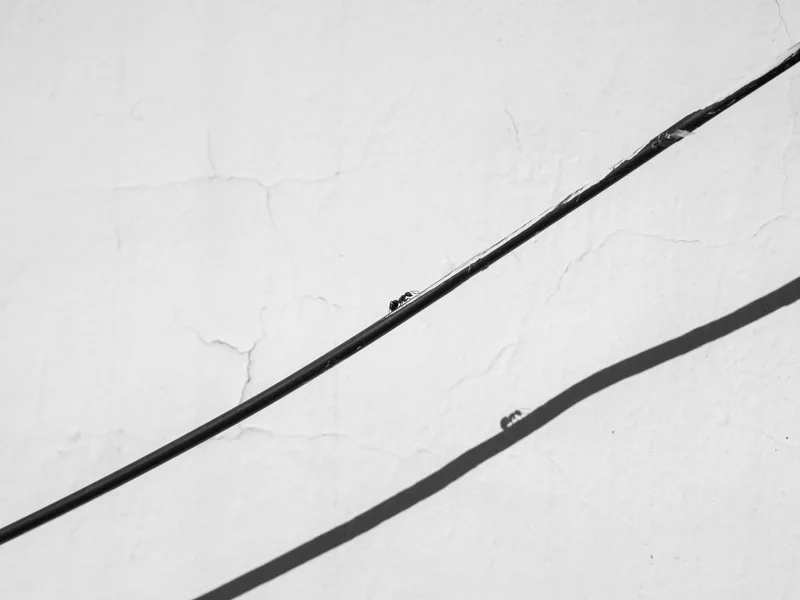
The trail and its direction
The trail starts from the old enclosures and climbs the outer walls of new homes, so treatment inside the house alone is not enough; the perimeter and boundary wall must be treated too.
Moisture before food
Moisture held in the old soil draws ants to gather beneath the foundations even if the building interior is completely dry.
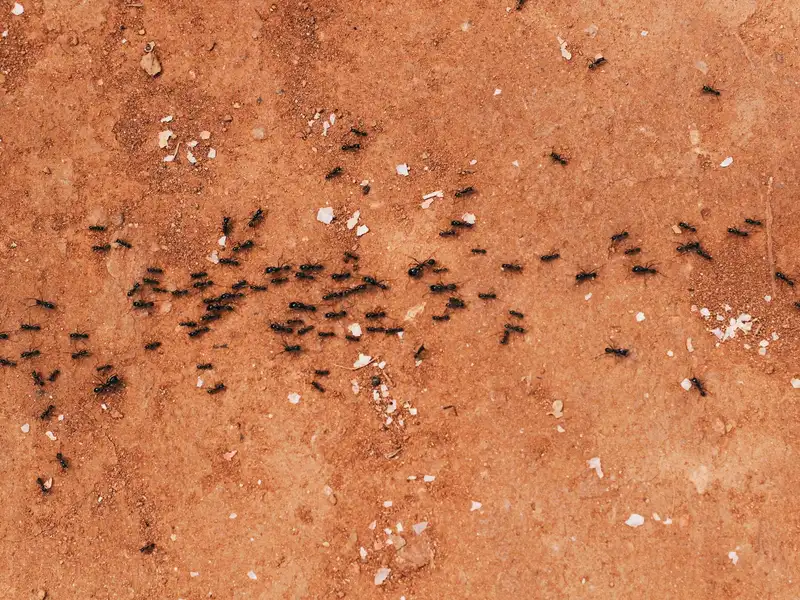
The nest outside the building
The main nest lies in old enclosure walls or deep under the foundations of old houses, and ants visible inside your new house are only a small part of the colony.
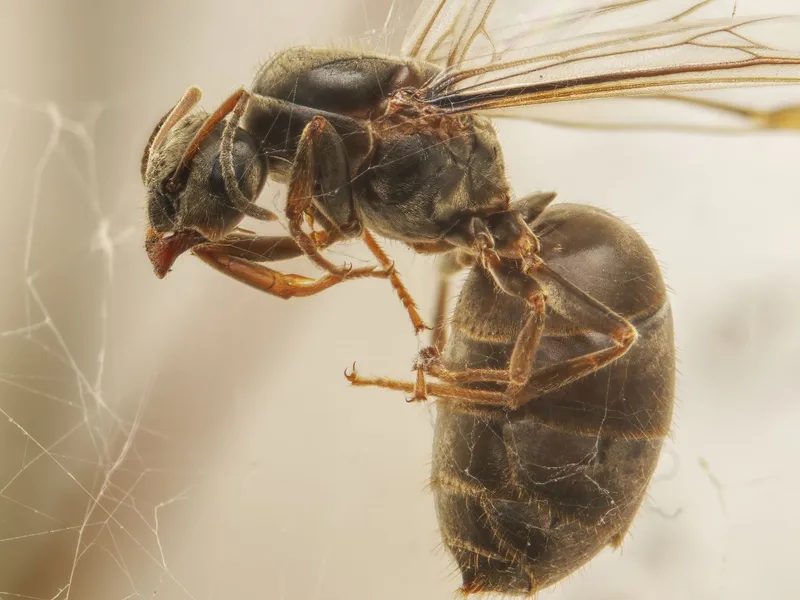
Winged ants
Winged ants appear in specific seasons, especially after winter when soil moisture and foundation dampness increase significantly.
How we work
-
1
Inspect and follow the trail
We follow the line from where you see it to where it enters, and establish the species, what it is feeding on and the moisture keeping the nest close.
-
2
Matched bait placed on the trail
We choose the matrix from the feeding preference and place it on the trail itself, leaving the trail intact so the workers carry it to the queen and the brood.
-
3
Treat the perimeter and close the ways in
An external treatment at the wall base and the openings, and we point out the cracks, pipe entries and any branch touching the building.
-
4
The follow-up visit
We come back once the bait has worked through the nest, check the trail is gone, and look for a satellite nest if a new line has appeared.
What ant control includes
-

Following the trail to its source
Species, entry point and the direction of the nest, established before anything is applied.
-

Bait matched to the colony
Sugar or protein according to what the workers are carrying, placed on the trail rather than near it.
-

An external perimeter treatment
A band at the wall base and the outside openings, with the indoor trail left unsprayed so it keeps carrying bait.
-

Moisture points and entries
Condensate lines, sink surrounds, weep holes and pipe entries, which are what keeps a nest against the building.
-

Aftercare instructions
What not to wipe until the bait has been taken, what to cover, and when normal cleaning can resume.
-

A scheduled follow-up
A set date to check the nest and re-bait anywhere still active.
What is different about Al Aziziyah (Makkah) Sub-Municipality
Al Aziziyah sub municipality runs from the Bin Dawood markets to the Al Hada road and carries pilgrim traffic to Mina. Hotel towers and furnished apartment blocks fill and empty with the Hajj and Ramadan seasons, and the kitchens, restaurants and markets along Al Masjid Al Haram Road and King Abdulaziz Road leave food waste at every peak. Southwards the fabric loosens into villas and planned streets in An Naseem and Al Awali, then Al Abidiyah's campus and the old farms of Al Husayniyah, where Wadi Uranah holds water after rain and farm enclosures shelter rodents and reptiles.
Questions about this district
Do the old farm enclosures beside my new house bring ants into it?
Yes, absolutely. Ants nest in the foundations and walls of old houses and march into your new one seeking better food. Treatment must reach the old enclosure too or it will not work.
After rain, does my house need extra treatment beyond the first round?
After heavy rain, new ants emerge from the wadi and your earlier treatment may not be sufficient. You may need a follow-up within a week of significant rainfall.
My new house sits next to an old farm building. Will it always have ants?
If the old building is not treated too, then yes. Ants will keep entering through the gap between the two houses. You should agree with that neighbour on joint treatment or at least seal every crack.
Does the deep groundwater under Al Husayniyah increase the ant problem?
Yes, damp soil beneath the house creates ideal ant habitat. Houses on old farm land see stronger ant activity than houses on new, raised, dry ground.
Does my new villa in the new part of the district need treatment like the old houses?
Yes, because the land itself is old and retains moisture. A new villa on old farm ground may see more ants than an old house standing on elevated, dry new ground.
Does treatment stop ants coming from the wadi completely?
Treatment controls the existing colony, but the wadi may bring new ants within a year or two. Seasonal preventive treatment is better than waiting for ants to return.
How much does ant control in Al Husayniyah cost?
It is set after the inspection, because the price follows the type of infestation, the size of the space, how far it has spread and the number of visits it needs. Send a photo and a description on WhatsApp and we will give you an estimate before we reach Al Husayniyah.
Nearby districts we cover
Other services in Al Husayniyah
Other services we provide to residents of Al Husayniyah.
-
 Residential
Cockroach control
Residential
Cockroach control
-
 Residential
Bed bug control
Residential
Bed bug control
-
 Residential
Termite control
Residential
Termite control
-
 Residential
Rodents and mice
Residential
Rodents and mice
-
 Residential
Mosquito control
Residential
Mosquito control
-
 Residential
Fly control
Residential
Fly control
-
 Residential
Gecko control
Residential
Gecko control
-
 Residential
Scorpion control
Residential
Scorpion control
-
 Residential
Snake control
Residential
Snake control
-
 Residential
Flea control
Residential
Flea control
-
 Residential
Bird and pigeon control
Residential
Bird and pigeon control
-
 Residential
Preventive treatment
Residential
Preventive treatment
-
 Residential
Disinfection
Residential
Disinfection
-
 Commercial
Annual contracts
Commercial
Annual contracts
-
 Commercial
Restaurants and cafes
Commercial
Restaurants and cafes
-
 Commercial
Hotels and apartments
Commercial
Hotels and apartments
-
 Commercial
Warehouses and factories
Commercial
Warehouses and factories
-
 Commercial
Schools and nurseries
Commercial
Schools and nurseries
-
 Commercial
Retail and malls
Commercial
Retail and malls
-
 Commercial
Rest houses and farms
Commercial
Rest houses and farms
-
 Commercial
Fumigation
Commercial
Fumigation
-
 Water tanks
Water tank cleaning
Water tanks
Water tank cleaning
-
 Water tanks
Water tank sterilization
Water tanks
Water tank sterilization
-
 Water tanks
Water tank sealing
Water tanks
Water tank sealing
-
 Water tanks
Tank leak repair
Water tanks
Tank leak repair
Need ant control in Al Husayniyah? Tell us what you saw and we will tell you what it needs
We reach Al Husayniyah at a time we agree, and you get the full cost before we start.