
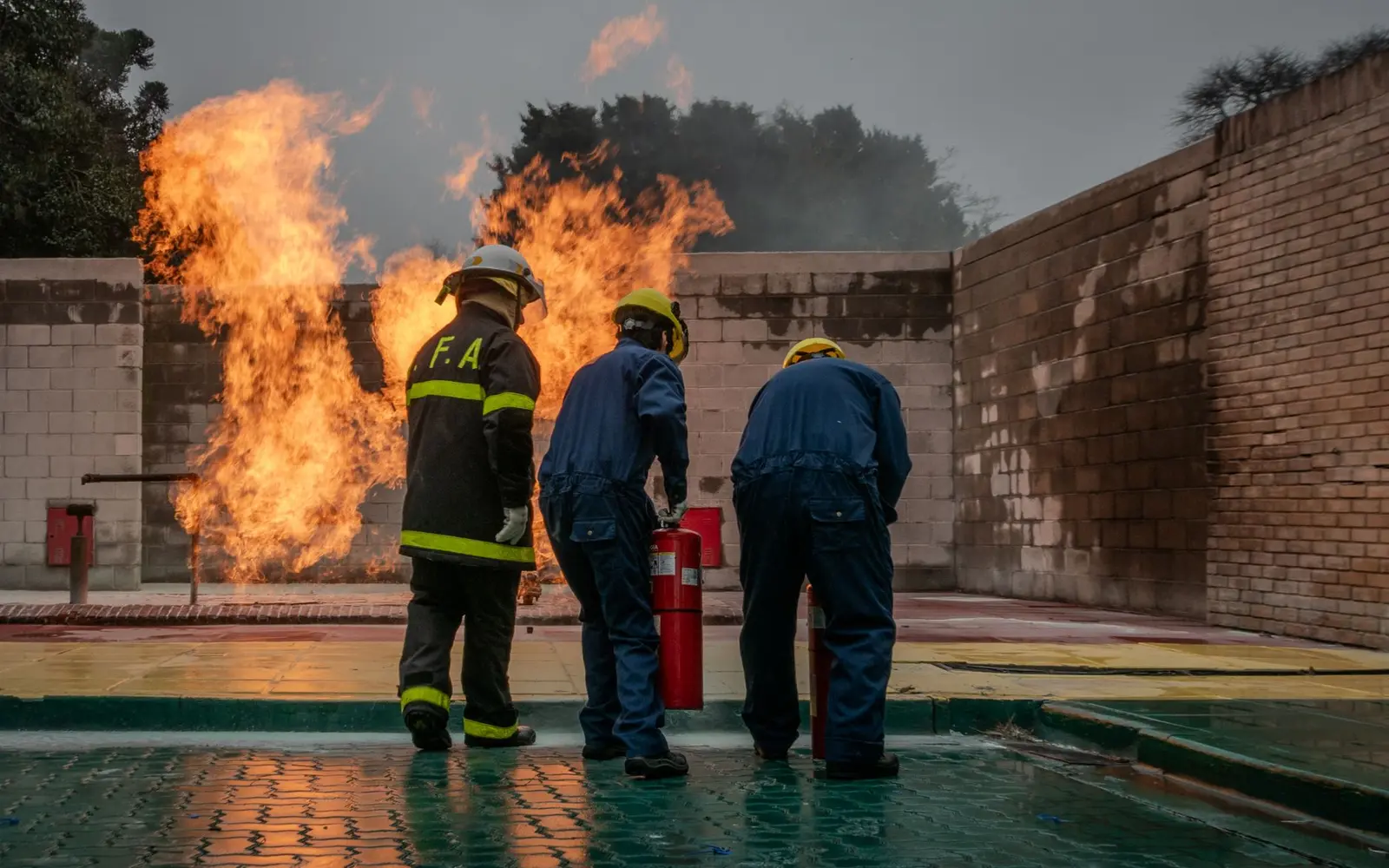
Bird and pigeon control in Al Abidiyah Makkah
Al Abidiyah sits on Umm Al Qura University's modern main campus south east of Makkah, a developing zone with extensive vacant plots and wadis that drain rainwater slowly. Active construction and incomplete schemes provide abundant shelter for birds, and moisture from Wadi Uranah and Wadi Numan create ideal nesting conditions across the campus roofs.
-
Targeted, not broadcast
Product goes into cracks and runways, never sprayed across open surfaces.
-
Told before we start
What we will use, where it goes, and what to cover or move before we arrive.
-
A follow-up visit
We return after the first treatment, because what survives it does not show on the day.
-
Homes and businesses
Apartments and villas, and kitchens and stores that need a record of each visit.
Why they keep coming back in Al Abidiyah
The modern university buildings offer expansive roofs and numerous gaps, and continuous construction work attracts the insects that in turn draw birds to settle on the structures. The method is set out in full on the full Bird and pigeon control page.
Active construction and open ground
New buildings under construction provide temporary shelter and wind protection around steel frames and concrete pours. Surrounding land is completely exposed, strewn with rubble and materials, creating dozens of safe positions for birds before they settle on roofs, extending the timespan in which nests can establish.
Wadis and standing water zones
Wadi Uranah and Wadi Numan run through the area and collect rainwater in depressions and excavations. Standing water provides a constant drinking supply and surrounds birds with aquatic insects and damp plants, the full attraction set for nesting activity.
Large institutional buildings and dense roof topography
Modern college buildings, lecture halls and stadium structures create roofs of varying height and bulk. Gaps between large buildings form sheltered passages where pigeons can move safely from wind, making the entire campus a connected network of protected vantage points.
The character of Al Abidiyah
New development: ongoing construction and vacant plots between the homes
New-development zones give birds everything: shelter from ongoing construction, water from wadis and ponding, abundant insects drawn to the building works themselves. Deterrents must be proactive and comprehensive because each new phase of construction creates fresh opportunities for pigeons to nest before that phase is complete.
The building decides which deterrent works
The campus sprawls over the slightly elevated Arafat plain, where several wadis pass through and collect water after rain in low ground and excavations. Most surrounding land remains undeveloped with ponding water and building works scattered across it.
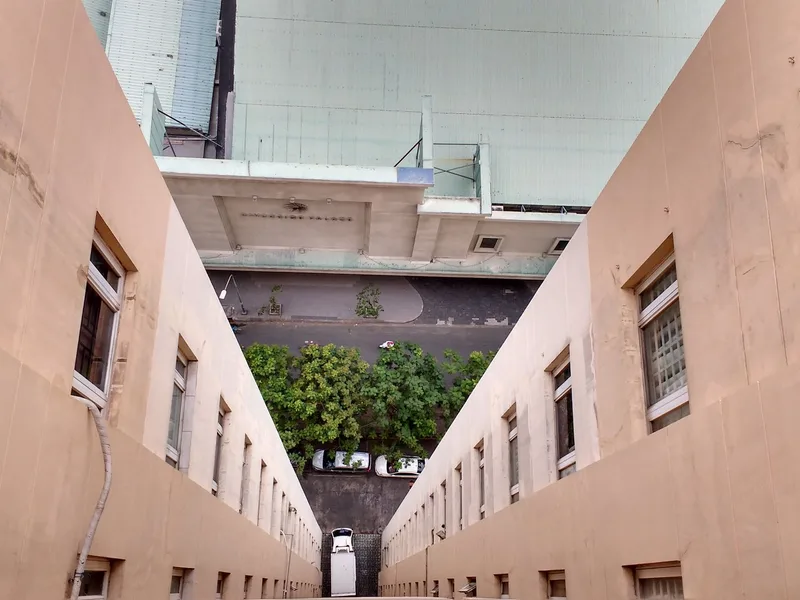
Ledge width
The ledges on modern university buildings are wide and smooth in most places, but material quality may not be uniform and some areas show minor cracks that provide early nesting opportunities for pigeons.
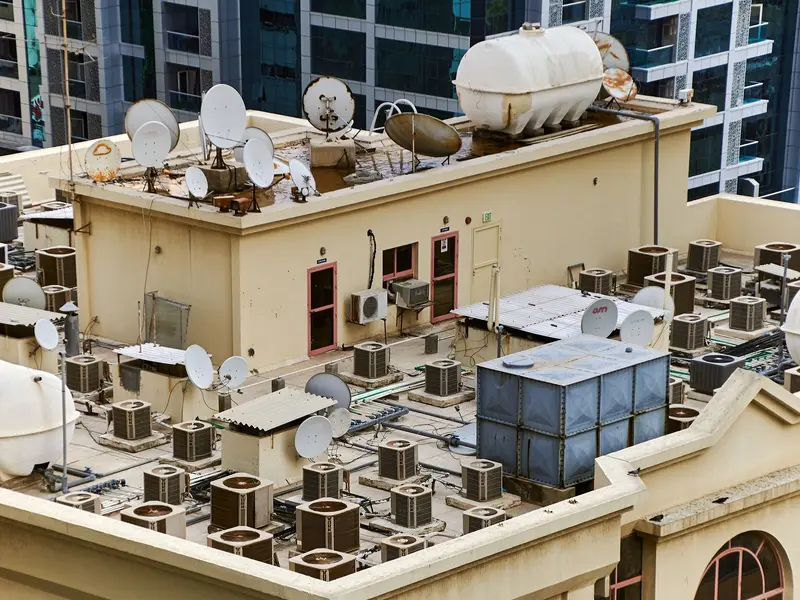
Air conditioning platforms
The campus air conditioning units are large and distributed across many roofs, which simplifies fitting round them but demands a comprehensive overall plan that covers the entire building envelope.
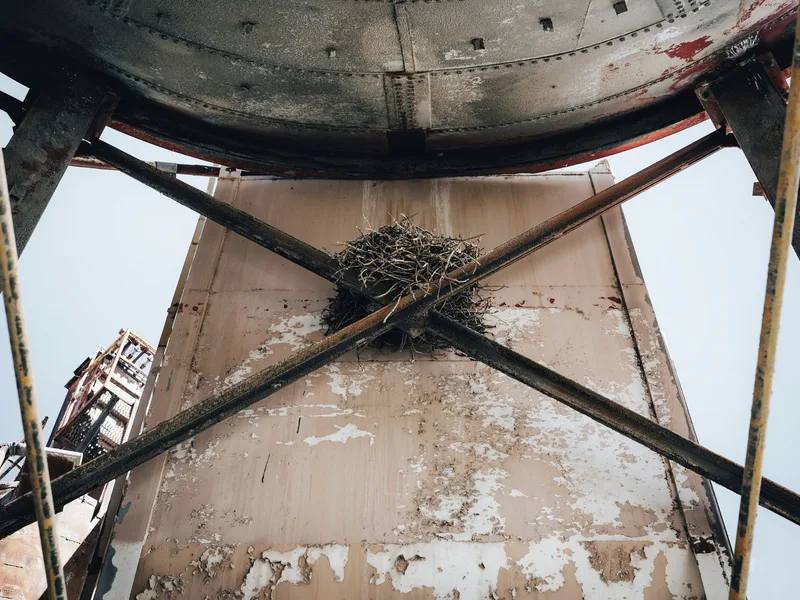
The nest itself
Nests appear here very quickly because birds enjoy complete security, and the first nest may draw others rapidly if it is not removed within the first few weeks of discovery.
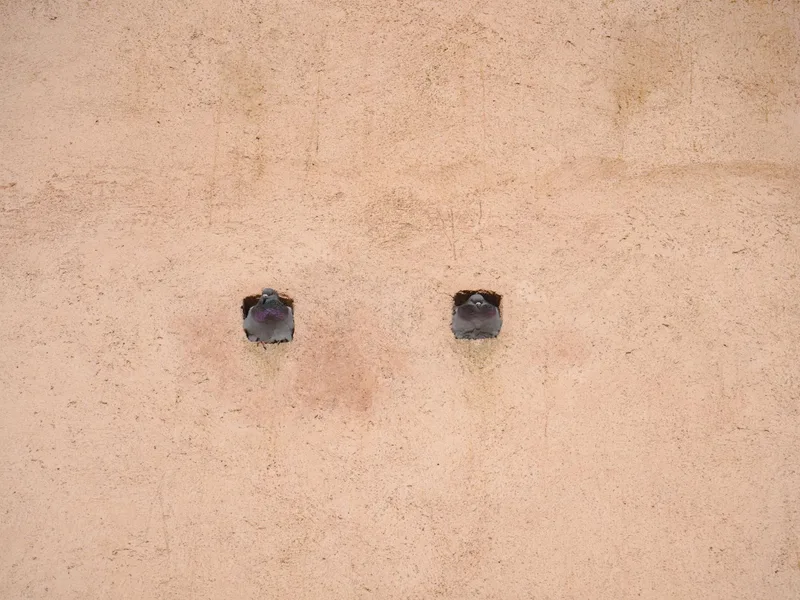
The droppings pattern
Droppings accumulate very fast on new clean roofs because birds hide nothing, and the waste attracts mites and crawling insects that can migrate indoors into student accommodation.
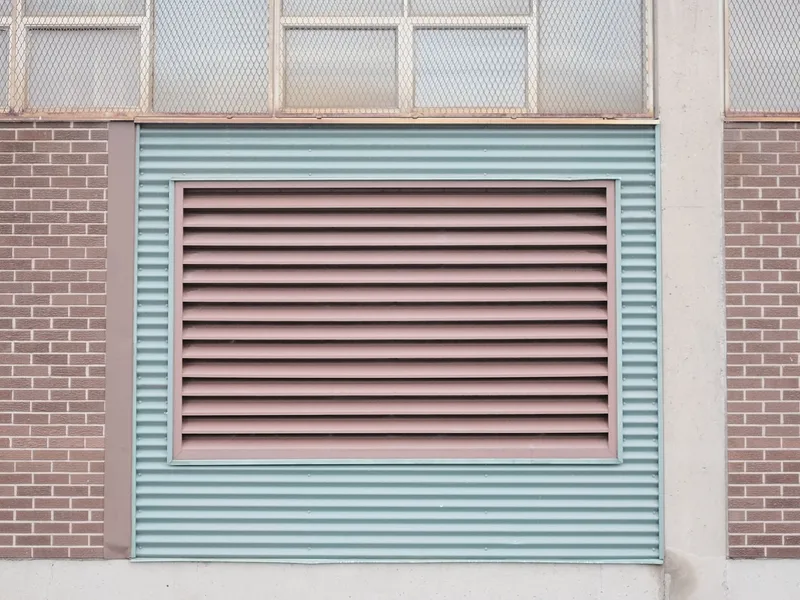
Openings and shafts
Roof openings and shafts on tall buildings are numerous and at different heights, some open for ventilation, requiring careful mapping and selective sealing rather than blanket closure.
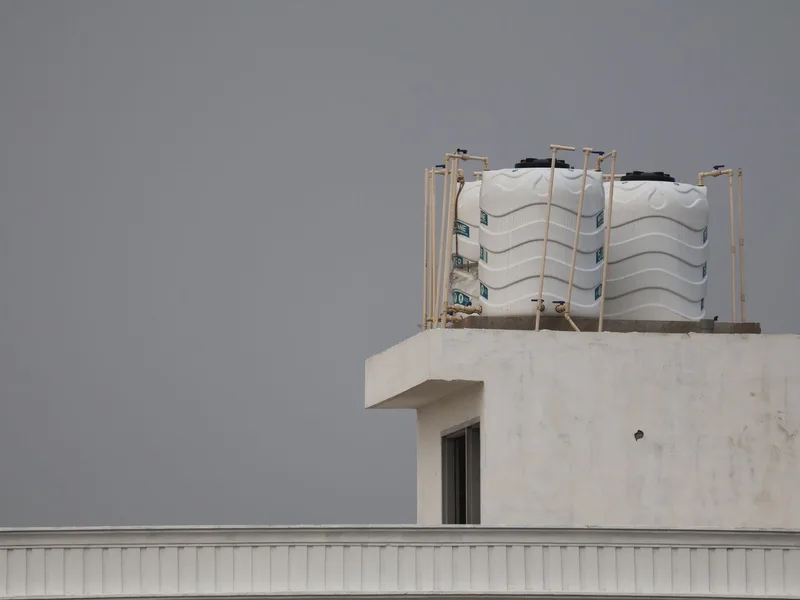
Around the roof tank
Water tanks on campus are very large and fed by complex pipe networks, so the full perimeter requires comprehensive treatment because of the scale of the campus and the number of staff and students affected.
How we work
-
1
Survey the roof and the facade
We walk the roof, the projections, the condenser platforms and the shafts, separate the nesting positions from the perching ones, and measure and photograph every ledge.
-
2
Strip the nests and treat the parasites
Droppings are wetted before they are lifted so nothing goes airborne dry, bagged closed, and the nest position is treated for ticks and mites before the surface is sanitised.
-
3
Close and fit
Netting tensioned on a perimeter wire with no gap at the corners, spikes or wire on the narrow projections, metal mesh across vents and shafts, and the roof drains freed of the nest material packing them.
-
4
The follow-up visit
We come back to check the tension, the corners and any position the flock has moved to, and correct what has slackened before a bird finds it.
What bird and pigeon control includes
-

A recorded survey
Every ledge, condenser platform and shaft, photographed, with nesting separated from perching before anything is chosen.
-

Nest removal and drain clearing
Lifted wet rather than swept dry, bagged closed, and the roof drains freed of the nest material packing them.
-

Parasite treatment and sanitising
The nest position treated for ticks and mites, then the surface the droppings sat on sanitised.
-

Sealing and fitting the deterrents
Netting tensioned on a perimeter wire, spikes or wire on narrow projections, and metal mesh across ventilation openings.
-

Aftercare instructions
The condensate water, food left on the roof, and what should not sit beside a ledge if the attraction is to stay gone.
-

A follow-up on tension and corners
Netting slackens and corners open over time; the visit corrects that and closes any new position.
What is different about Al Aziziyah (Makkah) Sub-Municipality
Al Aziziyah sub municipality runs from the Bin Dawood markets to the Al Hada road and carries pilgrim traffic to Mina. Hotel towers and furnished apartment blocks fill and empty with the Hajj and Ramadan seasons, and the kitchens, restaurants and markets along Al Masjid Al Haram Road and King Abdulaziz Road leave food waste at every peak. Southwards the fabric loosens into villas and planned streets in An Naseem and Al Awali, then Al Abidiyah's campus and the old farms of Al Husayniyah, where Wadi Uranah holds water after rain and farm enclosures shelter rodents and reptiles.
Questions about this district
The university buildings are brand new and the roofs are pristine and completely unused. Why do birds nest there immediately?
New pristine roofs are extremely attractive because they are free from old nests, parasites and predator activity. A new building carries no smell of danger or human occupation, so it reads as completely safe to exploring birds.
The wadis hold standing water and are full of wild birds and waterfowl. Do all those flocks move up onto the campus roofs?
The wadi flocks do not migrate as a body, but individual birds and pairs explore the elevated campus buildings for better nesting positions. Spacious, sheltered roofs offer more security than open wadi ground where competition is fierce.
There is constant building work and noise every single day. Does this noise scare birds away from nesting on the roofs?
Noise and activity during working hours may disrupt birds temporarily, but in the evening, night and weekends the roofs become very quiet, which makes them ideal refuges far from ground predators and the disturbance of human activity.
The new building has many ventilation openings and the corridors and walkways are very wide and open. Can pigeons enter the building itself?
Small vents at height do not usually attract pigeons, but wide open access routes and open entrance areas may allow bold birds entry. The roofs remain more attractive because they are completely secure from human interference.
The campus has gardens and irrigated green spaces everywhere. Does this increase how attractive the roofs are to birds?
Lush green gardens supply seeds and insects, and irrigation water means a permanent drinking source. Birds nesting on roofs close to this food and water source avoid long foraging flights and raise more successful broods.
Does removing nests from large university buildings need special permissions or fixed times to do the work?
Work on a university campus requires coordination with campus management and security because of movement restrictions and gathering rules. Ideal times are weekends or vacation periods when human activity is lowest and access is easier to arrange.
How much does bird and pigeon control in Al Abidiyah cost?
It is set after the inspection, because the price follows the type of infestation, the size of the space, how far it has spread and the number of visits it needs. Send a photo and a description on WhatsApp and we will give you an estimate before we reach Al Abidiyah.
Nearby districts we cover
Other services in Al Abidiyah
Other services we provide to residents of Al Abidiyah.
-
 Residential
Cockroach control
Residential
Cockroach control
-
 Residential
Bed bug control
Residential
Bed bug control
-
 Residential
Termite control
Residential
Termite control
-
 Residential
Rodents and mice
Residential
Rodents and mice
-
 Residential
Mosquito control
Residential
Mosquito control
-
 Residential
Fly control
Residential
Fly control
-
 Residential
Ant control
Residential
Ant control
-
 Residential
Gecko control
Residential
Gecko control
-
 Residential
Scorpion control
Residential
Scorpion control
-
 Residential
Snake control
Residential
Snake control
-
 Residential
Flea control
Residential
Flea control
-
 Residential
Preventive treatment
Residential
Preventive treatment
-
 Residential
Disinfection
Residential
Disinfection
-
 Commercial
Annual contracts
Commercial
Annual contracts
-
 Commercial
Restaurants and cafes
Commercial
Restaurants and cafes
-
 Commercial
Hotels and apartments
Commercial
Hotels and apartments
-
 Commercial
Warehouses and factories
Commercial
Warehouses and factories
-
 Commercial
Schools and nurseries
Commercial
Schools and nurseries
-
 Commercial
Retail and malls
Commercial
Retail and malls
-
 Commercial
Rest houses and farms
Commercial
Rest houses and farms
-
 Commercial
Fumigation
Commercial
Fumigation
-
 Water tanks
Water tank cleaning
Water tanks
Water tank cleaning
-
 Water tanks
Water tank sterilization
Water tanks
Water tank sterilization
-
 Water tanks
Water tank sealing
Water tanks
Water tank sealing
-
 Water tanks
Tank leak repair
Water tanks
Tank leak repair
Need bird and pigeon control in Al Abidiyah? Tell us what you saw and we will tell you what it needs
We reach Al Abidiyah at a time we agree, and you get the full cost before we start.