

Bird and pigeon control in Al Harazat Jeddah
Al Harazat is a densely built extension that grew on former farmland, and the pigeon population remembers those origins and returns to them. The apartment blocks are uniform and ledges are standardised, but the district is ringed by vacant land that persists. The problem is not the ledges alone but the surrounding landscape. Al Harazat sits on the margin between developed housing and open ground, and that boundary is where the flock congregates.
-
Targeted, not broadcast
Product goes into cracks and runways, never sprayed across open surfaces.
-
Told before we start
What we will use, where it goes, and what to cover or move before we arrive.
-
A follow-up visit
We return after the first treatment, because what survives it does not show on the day.
-
Homes and businesses
Apartments and villas, and kitchens and stores that need a record of each visit.
Why they keep coming back in Al Harazat
Residents observe that pigeons arrive in waves: very heavy flocks followed by quieter periods. This occurs because Al Harazat is a staging point, not a final roost. Birds move through from vacant land to the south towards older established districts to the north. The method is set out in full on our Bird and pigeon control service.
Vacant land around the district is the breeding ground
The empty plots supply seed, vegetation and standing water, and pigeons breed there in spring before moving into the flats. Treating the buildings alone does not stop continuous arrival from outside. The district is not the source but a waypoint in a larger migration cycle, and deterrents here slow the influx but do not end it.
Narrow streets trap moisture and stagnant air
Roads between blocks are tight and sunlight never reaches the ground, so leaked drainage stays damp for weeks. This moisture attracts insects and parasites, which bring pigeons. Treating ledges does nothing if the parasites continue to breed in the humid street below, and residents will report biting insects indoors even after pigeons are deterred on the roof.
Identical blocks and shared entries let pigeons move freely
Every building is the same, every ledge is the same, and shared staircases and walkways connect them. Pigeons move from block to block without breaking contact. Treating a single flat or even a single building fails if your neighbour leaves treatment incomplete, because pigeons walk across the roof line undisturbed. The whole district needs a single approach.
Al Harazat on the map
Al Harazat sits about 4.5 km from Umm Al Salam and about 5.5 km from Al Mahamid.
Open in Google MapsThe building decides which deterrent works
The district lies near Old Makkah Road on land that was once tilled. Development came quickly and the infrastructure lagged. Streets are narrow, drainage is mixed, and water pools in low spots. The Old Makkah Road carries heavy traffic and shops, and the site was never meant to absorb this density.
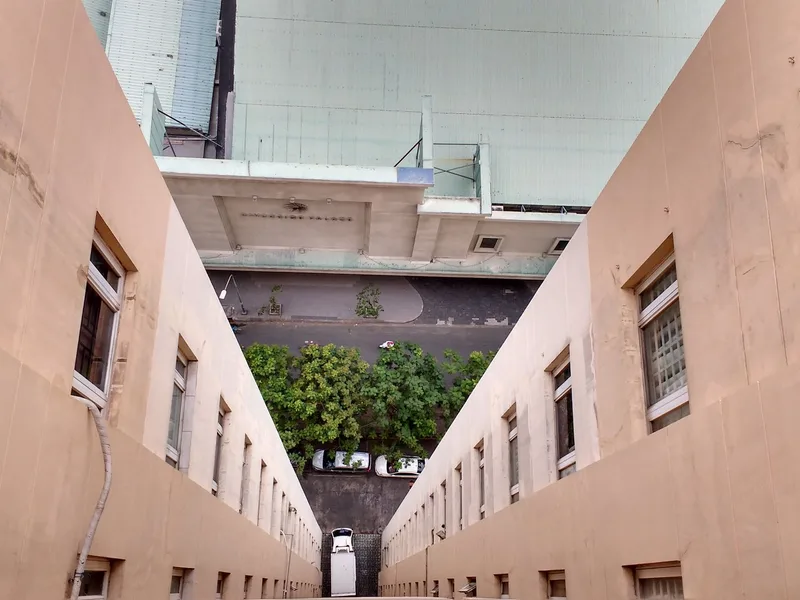
Ledge width
Ledges in Al Harazat are uniform because the blocks follow a single plan, but they suffer more from excess moisture due to narrow streets and incomplete drainage than ledges in newer districts.
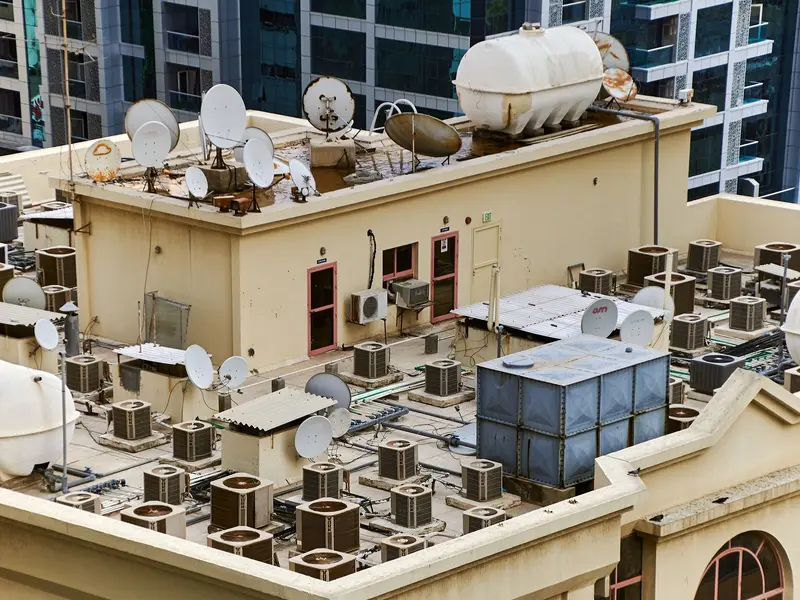
Air conditioning platforms
Air conditioning outlets on roofs supply continuous water and moisture, and pigeons roost there because the district is damp throughout the year.
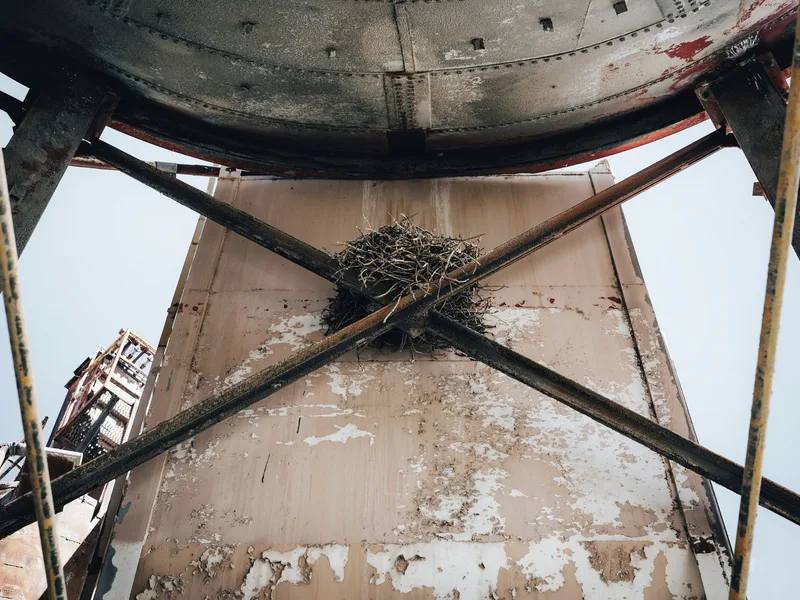
The nest itself
Nests here occupy ledges on apartment fronts, shared balconies and gaps between units, seldom the open roof because the district is too densely built.
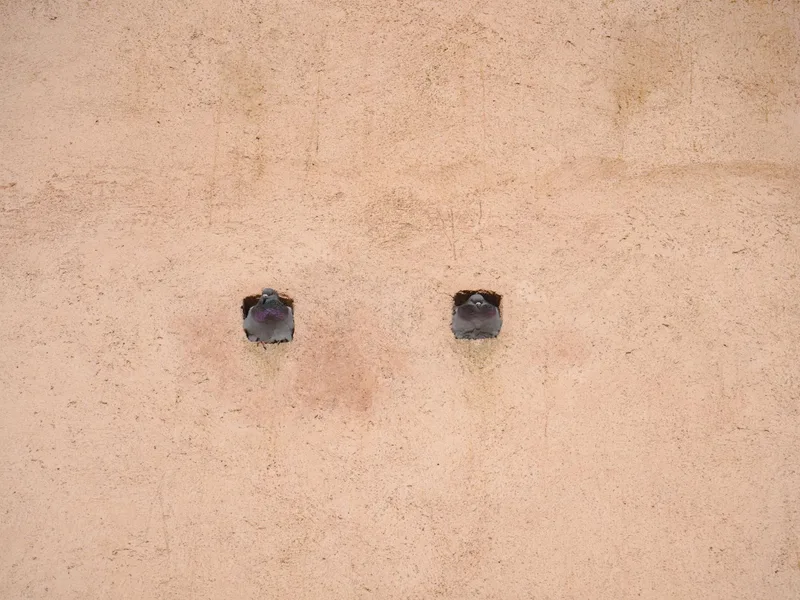
The droppings pattern
Droppings accumulate rapidly on lower storey windows because the population is dense and streets are narrow.
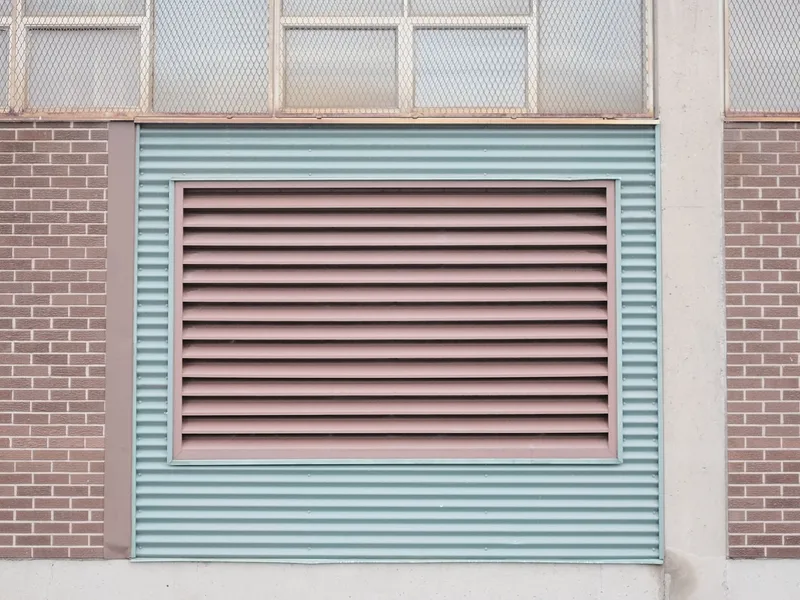
Openings and shafts
Ventilation openings between flats and in shared stairwells provide routes for pigeons to move inside walls, and these must be sealed before any exterior deterrents are fitted.
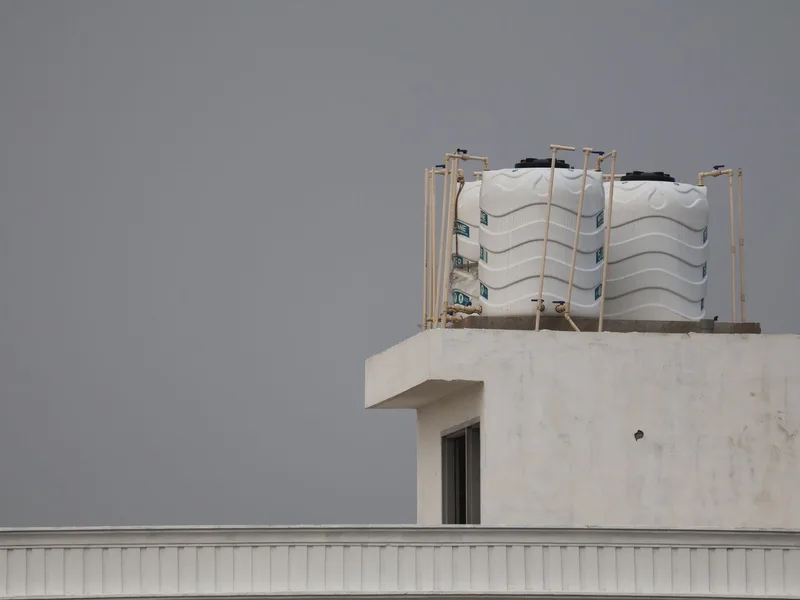
Around the roof tank
Roof water tanks in Al Harazat are raised high and may be a critical water source for pigeons, especially in summer when other water is scarce.
How we work
-
1
Survey the roof and the facade
We walk the roof, the projections, the condenser platforms and the shafts, separate the nesting positions from the perching ones, and measure and photograph every ledge.
-
2
Strip the nests and treat the parasites
Droppings are wetted before they are lifted so nothing goes airborne dry, bagged closed, and the nest position is treated for ticks and mites before the surface is sanitised.
-
3
Close and fit
Netting tensioned on a perimeter wire with no gap at the corners, spikes or wire on the narrow projections, metal mesh across vents and shafts, and the roof drains freed of the nest material packing them.
-
4
The follow-up visit
We come back to check the tension, the corners and any position the flock has moved to, and correct what has slackened before a bird finds it.
What bird and pigeon control includes
-

A recorded survey
Every ledge, condenser platform and shaft, photographed, with nesting separated from perching before anything is chosen.
-

Nest removal and drain clearing
Lifted wet rather than swept dry, bagged closed, and the roof drains freed of the nest material packing them.
-

Parasite treatment and sanitising
The nest position treated for ticks and mites, then the surface the droppings sat on sanitised.
-

Sealing and fitting the deterrents
Netting tensioned on a perimeter wire, spikes or wire on narrow projections, and metal mesh across ventilation openings.
-

Aftercare instructions
The condensate water, food left on the roof, and what should not sit beside a ledge if the attraction is to stay gone.
-

A follow-up on tension and corners
Netting slackens and corners open over time; the visit corrects that and closes any new position.
The character of Al Harazat
Apartment district: residential blocks, repeated floors and shared entrances
Flats in Al Harazat mean you share ledges and entry routes with neighbours. Treating your flat alone is incomplete: pigeons move from neighbouring buildings and through shared entries, and individual responsibility is limited. You must coordinate with neighbours or accept that the problem will return from their side.
Questions about this district
The vacant land behind us remains empty. Can I fence it to keep pigeons out?
You cannot fence it; it is public land or waiting for development. But you can understand that pigeons arrive in greater numbers from that source than from other areas. Treatment here focuses on prevention and deterrents on your flat, not complete eradication, because the source lies beyond the district boundary.
My flat is on the first floor next to the street. Am I more exposed?
Yes. Lower floors and lower storey windows are more exposed because pigeons descend from the vacant land onto the lower ledges first. Upper floors gain some natural shelter from lower units, but it is incomplete. Every flat needs deterrents on balconies and window ledges.
My neighbour refuses to treat their building ledge. Does that affect me?
Direct impact if your buildings are attached. Pigeons walk across from their ledge to yours easily. You can add extra deterrents to your balcony but there will be continuous movement from your neighbour's side. Reach agreement on joint treatment or expect additional birds on your ledge as long as theirs remains open.
Drainage pipes leak and water spills down the wall. Does that attract pigeons?
Leaking water attracts insects and parasites before it attracts pigeons. But pigeons come to feed on those insects and linger near the moisture. Fixing the drainage system first is essential, because chemical treatment alone will not stop the leak or the insect breeding.
The district is old and the building is worn. Do old areas have more pigeons?
Yes. Older districts have cracks in ledges and gaps where pipes meet walls, and pigeons nest in those crevices far more readily than on smooth modern ledges. Pigeon control in an ageing area requires an additional step: repair cracks first or use deterrents that can adapt to an uneven weathered surface.
How often will I need treatment per year in Al Harazat?
Al Harazat needs continuous monitoring because of the surrounding vacant land. Spring and summer, when pigeons breed in the open plots, pressure on the buildings increases. Single treatment gives one season without incident, but reassessment every six months is necessary.
How much does bird and pigeon control in Al Harazat cost?
It is set after the inspection, because the price follows the type of infestation, the size of the space, how far it has spread and the number of visits it needs. Send a photo and a description on WhatsApp and we will give you an estimate before we reach Al Harazat.
Nearby districts we cover
Other services in Al Harazat
Other services we provide to residents of Al Harazat.
-
 Residential
Cockroach control
Residential
Cockroach control
-
 Residential
Bed bug control
Residential
Bed bug control
-
 Residential
Termite control
Residential
Termite control
-
 Residential
Rodents and mice
Residential
Rodents and mice
-
 Residential
Mosquito control
Residential
Mosquito control
-
 Residential
Fly control
Residential
Fly control
-
 Residential
Ant control
Residential
Ant control
-
 Residential
Gecko control
Residential
Gecko control
-
 Residential
Scorpion control
Residential
Scorpion control
-
 Residential
Snake control
Residential
Snake control
-
 Residential
Flea control
Residential
Flea control
-
 Residential
Preventive treatment
Residential
Preventive treatment
-
 Residential
Disinfection
Residential
Disinfection
-
 Commercial
Annual contracts
Commercial
Annual contracts
-
 Commercial
Restaurants and cafes
Commercial
Restaurants and cafes
-
 Commercial
Hotels and apartments
Commercial
Hotels and apartments
-
 Commercial
Warehouses and factories
Commercial
Warehouses and factories
-
 Commercial
Schools and nurseries
Commercial
Schools and nurseries
-
 Commercial
Retail and malls
Commercial
Retail and malls
-
 Commercial
Rest houses and farms
Commercial
Rest houses and farms
-
 Commercial
Fumigation
Commercial
Fumigation
-
 Water tanks
Water tank cleaning
Water tanks
Water tank cleaning
-
 Water tanks
Water tank sterilization
Water tanks
Water tank sterilization
-
 Water tanks
Water tank sealing
Water tanks
Water tank sealing
-
 Water tanks
Tank leak repair
Water tanks
Tank leak repair
Need bird and pigeon control in Al Harazat? Tell us what you saw and we will tell you what it needs
We reach Al Harazat at a time we agree, and you get the full cost before we start.