
Bird and pigeon control in Al Sanabel Makkah
Al Sanabel is a multi-storey apartment district immediately south of Al Aziziyah, compressed between King Khalid Road and the Third Ring Road, where closely-spaced residential blocks share roofs and entrances. That shared infrastructure means treating one building's pigeon problem requires a unified strategy across several adjoining units.
-
Targeted, not broadcast
Product goes into cracks and runways, never sprayed across open surfaces.
-
Told before we start
What we will use, where it goes, and what to cover or move before we arrive.
-
A follow-up visit
We return after the first treatment, because what survives it does not show on the day.
-
Homes and businesses
Apartments and villas, and kitchens and stores that need a record of each visit.
Why they keep coming back in Al Sanabel
Pigeons in Al Sanabel settle mainly on the narrow ledges of block edges, window sills and drainage channels, and the number of storeys means recurring nest patterns across every facade. The method is set out in full on what Bird and pigeon control involves.
Shared roofs and connected drainage systems
Al Sanabel's apartment blocks are woven into a single network of roofs, channels and sewers, so a nesting site in one unit can open into the next. Treating one position means surveying the entire shared infrastructure for access points and alternative routes.
Tower height and roof exposure
The stacked residential towers create high vantage points pigeons spot from far away and favour as roosting grounds. Their height means every flat has a different entry and exit route, complicating the closure of all the gaps that connect the shared spaces.
Seasonal movement and nearby institutions
The Development Commission and Al Mousa Park draw constant visitor flow through Al Sanabel's streets, and maintenance workers add to the litter that encourages birds to stay. Feeding pressure varies by season and by the time of day.
Landmarks of Al Sanabel
Work in Al Sanabel is coordinated from the main approach routes: we schedule entry from King Khalid Road to the north and progress through the internal courtyards facing Al Iman Mosque, then move between blocks according to the roof access order.
- King Khalid Road
- Third Ring Road
- Muzdalifah Road
- Makkah Development Commission
- Al Iman Mosque
- Al Mousa Park
The building decides which deterrent works
The neighbourhood is built as stacked residential units with repeated floors, shared entrances and unified roof access. Al Mousa Park and the Makkah Development Commission offices nearby maintain steady foot traffic and feeding opportunities.
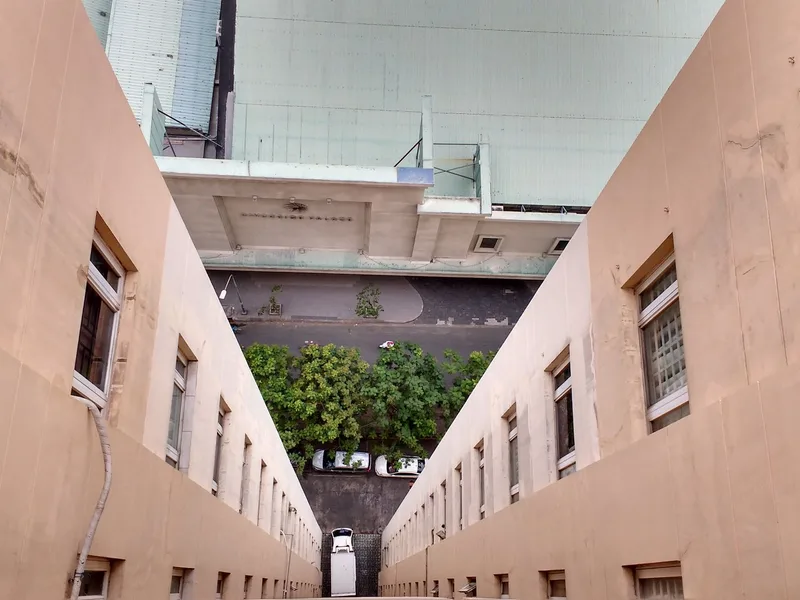
Ledge width
The ledges of Al Sanabel's apartment blocks are narrow and flat across most of their length, carrying water pipes and electrical cables, and pigeons prefer positions that give them hidden stability.
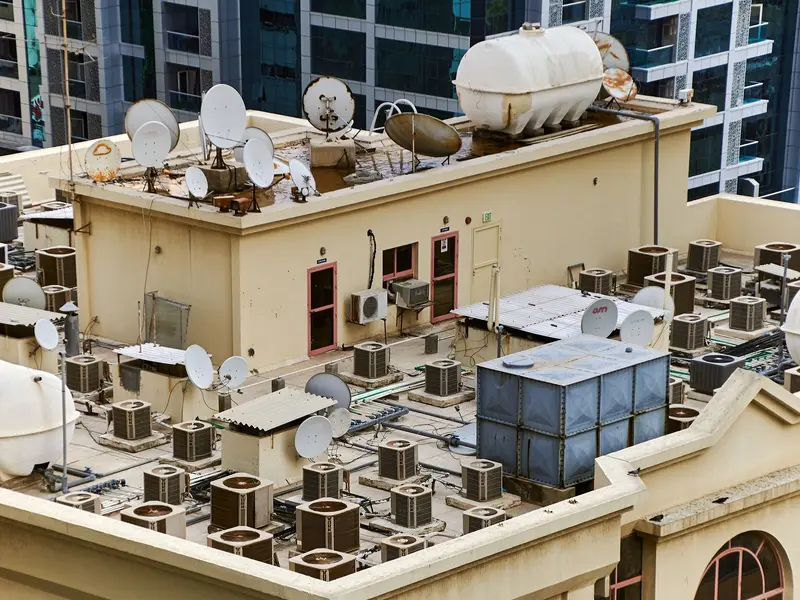
Air conditioning platforms
Outdoor air conditioning units spread across every flat's facade and create warm, secure spots for roosting and nest assembly.
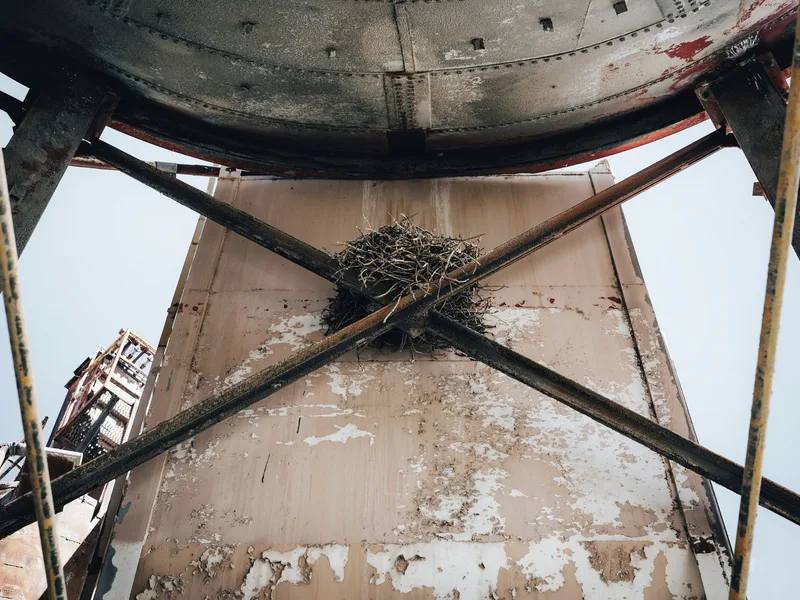
The nest itself
Nests here are built from paper, fibres and dust, and harbour small parasites that can enter flats through cracks in joints and seals.
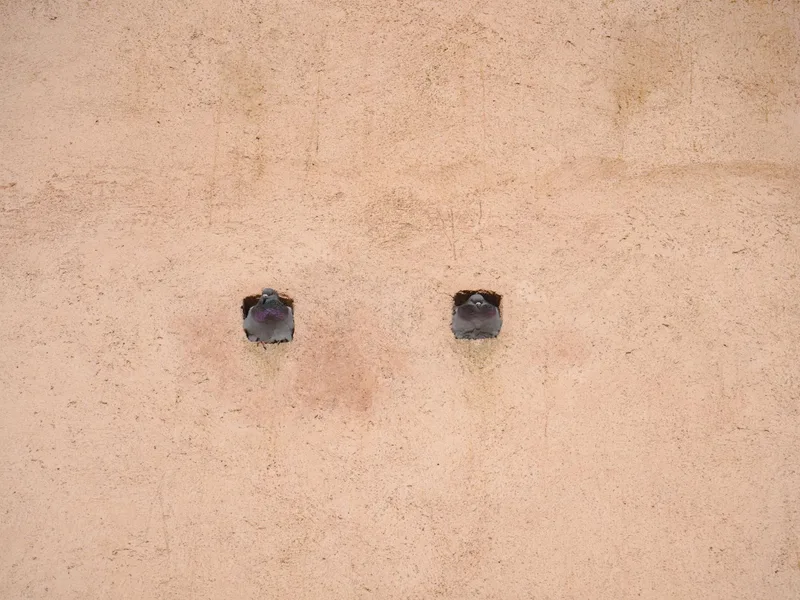
The droppings pattern
Droppings accumulate directly below the preferred perching spots, and wet facades streaked with spray corrosion mark the active sites clearly.
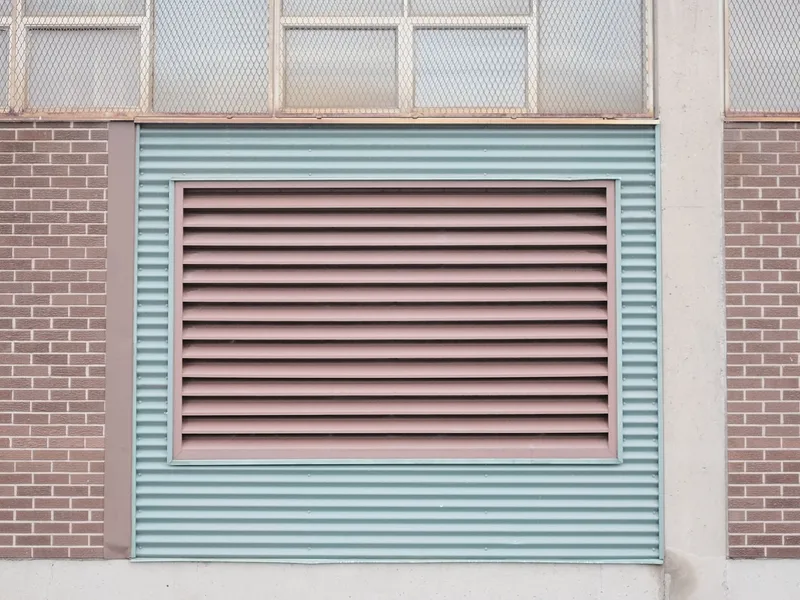
Openings and shafts
Gaps between pipes and narrow clearances around AC units provide hidden entry points which we seal with fine mesh that allows air to flow through.
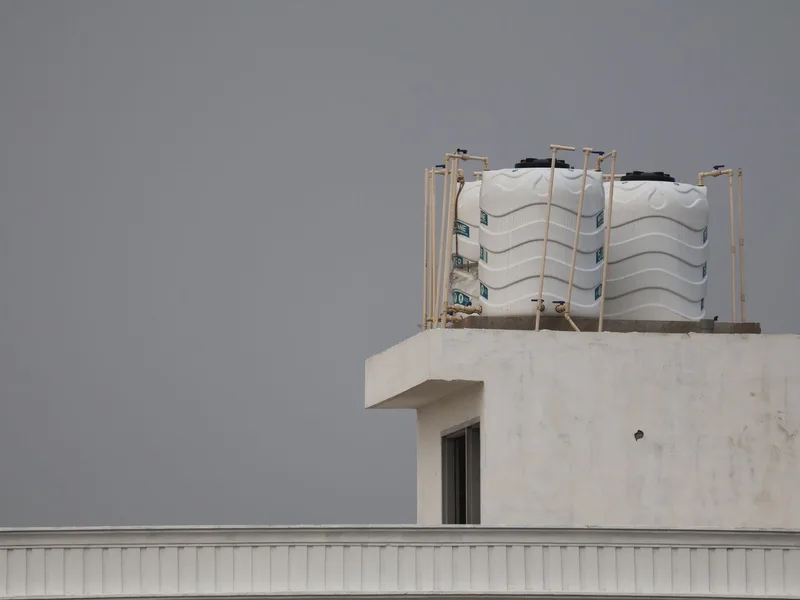
Around the roof tank
The exposed roof tank in multi-storey buildings becomes a lookout and gathering point, and moisture around it attracts small insects they feed on.
How we work
-
1
Survey the roof and the facade
We walk the roof, the projections, the condenser platforms and the shafts, separate the nesting positions from the perching ones, and measure and photograph every ledge.
-
2
Strip the nests and treat the parasites
Droppings are wetted before they are lifted so nothing goes airborne dry, bagged closed, and the nest position is treated for ticks and mites before the surface is sanitised.
-
3
Close and fit
Netting tensioned on a perimeter wire with no gap at the corners, spikes or wire on the narrow projections, metal mesh across vents and shafts, and the roof drains freed of the nest material packing them.
-
4
The follow-up visit
We come back to check the tension, the corners and any position the flock has moved to, and correct what has slackened before a bird finds it.
What bird and pigeon control includes
-

A recorded survey
Every ledge, condenser platform and shaft, photographed, with nesting separated from perching before anything is chosen.
-

Nest removal and drain clearing
Lifted wet rather than swept dry, bagged closed, and the roof drains freed of the nest material packing them.
-

Parasite treatment and sanitising
The nest position treated for ticks and mites, then the surface the droppings sat on sanitised.
-

Sealing and fitting the deterrents
Netting tensioned on a perimeter wire, spikes or wire on narrow projections, and metal mesh across ventilation openings.
-

Aftercare instructions
The condensate water, food left on the roof, and what should not sit beside a ledge if the attraction is to stay gone.
-

A follow-up on tension and corners
Netting slackens and corners open over time; the visit corrects that and closes any new position.
What is different about Al Aziziyah (Makkah) Sub-Municipality
Al Aziziyah sub municipality runs from the Bin Dawood markets to the Al Hada road and carries pilgrim traffic to Mina. Hotel towers and furnished apartment blocks fill and empty with the Hajj and Ramadan seasons, and the kitchens, restaurants and markets along Al Masjid Al Haram Road and King Abdulaziz Road leave food waste at every peak. Southwards the fabric loosens into villas and planned streets in An Naseem and Al Awali, then Al Abidiyah's campus and the old farms of Al Husayniyah, where Wadi Uranah holds water after rain and farm enclosures shelter rodents and reptiles.
Questions about this district
Will spike and netting installation spoil the window view from inside?
The mesh and spike systems we install are translucent and fitted to the outer ledge only, so they do not obstruct the view inward and may be almost invisible from across the street. The design adapts to your window width and the way it opens.
Pigeons perch on the air conditioning units above our windows. How do you stop that?
The outdoor AC units offer them a wide, exposed platform, so we remove old nesting material first, then fit angled deterrents on top that make landing unstable. Metal spikes go around the base of the unit itself to block alternative grips.
Do we need permission from the building management before installation begins?
Yes, if the building is under unified management we consult them beforehand. For individually-owned flats, working with the owner is sufficient, but shared ledges and roofs require approval from the residents' association.
How much time passes between cleaning and installing the final deterrent?
We remove nests, droppings and parasites, then wait two days to confirm the birds do not return to that exact spot. In difficult cases we monitor for three days before fitting the permanent barrier.
Will roof deterrents around the water tank affect drainage from it?
The barriers we fit around the tank do not block drainage channels or outlets. We design them for the tank's width and height and leave all water paths clear, so drainage continues without interference.
If we block one roosting site, will pigeons just move to distant spots?
When we seal the primary nesting point they may land elsewhere for a time, but they will search for a secure permanent base. We choose strategic positions on the roof and facades to cover the main routes the birds actually use to move through the building.
How much does bird and pigeon control in Al Sanabel cost?
It is set after the inspection, because the price follows the type of infestation, the size of the space, how far it has spread and the number of visits it needs. Send a photo and a description on WhatsApp and we will give you an estimate before we reach Al Sanabel.
Nearby districts we cover
Other services in Al Sanabel
Other services we provide to residents of Al Sanabel.
-
 Residential
Cockroach control
Residential
Cockroach control
-
 Residential
Bed bug control
Residential
Bed bug control
-
 Residential
Termite control
Residential
Termite control
-
 Residential
Rodents and mice
Residential
Rodents and mice
-
 Residential
Mosquito control
Residential
Mosquito control
-
 Residential
Fly control
Residential
Fly control
-
 Residential
Ant control
Residential
Ant control
-
 Residential
Gecko control
Residential
Gecko control
-
 Residential
Scorpion control
Residential
Scorpion control
-
 Residential
Snake control
Residential
Snake control
-
 Residential
Flea control
Residential
Flea control
-
 Residential
Preventive treatment
Residential
Preventive treatment
-
 Residential
Disinfection
Residential
Disinfection
-
 Commercial
Annual contracts
Commercial
Annual contracts
-
 Commercial
Restaurants and cafes
Commercial
Restaurants and cafes
-
 Commercial
Hotels and apartments
Commercial
Hotels and apartments
-
 Commercial
Warehouses and factories
Commercial
Warehouses and factories
-
 Commercial
Schools and nurseries
Commercial
Schools and nurseries
-
 Commercial
Retail and malls
Commercial
Retail and malls
-
 Commercial
Rest houses and farms
Commercial
Rest houses and farms
-
 Commercial
Fumigation
Commercial
Fumigation
-
 Water tanks
Water tank cleaning
Water tanks
Water tank cleaning
-
 Water tanks
Water tank sterilization
Water tanks
Water tank sterilization
-
 Water tanks
Water tank sealing
Water tanks
Water tank sealing
-
 Water tanks
Tank leak repair
Water tanks
Tank leak repair
Need bird and pigeon control in Al Sanabel? Tell us what you saw and we will tell you what it needs
We reach Al Sanabel at a time we agree, and you get the full cost before we start.