
Bird and pigeon control in Al Saruriyah Jeddah
Al Saruriyah is an industrial district south of Jeddah packed with warehouses and workshops, where vegetable and livestock markets sit beside scattered housing. Pigeon pressure here is intense because commercial waste provides abundant food year round, and the metal structures of old warehouses offer protected nesting sites that are harder to access.
-
Targeted, not broadcast
Product goes into cracks and runways, never sprayed across open surfaces.
-
Told before we start
What we will use, where it goes, and what to cover or move before we arrive.
-
A follow-up visit
We return after the first treatment, because what survives it does not show on the day.
-
Homes and businesses
Apartments and villas, and kitchens and stores that need a record of each visit.
Why they keep coming back in Al Saruriyah
Pigeons in the warehouses feed on grain and rice leaking from cargo shipments, and their behaviour is less fearful than in purely residential areas because human activity does not disrupt them. The method is set out in full on what Bird and pigeon control involves.
Massive warehouse structures and ceiling height
The high ceilings and old metal frameworks in the warehouses provide nesting places that standard access methods cannot reach. This requires a different approach to tall metal structures than to small houses and apartment blocks, involving rope access or aerial lifts.
Open markets with continuous daily waste
The vegetable, fruit and livestock markets operate daily and discard waste constantly. Pigeons do not nest on a single ledge but move between multiple food sources across the neighbourhood, making the whole area a feeding zone.
Corroded metal and weathered facades
The warehouses stand on decades old iron frames and salt air from the sea causes rust. Metal deterrents need surface preparation and protective coating before fitting, and in some cases we use alternative anchor methods.
Landmarks of Al Saruriyah
Work in Al Saruriyah flows from Al Laith Expressway, which divides the warehouses from the markets. We move between Shifa Jeddah Medical Complex and the Vegetable and Fruit Market to identify food sources and nesting positions.
- Al Laith Expressway
- Shifa Jeddah Medical Complex
- Vegetable and Fruit Market
- Livestock Market
- Al Seef Beach
The building decides which deterrent works
The area combines large distribution warehouses, vegetable and livestock markets and mixed housing close to the port and industrial city. Open stormwater channels and unfinished drainage infrastructure allow pests to shelter year round.
Ledge width
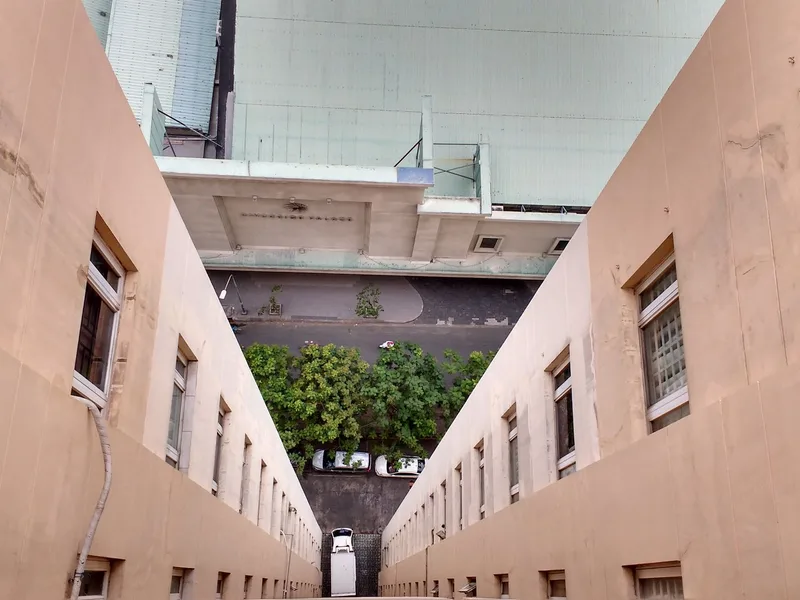
Warehouse ledges are often metal and wide, sometimes doubled on high ceilings to support air units and water tanks. Width affects which deterrent method works best.
Air conditioning platforms
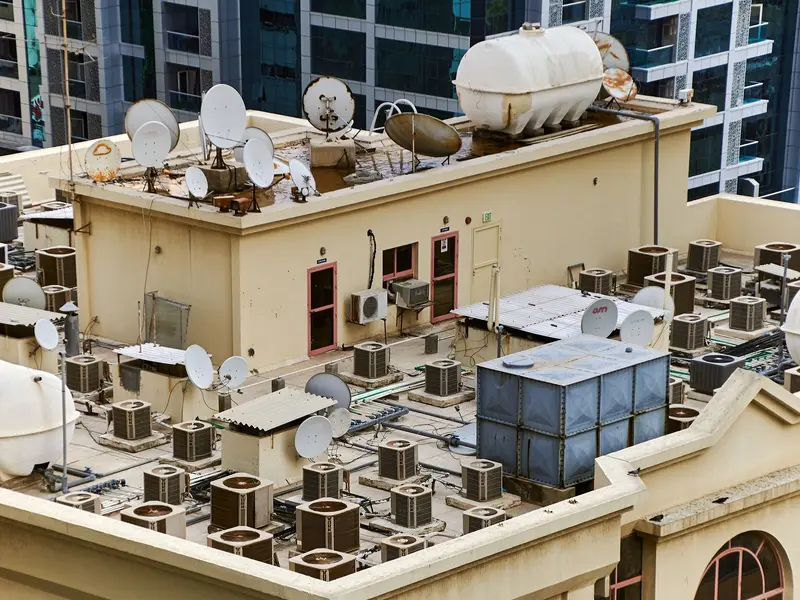
Warehouse air units are large and their fittings sit high up, requiring lifting equipment and experienced work at height to reach safely.
The nest itself
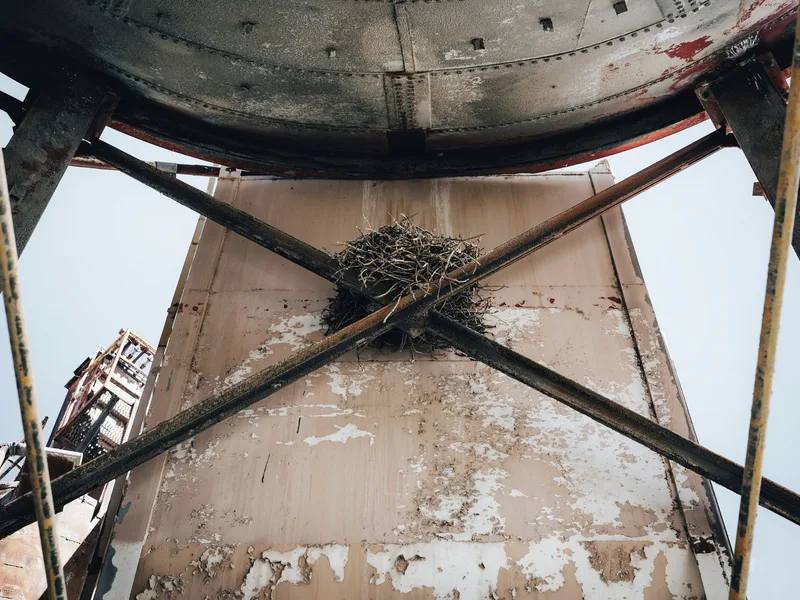
Nests in warehouses are bulky because pigeons feel secure in the sheltered space. Cleaning requires more labour and careful disposal of nest materials and droppings.
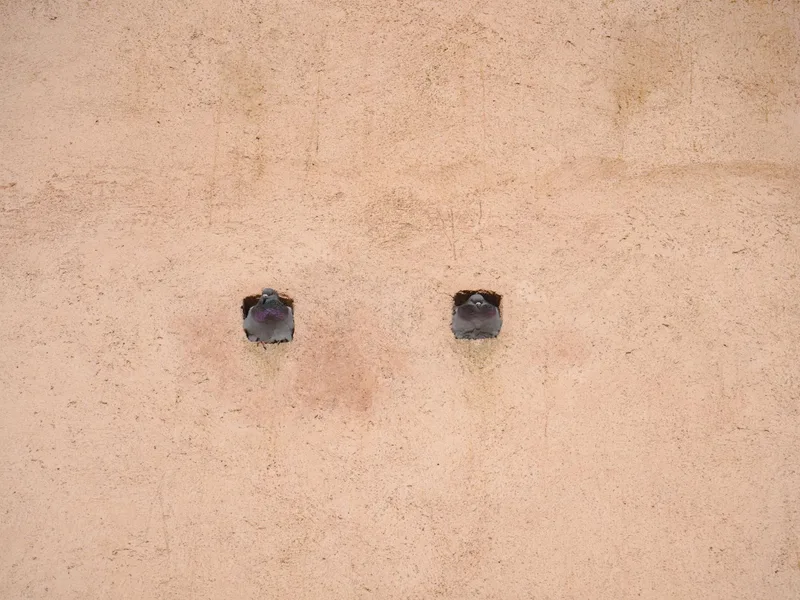
The droppings pattern
Droppings accumulate rapidly around nearby markets and pigeons clean themselves less when food is abundant, leaving a heavier parasitic burden.
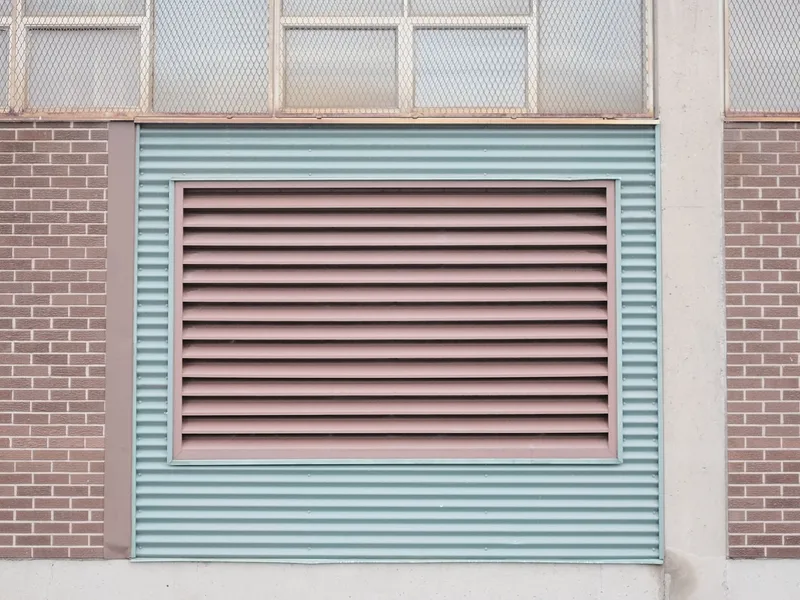
Openings and shafts
Openings in the metal frameworks are numerous and pigeons find multiple entry and exit routes. Sealing every opening is often impossible without structural changes.
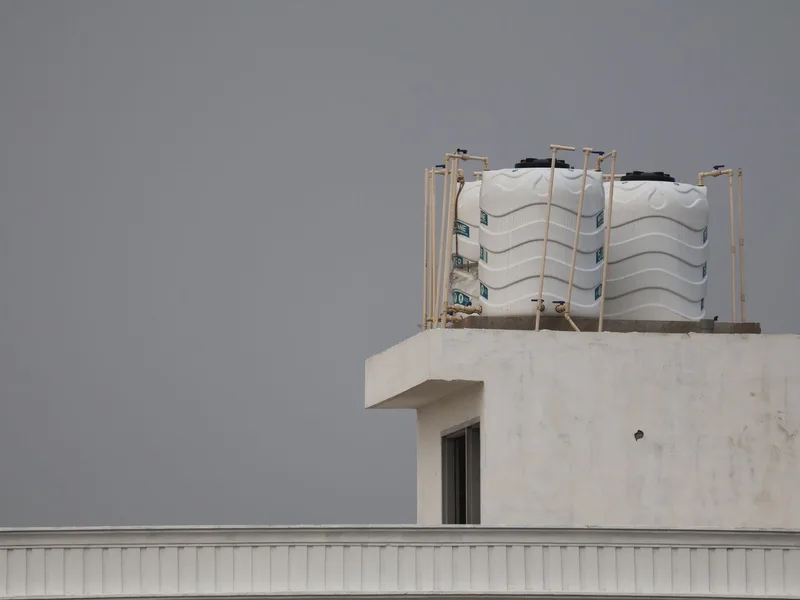
Around the roof tank
The roof tank sits in wide maintenance clearance and becomes a low surveillance gathering point where pigeons feel exposed but find shelter below the tank rim.
How we work
-
1
Survey the roof and the facade
We walk the roof, the projections, the condenser platforms and the shafts, separate the nesting positions from the perching ones, and measure and photograph every ledge.
-
2
Strip the nests and treat the parasites
Droppings are wetted before they are lifted so nothing goes airborne dry, bagged closed, and the nest position is treated for ticks and mites before the surface is sanitised.
-
3
Close and fit
Netting tensioned on a perimeter wire with no gap at the corners, spikes or wire on the narrow projections, metal mesh across vents and shafts, and the roof drains freed of the nest material packing them.
-
4
The follow-up visit
We come back to check the tension, the corners and any position the flock has moved to, and correct what has slackened before a bird finds it.
What bird and pigeon control includes
-

A recorded survey
Every ledge, condenser platform and shaft, photographed, with nesting separated from perching before anything is chosen.
-

Nest removal and drain clearing
Lifted wet rather than swept dry, bagged closed, and the roof drains freed of the nest material packing them.
-

Parasite treatment and sanitising
The nest position treated for ticks and mites, then the surface the droppings sat on sanitised.
-

Sealing and fitting the deterrents
Netting tensioned on a perimeter wire, spikes or wire on narrow projections, and metal mesh across ventilation openings.
-

Aftercare instructions
The condensate water, food left on the roof, and what should not sit beside a ledge if the attraction is to stay gone.
-

A follow-up on tension and corners
Netting slackens and corners open over time; the visit corrects that and closes any new position.
What is different about South Sub-Municipality
The South sub municipality runs from the edge of Old Makkah Road down to Al Khumrah and the southern corniche. Dense residential districts sit beside new subdivisions such as Al Sanabil and Al Taawun, warehouse fringes such as Al Saruriyah and Al Sarawat, and an old seaside settlement at Al Quzayn. Open stormwater channels cross the housing, and the warehouses, the vegetable and livestock markets and the nearby Islamic Port and Industrial City give pests shelter, food and year round humidity. Pressure is greatest in the older quarters, where drainage networks are ageing.
Questions about this district
Pigeons come from the vegetable and livestock markets; do we treat the entire market?
We focus on the ledges and loading areas of shops and warehouses directly beside the markets. The markets themselves need administrative approval and may not allow heavy fitting due to food safety and daily operations.
Above the warehouse sits an office and a residential flat; is the solution the same for both?
No. The office may need only simple deterrents, the flat requires complete protection inside against indoor droppings and parasites, and the warehouse itself needs external protection from above.
The old iron ledge is completely rusted; will deterrents install safely on corroded metal?
We inspect the metal first and may need cleaning and protective coating before fitting. In some cases we use alternative anchors designed for compromised surfaces.
Droppings fall on the flat below the warehouse; whose responsibility is treatment?
The warehouse owner is responsible for the upper area. The flat still needs window and balcony protection regardless, because droppings and parasites enter from multiple sources.
The warehouse is currently empty; should we fit deterrents before it is in use or after?
Fitting before occupation is far simpler. Pigeons may already shelter there but become visible only when activity starts, making early prevention much easier.
Pigeons stand on power lines above the warehouse; will deterrents on the roof stop them?
Power lines are outside our scope. Roof deterrents may stop them landing on the building, but power line perching needs a separate electrical solution managed by the utility.
How much does bird and pigeon control in Al Saruriyah cost?
It is set after the inspection, because the price follows the type of infestation, the size of the space, how far it has spread and the number of visits it needs. Send a photo and a description on WhatsApp and we will give you an estimate before we reach Al Saruriyah.
Nearby districts we cover
Other services in Al Saruriyah
Other services we provide to residents of Al Saruriyah.
-
 Residential
Cockroach control
Residential
Cockroach control
-
 Residential
Bed bug control
Residential
Bed bug control
-
 Residential
Termite control
Residential
Termite control
-
 Residential
Rodents and mice
Residential
Rodents and mice
-
 Residential
Mosquito control
Residential
Mosquito control
-
 Residential
Fly control
Residential
Fly control
-
 Residential
Ant control
Residential
Ant control
-
 Residential
Gecko control
Residential
Gecko control
-
 Residential
Scorpion control
Residential
Scorpion control
-
 Residential
Snake control
Residential
Snake control
-
 Residential
Flea control
Residential
Flea control
-
 Residential
Preventive treatment
Residential
Preventive treatment
-
 Residential
Disinfection
Residential
Disinfection
-
 Commercial
Annual contracts
Commercial
Annual contracts
-
 Commercial
Restaurants and cafes
Commercial
Restaurants and cafes
-
 Commercial
Hotels and apartments
Commercial
Hotels and apartments
-
 Commercial
Warehouses and factories
Commercial
Warehouses and factories
-
 Commercial
Schools and nurseries
Commercial
Schools and nurseries
-
 Commercial
Retail and malls
Commercial
Retail and malls
-
 Commercial
Rest houses and farms
Commercial
Rest houses and farms
-
 Commercial
Fumigation
Commercial
Fumigation
-
 Water tanks
Water tank cleaning
Water tanks
Water tank cleaning
-
 Water tanks
Water tank sterilization
Water tanks
Water tank sterilization
-
 Water tanks
Water tank sealing
Water tanks
Water tank sealing
-
 Water tanks
Tank leak repair
Water tanks
Tank leak repair
Need bird and pigeon control in Al Saruriyah? Tell us what you saw and we will tell you what it needs
We reach Al Saruriyah at a time we agree, and you get the full cost before we start.