

Bird and pigeon control in Al Sarawat Jeddah
Al Sarawat is an industrial district in the far south where large warehouses and workshops blend with scattered homes and wide commercial plots, creating a complex environment for pigeon colonies on large roofs and industrial structures. Pigeons settle here because of the building height, the multiple ledges and the number of angles and recesses.
-
Targeted, not broadcast
Product goes into cracks and runways, never sprayed across open surfaces.
-
Told before we start
What we will use, where it goes, and what to cover or move before we arrive.
-
A follow-up visit
We return after the first treatment, because what survives it does not show on the day.
-
Homes and businesses
Apartments and villas, and kitchens and stores that need a record of each visit.
Why they keep coming back in Al Sarawat
Pigeons in the industrial district settle on warehouse roofs far more than on villas, and nests appear in deep corners and angles that are difficult to access and difficult to treat. The method is set out in full on Bird and pigeon control in detail.
Large industrial buildings and extensive roof spans
Warehouses and workshops have vast roof areas and long ledges with numerous angles that provide multiple shelter options for pigeons. Deterrents on these roofs need different planning than standard housing, and fitting them at great heights requires specialist equipment and access methods. A single warehouse may need deterrents covering hundreds of metres of ledge.
Multiple owners and different facility types
Al Sarawat combines warehouses, workshops and scattered homes owned by different parties, so pigeon treatment is not limited to one roof but spans several adjacent structures. Pigeons move easily from warehouse to warehouse if the area is not treated in a coordinated way. A deterrent programme that covers only one warehouse leaves pigeons free to move to untreated neighbour sites.
Wide open commercial plots and yards
Vacant ground and courtyards between buildings attract pigeons and provide landing points before they ascend to roofs. Effective treatment requires covering ledges and entry points across the external perimeter of the whole site, not just the building itself. Pigeons use approach routes through open yards before settling on the higher industrial structures.
Al Sarawat on the map
Al Sarawat sits about 4.5 km from Al Saruriyah and about 6 km from Al Taawun.
Open in Google MapsThe building decides which deterrent works
Large warehouses and workshops with extensive flat roofs and numerous ledges provide abundant nesting sites. Proximity to Al Laith Road and the southern corniche increases bird movement through the area.
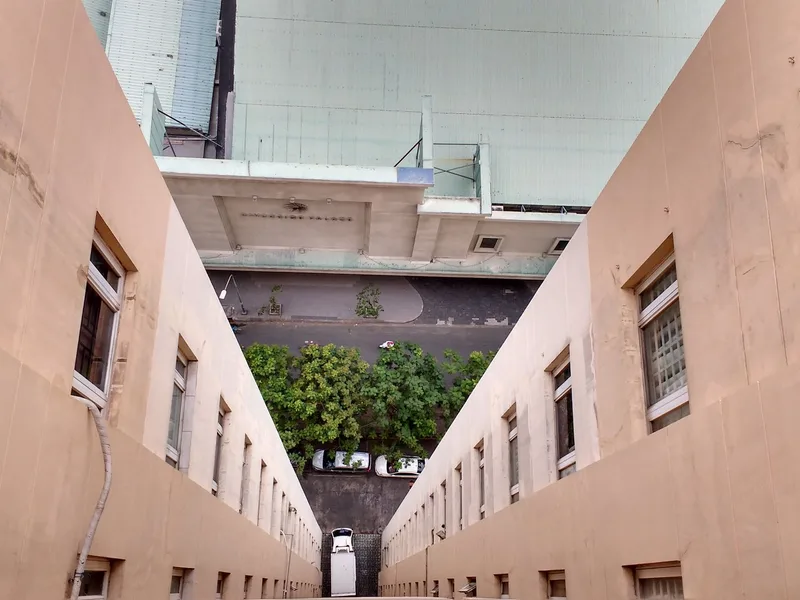
Ledge width
Warehouse and workshop ledges are very wide and flat, creating large surface areas where pigeons can stand and nest without difficulty.
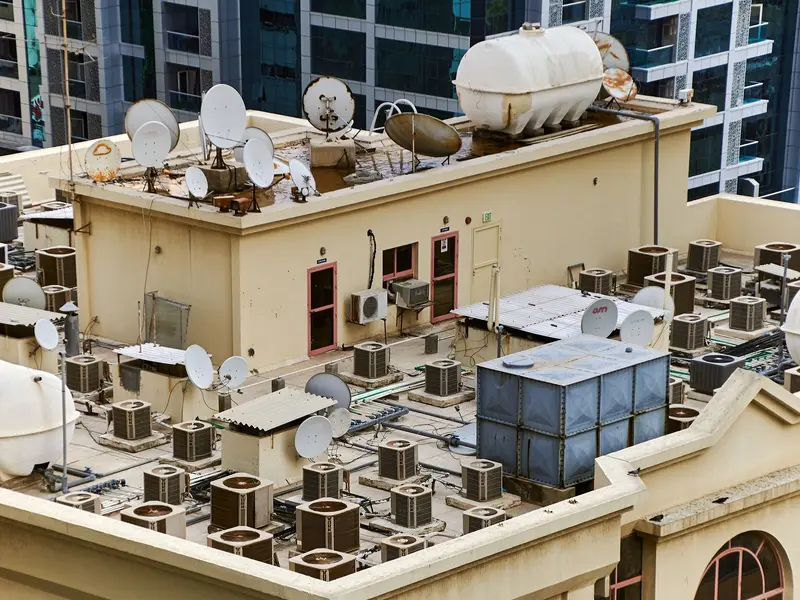
Air conditioning platforms
Warehouse and workshop air conditioners are large and metal and draw pigeons to perch on them, especially if they are old or neglected and offer a wet platform.
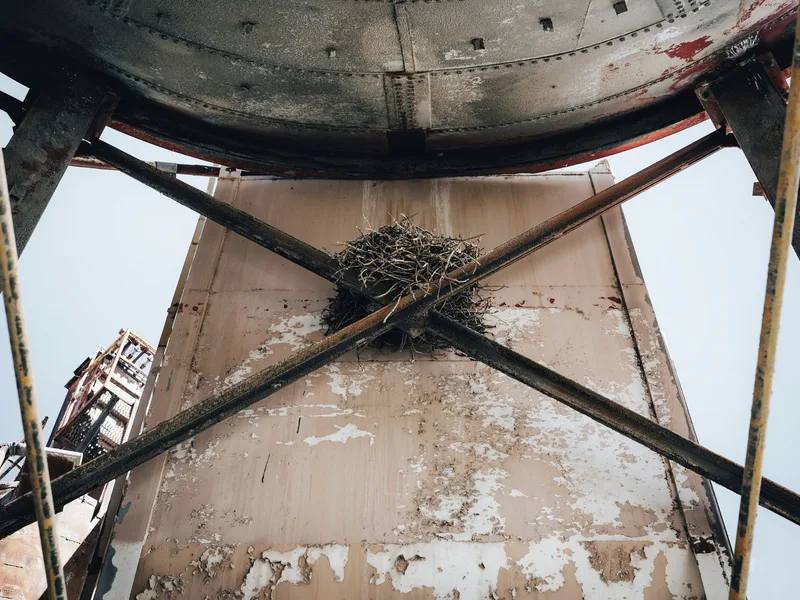
The nest itself
Nests in warehouses form under ceilings and steel beams, and deterrents remove the possibility of pigeons building nests on the open ledges instead.
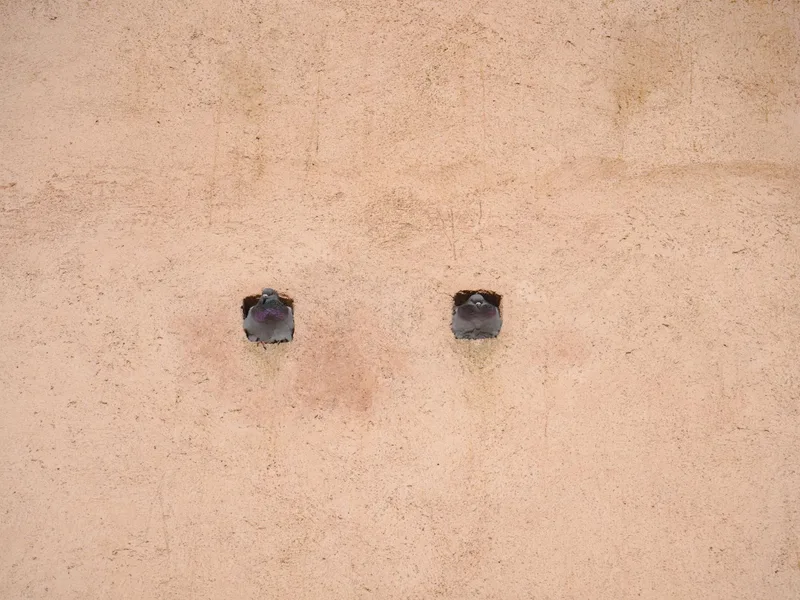
The droppings pattern
Pigeon droppings on large industrial roofs accumulate quickly and attract small insects and parasites; treatment stops them accumulating in the first place.
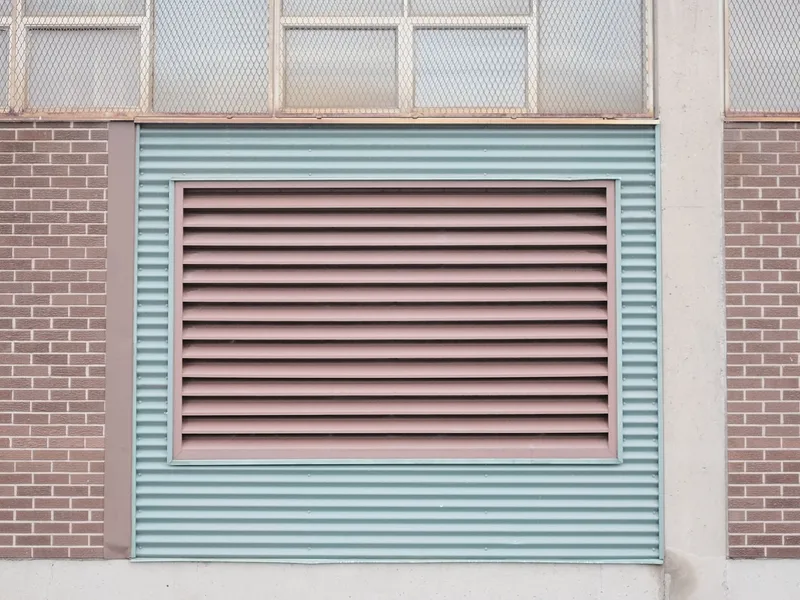
Openings and shafts
Openings and shafts on large warehouse roofs are numerous, and each one needs metal mesh screening to prevent pigeons from flying through them into the building.
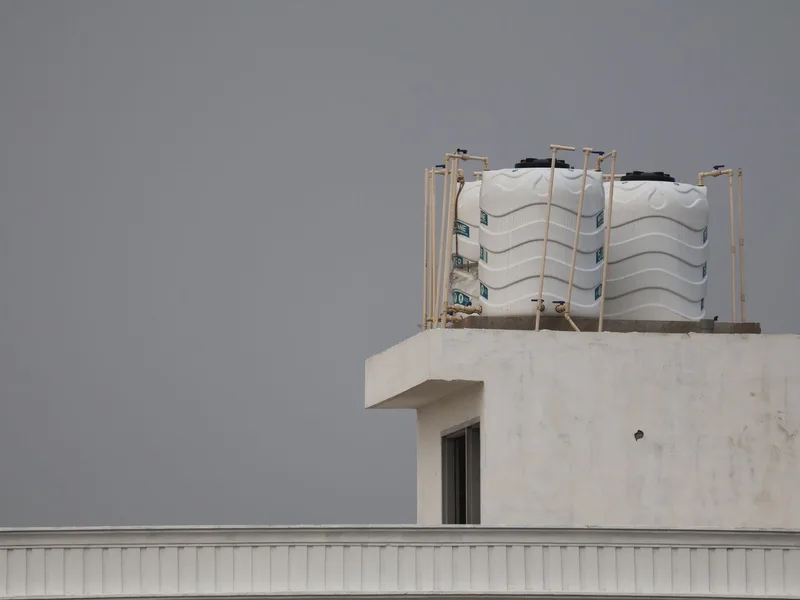
Around the roof tank
Water tanks on warehouse roofs are large and attract pigeons, but deterrents placed around their perimeter prevent pigeons from standing on or near them.
How we work
-
1
Survey the roof and the facade
We walk the roof, the projections, the condenser platforms and the shafts, separate the nesting positions from the perching ones, and measure and photograph every ledge.
-
2
Strip the nests and treat the parasites
Droppings are wetted before they are lifted so nothing goes airborne dry, bagged closed, and the nest position is treated for ticks and mites before the surface is sanitised.
-
3
Close and fit
Netting tensioned on a perimeter wire with no gap at the corners, spikes or wire on the narrow projections, metal mesh across vents and shafts, and the roof drains freed of the nest material packing them.
-
4
The follow-up visit
We come back to check the tension, the corners and any position the flock has moved to, and correct what has slackened before a bird finds it.
What bird and pigeon control includes
-

A recorded survey
Every ledge, condenser platform and shaft, photographed, with nesting separated from perching before anything is chosen.
-

Nest removal and drain clearing
Lifted wet rather than swept dry, bagged closed, and the roof drains freed of the nest material packing them.
-

Parasite treatment and sanitising
The nest position treated for ticks and mites, then the surface the droppings sat on sanitised.
-

Sealing and fitting the deterrents
Netting tensioned on a perimeter wire, spikes or wire on narrow projections, and metal mesh across ventilation openings.
-

Aftercare instructions
The condensate water, food left on the roof, and what should not sit beside a ledge if the attraction is to stay gone.
-

A follow-up on tension and corners
Netting slackens and corners open over time; the visit corrects that and closes any new position.
The character of Al Sarawat
Industrial area: workshops, warehouses and loading yards
An industrial area means that pigeon treatment spans large warehouses and tall workshops rather than standard villas, and the wide open ledges need continuous long deterrents rather than isolated point deterrents or small targeted interventions.
Questions about this district
The warehouse next to mine is untreated. Is treating my warehouse alone sufficient?
Pigeons move freely between adjacent warehouses. If a neighbour's warehouse is left untreated, pigeons will return to your site. Coordinating treatment with neighbouring owners significantly improves the effectiveness and duration of the deterrent programme.
The workshop has scaffolding and construction steel between ledges; does this affect fitting?
Scaffolding and materials in and around ledges need careful assessment. Some materials may need temporary removal or shifting to fit deterrents, but the fitting itself does not compromise workshop safety or structural integrity.
Al Laith Road runs beside the site with heavy traffic. Is fitting deterrents on the ledge safe?
Yes, metal deterrents and spikes pose no hazard to road users. Fitting is carried out away from the movement zone and outside the direct sightline of traffic.
Pigeons enter through ventilation gaps in the warehouse walls. How do we stop that?
Ventilation openings need specialist mesh screens that block pigeons without reducing airflow. We assess each opening and choose a solution that prevents entry while maintaining the building's air circulation.
Is roof treatment alone enough, or do we need to treat facades and openings as well?
Comprehensive treatment includes roofs, facades and horizontal openings. Pigeons enter from multiple points, and an effective solution covers all potential entry routes around the perimeter and roof structure.
The southern corniche is beside us. Does it bring new pigeons into the area constantly?
Yes, the corniche is a permanent pigeon source, but correct treatment makes your site unattractive to settlement even though pigeons may be near. Deterrents stop pigeons from choosing to nest there rather than focusing on their origin point.
How much does bird and pigeon control in Al Sarawat cost?
It is set after the inspection, because the price follows the type of infestation, the size of the space, how far it has spread and the number of visits it needs. Send a photo and a description on WhatsApp and we will give you an estimate before we reach Al Sarawat.
Nearby districts we cover
Other services in Al Sarawat
Other services we provide to residents of Al Sarawat.
-
 Residential
Cockroach control
Residential
Cockroach control
-
 Residential
Bed bug control
Residential
Bed bug control
-
 Residential
Termite control
Residential
Termite control
-
 Residential
Rodents and mice
Residential
Rodents and mice
-
 Residential
Mosquito control
Residential
Mosquito control
-
 Residential
Fly control
Residential
Fly control
-
 Residential
Ant control
Residential
Ant control
-
 Residential
Gecko control
Residential
Gecko control
-
 Residential
Scorpion control
Residential
Scorpion control
-
 Residential
Snake control
Residential
Snake control
-
 Residential
Flea control
Residential
Flea control
-
 Residential
Preventive treatment
Residential
Preventive treatment
-
 Residential
Disinfection
Residential
Disinfection
-
 Commercial
Annual contracts
Commercial
Annual contracts
-
 Commercial
Restaurants and cafes
Commercial
Restaurants and cafes
-
 Commercial
Hotels and apartments
Commercial
Hotels and apartments
-
 Commercial
Warehouses and factories
Commercial
Warehouses and factories
-
 Commercial
Schools and nurseries
Commercial
Schools and nurseries
-
 Commercial
Retail and malls
Commercial
Retail and malls
-
 Commercial
Rest houses and farms
Commercial
Rest houses and farms
-
 Commercial
Fumigation
Commercial
Fumigation
-
 Water tanks
Water tank cleaning
Water tanks
Water tank cleaning
-
 Water tanks
Water tank sterilization
Water tanks
Water tank sterilization
-
 Water tanks
Water tank sealing
Water tanks
Water tank sealing
-
 Water tanks
Tank leak repair
Water tanks
Tank leak repair
Need bird and pigeon control in Al Sarawat? Tell us what you saw and we will tell you what it needs
We reach Al Sarawat at a time we agree, and you get the full cost before we start.