
Bird and pigeon control in Al Thaghr Jeddah
Al Thaghr is a residential district south of Old Makkah Road, with villas, apartment blocks, Al Thaghr Model Schools and Al Thaghr Hospital. Pigeons settle on roofs and gaps especially around the educational and health institutions, which supply birds with food and water from canteens and green spaces. The district is mixed ownership between private residents and government institutions, each needing separate treatment coordination.
-
Targeted, not broadcast
Product goes into cracks and runways, never sprayed across open surfaces.
-
Told before we start
What we will use, where it goes, and what to cover or move before we arrive.
-
A follow-up visit
We return after the first treatment, because what survives it does not show on the day.
-
Homes and businesses
Apartments and villas, and kitchens and stores that need a record of each visit.
Why they keep coming back in Al Thaghr
Schools and hospitals attract large pigeon flocks because of human activity and dropped food from student and staff areas, and pigeons move from these institutions to neighbouring villas and apartment blocks at night. The method is set out in full on how we approach Bird and pigeon control.
Schools and hospital as concentrated food sources
Al Thaghr Model Schools and Al Thaghr Hospital supply food and water from canteens, gardens and gathering areas for students and staff. Large flocks settle on these institutional roofs and move to neighbouring villas and apartments when disturbed by movement or noise.
Detached villas and mixed apartment blocks in the same district
The neighbourhood combines separate villas needing individual treatment with shared apartment blocks needing collective agreement. Treating villas alone does not stop pigeons if neighbouring blocks remain unprotected bird sources.
Prince Majid Road as commercial axis and traffic hub
Prince Majid Road passes through the district carrying commercial movement and vehicles, which means shops and eateries along the road supply additional food. The neighbourhood is not isolated but exposed to the effect of central traffic and activity.
Landmarks of Al Thaghr
Work in Al Thaghr is organised around Al Thaghr Model Schools and Al Thaghr Hospital, and along Prince Majid Road which connects the neighbourhood to surrounding areas. Access to villas and apartment blocks is through interior streets encircling these institutions.
- Old Makkah Road
- Prince Majid Road
- King Khalid Road
- Al Thaghr Model Schools
- Al Thaghr Hospital
The building decides which deterrent works
Villas and apartment blocks alongside Al Thaghr Model Schools and Al Thaghr Hospital, a district bounded by main roads in central south Jeddah.
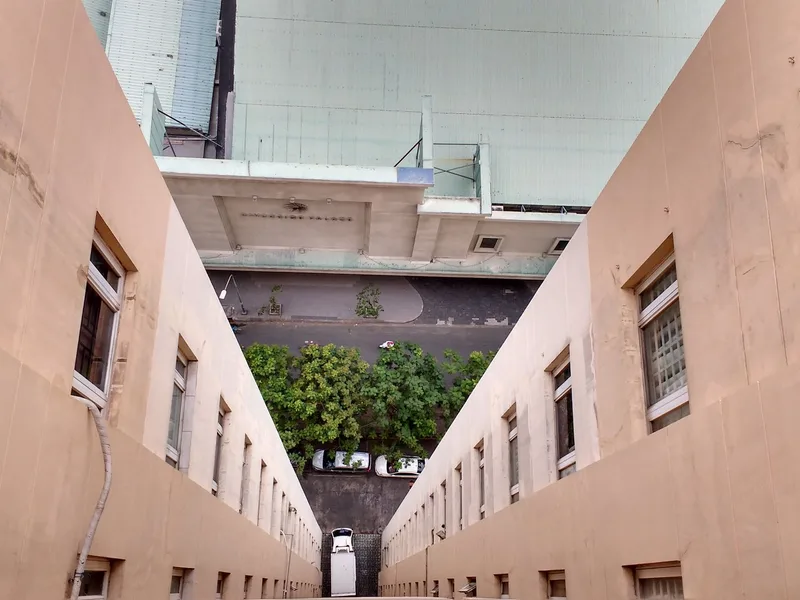
Ledge width
Ledges on villas, apartment blocks and institutional buildings vary in height, and pigeons prefer the broad ledges on schools and hospitals to the narrow ledges on villas.
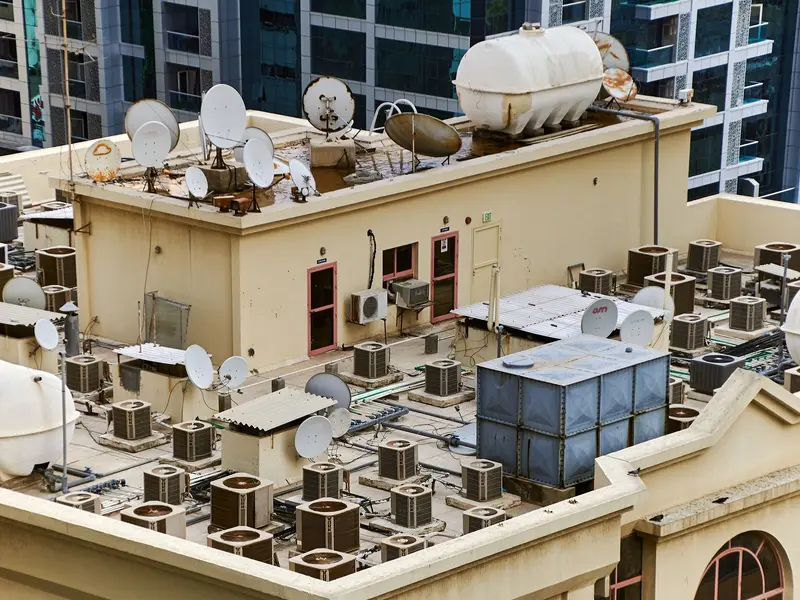
Air conditioning platforms
Air conditioning units on villa roofs, apartment blocks and institutional buildings drip substantial water, and pigeons gather around these units all day, especially in summer heat.
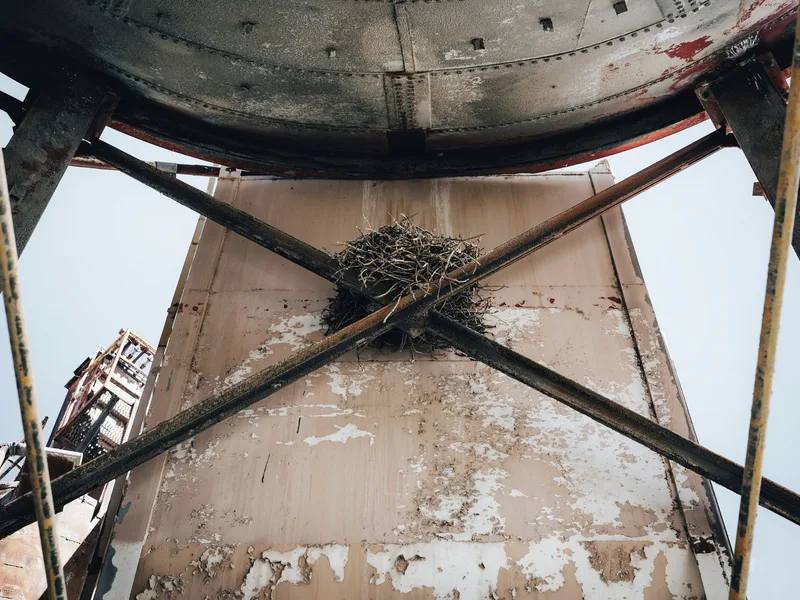
The nest itself
Nests on institutional roofs are larger and more complex because birds use these large surfaces for many years before treatment.
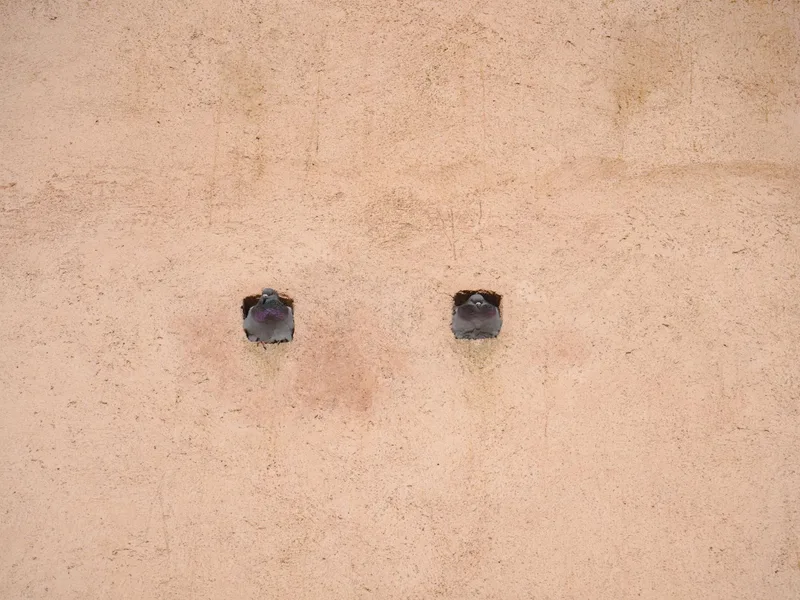
The droppings pattern
Droppings from large pigeon flocks on institutions accumulate rapidly and cause health issues in lower flats and educational classrooms.
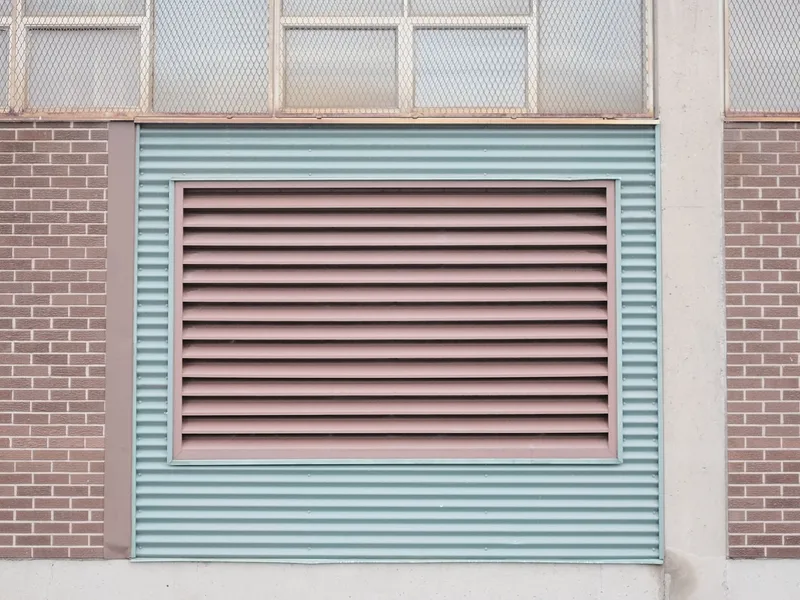
Openings and shafts
Openings and ventilation shafts on villas, apartment blocks and institutions give pigeons indoor access, and large institutions have more air vents than single structures.
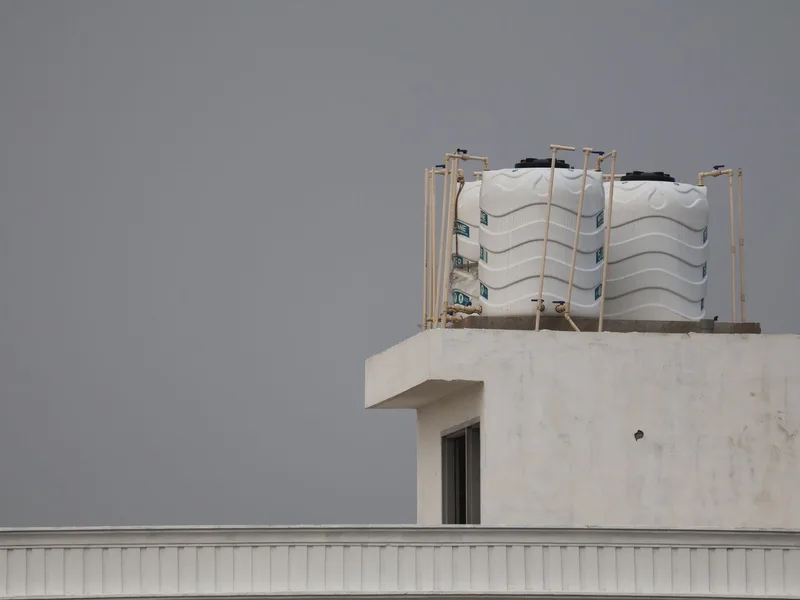
Around the roof tank
Water tanks on institutional roofs host large perching flocks, and droppings fall onto roofs and residential areas below.
How we work
-
1
Survey the roof and the facade
We walk the roof, the projections, the condenser platforms and the shafts, separate the nesting positions from the perching ones, and measure and photograph every ledge.
-
2
Strip the nests and treat the parasites
Droppings are wetted before they are lifted so nothing goes airborne dry, bagged closed, and the nest position is treated for ticks and mites before the surface is sanitised.
-
3
Close and fit
Netting tensioned on a perimeter wire with no gap at the corners, spikes or wire on the narrow projections, metal mesh across vents and shafts, and the roof drains freed of the nest material packing them.
-
4
The follow-up visit
We come back to check the tension, the corners and any position the flock has moved to, and correct what has slackened before a bird finds it.
What bird and pigeon control includes
-

A recorded survey
Every ledge, condenser platform and shaft, photographed, with nesting separated from perching before anything is chosen.
-

Nest removal and drain clearing
Lifted wet rather than swept dry, bagged closed, and the roof drains freed of the nest material packing them.
-

Parasite treatment and sanitising
The nest position treated for ticks and mites, then the surface the droppings sat on sanitised.
-

Sealing and fitting the deterrents
Netting tensioned on a perimeter wire, spikes or wire on narrow projections, and metal mesh across ventilation openings.
-

Aftercare instructions
The condensate water, food left on the roof, and what should not sit beside a ledge if the attraction is to stay gone.
-

A follow-up on tension and corners
Netting slackens and corners open over time; the visit corrects that and closes any new position.
What is different about Al Jamiah Sub-Municipality
Al Jamiah sub municipality spans the older south of Jeddah. Planned districts such as Al Fayha, Al Thaghr and Madain Al Fahd sit beside crowded popular quarters like the Nazlahs and Al Quraiyat, and beside cleared or clearing land in Ghulail, Petromin and Al Thaalibah awaiting redevelopment. Apartment buildings stand close together above dense runs of shops and restaurants along Old Makkah Road and Prince Majid Road. Drainage in the popular quarters is ageing, humid air drifts in from the port and refinery side to the west, and the flat low lying ground holds rainwater in narrow streets.
Questions about this district
Do schools and hospitals attract more pigeons than ordinary residential villas in the district?
Large institutions provide wide surfaces and abundant food and water, and pigeon flocks settle in large numbers. Treatment needs coordination with institution managements because their roofs are shared institutional property.
Do pupils and staff leave food scraps that attract pigeons at schools and hospitals?
School canteens and hospitals generate dropped food from meals and waste bins, and pigeons come every day during rest and mealtimes when food is scattered on the ground by students and staff.
Can treating a single villa make any difference if the school nearby is a constant pigeon source?
Treating one villa stops pigeons on that roof alone, and the birds return from the nearby school. Coordination with the school is essential to reduce the flocks arriving from that institution.
Do irrigated gardens and green spaces at the school supply additional water for pigeons?
Irrigated school gardens provide fresh water year round, and pigeons come daily to drink from sprinkler systems.
Do gaps between the villas and institutional buildings provide intermediate shelter for pigeons?
Gaps provide shelter and safe flight paths between institutions and neighbouring villas, and pigeons use these spaces to move safely between locations.
Do residents in this neighbourhood complain more about pigeons than people in other districts?
Large flocks from the institutions cause more complaints than ordinary residential areas, and residents notice daily flocks and heavy dropping accumulation.
How much does bird and pigeon control in Al Thaghr cost?
It is set after the inspection, because the price follows the type of infestation, the size of the space, how far it has spread and the number of visits it needs. Send a photo and a description on WhatsApp and we will give you an estimate before we reach Al Thaghr.
Nearby districts we cover
Other services in Al Thaghr
Other services we provide to residents of Al Thaghr.
-
 Residential
Cockroach control
Residential
Cockroach control
-
 Residential
Bed bug control
Residential
Bed bug control
-
 Residential
Termite control
Residential
Termite control
-
 Residential
Rodents and mice
Residential
Rodents and mice
-
 Residential
Mosquito control
Residential
Mosquito control
-
 Residential
Fly control
Residential
Fly control
-
 Residential
Ant control
Residential
Ant control
-
 Residential
Gecko control
Residential
Gecko control
-
 Residential
Scorpion control
Residential
Scorpion control
-
 Residential
Snake control
Residential
Snake control
-
 Residential
Flea control
Residential
Flea control
-
 Residential
Preventive treatment
Residential
Preventive treatment
-
 Residential
Disinfection
Residential
Disinfection
-
 Commercial
Annual contracts
Commercial
Annual contracts
-
 Commercial
Restaurants and cafes
Commercial
Restaurants and cafes
-
 Commercial
Hotels and apartments
Commercial
Hotels and apartments
-
 Commercial
Warehouses and factories
Commercial
Warehouses and factories
-
 Commercial
Schools and nurseries
Commercial
Schools and nurseries
-
 Commercial
Retail and malls
Commercial
Retail and malls
-
 Commercial
Rest houses and farms
Commercial
Rest houses and farms
-
 Commercial
Fumigation
Commercial
Fumigation
-
 Water tanks
Water tank cleaning
Water tanks
Water tank cleaning
-
 Water tanks
Water tank sterilization
Water tanks
Water tank sterilization
-
 Water tanks
Water tank sealing
Water tanks
Water tank sealing
-
 Water tanks
Tank leak repair
Water tanks
Tank leak repair
Need bird and pigeon control in Al Thaghr? Tell us what you saw and we will tell you what it needs
We reach Al Thaghr at a time we agree, and you get the full cost before we start.