
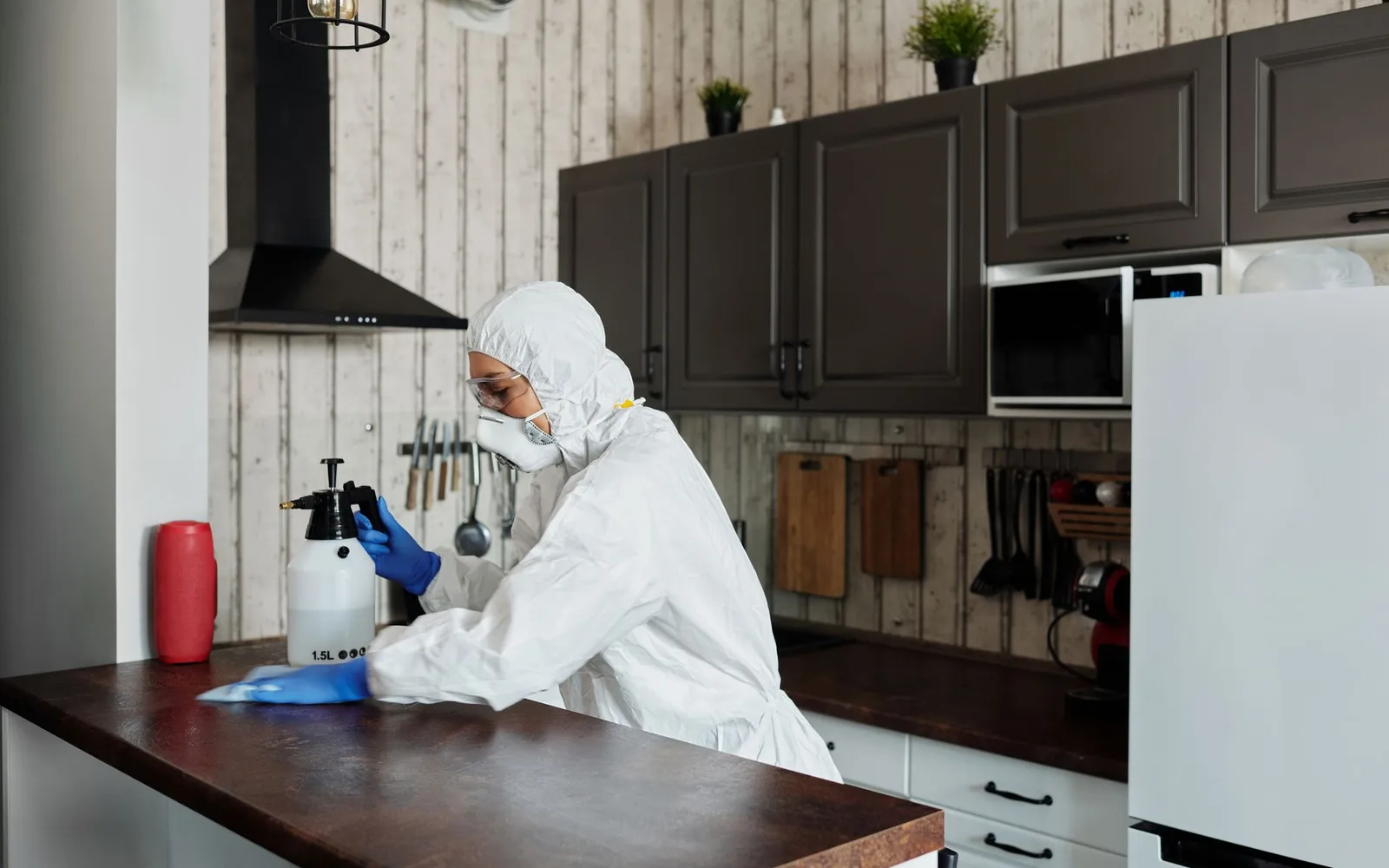
Disinfection in Al Sawari Jeddah
Al Sawari is a recently built district where shops line the ground floors and homes occupy the storeys above, which means surfaces receive contaminants from foot traffic, goods and deliveries all day long. Disinfection here extends beyond individual apartments to the shared thresholds, stairwells and ventilation channels that connect the floors and bridge domestic and commercial spaces.
-
Targeted, not broadcast
Product goes into cracks and runways, never sprayed across open surfaces.
-
Told before we start
What we will use, where it goes, and what to cover or move before we arrive.
-
A follow-up visit
We return after the first treatment, because what survives it does not show on the day.
-
Homes and businesses
Apartments and villas, and kitchens and stores that need a record of each visit.
Why they keep coming back in Al Sawari
Mixed-use buildings in Al Sawari require different treatment because touch points are numerous and users are diverse. Food retail and medical facilities on lower floors increase the microbial load that rises through shared circulation. The method is set out in full on our Disinfection service.
Mixed-use buildings and incomplete isolation
In a mixed district, the doors and windows and openings in residential apartments do not fully seal against smoke and humidity drifting up from commercial premises below. Disinfection must include air paths and internal thresholds where contaminants accumulate as they rise and settle between zones of use.
Continuous delivery and footfall loading
Daily cycles of customer, staff and goods movement through shop entrances raise microbial contamination in shared lobbies and corridors. Stairs, passages and lifts become high touch points and need intensive treatment because they are crossed by different people heading to different destinations every hour.
Ventilation paths and cross contamination
Electrical runs and pipework pass through party walls, and ductwork openings may allow contaminant drift between units. Disinfection in mixed buildings means treating channels and cavities so that germs travelling through shared air passages do not re colonise treated surfaces elsewhere.
The character of Al Sawari
Mixed district: shops at street level with homes above them
Disinfection in a mixed district protects residential units from contaminants generated in retail spaces below. Focusing on shared zones, ventilation paths and cycling disinfection prevents germs and odours drifting between different uses and users.
What we look at before the product is chosen
A recently developed northern district between King Saud Road and Prince Abdulmajeed Road, mixing owner-occupied villas and apartments, with Aabir Al Qarat Street crossing it, Al Sawari Park and the neighbourhood health centre.
The touch points
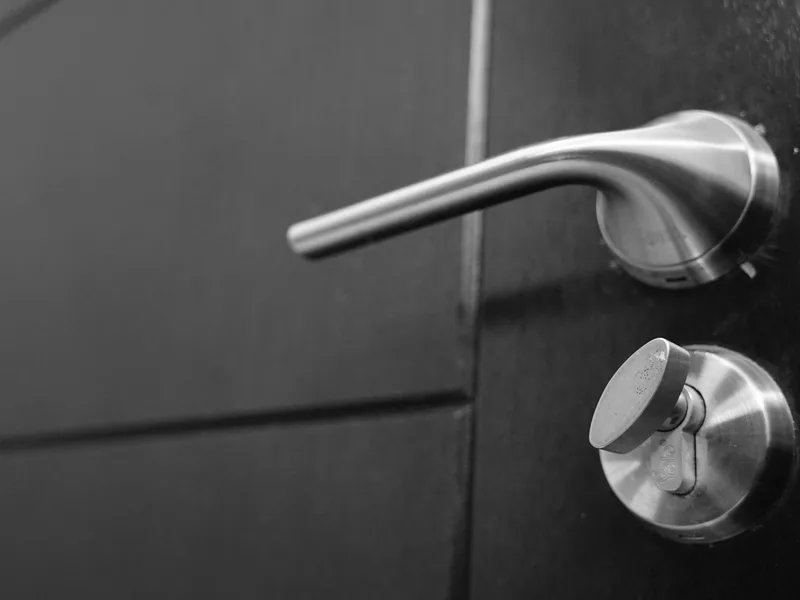
Al Sawari's mixed-use buildings have multiple touch points throughout the day: customer hands, delivered goods, staff movement, all of it raising contamination in lobbies, stairs and lift surfaces that need regular disinfection to stay safe.
Porous surfaces
Porous surfaces in shared stairs and passages absorb moisture from the sea air nearby, creating a damp environment where pathogens survive longer. Porous materials require deep treatment so the disinfectant penetrates to the depth where germs hide.
The finish itself
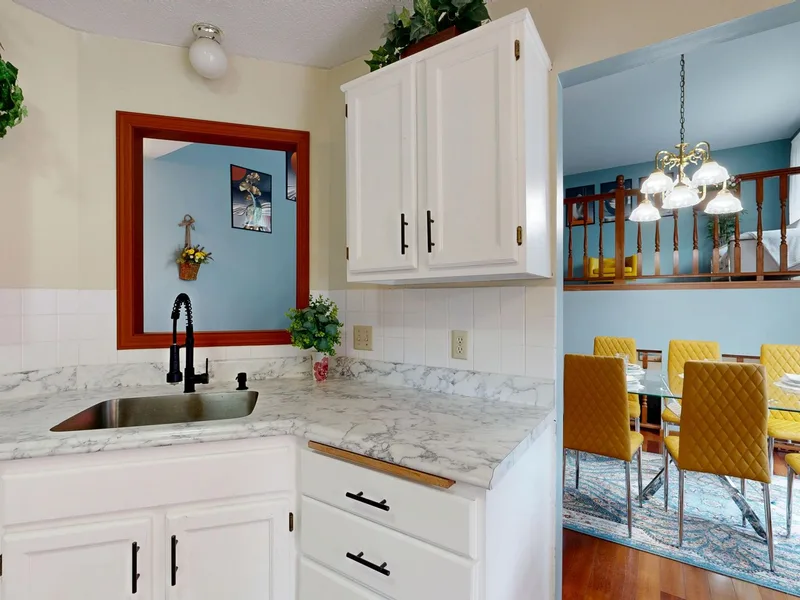
In a mixed district, finishes vary widely: ceramic tile in retail spaces, concrete in service areas, ceramic in residential lobbies. Each absorbs the disinfectant differently based on its porosity, so treatment methods must match the material.
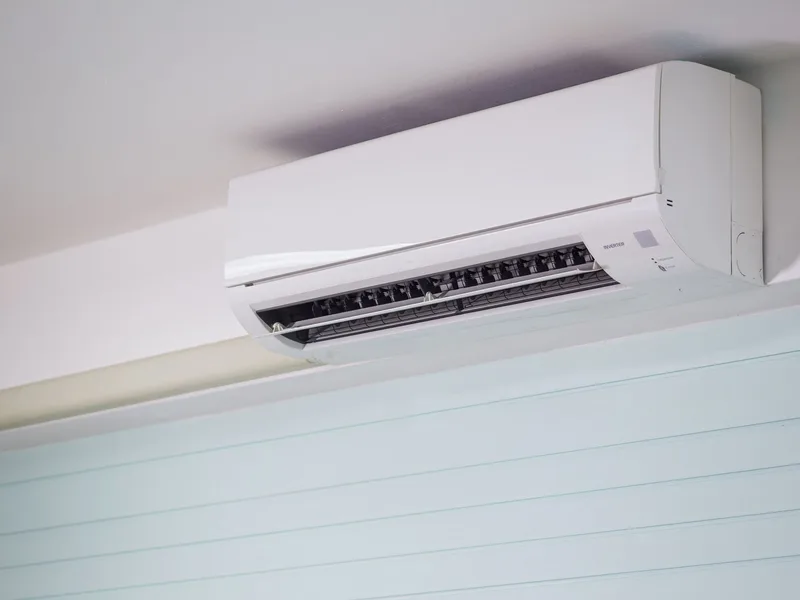
The air conditioning unit
Central air conditioning systems in older mixed buildings may serve multiple units at once. Cleaning and disinfecting ducts and units stops germs from travelling between residential and commercial space.
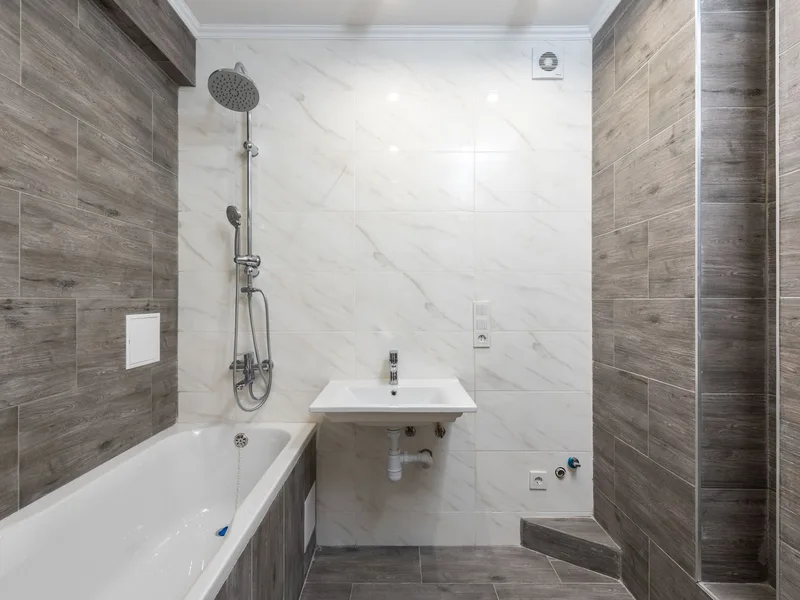
Floor traps
Floor traps in passages and commercial kitchen areas hold standing water. These traps are reservoirs of smell and germs and need separate treatment, sometimes mechanical cleaning before disinfection can reach deep enough.
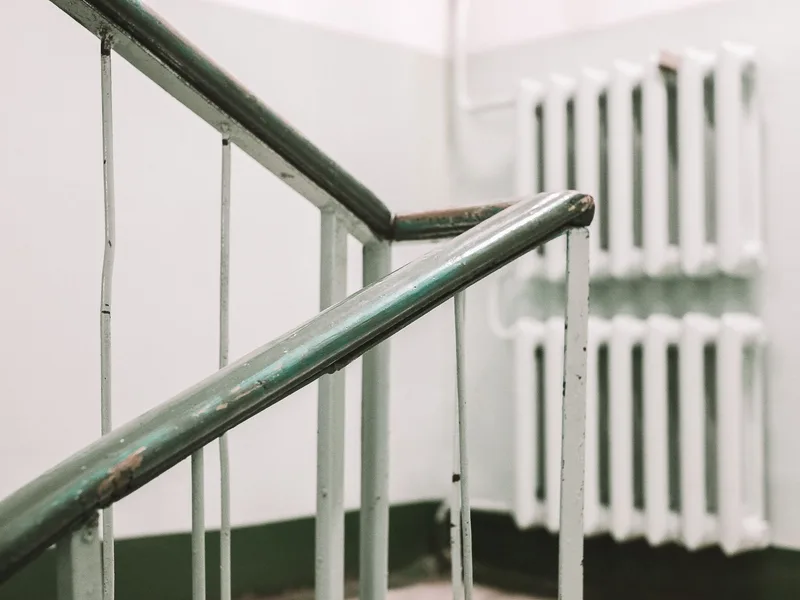
Shared entrances and stairs
Shared stairs and passages are the first surfaces residents and customers touch when entering. Regular disinfection here cuts the microbial load that residents carry into their own units and prevents smell and sickness returning home.
How we work
-
1
Walk the space and list the surfaces
We go through the rooms and mark the touch points, the porous surfaces and the finishes, then ask what prompted the call: illness at home, moving into a new place, building work, or a smell that arrived out of nowhere.
-
2
Clean what we are about to treat
We take the film of dust and grease off the surfaces that are in scope, so the product reaches the surface itself. This is preparation for the treatment, not general house cleaning.
-
3
Apply it, and hold the contact time
Hand work on the touch points, a product matched to each surface, and the surface left visibly wet for as long as that material needs before it is dried off. Cold fogging comes last, for what a cloth cannot reach.
-
4
Ventilate and hand back
We open the place up, rinse food preparation surfaces with water, and tell you when each room goes back into use. We give you that timing on the call, because it changes with the product and the space.
What a disinfection visit includes
-

A surface and touch point survey
What gets treated, and with what, settled before anything is opened.
-

Soil off first, then the disinfectant
The greasy film comes off first, then a product that stays wet for the contact time it needs.
-

Floor traps and the air conditioning drain
Floor traps, sink outlets and the drain tray, which is where most smells actually begin.
-
Cold fogging for the space
For upward faces and corners a cloth never reaches, done as the last thing before we leave a room.
-

Ventilation and use instructions
What gets rinsed with water, what is left alone, and when each room goes back into use.
-

A scheduled repeat when it is needed
For shared entrances and places people pass through every day, because a disinfectant leaves nothing behind to stop the next contact.
What is different about Dhahban Sub-Municipality
Dhahban sub municipality is the northern coastal strip of Jeddah, running from the north bank of Sharm Obhur up to the old village of Dhahban and Salman Bay. Its districts are recently built, with owner occupied villas and apartments, beach resorts and chalets on the shore, and land subdivisions still being developed. Nearness to the sea keeps humidity high all year, irrigated lawns in villas, resorts and district parks hold water, Wadi Obhur and the vacant plots between buildings give rodents and reptiles shelter, and the old fishing village of Dhahban gives the far north a rural edge.
Questions about this district
Does disinfection cover the shared stairs and passages here?
Yes, disinfection includes all shared touch points: stairs, corridors, lifts, thresholds, handrails and landing surfaces. In mixed-use districts these are critical because they carry far higher contamination loads from street traffic than residential stairs elsewhere.
How do you treat the ventilation openings between flats and shops?
We inspect ventilation systems and ducts and treat openings and channels that allow contaminant migration between residential and commercial units. This cuts the return of odours and odorous vapours that rise from food preparation and storage below.
Can disinfection protect against contaminants coming up from the shops?
Disinfection cleans existing surfaces, but it does not stop new contaminants entering from the street and shops. We recommend improving the unit's own sealing and directed ventilation so that continuous soil from below does not re enter treated space.
Should shops and flats be disinfected on different schedules?
Each unit should be treated to its own use pattern. Food retail especially needs intensive treatment and more frequent retreatment than residential apartments because the contamination load is higher and the risk profile different.
What distinguishes cleaning from disinfection in shared corridors?
Cleaning removes dust and soil. Disinfection kills pathogens on the surface. In shared corridors, disinfection is ongoing because these spaces see traffic from many different people every single day, each a source of new microbes.
Do you service air conditioning filters and fan casings during disinfection?
We inspect and treat air conditioning filters, fan casings and ductwork because they collect dust and microbial debris. Cleaning and disinfecting them improves indoor air quality and stops germs from being recirculated through the mixed units above.
How much does disinfection in Al Sawari cost?
It is set after the inspection, because the price follows the type of infestation, the size of the space, how far it has spread and the number of visits it needs. Send a photo and a description on WhatsApp and we will give you an estimate before we reach Al Sawari.
Nearby districts we cover
Other services in Al Sawari
Other services we provide to residents of Al Sawari.
-
 Residential
Cockroach control
Residential
Cockroach control
-
 Residential
Bed bug control
Residential
Bed bug control
-
 Residential
Termite control
Residential
Termite control
-
 Residential
Rodents and mice
Residential
Rodents and mice
-
 Residential
Mosquito control
Residential
Mosquito control
-
 Residential
Fly control
Residential
Fly control
-
 Residential
Ant control
Residential
Ant control
-
 Residential
Gecko control
Residential
Gecko control
-
 Residential
Scorpion control
Residential
Scorpion control
-
 Residential
Snake control
Residential
Snake control
-
 Residential
Flea control
Residential
Flea control
-
 Residential
Bird and pigeon control
Residential
Bird and pigeon control
-
 Residential
Preventive treatment
Residential
Preventive treatment
-
 Commercial
Annual contracts
Commercial
Annual contracts
-
 Commercial
Restaurants and cafes
Commercial
Restaurants and cafes
-
 Commercial
Hotels and apartments
Commercial
Hotels and apartments
-
 Commercial
Warehouses and factories
Commercial
Warehouses and factories
-
 Commercial
Schools and nurseries
Commercial
Schools and nurseries
-
 Commercial
Retail and malls
Commercial
Retail and malls
-
 Commercial
Rest houses and farms
Commercial
Rest houses and farms
-
 Commercial
Fumigation
Commercial
Fumigation
-
 Water tanks
Water tank cleaning
Water tanks
Water tank cleaning
-
 Water tanks
Water tank sterilization
Water tanks
Water tank sterilization
-
 Water tanks
Water tank sealing
Water tanks
Water tank sealing
-
 Water tanks
Tank leak repair
Water tanks
Tank leak repair
Need disinfection in Al Sawari? Tell us what you saw and we will tell you what it needs
We reach Al Sawari at a time we agree, and you get the full cost before we start.