
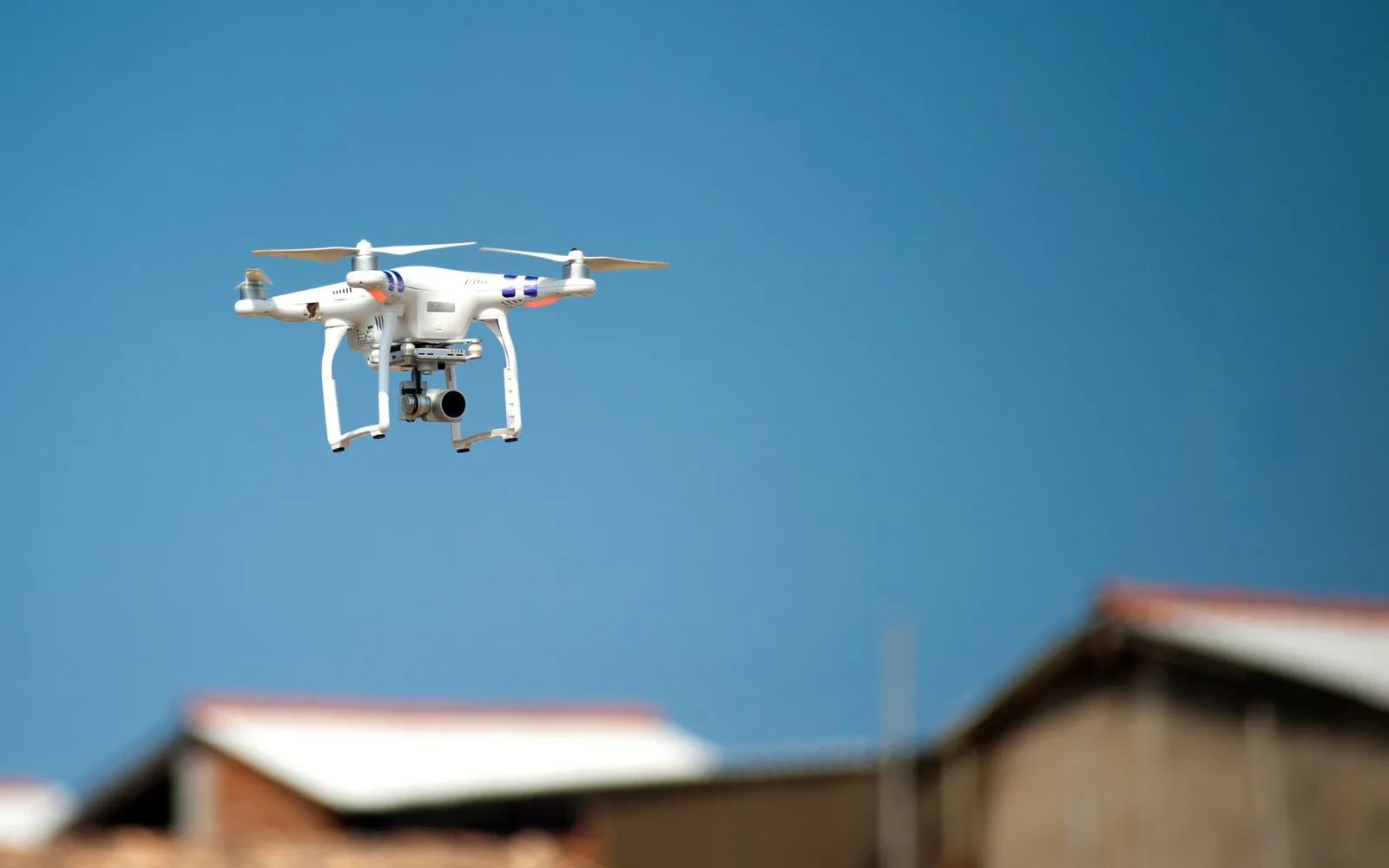
Fly control in Al Sawari Jeddah
Al Sawari is a mixed district laid out recently between King Saud Road and Prince Abdulmajeed Road, with street level shops beneath homes and attached villas and apartments ringed by irrigated gardens. Flies find shelter and entry points in every layer. The separation of functions means the fly control here must work across all of them.
-
Targeted, not broadcast
Product goes into cracks and runways, never sprayed across open surfaces.
-
Told before we start
What we will use, where it goes, and what to cover or move before we arrive.
-
A follow-up visit
We return after the first treatment, because what survives it does not show on the day.
-
Homes and businesses
Apartments and villas, and kitchens and stores that need a record of each visit.
Why they keep coming back in Al Sawari
Shops here close at night, leaving flies unsupervised for hours to prospect the kitchens and waste stores of the apartments and villas directly adjoining them on the floors above. The method is set out in full on the full Fly control page.
Ground shops work as a ladder for flies to climb
When ground floor shops are sprayed alone, flies escape to the apartments directly above them through shared vents, gaps and connecting pipework. Any treatment has to reach the residential units stacked on top, or the flies simply move upward and the problem shifts rather than resolves.
Irrigated gardens in villas breed flies daily
Twice daily watering of lawns and planting in Al Sawari villas keeps soil damp, which eggs and pupae favour. Flies mature in that moist ground and then move into the house, so garden treatment cannot be delayed or avoided without conceding the breeding ground entirely.
Aabir Al Qarat Street funnels traffic and waste together
The main artery carries dense daily traffic and is lined on both sides with waste bins and food stalls. That concentration means fly sources sit in one place and feed the district, so control here aims at the street facing side of the district first.
The character of Al Sawari
Mixed district: shops at street level with homes above them
In a mixed district such as Al Sawari, flies exploit the diversity: shops supply the food, flats supply shelter, and the connection between them is direct. A solution confined to one layer alone simply drives the flies into the other, so the work must span both.
Where the flies are actually coming from
The newer build stock in Al Sawari means orderly drainage, but ground floor shops often share outlets with the residential units stacked above them, creating a direct vertical route for flies.
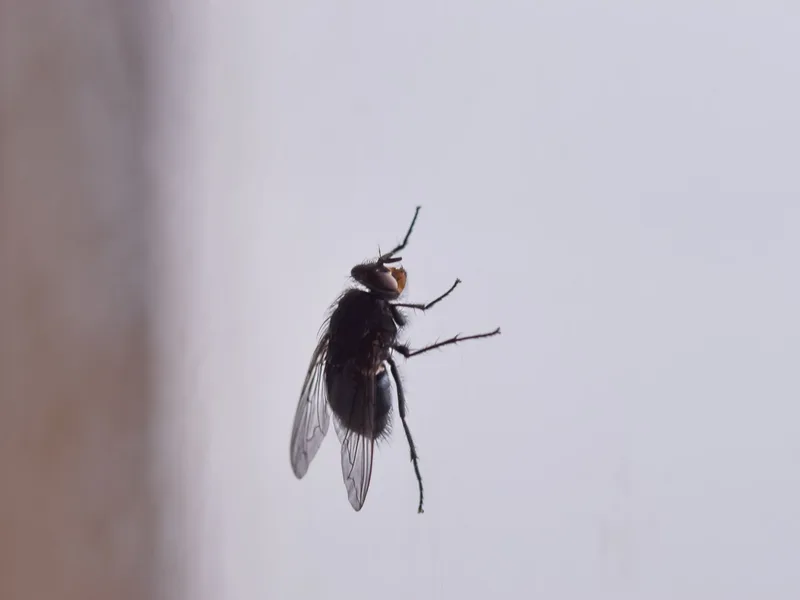
House fly
The house fly enters Al Sawari from the main street and settles in flats with open plan kitchens, breeding in waste bins that sit on the kitchen counter or are stored overnight.
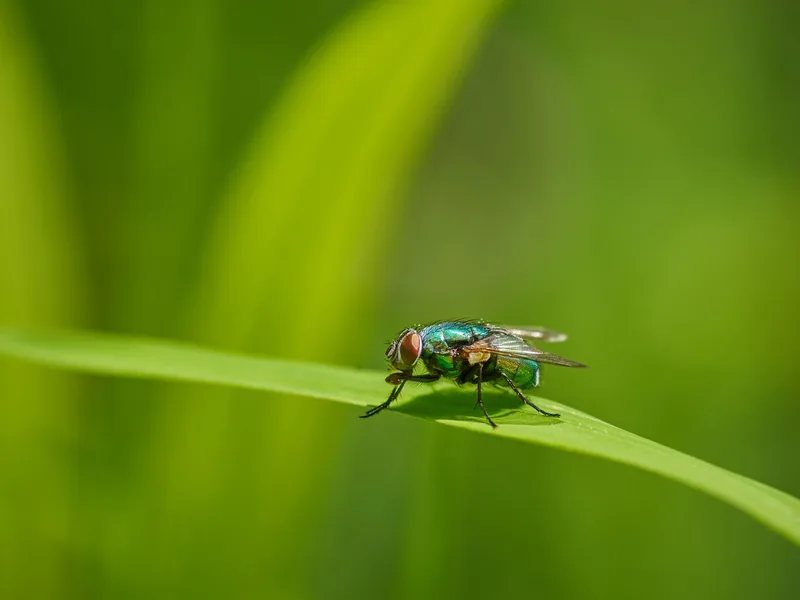
Blow fly
The blow fly is heavy around poultry and butcher shops on the ground floors, and travels upward into upper flats through ventilation gaps and the shared spaces between units.
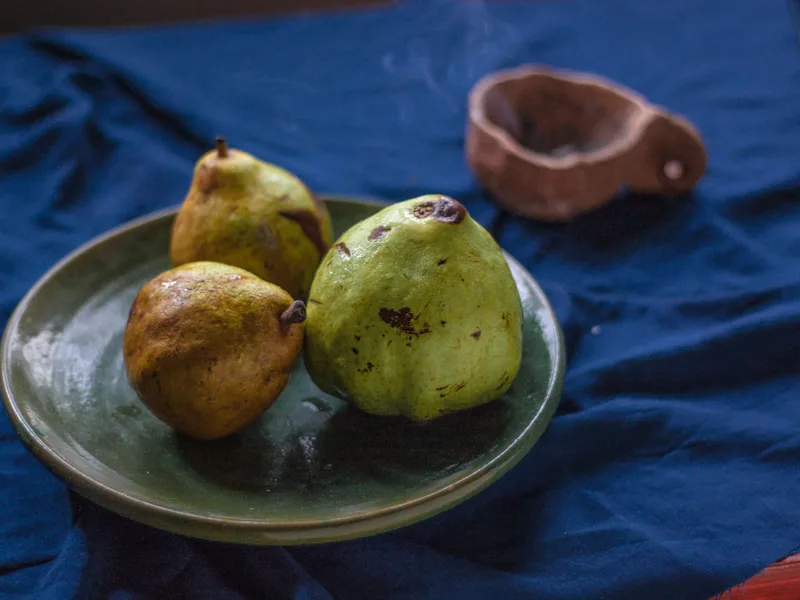
Fermenting residue
Food scraps left overnight in shop bins below provide ideal fermentation medium, and flies go through their entire cycle in hours without anyone seeing it happen.
The bin base
The base of bins pressed against ground level flooring stays damp, and fly larvae develop in the sludge that accumulates around drain holes and bin edges.

The film inside a drain
In pipes shared between shop and flat above, a biofilm forms that contains fly eggs and larvae, invisible until you look for it with a scope or see the emergence.

The service door and its mesh
The shop door opens and closes all day, and flies enter on every opening. Damaged or absent mesh screening lets them through easily, especially when the air pressure inside drops.
How we work
-
1
Inspect and trace the source
We trace the flies back to their medium: waste and the bin area, floor traps, drain runs and any standing organic wetness, and we identify the species from its size, its flight and where it settles.
-
2
Treat the breeding medium
Washing and scouring bin bases and floor traps, and a foam that treats the film inside the pipe, because removing the medium is the only thing that stops production.
-
3
Treat the resting surfaces
A fly spends most of its time settled on ceilings, cables, the tops of walls and the sunlit wall outside the door, and that is where the residual and the bait go, not into the air.
-
4
Proofing and the follow-up
We close the ways in and sort out the screens and the doors, then come back on a date matching the emergence of the pupae that were already in the medium on the first visit.
What fly control includes
-

A source tracing inspection
The species, the breeding medium and the route in, established before anything is applied.
-

Drains and floor traps
Scouring the film stuck inside the pipe and treating it with foam, which is where drain flies come from and almost nowhere else.
-

Residual on the resting surfaces
Ceilings, cables, the tops of walls and the sunlit wall outside the door, kept off food preparation surfaces.
-

Fly bait in protected positions
An attractant bait set at bin areas and service entrances, out of reach of children and pets and away from food.
-

Aftercare instructions
Ventilation, what to cover, and what needs a screen, an air curtain or a different waste routine.
-

A scheduled follow-up
A set date matching the emergence of the pupae, and re-treatment of any source still producing.
What is different about Dhahban Sub-Municipality
Dhahban sub municipality is the northern coastal strip of Jeddah, running from the north bank of Sharm Obhur up to the old village of Dhahban and Salman Bay. Its districts are recently built, with owner occupied villas and apartments, beach resorts and chalets on the shore, and land subdivisions still being developed. Nearness to the sea keeps humidity high all year, irrigated lawns in villas, resorts and district parks hold water, Wadi Obhur and the vacant plots between buildings give rodents and reptiles shelter, and the old fishing village of Dhahban gives the far north a rural edge.
Questions about this district
Can flies really climb from the shop below straight into our apartment above it?
Yes. Flies move upward through shared vents, cable ducts and gaps in shared pipework between units. If the shop is treated and your flat is not, the flies simply migrate up the shared route. Both units must be treated together or the problem simply relocates vertically.
Our villa has a small irrigated garden. Does watered planting attract more flies or mosquitoes?
Both breed in damp soil, but the small fly is particularly drawn to wet ground and decomposing organics in it. You cannot confine treatment to indoors alone. The garden is the source, and treating only the interior while leaving the garden untouched means the flies will keep emerging from outside.
Our flat is very clean but flies come in through the window every morning. What causes this?
Flies are entering from outside: from the street or the shop below. Window screens block many, but not all. You need simultaneous treatment of the external source while protecting the interior, or the external pressure will overcome the barriers.
Is spraying the garden alone enough, or must we treat inside the house as well?
Garden treatment cuts flies emerging there, but indoor flies may have other sources: kitchen drains, waste bins, or flies that have already entered. Both the source and the interior must be addressed. Treating only the garden leaves any flies already inside to breed further.
Can you treat the shop and the apartment together, or just one at a time?
Both can be done together. In Al Sawari specifically, the barrier between shop and residential flat above is weak, so combined treatment is more effective and prevents flies simply retreating upward when the shop is sprayed.
Flies in our apartment appear worse in the evening and at night. Does that mean the source is close?
Usually yes. Evening and night concentrate flies seeking shelter. If they are only in your flat at these times, the source may be in an adjacent shop or another unit rather than a breeding point inside your own flat itself.
How much does fly control in Al Sawari cost?
It is set after the inspection, because the price follows the type of infestation, the size of the space, how far it has spread and the number of visits it needs. Send a photo and a description on WhatsApp and we will give you an estimate before we reach Al Sawari.
Nearby districts we cover
Other services in Al Sawari
Other services we provide to residents of Al Sawari.
-
 Residential
Cockroach control
Residential
Cockroach control
-
 Residential
Bed bug control
Residential
Bed bug control
-
 Residential
Termite control
Residential
Termite control
-
 Residential
Rodents and mice
Residential
Rodents and mice
-
 Residential
Mosquito control
Residential
Mosquito control
-
 Residential
Ant control
Residential
Ant control
-
 Residential
Gecko control
Residential
Gecko control
-
 Residential
Scorpion control
Residential
Scorpion control
-
 Residential
Snake control
Residential
Snake control
-
 Residential
Flea control
Residential
Flea control
-
 Residential
Bird and pigeon control
Residential
Bird and pigeon control
-
 Residential
Preventive treatment
Residential
Preventive treatment
-
 Residential
Disinfection
Residential
Disinfection
-
 Commercial
Annual contracts
Commercial
Annual contracts
-
 Commercial
Restaurants and cafes
Commercial
Restaurants and cafes
-
 Commercial
Hotels and apartments
Commercial
Hotels and apartments
-
 Commercial
Warehouses and factories
Commercial
Warehouses and factories
-
 Commercial
Schools and nurseries
Commercial
Schools and nurseries
-
 Commercial
Retail and malls
Commercial
Retail and malls
-
 Commercial
Rest houses and farms
Commercial
Rest houses and farms
-
 Commercial
Fumigation
Commercial
Fumigation
-
 Water tanks
Water tank cleaning
Water tanks
Water tank cleaning
-
 Water tanks
Water tank sterilization
Water tanks
Water tank sterilization
-
 Water tanks
Water tank sealing
Water tanks
Water tank sealing
-
 Water tanks
Tank leak repair
Water tanks
Tank leak repair
Need fly control in Al Sawari? Tell us what you saw and we will tell you what it needs
We reach Al Sawari at a time we agree, and you get the full cost before we start.