
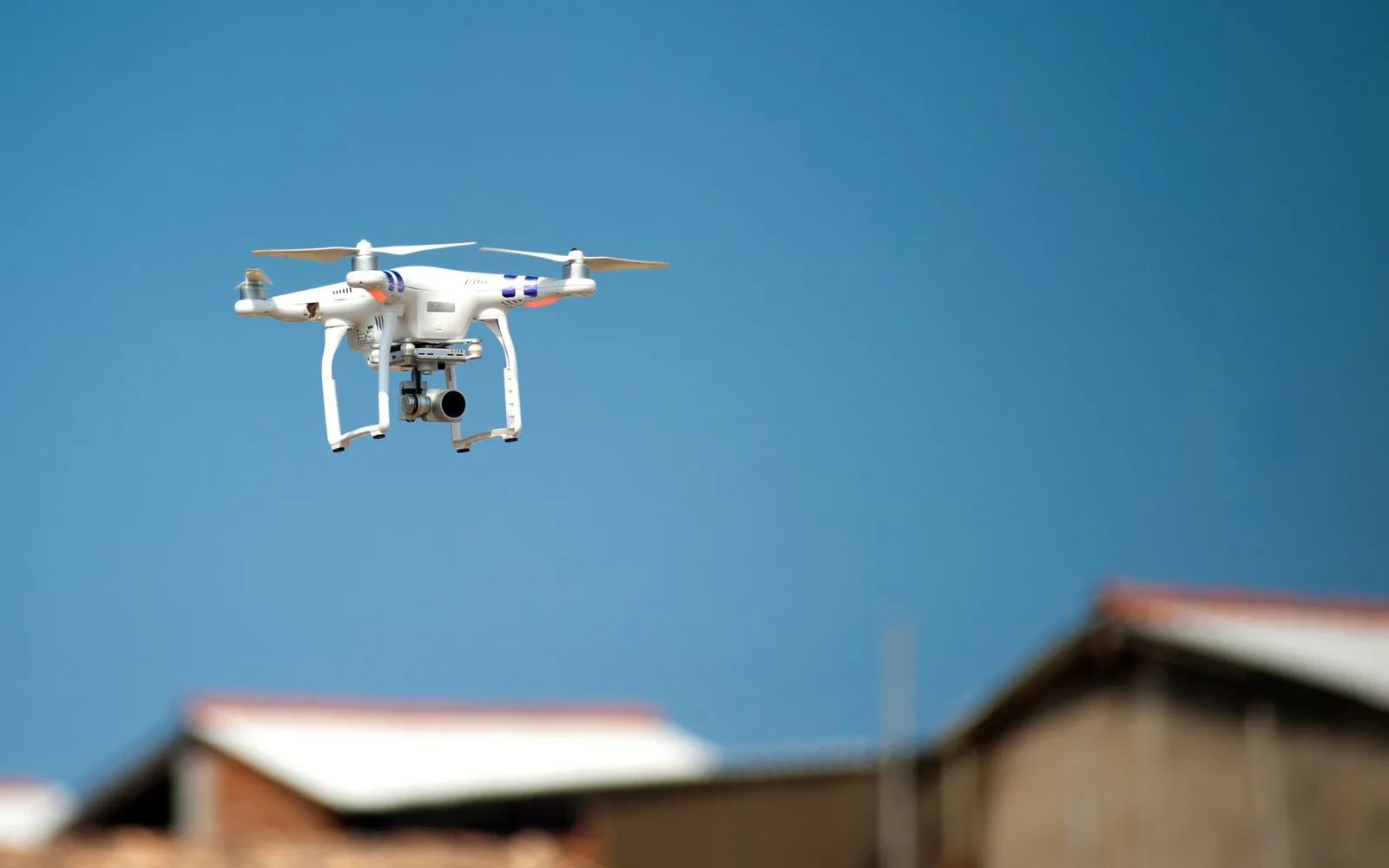
Fly control in Al Ukayshiyah Makkah
Al Ukayshiyah is a mixed district where shops occupy the ground floors and residential flats sit directly above them, with a large pilgrim bus station operating within the area. This overlap between commerce and housing means fly breeding sources are multiple and treatment requires coordination between separate property owners to be effective.
-
Targeted, not broadcast
Product goes into cracks and runways, never sprayed across open surfaces.
-
Told before we start
What we will use, where it goes, and what to cover or move before we arrive.
-
A follow-up visit
We return after the first treatment, because what survives it does not show on the day.
-
Homes and businesses
Apartments and villas, and kitchens and stores that need a record of each visit.
Why they keep coming back in Al Ukayshiyah
Fly pressure from commercial shops differs markedly from residential flats above them, because waste from retail outlets attracts far heavier numbers than housing alone would produce. The method is set out in full on Fly control in detail.
Shops and flats share fly breeding sources
Flies do not distinguish between ground and upper floors. Treating only the shop will not stop flies climbing from the waste and stock into the flat above. Simultaneous treatment of both levels is needed to cut off the source completely and prevent re-infestation within days.
The bus station provides permanent seasonal breeding
The large bus terminal in the district supplies a constant breeding environment: dense crowds, dropped food waste, long waiting periods. Flies originating there spread directly into adjacent shops and residential flats, especially during peak visitor seasons when crowding intensifies.
Main roads bring traffic and continuous debris
The Al Layth and Ibrahim Al Khalil roads carry heavy traffic, food vendors and constant foot movement. Open street-level commerce on these roads produces fly sources that transfer into nearby shops and residential buildings through open doors and ventilation.
The character of Al Ukayshiyah
Mixed district: shops at street level with homes above them
Mixed district means ground-floor shops send continuous fly breeding sources upward into residential flats above them. Effective control requires coordination between separate shop and residential owners, not treatment of an isolated individual home.
Where the flies are actually coming from
The district sits in southern Makkah near the Fourth Ring Road, with the Al Layth and Ibrahim Al Khalil roads passing through it, whilst ongoing sewerage and street cleaning works continue.
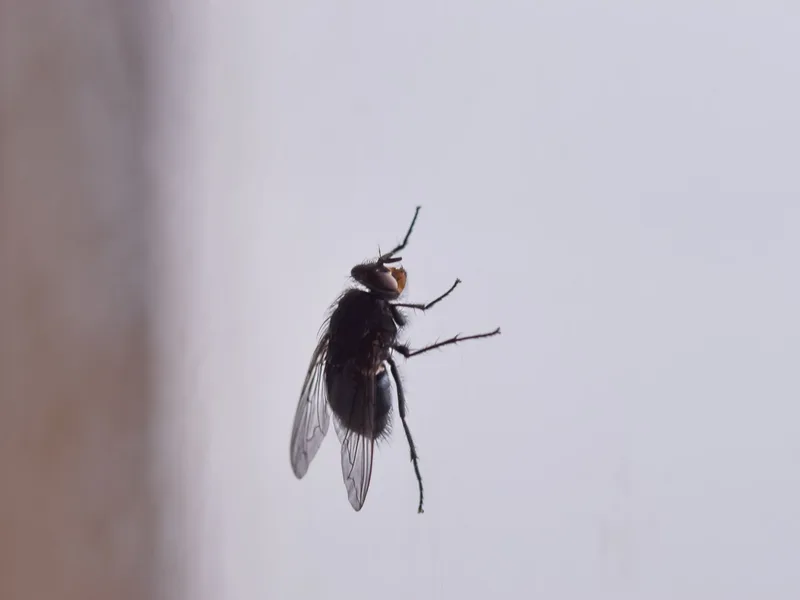
House fly
House flies breed faster in commercial shops than in flats, particularly in food and poultry outlets where breeding medium is replenished daily and conditions remain warm and moist.
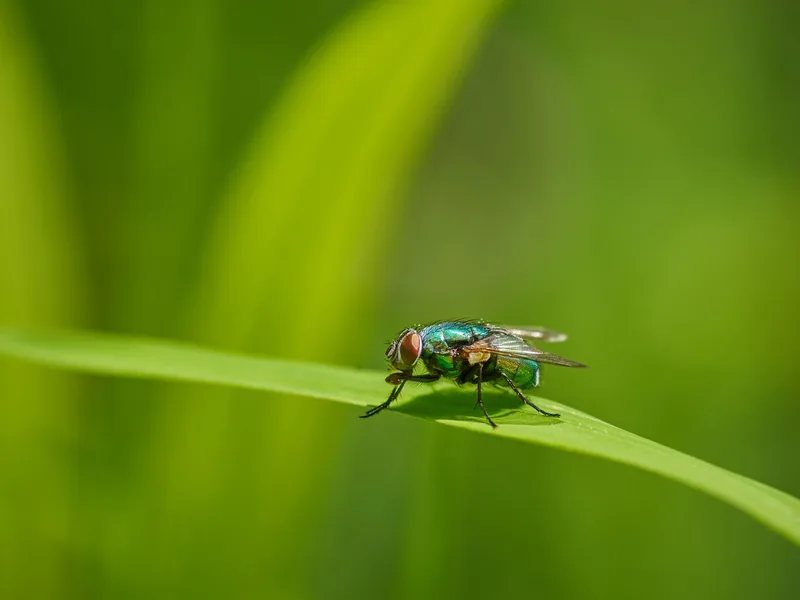
Blow fly
Blow flies (meat flies) thrive in butchers and fish shops and are also drawn to the large bus station and the busy street traffic where dropped food waste accumulates.
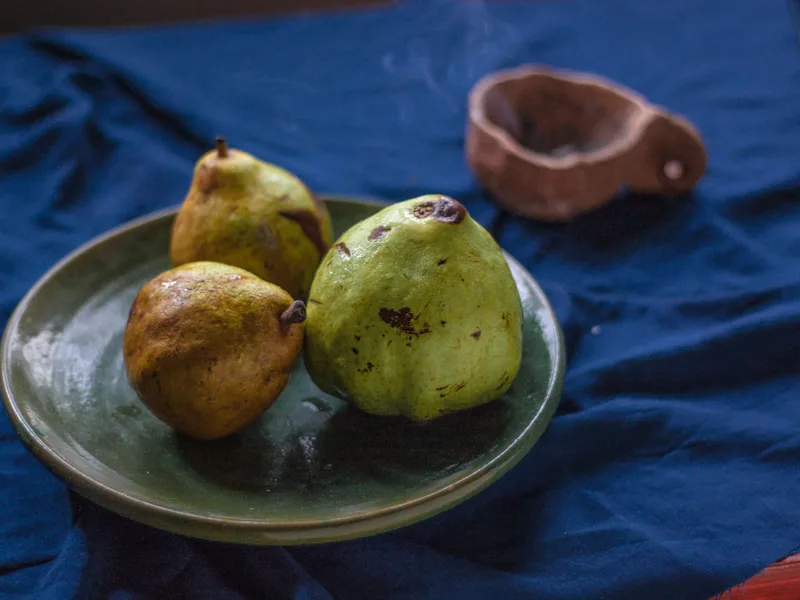
Fermenting residue
Fermenting residue in commercial waste bins is far more productive than domestic flat refuse and generates large fly cohorts within days, especially in summer heat.
The bin base
The bin base in shops accumulates liquid and matter daily, creating perfect larval development conditions, especially where bins are old or damaged and drainage is poor.
The film inside a drain
The film inside drains forms faster in commercial premises because fat and food volume is higher, providing extremely rich breeding habitat for fly larvae throughout the year.
The service door and its mesh
The shop door and its mesh screening do not hold against constant customer traffic and delivery boxes, allowing flies to enter with every entry and package arrival throughout the day.
How we work
-
1
Inspect and trace the source
We trace the flies back to their medium: waste and the bin area, floor traps, drain runs and any standing organic wetness, and we identify the species from its size, its flight and where it settles.
-
2
Treat the breeding medium
Washing and scouring bin bases and floor traps, and a foam that treats the film inside the pipe, because removing the medium is the only thing that stops production.
-
3
Treat the resting surfaces
A fly spends most of its time settled on ceilings, cables, the tops of walls and the sunlit wall outside the door, and that is where the residual and the bait go, not into the air.
-
4
Proofing and the follow-up
We close the ways in and sort out the screens and the doors, then come back on a date matching the emergence of the pupae that were already in the medium on the first visit.
What fly control includes
-

A source tracing inspection
The species, the breeding medium and the route in, established before anything is applied.
-

Drains and floor traps
Scouring the film stuck inside the pipe and treating it with foam, which is where drain flies come from and almost nowhere else.
-

Residual on the resting surfaces
Ceilings, cables, the tops of walls and the sunlit wall outside the door, kept off food preparation surfaces.
-

Fly bait in protected positions
An attractant bait set at bin areas and service entrances, out of reach of children and pets and away from food.
-

Aftercare instructions
Ventilation, what to cover, and what needs a screen, an air curtain or a different waste routine.
-

A scheduled follow-up
A set date matching the emergence of the pupae, and re-treatment of any source still producing.
Landmarks of Al Ukayshiyah
Al Ukayshiyah occupies southern Makkah at the convergence of several major roads. Treatment of the district begins from the junction of the Al Layth Road and Ibrahim Al Khalil Road where shops are densest and heaviest waste accumulates, and extends through the interior shops and residential blocks.
- Fourth Ring Road
- Al Layth Road
- Ibrahim Al Khalil Road
- Souq Al Halaqa
- At Taqwa Mosque
Questions about this district
The shop below has fridges with meat and poultry. Is that the fly source?
Yes. Poultry, fish and feed are extremely strong fly attractants. Even with sealed fridges, waste, floor matter and moisture create a development environment. Flies breed in the back store and toilet facilities and climb directly upward into your flat through gaps and pipe runs.
Is treating my flat alone enough when the shop operates below?
No. Treating only the flat removes flies present there, but the shop sends new cohorts daily through cracks, pipes and shared doors. Effective treatment must cover both the shop and the flat together as a single system.
The bus station is directly beside us. Should that be treated too?
The bus station requires municipal permission and management coordination, which lies outside your responsibility as a resident. Regular treatment of your flat and shop significantly reduces entry from outside and limits the numbers that can establish themselves.
Flies are much worse on Fridays and holidays. Is this seasonal?
No, it is daily variation. Days with higher foot traffic in the bus station and shops create more breeding sources. Flies do not wait for seasons; they track crowds and discarded food continuously.
Will the new sewerage reduce flies once the construction work finishes?
New sewerage will reduce flies over the long term, but during active works, numbers actually increase because of open excavations and broken connections. Regular treatment throughout this period is especially important to prevent establishment.
How often does a mixed district like Al Ukayshiyah need treatment?
A mixed district with multiple sources needs more frequent treatment than a purely residential neighbourhood. The exact interval depends on shop density and waste volumes, but baseline treatment and follow-up visits are necessary and more frequent than for housing alone.
How much does fly control in Al Ukayshiyah cost?
It is set after the inspection, because the price follows the type of infestation, the size of the space, how far it has spread and the number of visits it needs. Send a photo and a description on WhatsApp and we will give you an estimate before we reach Al Ukayshiyah.
Nearby districts we cover
Other services in Al Ukayshiyah
Other services we provide to residents of Al Ukayshiyah.
-
 Residential
Cockroach control
Residential
Cockroach control
-
 Residential
Bed bug control
Residential
Bed bug control
-
 Residential
Termite control
Residential
Termite control
-
 Residential
Rodents and mice
Residential
Rodents and mice
-
 Residential
Mosquito control
Residential
Mosquito control
-
 Residential
Ant control
Residential
Ant control
-
 Residential
Gecko control
Residential
Gecko control
-
 Residential
Scorpion control
Residential
Scorpion control
-
 Residential
Snake control
Residential
Snake control
-
 Residential
Flea control
Residential
Flea control
-
 Residential
Bird and pigeon control
Residential
Bird and pigeon control
-
 Residential
Preventive treatment
Residential
Preventive treatment
-
 Residential
Disinfection
Residential
Disinfection
-
 Commercial
Annual contracts
Commercial
Annual contracts
-
 Commercial
Restaurants and cafes
Commercial
Restaurants and cafes
-
 Commercial
Hotels and apartments
Commercial
Hotels and apartments
-
 Commercial
Warehouses and factories
Commercial
Warehouses and factories
-
 Commercial
Schools and nurseries
Commercial
Schools and nurseries
-
 Commercial
Retail and malls
Commercial
Retail and malls
-
 Commercial
Rest houses and farms
Commercial
Rest houses and farms
-
 Commercial
Fumigation
Commercial
Fumigation
-
 Water tanks
Water tank cleaning
Water tanks
Water tank cleaning
-
 Water tanks
Water tank sterilization
Water tanks
Water tank sterilization
-
 Water tanks
Water tank sealing
Water tanks
Water tank sealing
-
 Water tanks
Tank leak repair
Water tanks
Tank leak repair
Need fly control in Al Ukayshiyah? Tell us what you saw and we will tell you what it needs
We reach Al Ukayshiyah at a time we agree, and you get the full cost before we start.