
Fly control in Mughammas Makkah
Mughammas is an industrial zone east of Makkah holding warehouses, loading yards and open storage areas, cut through by Wadi Al Mughammas, known locally as Al Wadi Al Akhdar and used for picnics and camping. The wadi carries seasonal surges of water and leaves behind silt and damp ground, whilst the warehouses accumulate organic waste that attracts large fly populations.
-
Targeted, not broadcast
Product goes into cracks and runways, never sprayed across open surfaces.
-
Told before we start
What we will use, where it goes, and what to cover or move before we arrive.
-
A follow-up visit
We return after the first treatment, because what survives it does not show on the day.
-
Homes and businesses
Apartments and villas, and kitchens and stores that need a record of each visit.
Why they keep coming back in Mughammas
The wide spacing between warehouses and concrete floors means flies rest on walls and ceilings more than entering buildings, but they still move freely into partially open stores and loading bays. The method is set out in full on how we approach Fly control.
Loading yards and organic waste accumulation
Food storage containers, cardboard boxes and debris from loading operations shed small organic scraps across the yards that mix with the damp conditions of low storage areas, creating concentrated fly breeding substrate around each warehouse.
The wadi carries larvae and seasonal spawn
Wadi Al Mughammas carries heavy flows in winter and spring, depositing organic silt in low spots near the stores. This waterlogged silt remains a breeding ground until evaporation is complete, sometimes weeks after rain.
Open storage and poor ventilation trap populations
Roofless yards and open storage areas give shelter from wind but not from flies. Stagnant air in corners and under loading ramps allows fly populations to cluster around spilled food, where they feed and lay eggs undisturbed.
Mughammas on the map
Mughammas sits about 2.5 km from Kawthar and about 3 km from Tarwiyah.
Open in Google MapsWhere the flies are actually coming from
Wadi Al Mughammas runs along the eastern and southern edges of the district, trapping water in low pockets after rain. Seasonal flows leave damp organic silt in shallow depressions near the buildings.
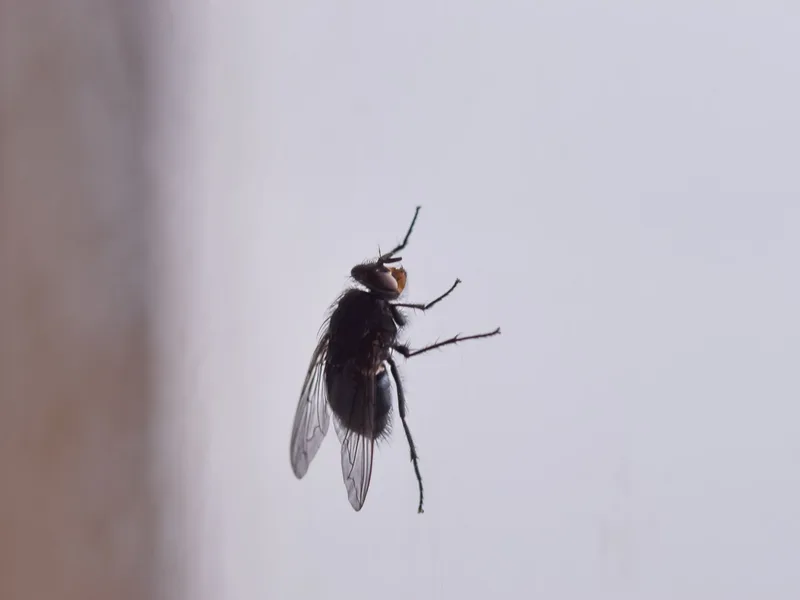
House fly
House flies accumulate in damp corners and dark storage areas, multiplying rapidly if organic waste remains exposed to the air.
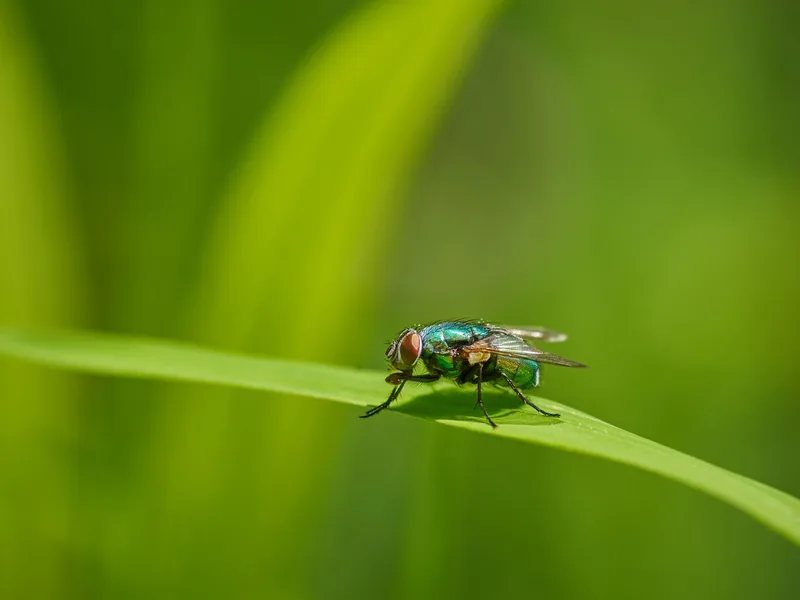
Blow fly
Blow flies arrive from outside on trucks and in the air, preferring fresh organic waste and newly soiled surfaces.
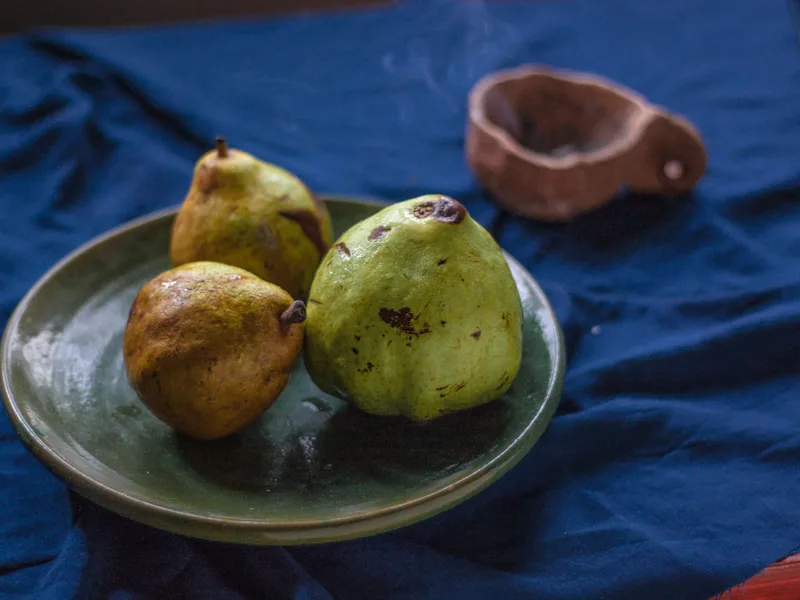
Fermenting residue
Food scraps and wet cardboard provide ideal fermentation medium for rapid larval development.
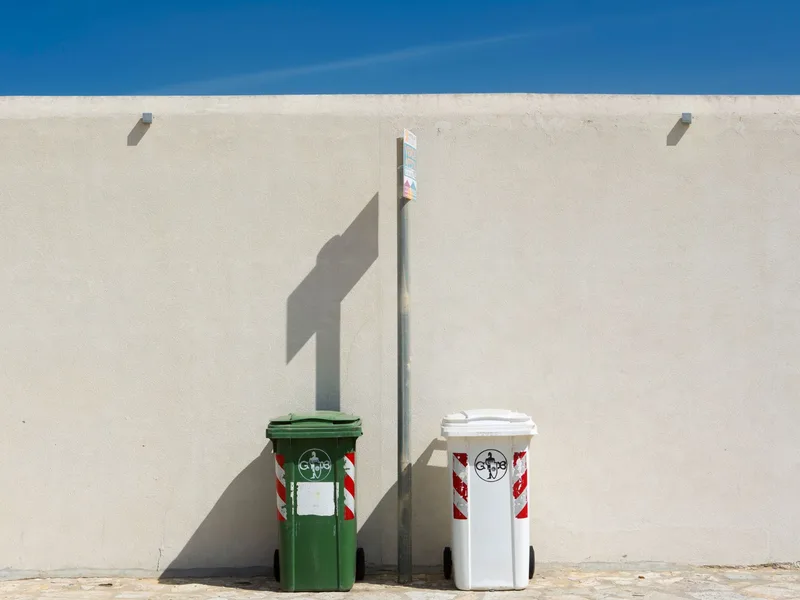
The bin base
Bin bases when filled with organic matter become larval reservoirs; regular emptying and washing are essential.
The film inside a drain
Drain channels and underfloor cavities harbour standing water and act as secondary silt traps after the wadi recedes.
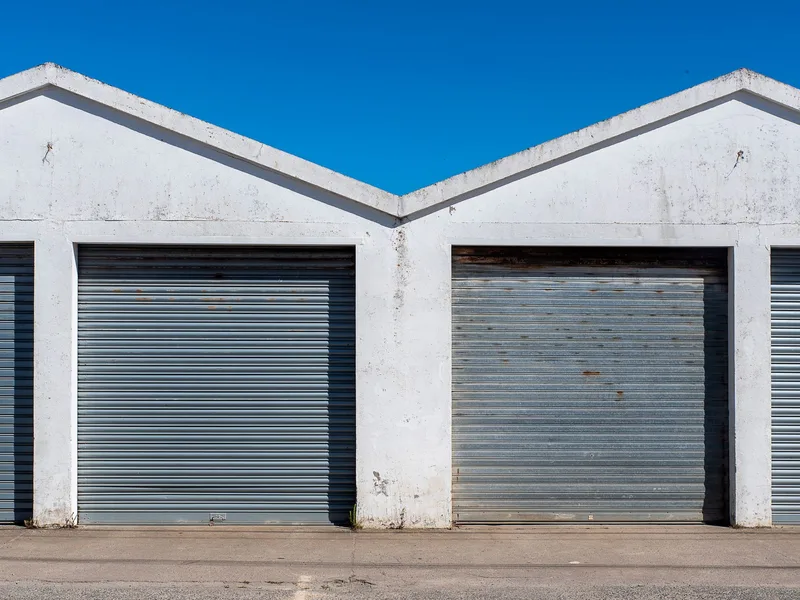
The service door and its mesh
Wide gaps around warehouse doors allow large fly entry; air curtains and fine mesh screens reduce infiltration but need maintenance against dust blocking.
How we work
-
1
Inspect and trace the source
We trace the flies back to their medium: waste and the bin area, floor traps, drain runs and any standing organic wetness, and we identify the species from its size, its flight and where it settles.
-
2
Treat the breeding medium
Washing and scouring bin bases and floor traps, and a foam that treats the film inside the pipe, because removing the medium is the only thing that stops production.
-
3
Treat the resting surfaces
A fly spends most of its time settled on ceilings, cables, the tops of walls and the sunlit wall outside the door, and that is where the residual and the bait go, not into the air.
-
4
Proofing and the follow-up
We close the ways in and sort out the screens and the doors, then come back on a date matching the emergence of the pupae that were already in the medium on the first visit.
What fly control includes
-

A source tracing inspection
The species, the breeding medium and the route in, established before anything is applied.
-

Drains and floor traps
Scouring the film stuck inside the pipe and treating it with foam, which is where drain flies come from and almost nowhere else.
-

Residual on the resting surfaces
Ceilings, cables, the tops of walls and the sunlit wall outside the door, kept off food preparation surfaces.
-

Fly bait in protected positions
An attractant bait set at bin areas and service entrances, out of reach of children and pets and away from food.
-

Aftercare instructions
Ventilation, what to cover, and what needs a screen, an air curtain or a different waste routine.
-

A scheduled follow-up
A set date matching the emergence of the pupae, and re-treatment of any source still producing.
Landmarks of Mughammas
Warehouses bordering Wadi Al Mughammas and Jabal Al Tariqi form the treatment boundary, with work centred on fly ingress routes from the wadi and on low collection points between buildings where seasonal silt and standing water remain longest.
- Wadi Al Mughammas (Al Wadi Al Akhdar)
- Jabal Al Tariqi
- Wadi Mudarraja
- Wadi Al Sharai
- Hamid Al Qathami Mosque
Questions about this district
Is Al Wadi Al Akhdar the main source of flies coming to the warehouses?
The wadi brings seasonal water but the primary source in the warehouses is the accumulated waste and damp storage conditions. The wadi worsens the problem only during the rainy season when water stands.
How often should the warehouse and yard be treated?
Monthly treatment indoors and outdoors, combined with regular waste removal, usually maintains control. Treatment intensity should increase before the rainy season when the wadi is active.
Is treating only the warehouse interior sufficient, or must the yards be treated too?
Yards must be treated as well, because flies carry waste particles from outdoors inside. Separating the two protection zones gives better results than treating one without the other.
Organic waste is unavoidable in our operation. How can we reduce flies despite it?
Enclosed bins and covered storage cut exposure, and regular treatment manages populations, but complete control is impossible whilst waste remains open. Frequency of treatment must increase with waste volume.
When are flies at their worst in Mughammas? Is there a peak season?
Spring and summer are worst, but the wadi's waterlogged aftermath from winter rains brings a secondary peak. Year round monitoring is necessary because the wadi remains active longer than the air temperature would suggest.
Warehouses are packed closely together. Do flies travel between buildings?
Yes, and small gaps between buildings are easy movement routes. A co-ordinated treatment of the entire precinct is more effective than treating one warehouse in isolation from its neighbours.
How much does fly control in Mughammas cost?
It is set after the inspection, because the price follows the type of infestation, the size of the space, how far it has spread and the number of visits it needs. Send a photo and a description on WhatsApp and we will give you an estimate before we reach Mughammas.
Nearby districts we cover
Other services in Mughammas
Other services we provide to residents of Mughammas.
-
 Residential
Cockroach control
Residential
Cockroach control
-
 Residential
Bed bug control
Residential
Bed bug control
-
 Residential
Termite control
Residential
Termite control
-
 Residential
Rodents and mice
Residential
Rodents and mice
-
 Residential
Mosquito control
Residential
Mosquito control
-
 Residential
Ant control
Residential
Ant control
-
 Residential
Gecko control
Residential
Gecko control
-
 Residential
Scorpion control
Residential
Scorpion control
-
 Residential
Snake control
Residential
Snake control
-
 Residential
Flea control
Residential
Flea control
-
 Residential
Bird and pigeon control
Residential
Bird and pigeon control
-
 Residential
Preventive treatment
Residential
Preventive treatment
-
 Residential
Disinfection
Residential
Disinfection
-
 Commercial
Annual contracts
Commercial
Annual contracts
-
 Commercial
Restaurants and cafes
Commercial
Restaurants and cafes
-
 Commercial
Hotels and apartments
Commercial
Hotels and apartments
-
 Commercial
Warehouses and factories
Commercial
Warehouses and factories
-
 Commercial
Schools and nurseries
Commercial
Schools and nurseries
-
 Commercial
Retail and malls
Commercial
Retail and malls
-
 Commercial
Rest houses and farms
Commercial
Rest houses and farms
-
 Commercial
Fumigation
Commercial
Fumigation
-
 Water tanks
Water tank cleaning
Water tanks
Water tank cleaning
-
 Water tanks
Water tank sterilization
Water tanks
Water tank sterilization
-
 Water tanks
Water tank sealing
Water tanks
Water tank sealing
-
 Water tanks
Tank leak repair
Water tanks
Tank leak repair
Need fly control in Mughammas? Tell us what you saw and we will tell you what it needs
We reach Mughammas at a time we agree, and you get the full cost before we start.