
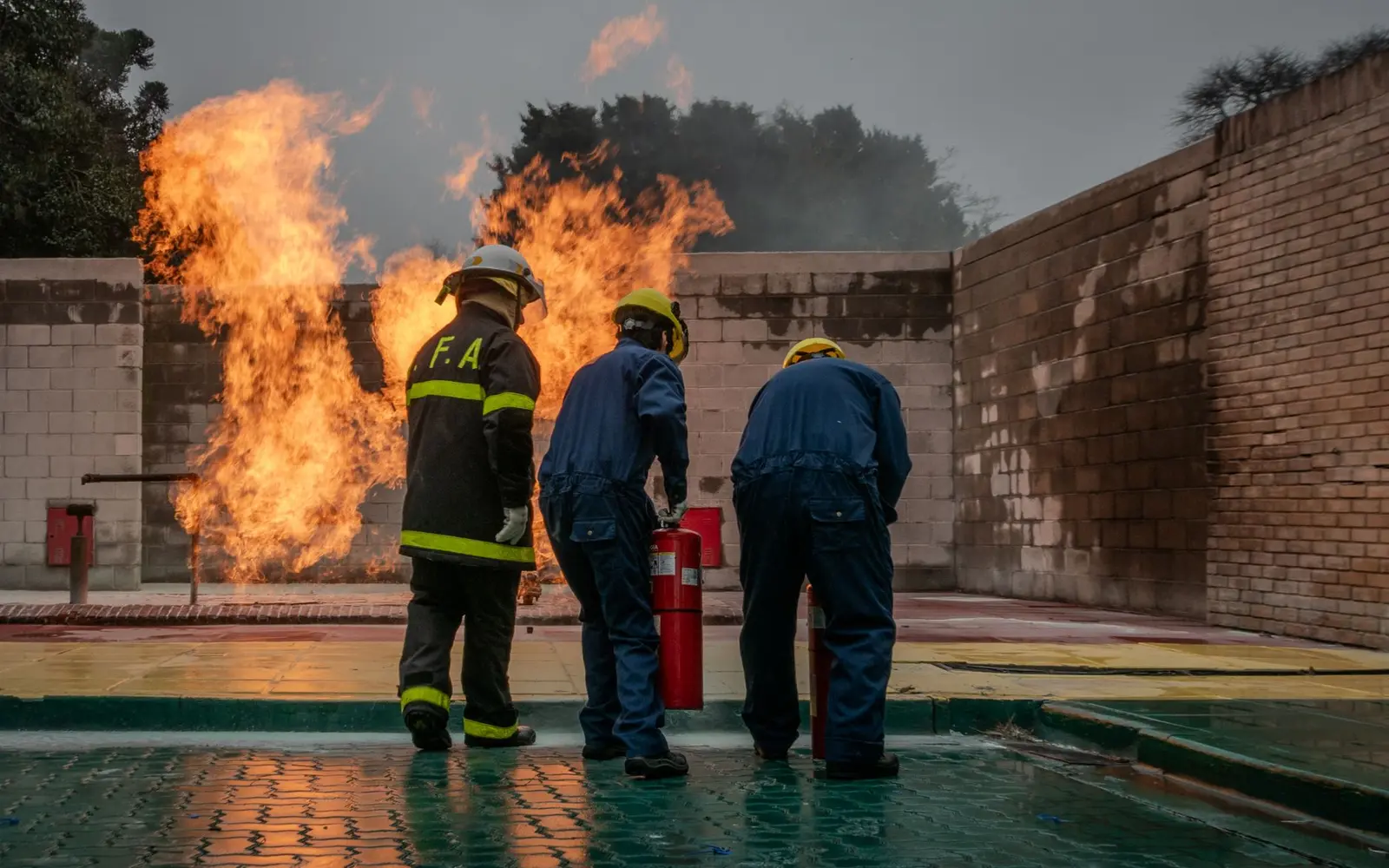
Bird and pigeon control in Al Diyafah Makkah
Al Diyafah is a busy apartment district between Al Zahir and the Haram, with tightly packed residential blocks, shared entrances, and short-let flats for pilgrims and visitors throughout the year. Pigeons nest on shared roofs and the narrow ledges between buildings, and removal requires coordination with all residents of each block, sometimes spanning ten adjacent buildings at once.
-
Targeted, not broadcast
Product goes into cracks and runways, never sprayed across open surfaces.
-
Told before we start
What we will use, where it goes, and what to cover or move before we arrive.
-
A follow-up visit
We return after the first treatment, because what survives it does not show on the day.
-
Homes and businesses
Apartments and villas, and kitchens and stores that need a record of each visit.
Why they keep coming back in Al Diyafah
Short-let flats in Al Diyafah turn over tenants weekly, and many new occupants leave windows open for the pigeons, so birds return to the same spot even after removal because the newest tenant has no history of it. The method is set out in full on the full Bird and pigeon control page.
Coordinating across dozens of separate households
A single roof in Al Diyafah may belong to a building with dozens of families, different owners and tenants all at once. Approval requires a building committee meeting or individual negotiation with every floor, a process that takes significantly longer than in a standard residential neighbourhood where one owner decides.
Extremely narrow ledges between buildings
Buildings in Al Diyafah are packed so tightly that only finger-width gaps remain between them, and pigeons nest in these narrow spaces where standard barriers will not fit. Solutions must be tailored to these gaps and differ entirely from those needed in open residential areas.
New visitors every week undermine the deterrent
Short-let flats receive new guests continuously, many of whom open windows and let pigeons in. If even one flat in the building stays routinely open, pigeons enter through it and render the deterrents on every other flat ineffective.
Al Diyafah on the map
Al Diyafah sits about 1 km from Al Bayban and about 1 km from Al Zahra.
Open in Google MapsThe building decides which deterrent works
The apartment blocks in Al Diyafah stand very close together with extremely narrow gaps between them, and most roofs are shared by dozens of flats across multiple storeys and different owners.
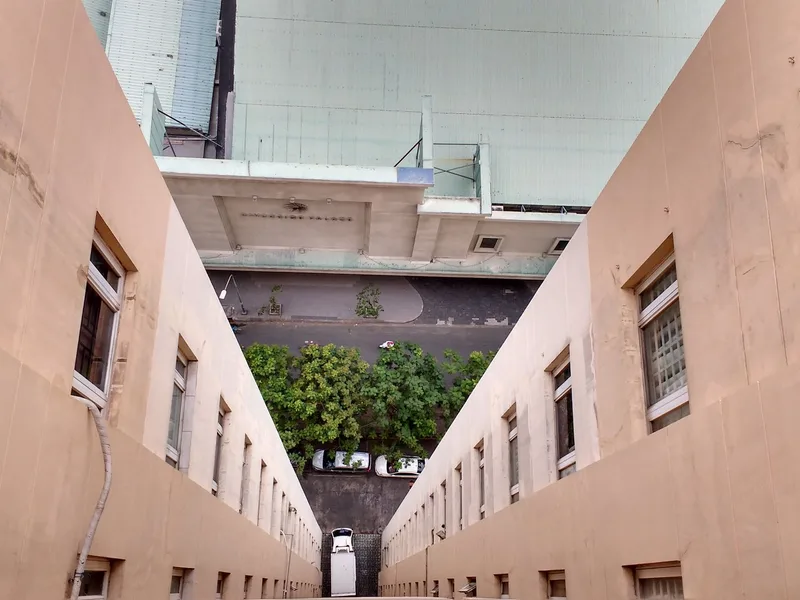
Ledge width
Roof ledges in Al Diyafah are very narrow and the gaps between buildings are so tight that off-the-shelf barriers must be adapted or replaced with specialised products for confined spaces.
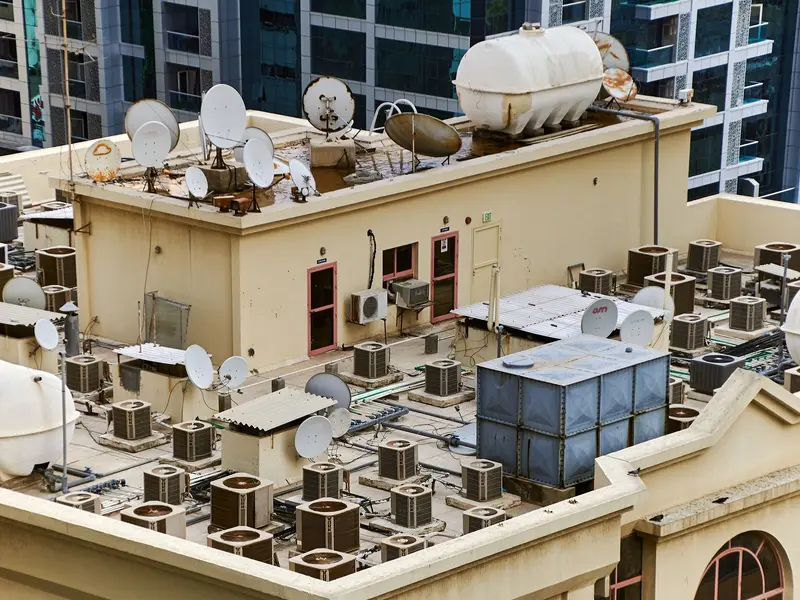
Air conditioning platforms
Shared roofs here have many closely spaced air conditioning units, and pigeons perch on the pipework and condensers rather than on the ledges themselves, requiring different positioning.
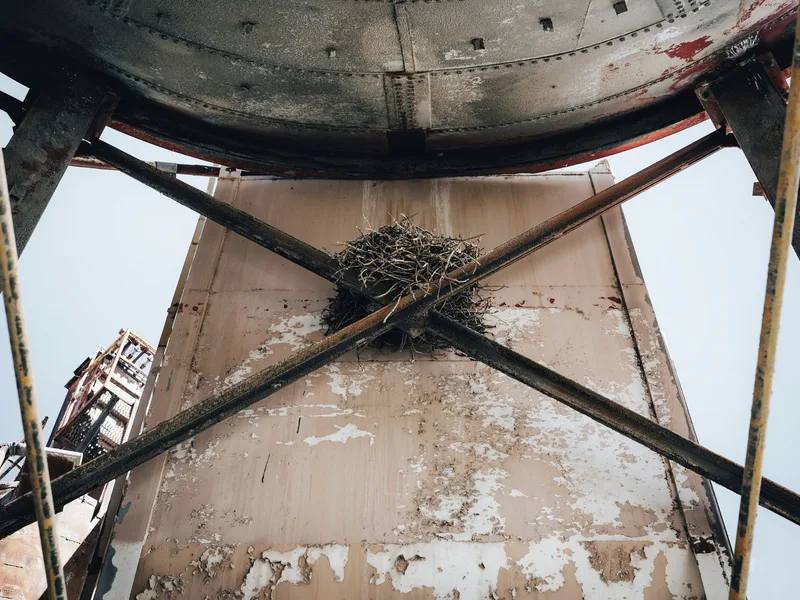
The nest itself
Nests in Al Diyafah cluster in the tight gaps between buildings, under AC pipework, and in internal roof corners where standard removal tools cannot easily reach.
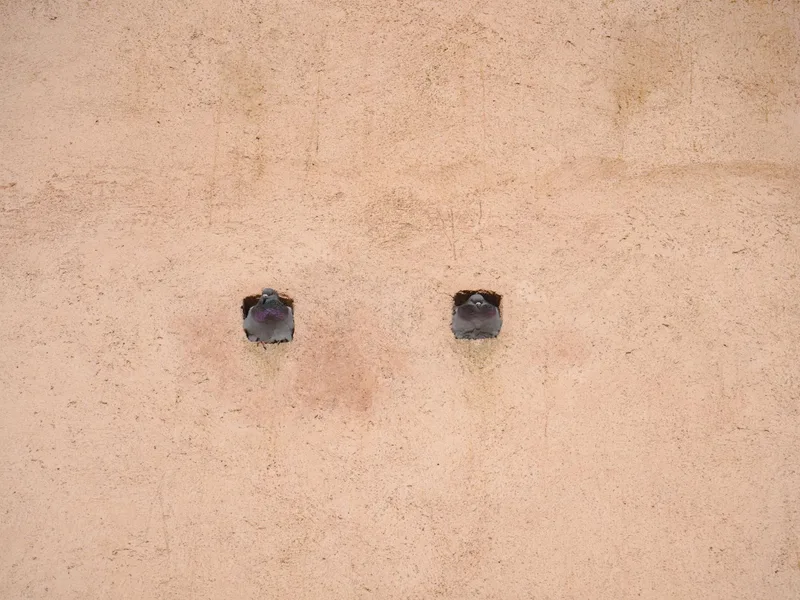
The droppings pattern
Droppings fall directly onto the flats below, and short-let residents report damage more readily because new tenants see it immediately and do not accept it as normal.
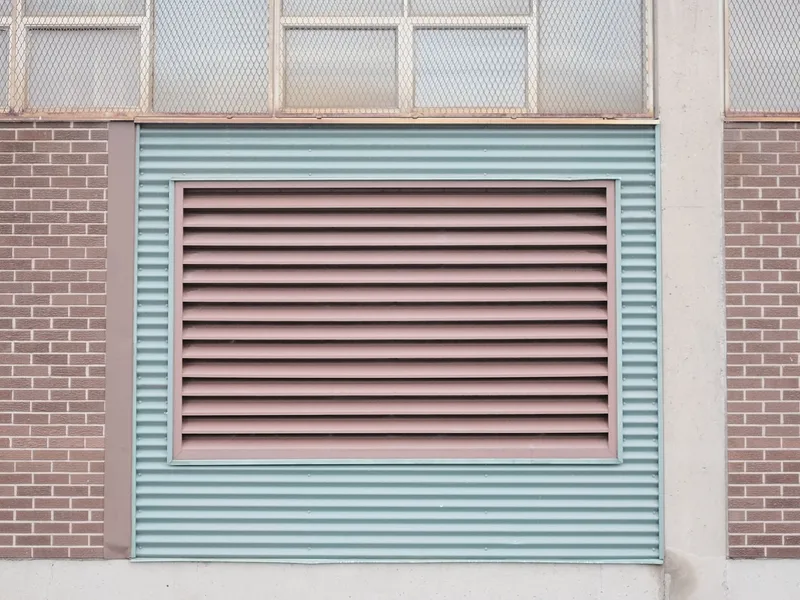
Openings and shafts
Openings and roof access points in these blocks are numerous and many windows stand open for long periods, allowing pigeons to enter the flats themselves, not just nest on external surfaces.
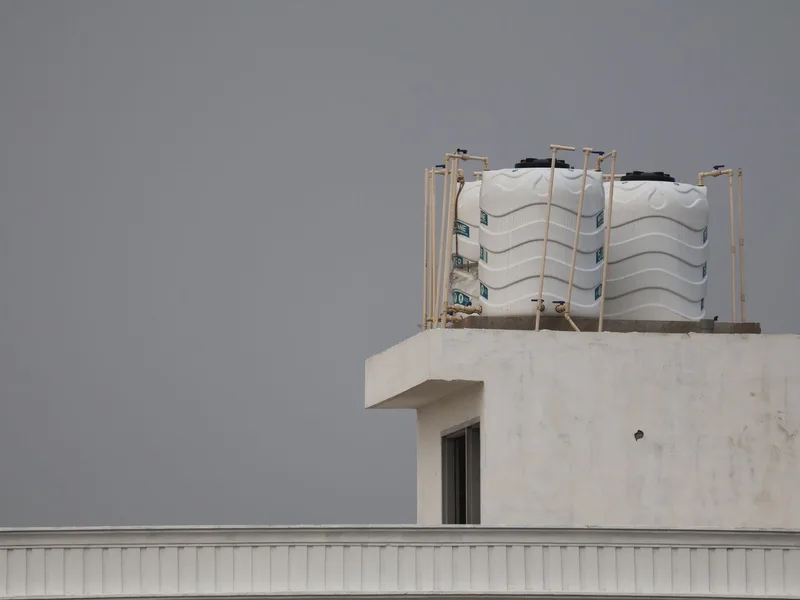
Around the roof tank
The shared roof tank sits ringed by narrow gaps and low ledges, and pigeons perch around it continuously, creating a constant contamination risk to the stored water.
How we work
-
1
Survey the roof and the facade
We walk the roof, the projections, the condenser platforms and the shafts, separate the nesting positions from the perching ones, and measure and photograph every ledge.
-
2
Strip the nests and treat the parasites
Droppings are wetted before they are lifted so nothing goes airborne dry, bagged closed, and the nest position is treated for ticks and mites before the surface is sanitised.
-
3
Close and fit
Netting tensioned on a perimeter wire with no gap at the corners, spikes or wire on the narrow projections, metal mesh across vents and shafts, and the roof drains freed of the nest material packing them.
-
4
The follow-up visit
We come back to check the tension, the corners and any position the flock has moved to, and correct what has slackened before a bird finds it.
What bird and pigeon control includes
-

A recorded survey
Every ledge, condenser platform and shaft, photographed, with nesting separated from perching before anything is chosen.
-

Nest removal and drain clearing
Lifted wet rather than swept dry, bagged closed, and the roof drains freed of the nest material packing them.
-

Parasite treatment and sanitising
The nest position treated for ticks and mites, then the surface the droppings sat on sanitised.
-

Sealing and fitting the deterrents
Netting tensioned on a perimeter wire, spikes or wire on narrow projections, and metal mesh across ventilation openings.
-

Aftercare instructions
The condensate water, food left on the roof, and what should not sit beside a ledge if the attraction is to stay gone.
-

A follow-up on tension and corners
Netting slackens and corners open over time; the visit corrects that and closes any new position.
Landmarks of Al Diyafah
Work in Al Diyafah is organised by our access routes along Old Makkah Road and Hussain Arab Street, both of which divide the district into grids of apartment blocks. We begin with buildings nearest Al Diyafah Mall and work systematically uphill towards Al Zahir.
- Old Makkah Road
- Hussain Arab Street
- Abdullah Arif Road
- Qasr Al Diyafah Street
- Al Diyafah Mall
Questions about this district
Does a shared roof need everyone's consent or just the committee?
If the roof belongs to all flats jointly, you need committee approval and the agreement of a building majority. In Al Diyafah, committees are sometimes inactive and tenants change constantly, so we liaise with the managing office or the property owner in parallel with work elsewhere.
A short-let flat might house a tenant who does not care about the problem, what then?
We contact the flat owner or letting agency at the same time we work on the roofs and facades and the gaps between buildings, all of which require no entry to any single flat. If one tenant refuses access, the open-air treatments are unaffected.
The gap between two buildings is impossibly narrow, can we fit anything there?
The narrow crevices in Al Diyafah need specialist barriers: suspended mesh, thin-profile mesh, or anti-perch coating. Standard roof spikes cannot fit in a finger-width gap and need replacement with solutions designed for confined spaces.
The old building has weak stone; can we drill into it for mesh?
We test the stone and mortar first. If too weak for drilling, we use specialist fasteners, or we fasten to the steel bars or grilles already built in rather than to the masonry itself.
After treatment will pigeons return from Al Zahir or Al Bayban nearby?
Yes, the neighbouring districts are very close and new pigeons may migrate from there. We focus on making the roof ledges and gaps between buildings absolutely secure so the deterrents hold for as long as possible.
Does an empty flat sitting unoccupied for months attract more pigeons to the block?
Yes, a closed flat with no human activity is safer for pigeons because they see no movement. We pay special attention to its windows and its roof edge if it will stand empty for any length of time.
How much does bird and pigeon control in Al Diyafah cost?
It is set after the inspection, because the price follows the type of infestation, the size of the space, how far it has spread and the number of visits it needs. Send a photo and a description on WhatsApp and we will give you an estimate before we reach Al Diyafah.
Other services in Al Diyafah
Other services we provide to residents of Al Diyafah.
-
 Residential
Cockroach control
Residential
Cockroach control
-
 Residential
Bed bug control
Residential
Bed bug control
-
 Residential
Termite control
Residential
Termite control
-
 Residential
Rodents and mice
Residential
Rodents and mice
-
 Residential
Mosquito control
Residential
Mosquito control
-
 Residential
Fly control
Residential
Fly control
-
 Residential
Ant control
Residential
Ant control
-
 Residential
Gecko control
Residential
Gecko control
-
 Residential
Scorpion control
Residential
Scorpion control
-
 Residential
Snake control
Residential
Snake control
-
 Residential
Flea control
Residential
Flea control
-
 Residential
Preventive treatment
Residential
Preventive treatment
-
 Residential
Disinfection
Residential
Disinfection
-
 Commercial
Annual contracts
Commercial
Annual contracts
-
 Commercial
Restaurants and cafes
Commercial
Restaurants and cafes
-
 Commercial
Hotels and apartments
Commercial
Hotels and apartments
-
 Commercial
Warehouses and factories
Commercial
Warehouses and factories
-
 Commercial
Schools and nurseries
Commercial
Schools and nurseries
-
 Commercial
Retail and malls
Commercial
Retail and malls
-
 Commercial
Rest houses and farms
Commercial
Rest houses and farms
-
 Commercial
Fumigation
Commercial
Fumigation
-
 Water tanks
Water tank cleaning
Water tanks
Water tank cleaning
-
 Water tanks
Water tank sterilization
Water tanks
Water tank sterilization
-
 Water tanks
Water tank sealing
Water tanks
Water tank sealing
-
 Water tanks
Tank leak repair
Water tanks
Tank leak repair
Need bird and pigeon control in Al Diyafah? Tell us what you saw and we will tell you what it needs
We reach Al Diyafah at a time we agree, and you get the full cost before we start.