

Bird and pigeon control in Al Huda Jeddah
Al Huda is an older south Jeddah district formerly called Al Tahlawi, with identical three storey apartment blocks east of Al Sanabil and vacant plots being developed as new villas. The apartment blocks themselves are highly attractive to pigeons because repeated ledges and shared entrance passages offer multiple perching routes. The district map includes Al Laith Road on its western edge, Al Huda Park and Al Huda Mosque.
-
Targeted, not broadcast
Product goes into cracks and runways, never sprayed across open surfaces.
-
Told before we start
What we will use, where it goes, and what to cover or move before we arrive.
-
A follow-up visit
We return after the first treatment, because what survives it does not show on the day.
-
Homes and businesses
Apartments and villas, and kitchens and stores that need a record of each visit.
Why they keep coming back in Al Huda
Pigeons in Al Huda nest on identical ledges across multiple adjoining buildings and migrate easily from one identical ledge to its neighbour because the geometry repeats perfectly. The method is set out in full on our Bird and pigeon control service.
Identical ledges on repeated buildings
The three storey blocks in Al Huda are identical in size and shape, with ledges that are the same width and height on every building. Pigeons use this uniformity to move from building to building without effort. A lasting solution requires fitting deterrents on all identical ledges together, not on a single building alone.
Shared entrances and external staircases
Each building has one shared entrance between flats, and external stairs provide pigeon perching on every step. Birds drop droppings on the stairs and at the entrance door, disturbing residents. Treatment must remove nests from stairs and entrances and fit deterrents on every structural level.
Al Laith Road nearby and green space in the park
Al Laith Road has commercial activity and shops displaying goods where pigeons feed abundantly. Al Huda Park beside the district provides water, shade and trees, and pigeons spend the day in the park before returning to the blocks at dusk. This means the district is not just where pigeons settle but where they sleep every night, making the cycle unstoppable unless surrounding sources are also reduced.
Al Huda on the map
Al Huda sits about 3.5 km from Al Ajawid and about 3.5 km from Al Sanabil.
Open in Google MapsThe building decides which deterrent works
Identical three storey residential blocks, vacant plots between buildings, Al Laith Road nearby, Al Huda Park providing green space and water sources that draw birds.
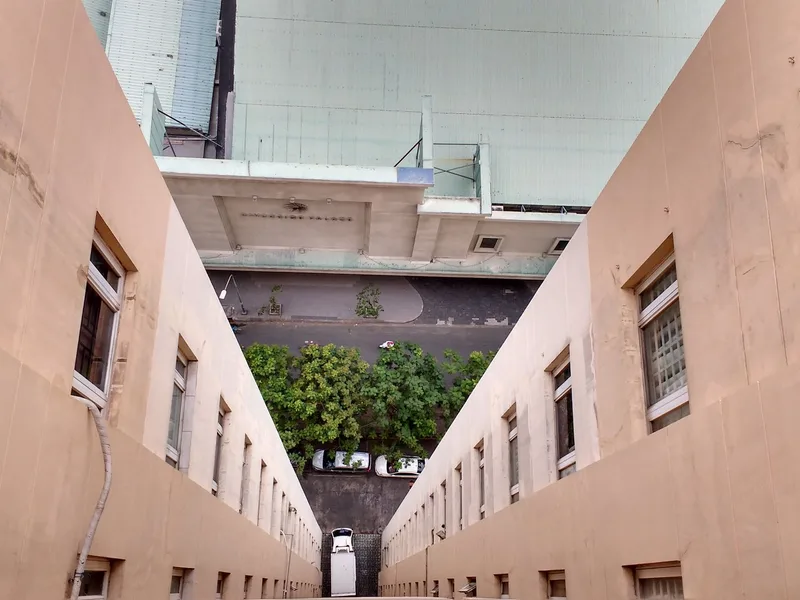
Ledge width
Ledges on the three storey blocks are narrow, flat and uniform, offering safe and consistent perching across all identical buildings.
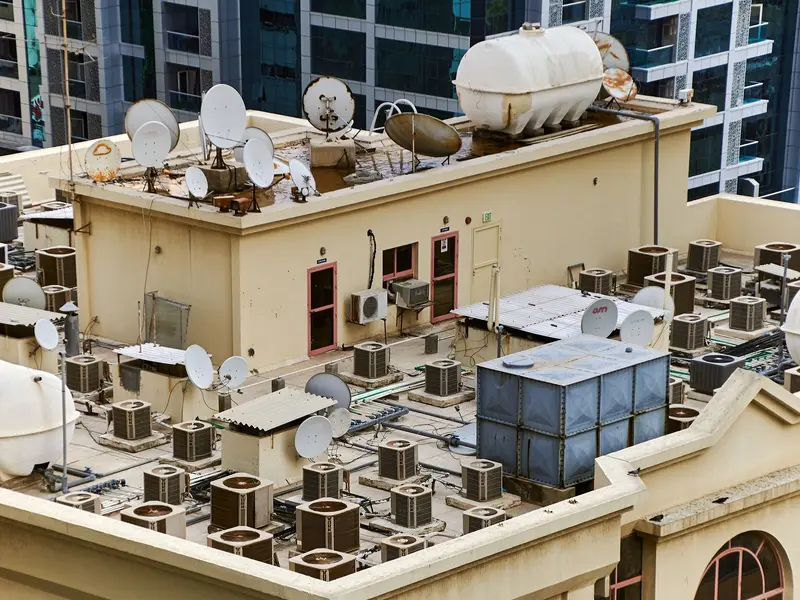
Air conditioning platforms
Air conditioning units on the first roof level above the external stair provide additional pigeon platforms at multiple heights.
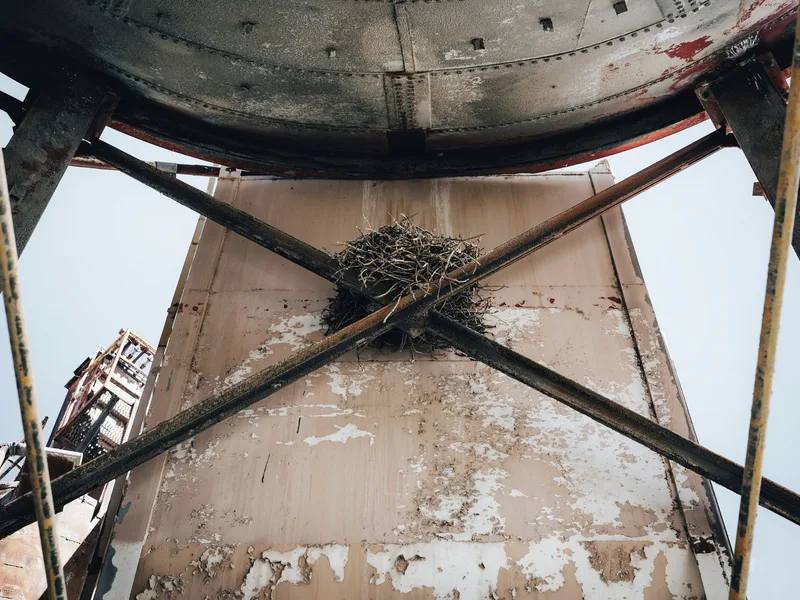
The nest itself
Nests form in stair corners and under drainage lines because these spots shield birds from wind and sun.
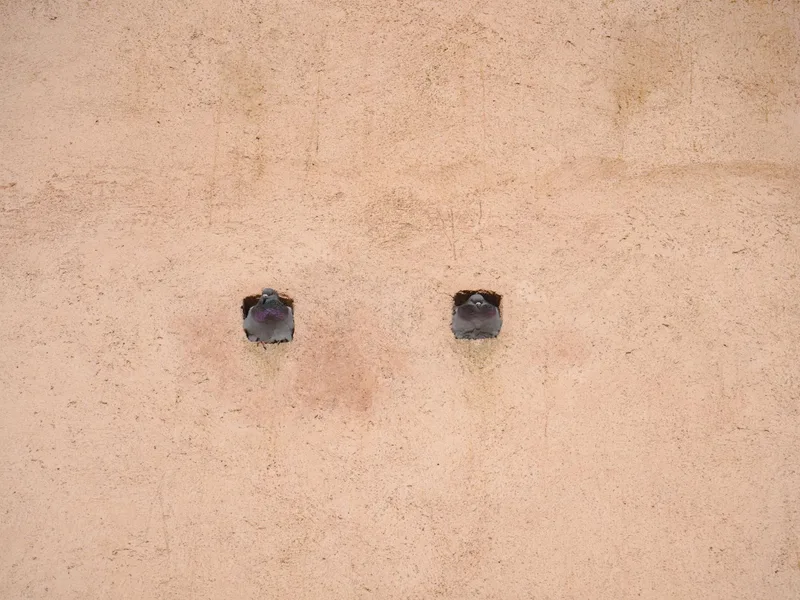
The droppings pattern
Droppings from nests fall on the stairway and entrance door, causing odours and creating slip hazards for residents.
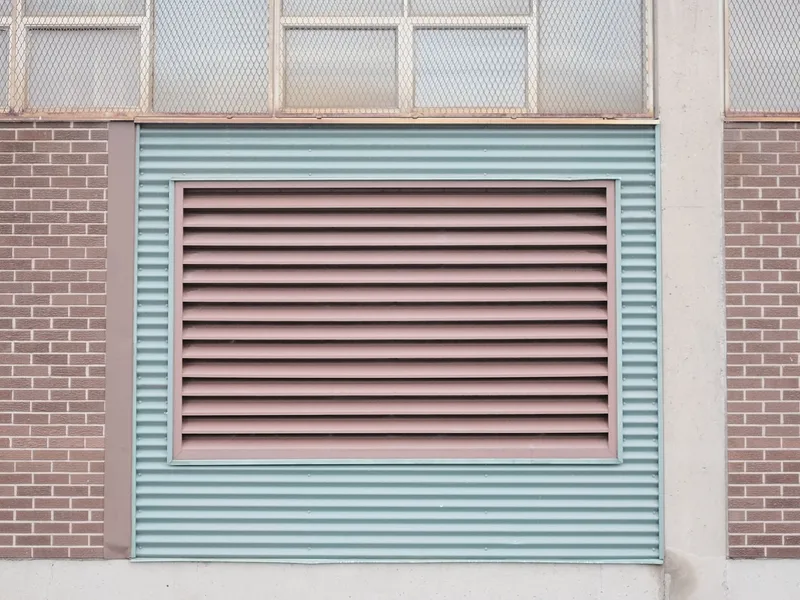
Openings and shafts
Gaps in the walls around sewer lines on the roof can be an entry point for pigeons to nest inside if not properly sealed.
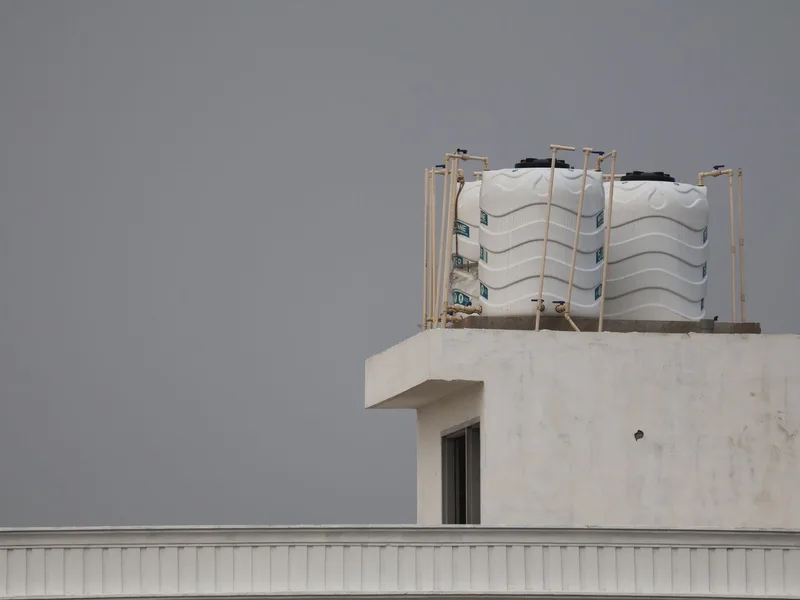
Around the roof tank
Water tanks on identical roofs provide a single water source for all birds on adjoining buildings, concentrating pigeon populations there.
How we work
-
1
Survey the roof and the facade
We walk the roof, the projections, the condenser platforms and the shafts, separate the nesting positions from the perching ones, and measure and photograph every ledge.
-
2
Strip the nests and treat the parasites
Droppings are wetted before they are lifted so nothing goes airborne dry, bagged closed, and the nest position is treated for ticks and mites before the surface is sanitised.
-
3
Close and fit
Netting tensioned on a perimeter wire with no gap at the corners, spikes or wire on the narrow projections, metal mesh across vents and shafts, and the roof drains freed of the nest material packing them.
-
4
The follow-up visit
We come back to check the tension, the corners and any position the flock has moved to, and correct what has slackened before a bird finds it.
What bird and pigeon control includes
-

A recorded survey
Every ledge, condenser platform and shaft, photographed, with nesting separated from perching before anything is chosen.
-

Nest removal and drain clearing
Lifted wet rather than swept dry, bagged closed, and the roof drains freed of the nest material packing them.
-

Parasite treatment and sanitising
The nest position treated for ticks and mites, then the surface the droppings sat on sanitised.
-

Sealing and fitting the deterrents
Netting tensioned on a perimeter wire, spikes or wire on narrow projections, and metal mesh across ventilation openings.
-

Aftercare instructions
The condensate water, food left on the roof, and what should not sit beside a ledge if the attraction is to stay gone.
-

A follow-up on tension and corners
Netting slackens and corners open over time; the visit corrects that and closes any new position.
Landmarks of Al Huda
Work in Al Huda is positioned by reference to Al Laith Road, which marks the western boundary of the district, and Al Huda Park beside the buildings serves as a geographical anchor for identifying which block needs treatment within the cluster of identical structures.
- Al Laith Road
- Al Huda Mosque
- Al Huda Park
- Al Huda Health Centre
Questions about this district
Ground and upper flats are occupied by residents. How do you work without disturbing them?
We start from outside on ledges, roofs and downpipes. We may need to enter flats to treat ventilation holes and windows from inside, and we coordinate with residents for convenient times. The work takes only a few hours, not a full day.
Six buildings stand very close together. Will pigeons just move to the next building if we fit one?
Yes, absolutely. Pigeons migrate to the next building in seconds. For a lasting fix, residents must agree to fit deterrents together. We help coordinate a group approach across the adjoining buildings.
The external stairs have old nests and pigeons return to them daily. Do you remove them?
We remove all nests and droppings from stairs and entrances. After removal we seal the cracks and corners where birds nested. Then we fit deterrents on stair steps to block pigeons from returning.
Al Huda Mosque stands next to the building. Does the fitting affect the mosque or its visitors?
No, fitting deterrents on a residential block does not affect the mosque. If the mosque itself has pigeon problems, that is a separate issue needing its own treatment. Deterrents on your roof also reduce the pressure on the mosque.
Vacant plots beside the building are being developed as new villas. Will pigeons increase or decline once building ends?
Vacant plots now provide damp ground and grass cover. When villas rise, building removes weeds and pooled water but adds new roof surfaces. Treating new villas early, before pigeons settle, is simpler and cheaper than waiting.
Al Huda Park is very close to the flat. Do pigeons come from the park and return to it?
Yes, the park is their main food and water source. Pigeons raid your flat from the park at dawn and return there at dusk. Fitting deterrents on your building breaks part of their daily cycle and forces them to look for shelter elsewhere, away from your area.
How much does bird and pigeon control in Al Huda cost?
It is set after the inspection, because the price follows the type of infestation, the size of the space, how far it has spread and the number of visits it needs. Send a photo and a description on WhatsApp and we will give you an estimate before we reach Al Huda.
Nearby districts we cover
Other services in Al Huda
Other services we provide to residents of Al Huda.
-
 Residential
Cockroach control
Residential
Cockroach control
-
 Residential
Bed bug control
Residential
Bed bug control
-
 Residential
Termite control
Residential
Termite control
-
 Residential
Rodents and mice
Residential
Rodents and mice
-
 Residential
Mosquito control
Residential
Mosquito control
-
 Residential
Fly control
Residential
Fly control
-
 Residential
Ant control
Residential
Ant control
-
 Residential
Gecko control
Residential
Gecko control
-
 Residential
Scorpion control
Residential
Scorpion control
-
 Residential
Snake control
Residential
Snake control
-
 Residential
Flea control
Residential
Flea control
-
 Residential
Preventive treatment
Residential
Preventive treatment
-
 Residential
Disinfection
Residential
Disinfection
-
 Commercial
Annual contracts
Commercial
Annual contracts
-
 Commercial
Restaurants and cafes
Commercial
Restaurants and cafes
-
 Commercial
Hotels and apartments
Commercial
Hotels and apartments
-
 Commercial
Warehouses and factories
Commercial
Warehouses and factories
-
 Commercial
Schools and nurseries
Commercial
Schools and nurseries
-
 Commercial
Retail and malls
Commercial
Retail and malls
-
 Commercial
Rest houses and farms
Commercial
Rest houses and farms
-
 Commercial
Fumigation
Commercial
Fumigation
-
 Water tanks
Water tank cleaning
Water tanks
Water tank cleaning
-
 Water tanks
Water tank sterilization
Water tanks
Water tank sterilization
-
 Water tanks
Water tank sealing
Water tanks
Water tank sealing
-
 Water tanks
Tank leak repair
Water tanks
Tank leak repair
Need bird and pigeon control in Al Huda? Tell us what you saw and we will tell you what it needs
We reach Al Huda at a time we agree, and you get the full cost before we start.