

Bird and pigeon control in Khalij Salman Jeddah
Khalij Salman is a coastal stretch where sea humidity and salt air are constant all year, and any exposed surface faces unrelenting corrosion. Standard deterrents fail under this climatic pressure, nesting returns rapidly on the scattered chalets and rest houses, and the shallow bay and reef line mean the humidity grips tighter than in inland districts.
-
Targeted, not broadcast
Product goes into cracks and runways, never sprayed across open surfaces.
-
Told before we start
What we will use, where it goes, and what to cover or move before we arrive.
-
A follow-up visit
We return after the first treatment, because what survives it does not show on the day.
-
Homes and businesses
Apartments and villas, and kitchens and stores that need a record of each visit.
Why they keep coming back in Khalij Salman
Chalets closed for months in summer provide pigeons with undisturbed shelter, and metal components corrode visibly within weeks under the salt laden air. The method is set out in full on how we approach Bird and pigeon control.
Salt and humidity accelerate deterioration of deterrents
Unprotected metals rust within weeks, galvanised spikes lose rigidity, and netting leaks at the edges. Products that hold up in inland districts fail here within a single season. We specify marine-grade materials and additional fixings, with sealed joints to keep salt water out of the attachment points.
Closed chalets offer pigeons an extended safe nesting window
Rest houses and holiday properties that close for months offer pigeons a secure space to nest and rear young with no disturbance. When reopened, established nests harbour parasites that migrate into occupied rooms. We carry out deep cleaning of all interior voids before fitting, targeting any remaining nesting material.
Gaps between new and old buildings create perching points
When new villas rise next to older chalets, uneven heights and differently angled edges give pigeons perching options they cannot find on uniform modern buildings. Exposed pipework from adjacent building sites and roof edges at varied levels multiply available ledges, so we treat each facade independently with its own geometry in mind.
Landmarks of Khalij Salman
From Khalij Salman Park to Khalij Salman Beach, the open coastal areas allow us to reach the roofs and facades directly, and our work here depends on knowing the access routes through the private subdivisions and identifying the main roosting concentrations where birds gather.
- Khalij Salman Beach
- Lakes City
- Khalij Salman Park
- Khalij Salman Chalets
The building decides which deterrent works
The shoreline setting on the Red Sea in a shallow winding bay means moisture is always present and salt spray reaches every facade. New building sites and land still being developed leave wide gaps where pigeons readily settle and build.

Ledge width
The coastal ledge faces salt spray and high humidity year-round, so we specify corrosion-resistant materials, extra fixings, and closer monitoring intervals than inland work.

Air conditioning platforms
Air conditioning condensate runs down the outside walls adding moisture and algae, and pigeons prefer perching and nesting on these wetter surfaces where mould is visible.
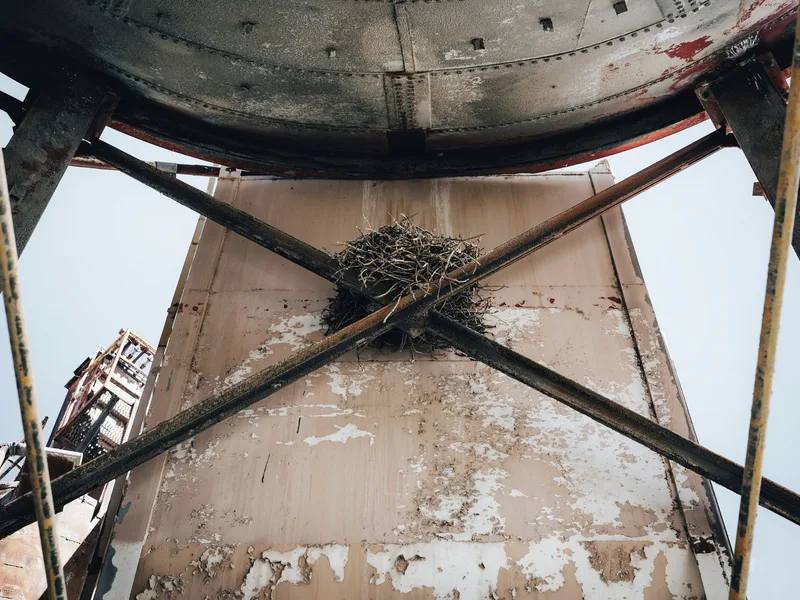
The nest itself
Nests on closed chalets remain protected for months during seasonal closures, and parasites establish populations in voids when the chalet is unoccupied.
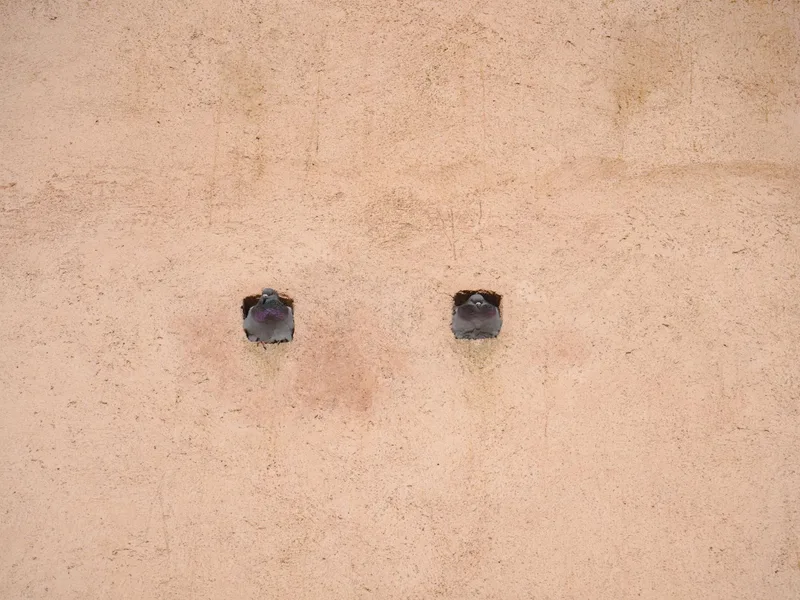
The droppings pattern
Droppings dry slowly in high humidity and leave white salt residue deposits that attract small biting insects indoors in the occupied season.
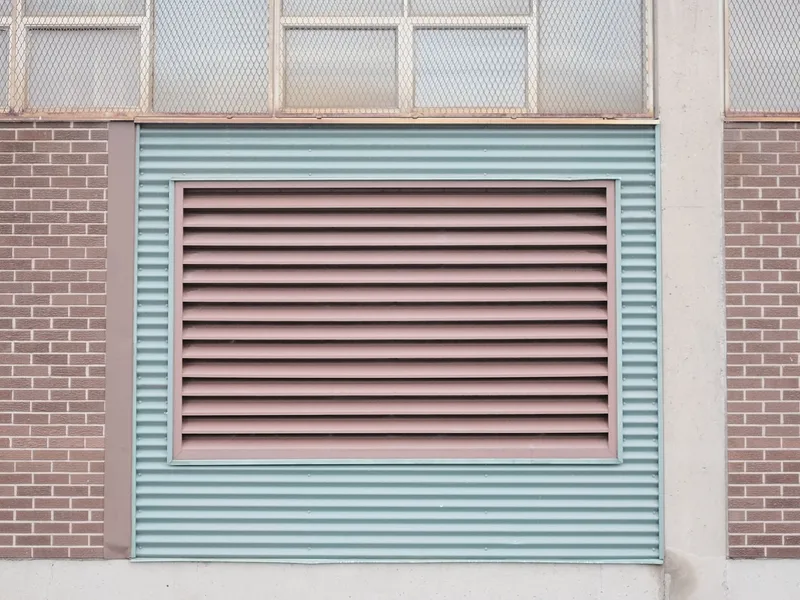
Openings and shafts
Gaps between new and old buildings and foundation vents in chalets stepped on older piles provide safe entry routes for rodents and birds.
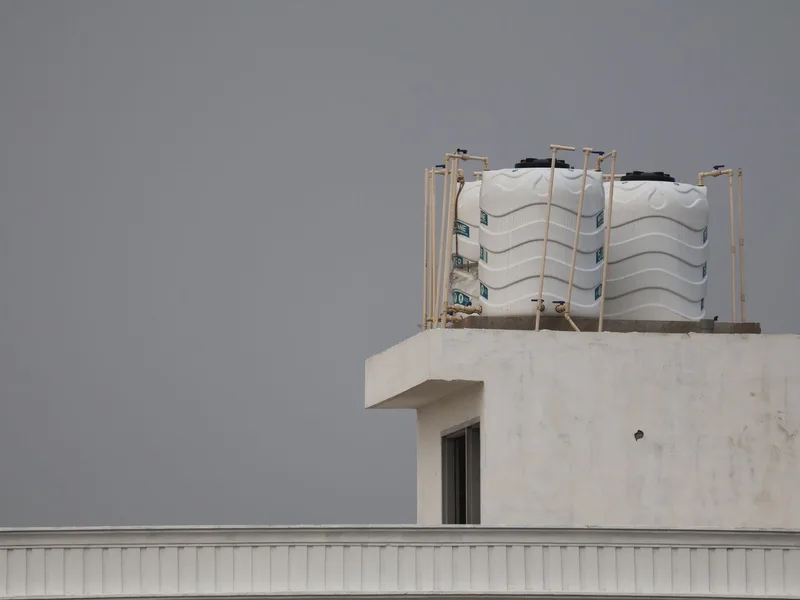
Around the roof tank
Roof tanks are surrounded by new pipework and ductwork from adjacent buildings still under construction, creating multiple access points and perching areas for pigeons.
How we work
-
1
Survey the roof and the facade
We walk the roof, the projections, the condenser platforms and the shafts, separate the nesting positions from the perching ones, and measure and photograph every ledge.
-
2
Strip the nests and treat the parasites
Droppings are wetted before they are lifted so nothing goes airborne dry, bagged closed, and the nest position is treated for ticks and mites before the surface is sanitised.
-
3
Close and fit
Netting tensioned on a perimeter wire with no gap at the corners, spikes or wire on the narrow projections, metal mesh across vents and shafts, and the roof drains freed of the nest material packing them.
-
4
The follow-up visit
We come back to check the tension, the corners and any position the flock has moved to, and correct what has slackened before a bird finds it.
What bird and pigeon control includes
-

A recorded survey
Every ledge, condenser platform and shaft, photographed, with nesting separated from perching before anything is chosen.
-

Nest removal and drain clearing
Lifted wet rather than swept dry, bagged closed, and the roof drains freed of the nest material packing them.
-

Parasite treatment and sanitising
The nest position treated for ticks and mites, then the surface the droppings sat on sanitised.
-

Sealing and fitting the deterrents
Netting tensioned on a perimeter wire, spikes or wire on narrow projections, and metal mesh across ventilation openings.
-

Aftercare instructions
The condensate water, food left on the roof, and what should not sit beside a ledge if the attraction is to stay gone.
-

A follow-up on tension and corners
Netting slackens and corners open over time; the visit corrects that and closes any new position.
What is different about Dhahban Sub-Municipality
Dhahban sub municipality is the northern coastal strip of Jeddah, running from the north bank of Sharm Obhur up to the old village of Dhahban and Salman Bay. Its districts are recently built, with owner occupied villas and apartments, beach resorts and chalets on the shore, and land subdivisions still being developed. Nearness to the sea keeps humidity high all year, irrigated lawns in villas, resorts and district parks hold water, Wadi Obhur and the vacant plots between buildings give rodents and reptiles shelter, and the old fishing village of Dhahban gives the far north a rural edge.
Questions about this district
Does salt air and moisture affect how well the deterrents work?
Yes, humidity speeds fungal growth on netting and spikes, and salt causes accelerated corrosion at stress points. We specify salt-resistant materials and better drainage around fixings to prevent water pooling or salt spray seeping into the attachment mechanism.
A chalet closes for months in summer, will the pigeon problem disappear?
No, pigeons remain and nest in dark, undisturbed voids throughout the closure, and parasites breed undisturbed in established nests. We carry out thorough inspection and removal of all nesting material and droppings when the property reopens, then immediately fit the deterrent.
Can deterrents be fitted to uneven or curved ledges common in older chalets?
Yes, but it requires stronger fixings and angled brackets to follow the ledge curvature. We use additional steel brackets and fill gaps beneath the deterrent to stop pigeons wrapping around the product.
Will strong sea breezes loosen or damage the fitted netting and spikes?
Strong wind can open seams or dislodge weak fixings, so we increase the number of attachment points and use heavy gauge steel brackets with fixings at closer intervals than inland specifications.
After we remove an old nest will pigeons return to the same spot?
They will return to abandoned nest sites if the ledge is not blocked. We fit the deterrent immediately after removal and thorough cleaning, then carry out a follow-up inspection two weeks later to verify the seal has held.
Can we fit deterrents on the roof water tank without affecting water use?
Yes, we fit horizontal barriers on the tank sides and netting over top access points. The tank does not need to be completely sealed, only protected from pigeon entry while keeping adequate ventilation and water circulation.
How much does bird and pigeon control in Khalij Salman cost?
It is set after the inspection, because the price follows the type of infestation, the size of the space, how far it has spread and the number of visits it needs. Send a photo and a description on WhatsApp and we will give you an estimate before we reach Khalij Salman.
Other services in Khalij Salman
Other services we provide to residents of Khalij Salman.
-
 Residential
Cockroach control
Residential
Cockroach control
-
 Residential
Bed bug control
Residential
Bed bug control
-
 Residential
Termite control
Residential
Termite control
-
 Residential
Rodents and mice
Residential
Rodents and mice
-
 Residential
Mosquito control
Residential
Mosquito control
-
 Residential
Fly control
Residential
Fly control
-
 Residential
Ant control
Residential
Ant control
-
 Residential
Gecko control
Residential
Gecko control
-
 Residential
Scorpion control
Residential
Scorpion control
-
 Residential
Snake control
Residential
Snake control
-
 Residential
Flea control
Residential
Flea control
-
 Residential
Preventive treatment
Residential
Preventive treatment
-
 Residential
Disinfection
Residential
Disinfection
-
 Commercial
Annual contracts
Commercial
Annual contracts
-
 Commercial
Restaurants and cafes
Commercial
Restaurants and cafes
-
 Commercial
Hotels and apartments
Commercial
Hotels and apartments
-
 Commercial
Warehouses and factories
Commercial
Warehouses and factories
-
 Commercial
Schools and nurseries
Commercial
Schools and nurseries
-
 Commercial
Retail and malls
Commercial
Retail and malls
-
 Commercial
Rest houses and farms
Commercial
Rest houses and farms
-
 Commercial
Fumigation
Commercial
Fumigation
-
 Water tanks
Water tank cleaning
Water tanks
Water tank cleaning
-
 Water tanks
Water tank sterilization
Water tanks
Water tank sterilization
-
 Water tanks
Water tank sealing
Water tanks
Water tank sealing
-
 Water tanks
Tank leak repair
Water tanks
Tank leak repair
Need bird and pigeon control in Khalij Salman? Tell us what you saw and we will tell you what it needs
We reach Khalij Salman at a time we agree, and you get the full cost before we start.