
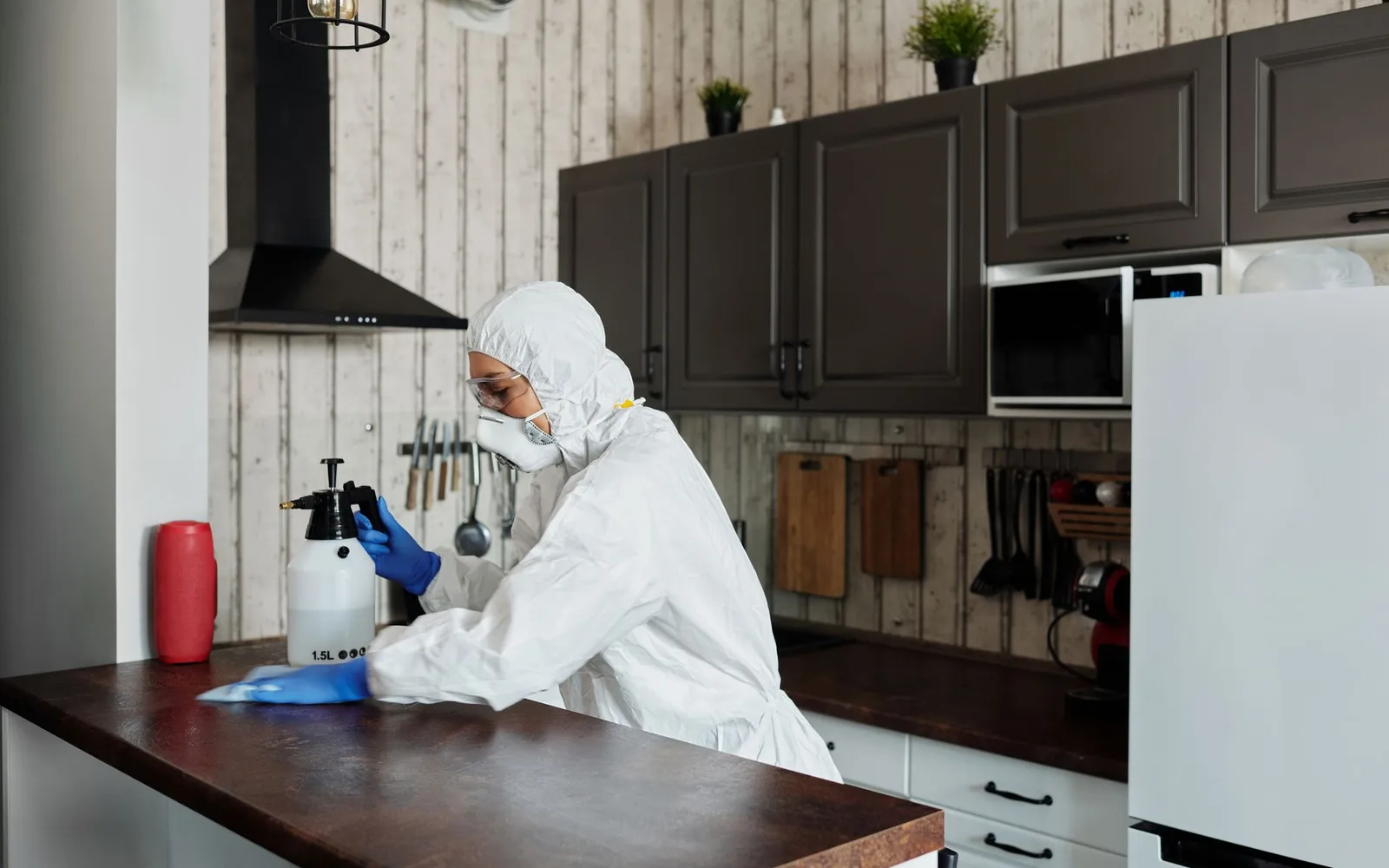
Disinfection in Al Lulu Jeddah
Al Lulu is a new coastal strip on the Red Sea with villas, apartments and resorts facing high humidity and salty air throughout the year. Disinfection here differs because sea salt penetrates surfaces and joints, and the dampness holds the disinfectant and stops the rapid evaporation that would cancel it.
-
Targeted, not broadcast
Product goes into cracks and runways, never sprayed across open surfaces.
-
Told before we start
What we will use, where it goes, and what to cover or move before we arrive.
-
A follow-up visit
We return after the first treatment, because what survives it does not show on the day.
-
Homes and businesses
Apartments and villas, and kitchens and stores that need a record of each visit.
Why they keep coming back in Al Lulu
High humidity slows the drying of disinfectant, but the sea salt deposited on surfaces needs separate treatment before actual disinfection can be effective. The method is set out in full on our Disinfection service.
Sea salt and its effect on surfaces
Salty air deposits on walls, furniture and windows, forming a barrier layer that stops disinfectant from reaching the surface itself. Salt must be rinsed away first with distilled water before disinfection, or the disinfectant works on the salt, not the surface. This step is not optional in coastal areas.
Dampness and poor ventilation
High humidity slows evaporation, and in flats with sealed windows and tight seals, moisture stays trapped inside. This means disinfectant needs longer to work, and we may need to adjust the concentrate strength or extend exposure time to ensure the product reaches full effect.
Irrigated green spaces and standing water
Villas and resorts have watered gardens and swimming pools, and stagnant water attracts insects and microorganisms. Disinfection includes draining standing water and treating damp soil around foundations where humidity creates persistent contamination risks.
Landmarks of Al Lulu
Al Lulu stretches along Obhur Road from north to south, and villas and apartments near Al Suyuti Mosque and Al Lulu Park require extra care because of their direct coastal exposure to humidity and salt spray.
- Obhur Road
- Al Lulu Park
- Al Suyuti Mosque
- Umm Bandar Mosque
- Awfa Rizk Mall
What we look at before the product is chosen
The coastal location keeps relative humidity high even in dry months, and the irrigated green spaces in villas and gardens hold water throughout the year.
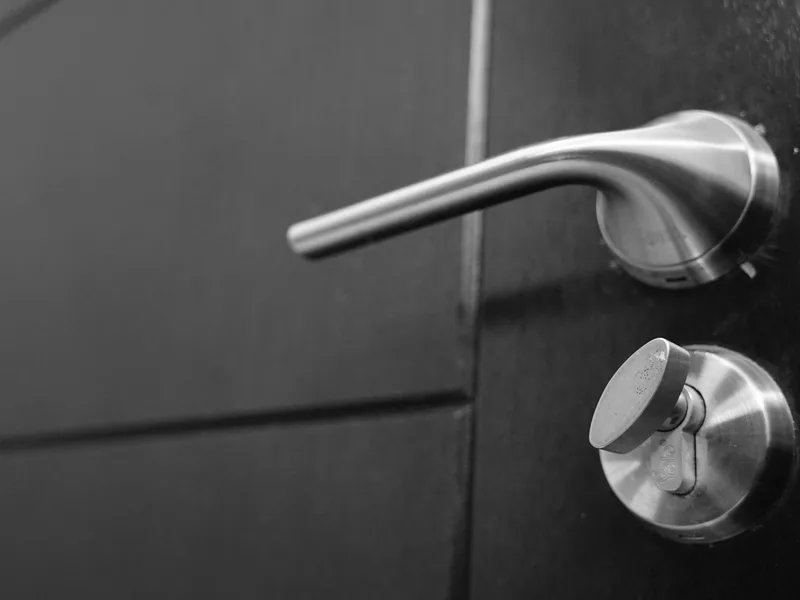
The touch points
Touch points in coastal villas and apartments include window handles, door handles and railings, all exposed to sea salt that increases bacterial accumulation and makes these spots high risk.
Porous surfaces
Natural marble and stone surfaces are common in resorts and coastal villas, and need careful treatment because some acidic disinfectants react with natural stone and can leave marks.
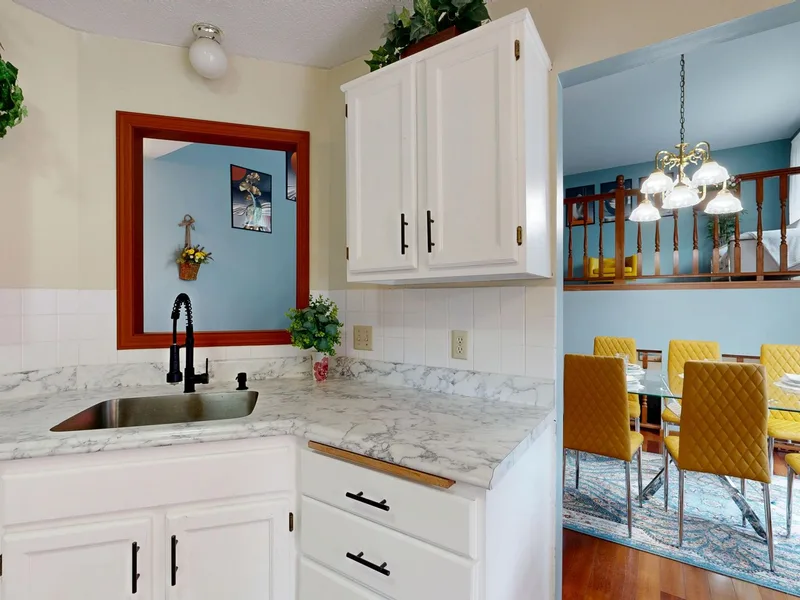
The finish itself
Modern finishes of vinyl and glazed tile offer better protection against salt, but grout lines between tiles collect salt and moisture and need separate thorough treatment to prevent staining.
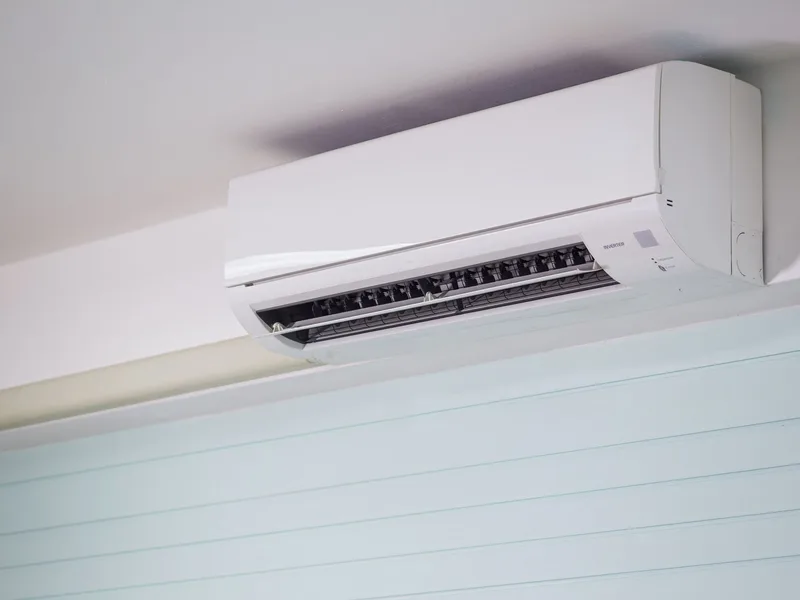
The air conditioning unit
Air conditioning units in coastal flats work harder because humidity is higher, and the drainage outlet collects excess water that becomes a breeding ground for bacteria and fungi if not treated.
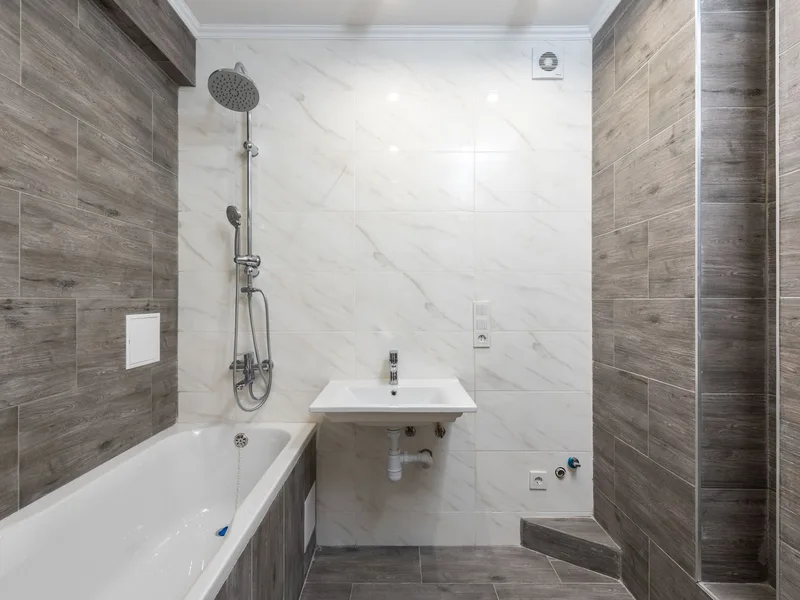
Floor traps
Floor traps in coastal villas and flats hold stagnant water constantly because high humidity prevents evaporation, and they are a major source of smell and insect harbouring if left untreated.
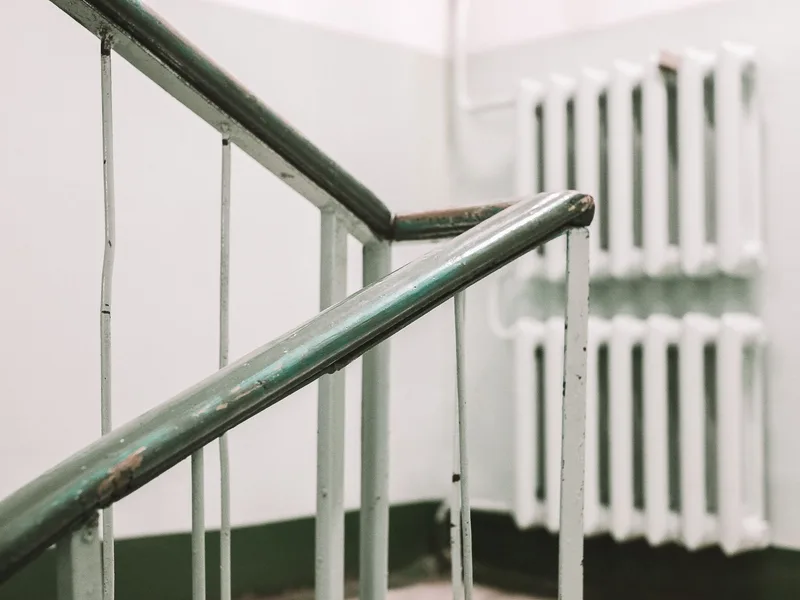
Shared entrances and stairs
Shared stairs and passages in coastal apartment blocks suffer from salt accumulation on walls and railings, and need deep cleaning before disinfection to ensure the product reaches the surface.
How we work
-
1
Walk the space and list the surfaces
We go through the rooms and mark the touch points, the porous surfaces and the finishes, then ask what prompted the call: illness at home, moving into a new place, building work, or a smell that arrived out of nowhere.
-
2
Clean what we are about to treat
We take the film of dust and grease off the surfaces that are in scope, so the product reaches the surface itself. This is preparation for the treatment, not general house cleaning.
-
3
Apply it, and hold the contact time
Hand work on the touch points, a product matched to each surface, and the surface left visibly wet for as long as that material needs before it is dried off. Cold fogging comes last, for what a cloth cannot reach.
-
4
Ventilate and hand back
We open the place up, rinse food preparation surfaces with water, and tell you when each room goes back into use. We give you that timing on the call, because it changes with the product and the space.
What a disinfection visit includes
-

A surface and touch point survey
What gets treated, and with what, settled before anything is opened.
-

Soil off first, then the disinfectant
The greasy film comes off first, then a product that stays wet for the contact time it needs.
-

Floor traps and the air conditioning drain
Floor traps, sink outlets and the drain tray, which is where most smells actually begin.
-
Cold fogging for the space
For upward faces and corners a cloth never reaches, done as the last thing before we leave a room.
-

Ventilation and use instructions
What gets rinsed with water, what is left alone, and when each room goes back into use.
-

A scheduled repeat when it is needed
For shared entrances and places people pass through every day, because a disinfectant leaves nothing behind to stop the next contact.
What is different about Dhahban Sub-Municipality
Dhahban sub municipality is the northern coastal strip of Jeddah, running from the north bank of Sharm Obhur up to the old village of Dhahban and Salman Bay. Its districts are recently built, with owner occupied villas and apartments, beach resorts and chalets on the shore, and land subdivisions still being developed. Nearness to the sea keeps humidity high all year, irrigated lawns in villas, resorts and district parks hold water, Wadi Obhur and the vacant plots between buildings give rodents and reptiles shelter, and the old fishing village of Dhahban gives the far north a rural edge.
Questions about this district
Sea salt builds up on furniture and surfaces; does disinfectant work underneath it?
No, disinfectant cannot penetrate a salt layer. Before disinfection we rinse surfaces with distilled water to remove accumulated salt, then apply the disinfectant to a clean surface. Without this step the disinfectant works on salt, not the microbe.
The humidity here is very high; does it reduce how well disinfection works?
High humidity slows evaporation, but it does not cancel disinfectant. It may even extend the working time because the product stays wet longer, which can be beneficial if we allow enough time. The key is not to wipe the surface before the disinfectant is fully dry.
The flat faces the sea and windows are close to the water; do we disinfect the windows and frames?
Yes, coastal home windows are exposed to salt and moisture far more than inland ones. We disinfect windows, shutters and the seals around them, because small gaps collect salt and grime that become breeding grounds for bacteria.
The villa garden has plants and is always wet; do we also treat the soil?
Yes, irrigated damp soil is a safe haven for bacteria, fungi and insects. We treat the soil around foundations and wet zones in the garden with specialist disinfectant, and recommend improved drainage to reduce persistent dampness.
The resort swimming pool: does disinfection cover it or does a separate company treat it?
A swimming pool has separate chemical treatment with chlorine and specialist pool products; it is not part of interior disinfection. But the walkways, showers and courtyards around the pool are disinfected as part of the service.
After disinfection in this damp climate, when can rooms be used again?
Because humidity is high, disinfectant dries much slower than in dry areas. Wait at least two hours before opening windows to ventilate the room, and three hours before touching surfaces or using furniture fully.
How much does disinfection in Al Lulu cost?
It is set after the inspection, because the price follows the type of infestation, the size of the space, how far it has spread and the number of visits it needs. Send a photo and a description on WhatsApp and we will give you an estimate before we reach Al Lulu.
Other services in Al Lulu
Other services we provide to residents of Al Lulu.
-
 Residential
Cockroach control
Residential
Cockroach control
-
 Residential
Bed bug control
Residential
Bed bug control
-
 Residential
Termite control
Residential
Termite control
-
 Residential
Rodents and mice
Residential
Rodents and mice
-
 Residential
Mosquito control
Residential
Mosquito control
-
 Residential
Fly control
Residential
Fly control
-
 Residential
Ant control
Residential
Ant control
-
 Residential
Gecko control
Residential
Gecko control
-
 Residential
Scorpion control
Residential
Scorpion control
-
 Residential
Snake control
Residential
Snake control
-
 Residential
Flea control
Residential
Flea control
-
 Residential
Bird and pigeon control
Residential
Bird and pigeon control
-
 Residential
Preventive treatment
Residential
Preventive treatment
-
 Commercial
Annual contracts
Commercial
Annual contracts
-
 Commercial
Restaurants and cafes
Commercial
Restaurants and cafes
-
 Commercial
Hotels and apartments
Commercial
Hotels and apartments
-
 Commercial
Warehouses and factories
Commercial
Warehouses and factories
-
 Commercial
Schools and nurseries
Commercial
Schools and nurseries
-
 Commercial
Retail and malls
Commercial
Retail and malls
-
 Commercial
Rest houses and farms
Commercial
Rest houses and farms
-
 Commercial
Fumigation
Commercial
Fumigation
-
 Water tanks
Water tank cleaning
Water tanks
Water tank cleaning
-
 Water tanks
Water tank sterilization
Water tanks
Water tank sterilization
-
 Water tanks
Water tank sealing
Water tanks
Water tank sealing
-
 Water tanks
Tank leak repair
Water tanks
Tank leak repair
Need disinfection in Al Lulu? Tell us what you saw and we will tell you what it needs
We reach Al Lulu at a time we agree, and you get the full cost before we start.