
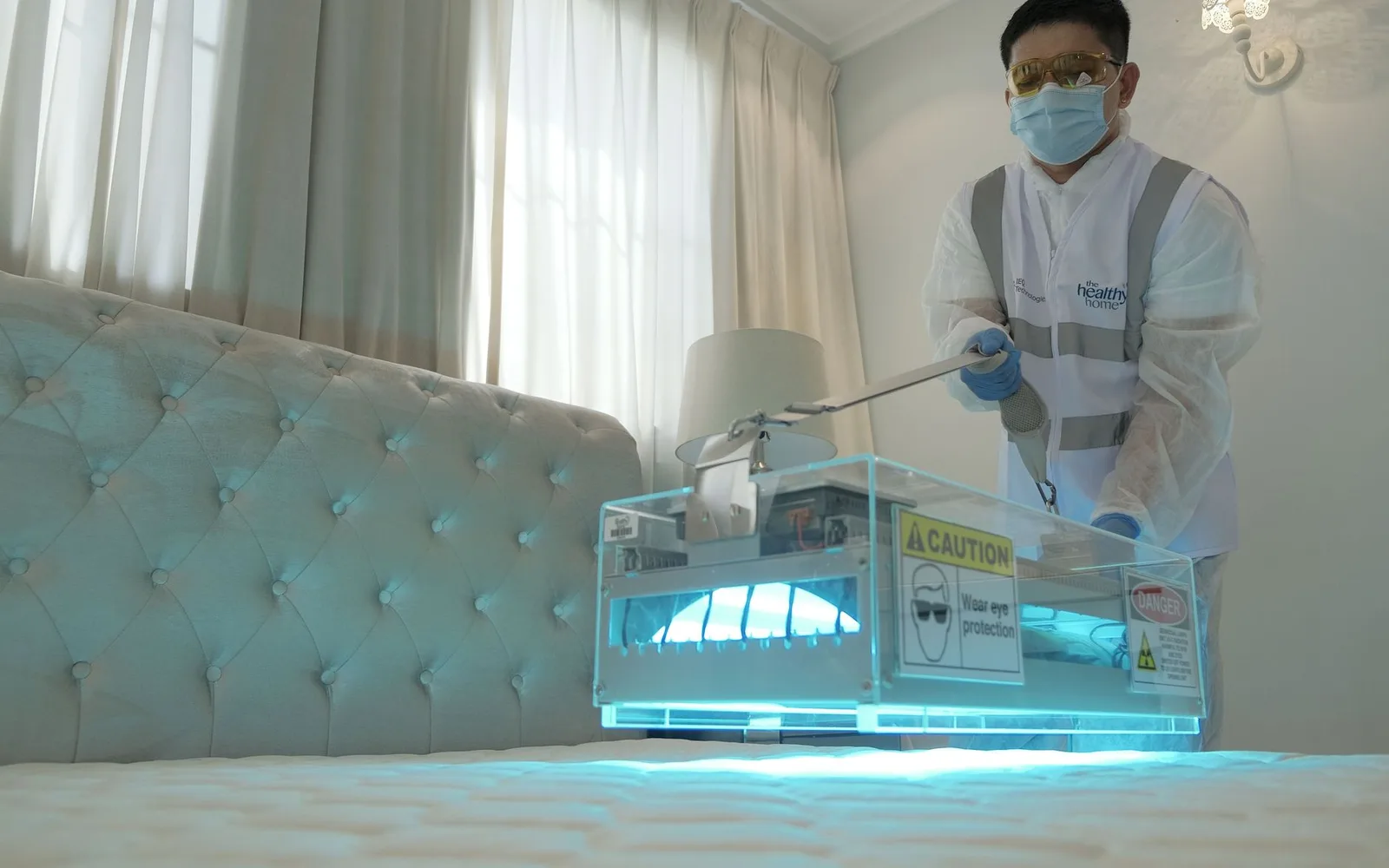
Hotels and apartments in Al Jumayzah Makkah
Al Jumayzah is a small district close to the Grand Mosque along Al Hajoun Street and Al Masjid Al Haram Road, named after a sycamore fig where residents once gathered. Apartment blocks and modest hotels house Umrah visitors, and the closely packed buildings with the Al Mualla cemetery and Masjid Al Jinn at its edges make this area a distinct challenge.
-
Targeted, not broadcast
Product goes into cracks and runways, never sprayed across open surfaces.
-
Told before we start
What we will use, where it goes, and what to cover or move before we arrive.
-
A follow-up visit
We return after the first treatment, because what survives it does not show on the day.
-
Homes and businesses
Apartments and villas, and kitchens and stores that need a record of each visit.
Why they keep coming back in Al Jumayzah
Small hotels in Al Jumayzah serve individual pilgrims and small family groups, unlike the huge tower hotels elsewhere. Infestation spreads faster in small hotels because staff numbers are lower and coordination is easier, but so is cross-infection between properties. The method is set out in full on what Hotels and apartments involves.
Small hotels and apartment blocks tightly clustered and interconnected
Ajyad hotels are small and stand very close to neighbours. Insects move freely through thin walls and tight gaps between buildings. Work in one property must include treatment of adjacent units or insects simply migrate across the boundary walls.
Prime location near Haram drives high pilgrim turnover
Umrah visitors choose Al Jumayzah for its walking distance to the Mosque. Infested furnished apartments may be occupied before inspection, and continuous work with repeat inspections between guests is essential to stop transmission between properties.
Furnished units with tiny kitchens and cramped bathrooms
Flats in Al Jumayzah are small with tight kitchens and compact bathrooms. Cockroaches and mosquitoes establish themselves in these confined spaces with ease. Treatment demands precise access to every small void and corner where insects hide.
Al Jumayzah on the map
Al Jumayzah sits about 1.5 km from Al Maabdah and about 1.5 km from Rai Adhakhir.
Open in Google MapsWhat we check in the room, and behind it
Small residential blocks and modest hotels stand shoulder to shoulder, with continuous foot traffic of pilgrims and Umrah visitors, especially during peak seasons. Buildings are old, walls are thin and the density is high.
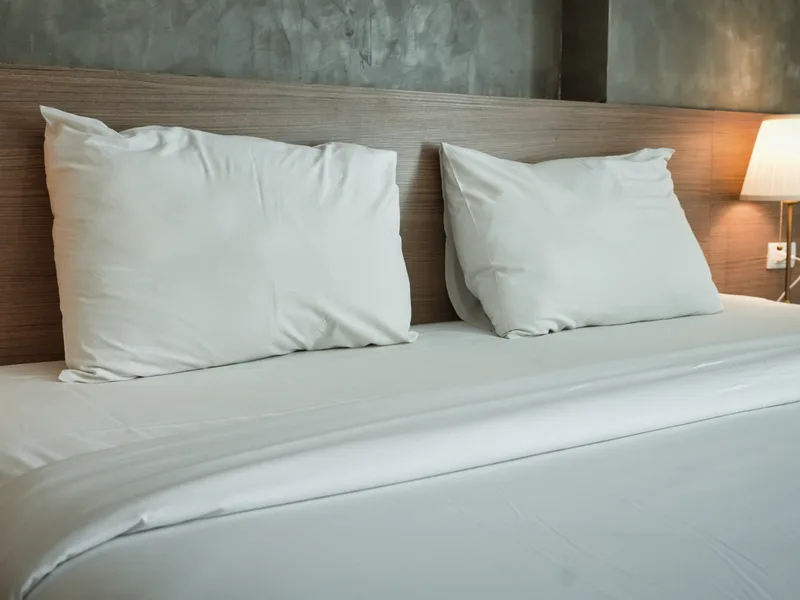
Mattress and base seams
Mattress seams in small furnished flats need pre-guest inspection every time, as eggs cement into seams readily. Old bases have undersides with gaps that harbour colonies. Used mattresses in furnished units need deeper inspection than new ones.
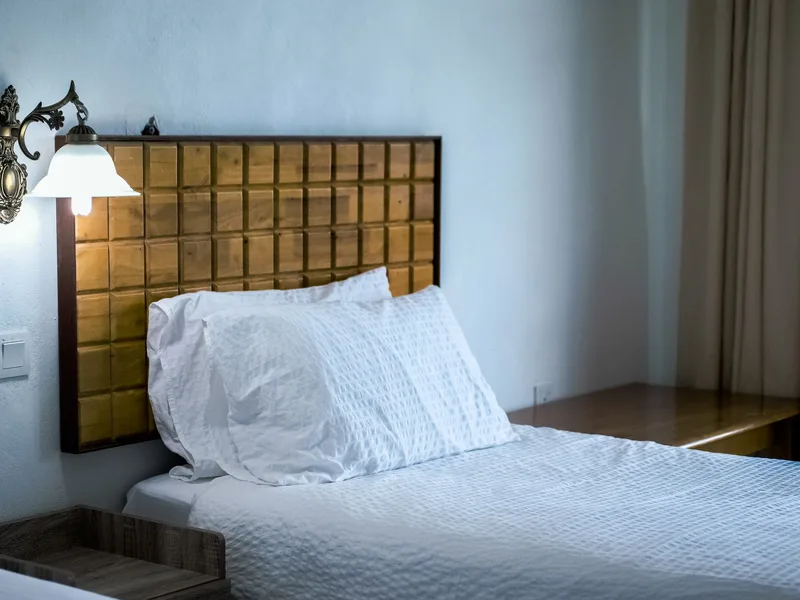
The headboard
Headboards in old Al Jumayzah flats are often poorly fixed with large voids behind. Access requires partial disassembly. The gap behind the headboard is a standard refuge that regular cleaning never reaches.
The rooms either side
Rooms in small blocks stand very close together. Walls are thin and gaps between units are tight. Insects migrate freely between rooms through cracks and narrow pipe chases shared between units.
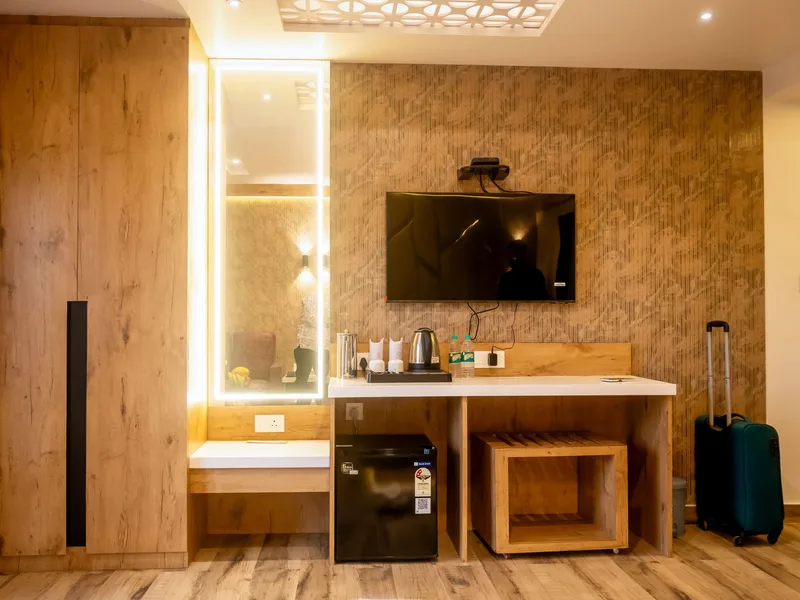
The luggage stand and wardrobe
Luggage stands and wardrobes in furnished flats are small and sit in tight corners. Infested bags left in the rack may harbour eggs in corners the owner never sees. Work covers frame, gaps and the floor beneath.
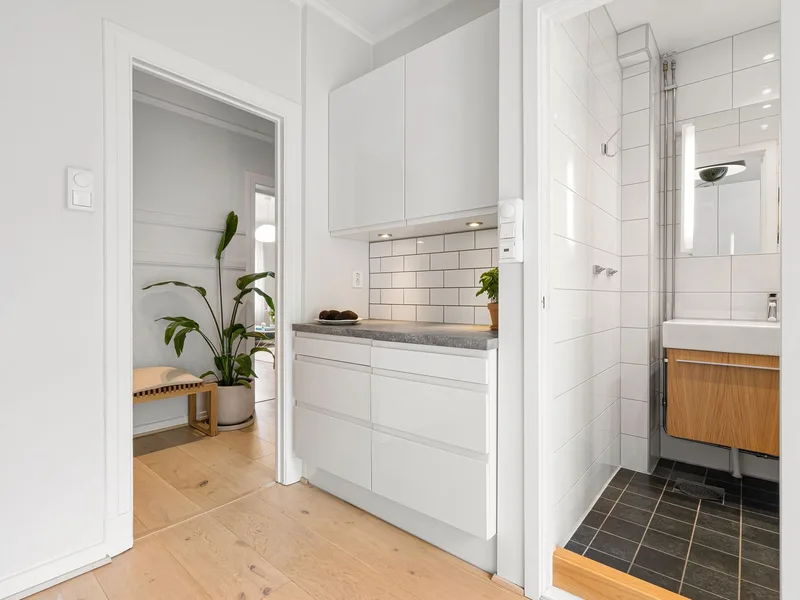
The kitchenette in a unit
The kitchenette in a small furnished unit is cramped and compact. Guests may cook fatty or sugary foods that leave residue. Cockroaches establish quickly in tight kitchens with food waste and standing water in a small space.

Laundry and the waste room
Laundry and waste rooms in small blocks share aged pipework. Dampness and waste accumulate in small confined spaces. Repeated work here is needed because insects return quickly to these concentrated waste zones.
How we work
-
1
Walk the floor, room by room
We start from what the staff reported, open the beds, lift the headboards and check the rooms either side and the ones above and below, then mark each room as affected, adjacent or clear.
-
2
Treatment outside occupied hours
Seams are vacuumed first, then steam or a targeted application goes onto the seams and joints, dust into the frame voids and behind the skirting, and gel bait through the kitchens and service areas. Nothing is broadcast over soft furnishings.
-
3
Sealing, and the operating routine
We close the skirting gap, the pipe penetration and the gap under the service corridor door, then agree with the staff that linen is bagged inside the room itself, and what gets reported the moment it is seen.
-
4
Follow-up, and putting the room back
We come back once the remaining eggs have hatched, read the monitors and open the bed a second time. A room returns to service on the result of that inspection, and the room number and both dates go into the log.
What the hotel and apartment programme includes
-

A recorded room by room inspection
Beds opened, headboards lifted, neighbouring rooms checked, and the state of every room number recorded before anything is applied.
-

Treatment of the beds and seams
Vacuuming, then a targeted application on mattress and base seams, frame joints and behind the skirting, never across the open surfaces of the room.
-

Bait and points in the service areas
Gel bait and numbered monitoring positions through the kitchen, the stores and the service corridors, read and logged on every visit.
-

Drains, laundry and waste
Floor gullies, the grease trap, the laundry and the ground around the containers, because that is the source that renews itself daily.
-

Room release and staff guidance
What is covered and cleared before we go in, the ventilation time we set for each case, and what the staff look for when they strip a bed.
-

A timed follow-up and a room log
A second visit timed to the hatch, monitors read, and a record carrying the room number, the date of each visit and what was found.
The character of Al Jumayzah
Apartment district: residential blocks, repeated floors and shared entrances
These are residential apartment blocks where each unit shares walls directly with neighbours through thin plaster and shared service pipes. Treating one flat while neighbours stay untreated leaves transmission paths open, and one infested unit rapidly seeds adjacent ones.
Questions about this district
Does a small hotel in Al Jumayzah need different treatment than a tower block?
Yes. A small hotel has fewer staff and easier coordination, so work moves faster. But insects cross from one small hotel to another more easily because the buildings are so close, so neighbour properties must be included in the programme.
Are old furnished flats in Al Jumayzah more susceptible to infestation?
Yes. Old buildings have numerous voids, aged pipework and cracked plaster. Insects establish themselves in these spaces much more readily than in newer structures, and removal is harder because the hiding places are numerous and deep.
Is treatment of a furnished flat different from a hotel room?
Yes. A furnished flat has a small kitchenette where guests may cook, while a hotel has a central kitchen. The flat needs close work on the kitchenette and the small bathroom where insects cluster more densely than in hotel equivalents.
Do Umrah visitors bring insects from their homes to Al Jumayzah?
Yes. A visitor from an infested home may carry eggs in baggage, and unpacking distributes them into the flat. Regular work and inspection before new guest arrival breaks the cycle of importation and re-establishment.
Does work in Al Jumayzah require coordination between separate buildings?
Yes. Buildings standing very close together require coordinated treatment. Insects transmit between adjacent properties through shared walls and utility runs. Treating one hotel while leaving neighbours untreated creates a cross-infection loop.
How often must a furnished flat be inspected and treated?
Each flat should have a thorough check before new guest arrival, with treatment between departures. In dense Hajj and Umrah seasons, weekly treatment cycles may be needed to stay ahead of the turnover and importation of infested baggage.
How much does hotels and apartments in Al Jumayzah cost?
It is set after the inspection, because the price follows the type of infestation, the size of the space, how far it has spread and the number of visits it needs. Send a photo and a description on WhatsApp and we will give you an estimate before we reach Al Jumayzah.
Nearby districts we cover
Other services in Al Jumayzah
Other services we provide to residents of Al Jumayzah.
-
 Residential
Cockroach control
Residential
Cockroach control
-
 Residential
Bed bug control
Residential
Bed bug control
-
 Residential
Termite control
Residential
Termite control
-
 Residential
Rodents and mice
Residential
Rodents and mice
-
 Residential
Mosquito control
Residential
Mosquito control
-
 Residential
Fly control
Residential
Fly control
-
 Residential
Ant control
Residential
Ant control
-
 Residential
Gecko control
Residential
Gecko control
-
 Residential
Scorpion control
Residential
Scorpion control
-
 Residential
Snake control
Residential
Snake control
-
 Residential
Flea control
Residential
Flea control
-
 Residential
Bird and pigeon control
Residential
Bird and pigeon control
-
 Residential
Preventive treatment
Residential
Preventive treatment
-
 Residential
Disinfection
Residential
Disinfection
-
 Commercial
Annual contracts
Commercial
Annual contracts
-
 Commercial
Restaurants and cafes
Commercial
Restaurants and cafes
-
 Commercial
Warehouses and factories
Commercial
Warehouses and factories
-
 Commercial
Schools and nurseries
Commercial
Schools and nurseries
-
 Commercial
Retail and malls
Commercial
Retail and malls
-
 Commercial
Rest houses and farms
Commercial
Rest houses and farms
-
 Commercial
Fumigation
Commercial
Fumigation
-
 Water tanks
Water tank cleaning
Water tanks
Water tank cleaning
-
 Water tanks
Water tank sterilization
Water tanks
Water tank sterilization
-
 Water tanks
Water tank sealing
Water tanks
Water tank sealing
-
 Water tanks
Tank leak repair
Water tanks
Tank leak repair
Need hotels and apartments in Al Jumayzah? Tell us what you saw and we will tell you what it needs
We reach Al Jumayzah at a time we agree, and you get the full cost before we start.