
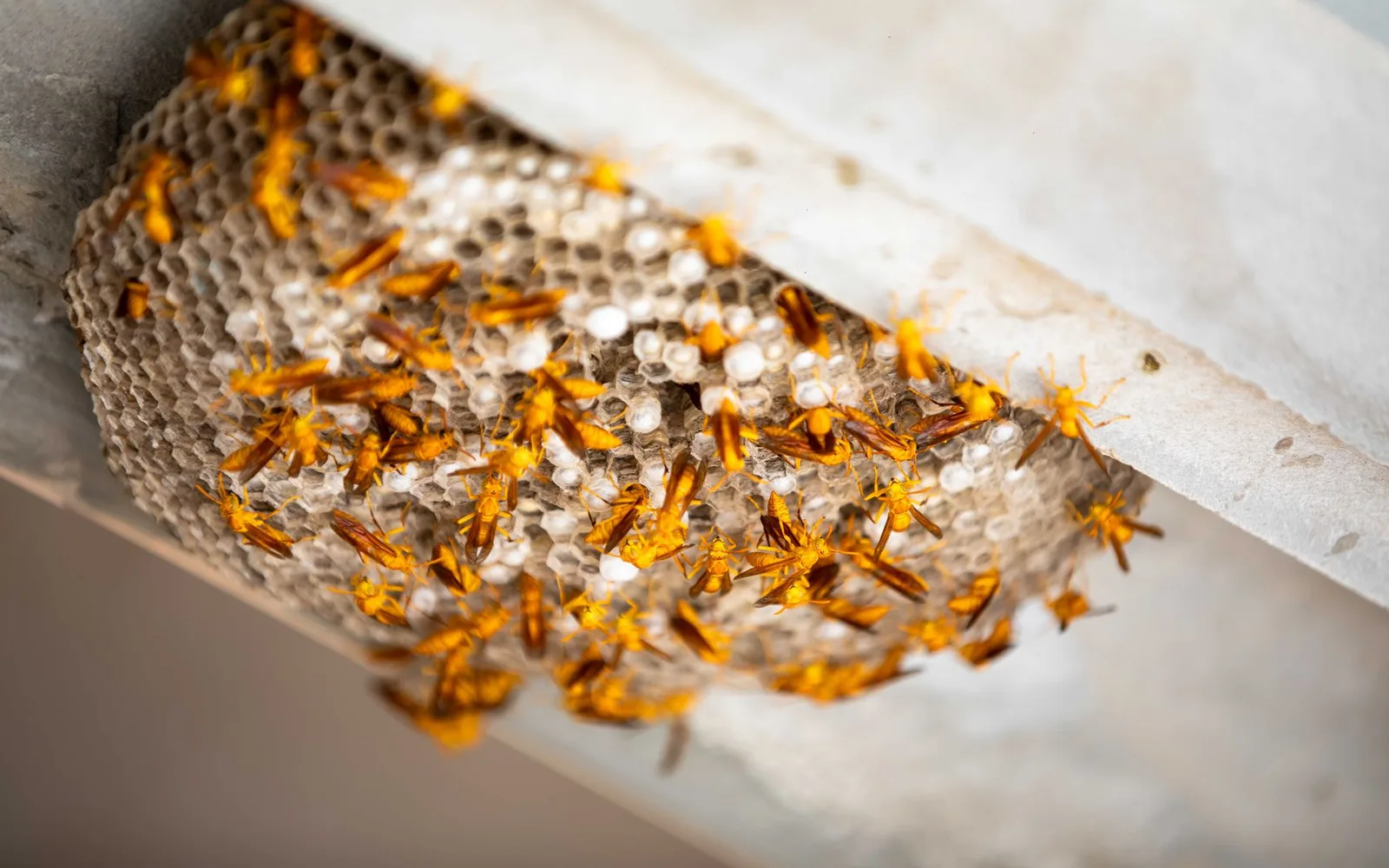
Schools and nurseries in Al Jumayzah Makkah
Al Jumayzah is a small apartment district close to the Grand Mosque along Al Hajoun Street, with modest blocks and hotels housing Umrah visitors. Schools here occupy old residential buildings that have been adapted for education, which creates unique challenges: shared passageways, interconnected systems and the constant presence of other residents.
-
Targeted, not broadcast
Product goes into cracks and runways, never sprayed across open surfaces.
-
Told before we start
What we will use, where it goes, and what to cover or move before we arrive.
-
A follow-up visit
We return after the first treatment, because what survives it does not show on the day.
-
Homes and businesses
Apartments and villas, and kitchens and stores that need a record of each visit.
Why they keep coming back in Al Jumayzah
The buildings here are comparatively old and their conversion to hotels and nurseries has left them prone to regular leaks in pipework and foundation seepage. The method is set out in full on Schools and nurseries in detail.
Small residential buildings converted to schools and nurseries
Old small apartment blocks have been adapted to serve as schools and nurseries, so classrooms share passageways, foundations and utilities with other residential flats. Insects move readily from occupied flats into classrooms through shared corridors, floor gaps and interconnected pipe systems.
Deep, dark and shadowed shared passageways
The shared corridors are deep, narrow and airless with old pipework and uneven flooring. This is ideal habitat for cockroaches and scorpions. We treat these passageways, but we cannot control adjacent flats, so insects may return from there. Regular monitoring is essential.
Shared pipework and persistent leaks
Main sewage and water pipes run through shared passageways and beneath classrooms, and leaks are common. Repairs require coordination with building management and other flat owners, which can be slow. Standing water from these leaks supports insect populations.
Al Jumayzah on the map
Al Jumayzah sits about 1.5 km from Al Maabdah and about 1.5 km from Rai Adhakhir.
Open in Google MapsWhat sets the shape of a school programme
The location on a slope very close to the Haram in an older district means buildings stand very close together. Shared passageways are deep and shadowed, and the Al Mualla cemetery lies at the edge of the area.
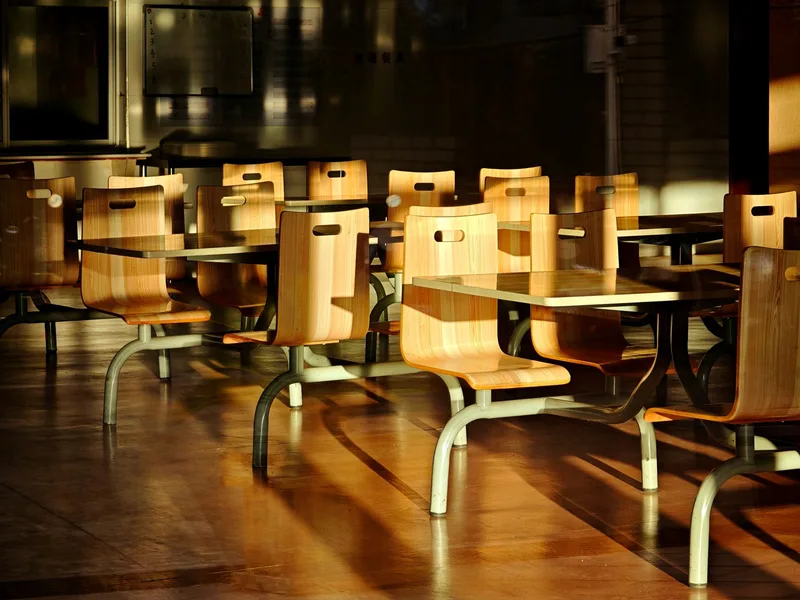
The canteen and the food store
The canteen is small and sits in a corner of the first floor, with shared sewage pipes running beneath it. We focus on ventilation and sealing from the shared passageways.
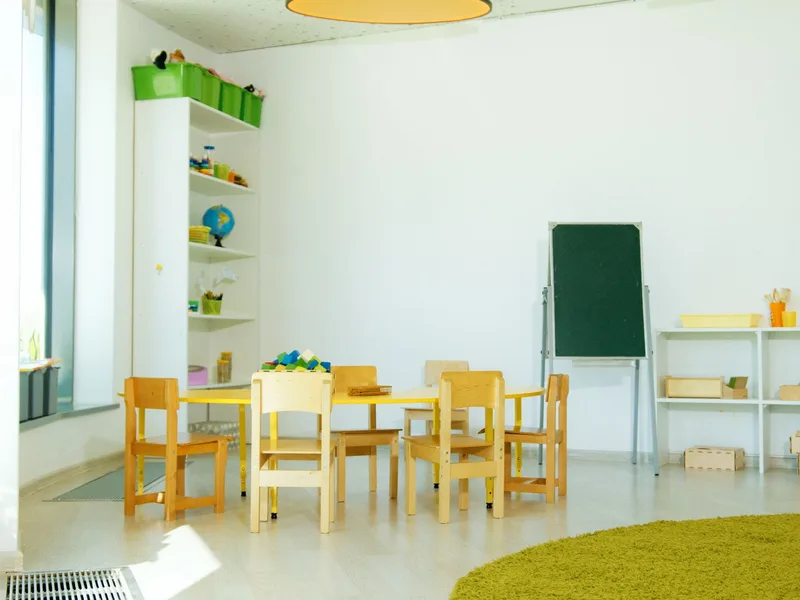
Floor level in a nursery
Ground-floor nurseries have cold floors directly adjacent to dark shared corridors. We focus on sealing gaps around the classroom door and beneath the ceiling to block insect entry.
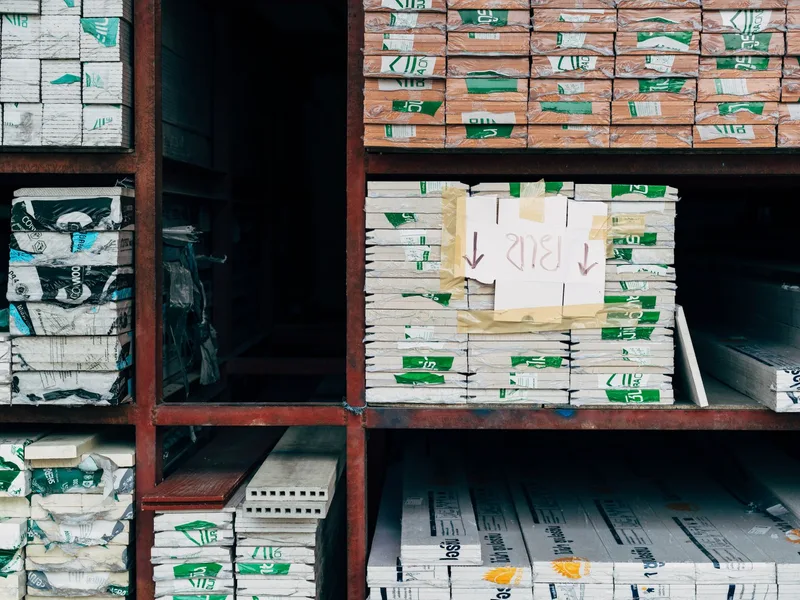
The paper and cardboard store
The paper and cardboard store sits in a dark corner, sometimes under the shared stairwell. We treat it intensively and recommend relocation to a better location if possible.
Standing water in the yard
The yard is very small and may be enclosed between walls or near the adjacent cemetery. We focus on water drainage and ensure good air circulation.

The gap under the service door
The service door gap is often large because old floors are uneven and the door may sit high or low. We seal it with metal strips along the full width.
The wall line, irrigation and planting
The boundary wall lies very close to the cemetery with high moisture and dense planting around it. We concentrate treatment around the wall line and recommend removal of excess vegetation.
How we work
-
1
Survey the building and zone it
We walk from the service gate through the canteen, the stores, the classrooms, the washrooms and the yard, record the entry routes, the moisture and the species pressure, and grade every area by who occupies it and for how long.
-
2
Schedule it against the calendar
Work that needs an empty building, closing entry points, treating the drains and the perimeter, goes into the long breaks. Station reads and spot treatment happen after the students leave or at the weekend. We agree in advance who opens the building and which rooms are cleared and covered.
-
3
Targeted treatment, out of reach
Gel bait inside joints and cracks, dust into the dry voids, enclosed stations fixed where a child cannot reach them, and targeted spray on junctions and service areas, never on open surfaces or play flooring.
-
4
Follow up and record it
We come back on the date the life cycle sets, such as a visit timed to a cockroach hatch, re-read the points, treat whatever is still active, and hand over a report with the dates, the positions and what the building itself needs closed.
What a school and nursery programme includes
-

Building survey and zone plan
A walk that fixes the entry routes, the food areas and the child areas, and a plan with the monitoring positions numbered before anything is installed.
-

Enclosed bait and stations
Stations fixed in positions a child cannot get to, and gel bait inside joints and cracks rather than on any surface.
-

Treatment outside teaching hours
After the students leave, at the weekend or in a break, on junctions and service areas, with the surfaces wiped down before anyone comes back.
-

Drains, waste and standing water
Kitchen and washroom gullies, the ground around the containers, the yard drains and the air conditioning trays, on every visit.
-

Room preparation and aftercare
Which rooms are cleared and which surfaces are covered before we arrive, what is wiped down before the students come back, and the ventilation time we set for each case on the call.
-

Scheduled visits and a report each time
Dates agreed across the term, and a report carrying the dates, the positions, the findings and the state of every corrective action.
The character of Al Jumayzah
Apartment district: residential blocks, repeated floors and shared entrances
In an apartment block still occupied by other residents, the school shares passageways, foundations and utilities with neighbouring families. Insects move readily from flats into classrooms through shared corridors and pipework, so our treatment emphasises strong barriers around the classroom and intensive monitoring of shared passageways.
Questions about this district
Flats are directly above our classroom and insects come down from there. How do we stop this?
We treat the classroom and recommend treating the other flat as well. We focus on sealing gaps between ceiling and walls and on shared sewage pipes running past the classroom.
Leaks in the shared passageways never stop. Who is responsible for repairs?
The building management or owner. We document all leaks in our report and recommend urgent repair, since standing water attracts insects constantly.
Can scorpions enter from gaps beneath the upper floors?
Yes, they favour dark damp gaps. We inspect these spaces and treat them. Other flats may also need treatment, which depends on building management cooperation.
The ground-floor nursery is very damp. Why?
Ground level absorbs moisture from the foundation and shared passageways. We treat and recommend better ventilation and improved external drainage around the building.
The classroom is next to a shared stairwell and ants enter from there. How do we stop it?
We treat the stairwell alongside the school and focus on sealing gaps beneath the classroom door and sewage pipes within the stairwell.
Is regular treatment enough or do we need special treatment for shared passageways?
We need both. Regular treatment of classrooms plus repeated treatment of the passageways and shared foundations, because leaks continue and insects return from other flats.
How much does schools and nurseries in Al Jumayzah cost?
It is set after the inspection, because the price follows the type of infestation, the size of the space, how far it has spread and the number of visits it needs. Send a photo and a description on WhatsApp and we will give you an estimate before we reach Al Jumayzah.
Nearby districts we cover
Other services in Al Jumayzah
Other services we provide to residents of Al Jumayzah.
-
 Residential
Cockroach control
Residential
Cockroach control
-
 Residential
Bed bug control
Residential
Bed bug control
-
 Residential
Termite control
Residential
Termite control
-
 Residential
Rodents and mice
Residential
Rodents and mice
-
 Residential
Mosquito control
Residential
Mosquito control
-
 Residential
Fly control
Residential
Fly control
-
 Residential
Ant control
Residential
Ant control
-
 Residential
Gecko control
Residential
Gecko control
-
 Residential
Scorpion control
Residential
Scorpion control
-
 Residential
Snake control
Residential
Snake control
-
 Residential
Flea control
Residential
Flea control
-
 Residential
Bird and pigeon control
Residential
Bird and pigeon control
-
 Residential
Preventive treatment
Residential
Preventive treatment
-
 Residential
Disinfection
Residential
Disinfection
-
 Commercial
Annual contracts
Commercial
Annual contracts
-
 Commercial
Restaurants and cafes
Commercial
Restaurants and cafes
-
 Commercial
Hotels and apartments
Commercial
Hotels and apartments
-
 Commercial
Warehouses and factories
Commercial
Warehouses and factories
-
 Commercial
Retail and malls
Commercial
Retail and malls
-
 Commercial
Rest houses and farms
Commercial
Rest houses and farms
-
 Commercial
Fumigation
Commercial
Fumigation
-
 Water tanks
Water tank cleaning
Water tanks
Water tank cleaning
-
 Water tanks
Water tank sterilization
Water tanks
Water tank sterilization
-
 Water tanks
Water tank sealing
Water tanks
Water tank sealing
-
 Water tanks
Tank leak repair
Water tanks
Tank leak repair
Need schools and nurseries in Al Jumayzah? Tell us what you saw and we will tell you what it needs
We reach Al Jumayzah at a time we agree, and you get the full cost before we start.