
Bird and pigeon control in Ajyad Makkah
Ajyad sits pressed against the southern courtyards of the Grand Mosque, where the Abraj Al Bait clock tower rises over Ajyad Street. Hotel towers and pilgrim lodgings fill the slopes, thousands of rooms open to courtyards and roofscapes. Pigeons nest on high roof surfaces, on balconies, and in the gaps between towers. Here the pigeons do not wait for pilgrims; they drive them away from their food.
-
Targeted, not broadcast
Product goes into cracks and runways, never sprayed across open surfaces.
-
Told before we start
What we will use, where it goes, and what to cover or move before we arrive.
-
A follow-up visit
We return after the first treatment, because what survives it does not show on the day.
-
Homes and businesses
Apartments and villas, and kitchens and stores that need a record of each visit.
Why they keep coming back in Ajyad
Pilgrims and Umrah visitors year round leave food scraps in streets and courtyards. Restaurants and bakeries operate day and night during peak seasons, so food is consistently available. The bird population responds rapidly to this abundance. The method is set out in full on our Bird and pigeon control service.
Giant towers and the gaps between them
The Abraj Al Bait and clock tower are massive hotel blocks standing extremely high, with thousands of openings between them: balconies, shafts, internal courtyards and recessed spaces. Pigeons nest on the roofs of these towers and in cracks, corners and dark sheltered spots. We fit strong metal mesh to every opening and every balcony.
Crowding and tightly adjoining apartment blocks
Pilgrim lodgings stack up beside the towers and hotels, some touching each other directly. Pigeons nest in gaps between buildings and on closely spaced roof surfaces. We seal the gaps with heavy duty mesh and metal stripping that does not allow pigeons to squeeze through.
The mountain and slopes and the approach from above
The mountain is very close to the towers and apartment blocks and pigeons descend from the slopes to the towers easily. We focus on roof edges and ledges that face the mountain and seal them tightly so pigeons cannot climb from the mountain side.
Ajyad on the map
Ajyad sits about 0.5 km from Al Hajlah and about 1 km from Al Shubaikah.
Open in Google MapsThe building decides which deterrent works
The district is framed by the steep flanks of Jabal Khandamah and Jabal Omar. The ground rises sharply to the south and east, and the old water runoff paths from the mountains pass very close by. Summer heat and the tower mass create wind funnels that birds navigate easily.
Ledge width
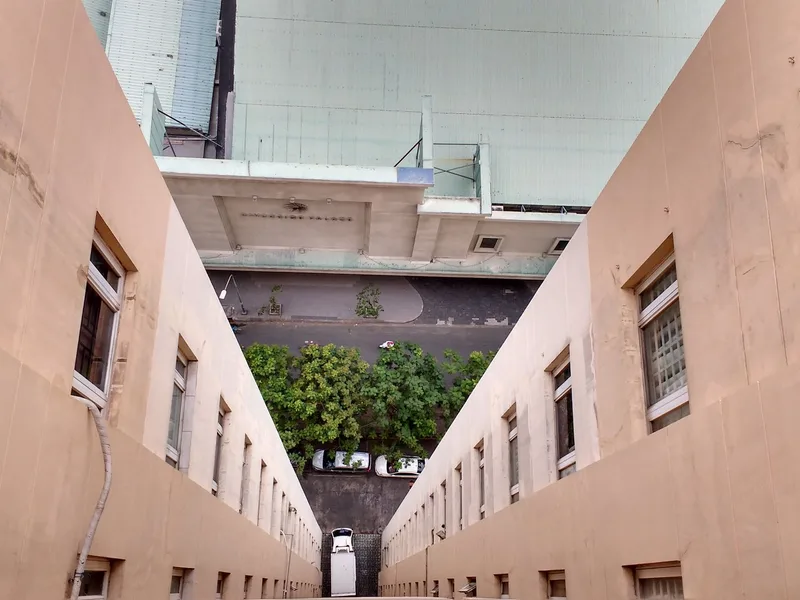
Roof ledges on the towers and hotel buildings in Ajyad are high and wide, metal or thick concrete. We use strong spikes or suspended mesh hung on metal brackets rated for the wind load.
Air conditioning platforms
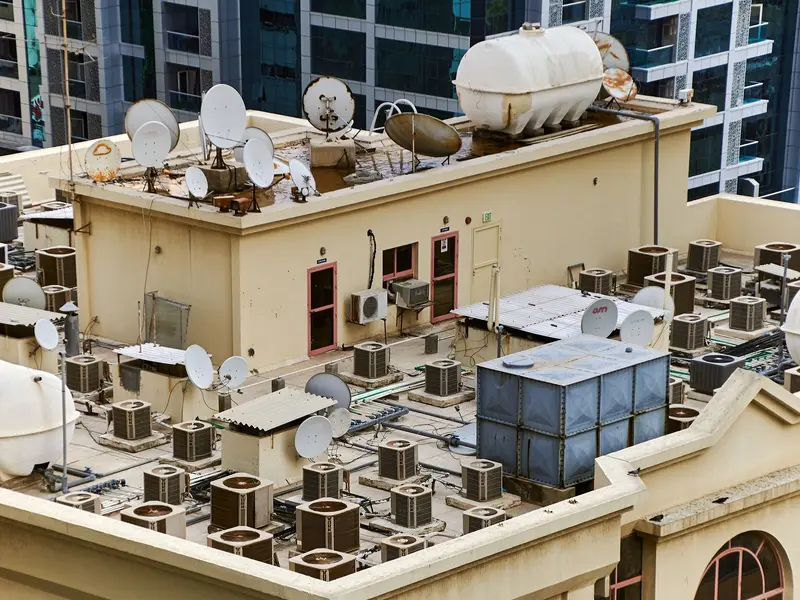
Massive hotel and tower air conditioning units cover every facade and roofline. Pigeons perch on them for warmth and shelter. We fit mesh below every unit, around every support pole and around inlet pipes.
The nest itself
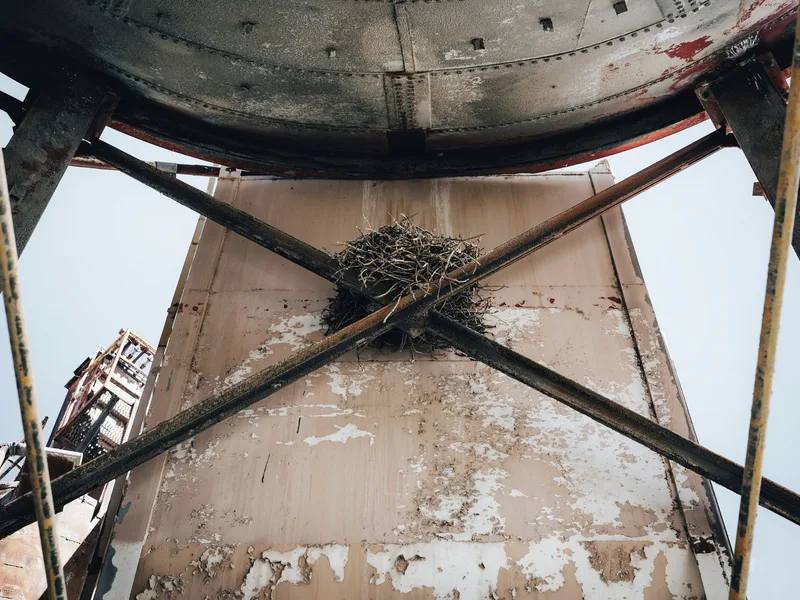
Nests in the towers shelter in cracks between brickwork, on internal balconies, in dark corners and in voids under roof structures. Every nesting spot is dry and well hidden.
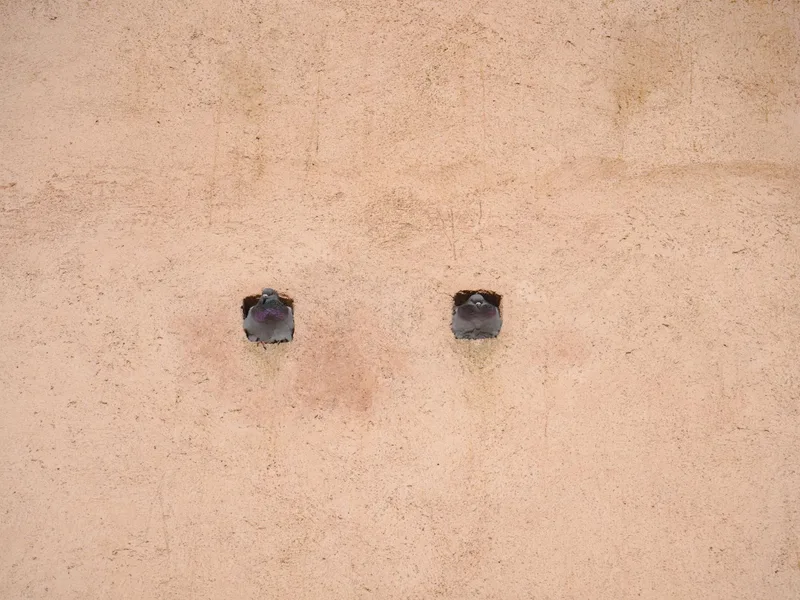
The droppings pattern
Droppings accumulate heavily because pigeons spend long hours on roofs and balconies hunting downward for food dropped from windows and floors below. Buildup is rapid.
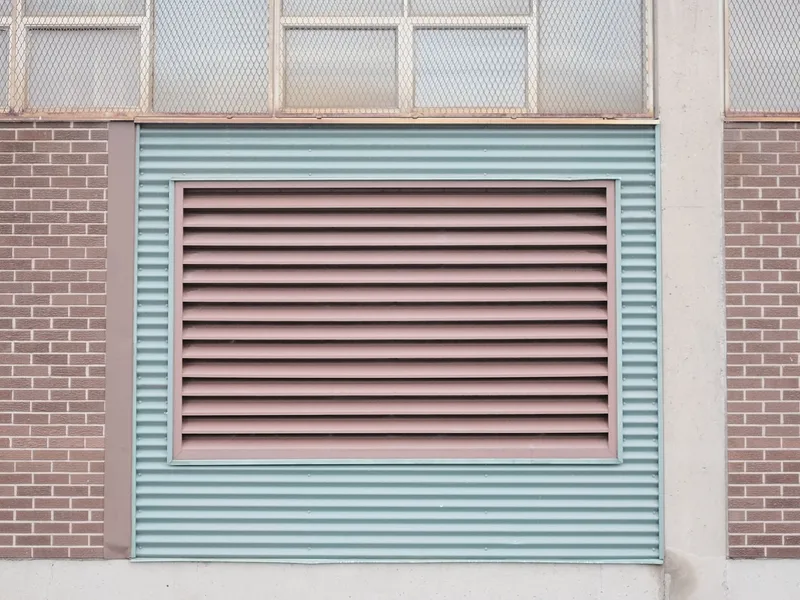
Openings and shafts
Openings are numerous: internal and external balconies, light shafts, ventilation vents and the gaps between the towers themselves. Each requires separate treatment adapted to its location.
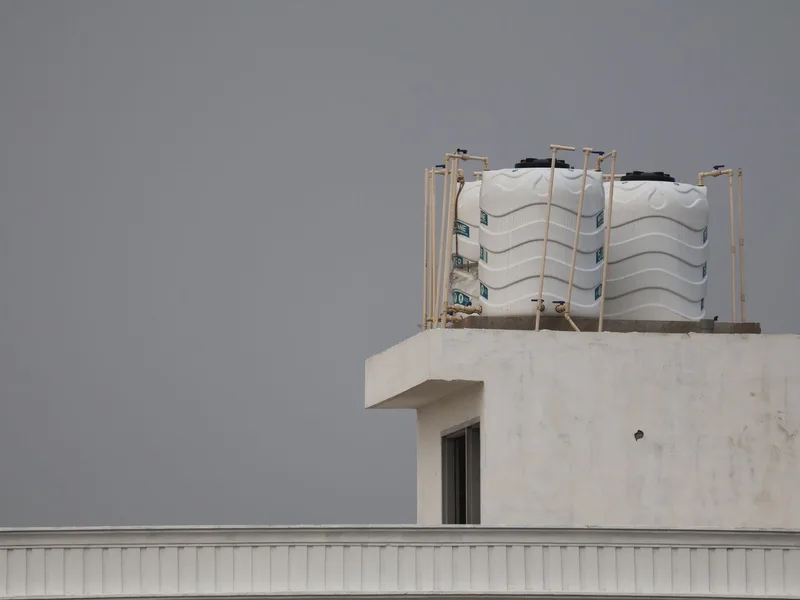
Around the roof tank
Large water tanks on tower roofs are highly attractive to pigeons for drinking and bathing. We fit heavy duty mesh around the tank or enclose it with metal panels that allow drainage but exclude birds.
How we work
-
1
Survey the roof and the facade
We walk the roof, the projections, the condenser platforms and the shafts, separate the nesting positions from the perching ones, and measure and photograph every ledge.
-
2
Strip the nests and treat the parasites
Droppings are wetted before they are lifted so nothing goes airborne dry, bagged closed, and the nest position is treated for ticks and mites before the surface is sanitised.
-
3
Close and fit
Netting tensioned on a perimeter wire with no gap at the corners, spikes or wire on the narrow projections, metal mesh across vents and shafts, and the roof drains freed of the nest material packing them.
-
4
The follow-up visit
We come back to check the tension, the corners and any position the flock has moved to, and correct what has slackened before a bird finds it.
What bird and pigeon control includes
-

A recorded survey
Every ledge, condenser platform and shaft, photographed, with nesting separated from perching before anything is chosen.
-

Nest removal and drain clearing
Lifted wet rather than swept dry, bagged closed, and the roof drains freed of the nest material packing them.
-

Parasite treatment and sanitising
The nest position treated for ticks and mites, then the surface the droppings sat on sanitised.
-

Sealing and fitting the deterrents
Netting tensioned on a perimeter wire, spikes or wire on narrow projections, and metal mesh across ventilation openings.
-

Aftercare instructions
The condensate water, food left on the roof, and what should not sit beside a ledge if the attraction is to stay gone.
-

A follow-up on tension and corners
Netting slackens and corners open over time; the visit corrects that and closes any new position.
What is different about Ajyad Sub-Municipality
Ajyad sub municipality takes in the districts that press against the Grand Mosque from the south and west: Ajyad, Al Hajlah, Al Shubaikah, Al Tandabawi and Al Mansour. Hotels and rented apartment blocks for Umrah visitors stack up along Ajyad Street and Ibrahim Al Khalil Street, with kitchens and restaurants running aday and night in season. Behind them, Al Shubaikah and Al Tandabawi keep narrow old lanes on hillside ground where buildings and drains are ageing, and demolition and construction sites are a constant presence around Jabal Omar and the central zone.
Questions about this district
Can we fit mesh on towers this tall and massive?
Yes. We use safe equipment, safety harnesses and specialist teams for high tower work. We fit mesh to every opening and balcony, inside and outside every vent and void.
Pilgrims throw food from hotel windows; how do we stop the pigeons?
We fit mesh on windows from inside in a way that does not obstruct the view of the mosque. Very fine mesh lets pilgrims see out clearly but prevents pigeons entering and food being thrown.
How many openings do we need to cover?
A tower of this size may have thousands of openings and balconies, but we focus on the largest and most used by pigeons. We survey the building and count the primary openings.
Do pigeons carry disease that affects pilgrims and visitors?
Yes. Pigeons carry parasites and pathogens. Removing nests and droppings greatly reduces the health risk and improves conditions for all pilgrims and Umrah visitors.
Do strong winds between towers damage the fitted mesh?
Winds between towers are powerful, so we use very strong metal mesh and secure fastening with multiple metal brackets. We test mesh under pressure before finishing.
Do we need daily cleaning of pigeons after fitting?
After complete fitting and sealing no daily cleaning is necessary. Routine cleaning of floors and corridors for guests is sufficient; the pigeons do not return.
How much does bird and pigeon control in Ajyad cost?
It is set after the inspection, because the price follows the type of infestation, the size of the space, how far it has spread and the number of visits it needs. Send a photo and a description on WhatsApp and we will give you an estimate before we reach Ajyad.
Nearby districts we cover
Other services in Ajyad
Other services we provide to residents of Ajyad.
-
 Residential
Cockroach control
Residential
Cockroach control
-
 Residential
Bed bug control
Residential
Bed bug control
-
 Residential
Termite control
Residential
Termite control
-
 Residential
Rodents and mice
Residential
Rodents and mice
-
 Residential
Mosquito control
Residential
Mosquito control
-
 Residential
Fly control
Residential
Fly control
-
 Residential
Ant control
Residential
Ant control
-
 Residential
Gecko control
Residential
Gecko control
-
 Residential
Scorpion control
Residential
Scorpion control
-
 Residential
Snake control
Residential
Snake control
-
 Residential
Flea control
Residential
Flea control
-
 Residential
Preventive treatment
Residential
Preventive treatment
-
 Residential
Disinfection
Residential
Disinfection
-
 Commercial
Annual contracts
Commercial
Annual contracts
-
 Commercial
Restaurants and cafes
Commercial
Restaurants and cafes
-
 Commercial
Hotels and apartments
Commercial
Hotels and apartments
-
 Commercial
Warehouses and factories
Commercial
Warehouses and factories
-
 Commercial
Schools and nurseries
Commercial
Schools and nurseries
-
 Commercial
Retail and malls
Commercial
Retail and malls
-
 Commercial
Rest houses and farms
Commercial
Rest houses and farms
-
 Commercial
Fumigation
Commercial
Fumigation
-
 Water tanks
Water tank cleaning
Water tanks
Water tank cleaning
-
 Water tanks
Water tank sterilization
Water tanks
Water tank sterilization
-
 Water tanks
Water tank sealing
Water tanks
Water tank sealing
-
 Water tanks
Tank leak repair
Water tanks
Tank leak repair
Need bird and pigeon control in Ajyad? Tell us what you saw and we will tell you what it needs
We reach Ajyad at a time we agree, and you get the full cost before we start.