
Bird and pigeon control in Al Thaalibah Jeddah
Al Thaalibah packs hundreds of apartment blocks with ledges so close together and facades so alike that every roof has dozens of nesting positions and every block shares entrances. This density means a single roof holds hundreds of pigeon nesting sites, and protecting your flat alone fails if the flats next to yours have no protection. Treatment here is a whole-building problem, not a single-flat one.
-
Targeted, not broadcast
Product goes into cracks and runways, never sprayed across open surfaces.
-
Told before we start
What we will use, where it goes, and what to cover or move before we arrive.
-
A follow-up visit
We return after the first treatment, because what survives it does not show on the day.
-
Homes and businesses
Apartments and villas, and kitchens and stores that need a record of each visit.
Why they keep coming back in Al Thaalibah
Residents of long standing in Al Thaalibah report that pigeon nesting began in earnest when the district's redevelopment programme started demolishing old structures. Displaced birds moved to the apartment blocks that remained nearby. The method is set out in full on Bird and pigeon control in detail.
Shared roofs and joined ledges across the whole row
Every block's roof connects to its neighbour's roof with no break. Deterring your flat alone pushes the birds to the neighbour's roof, then back. Treatment must cover the shared roof completely, and approval often needs the flat owner, the building manager, or a group of residents working in concert.
Ventilation shafts and gaps between storeys throughout the building
The older blocks in Al Thaalibah have many ventilation openings and gaps in the old mortar. Pigeons enter through these gaps into shared passages and into the flats themselves. Sealing these internal routes is harder than fitting roof deterrents because it needs interior access and coordination.
Wall-mounted air conditioners and dripping waterpipes on every facade
Every facade in Al Thaalibah carries old air conditioners and dirty water pipes that drip year round. Pigeons drink from the drips and roost on the conditioners and pipes. Cleaning the drip sources helps, but fitting deterrents on them is fiddly because maintenance gets in the way.
The character of Al Thaalibah
Apartment district: residential blocks, repeated floors and shared entrances
Pigeons in apartment districts nest in bigger numbers because each roof serves dozens of flats with different owners and utility bills go to different addresses. Treatment here needs agreement across all the flats and the building management, or birds simply move from one flat to another.
The building decides which deterrent works
The blocks in Al Thaalibah are old and pressed against each other. Shared roofs, connected ledges and joined facades mean pigeons move from one block to the next without crossing open ground. Deferred maintenance leaves gaps, open shafts and uncovered conduits where birds enter.
Ledge width
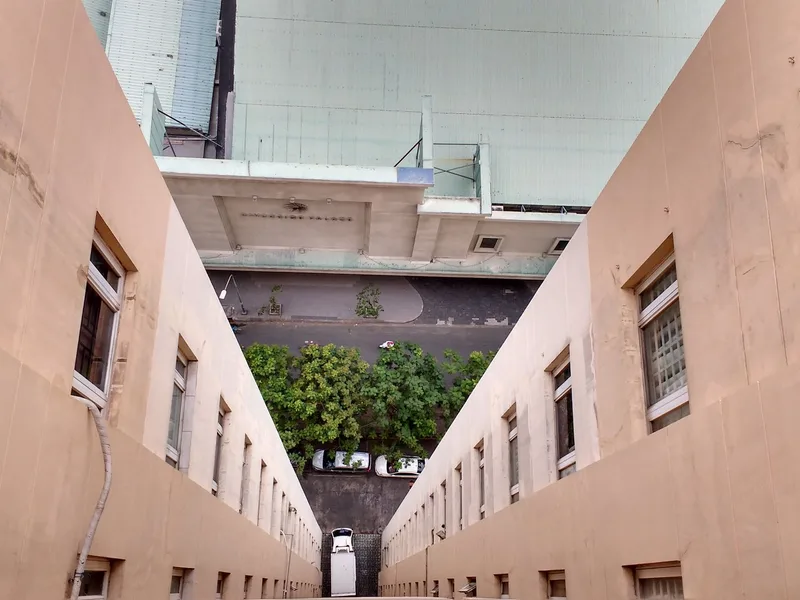
Ledges on Al Thaalibah blocks are narrow and identical, with pigeons crowded together because dozens of flats open onto each one. Deterrents here are densely spaced spikes so the birds find no foothold at all.
Air conditioning platforms
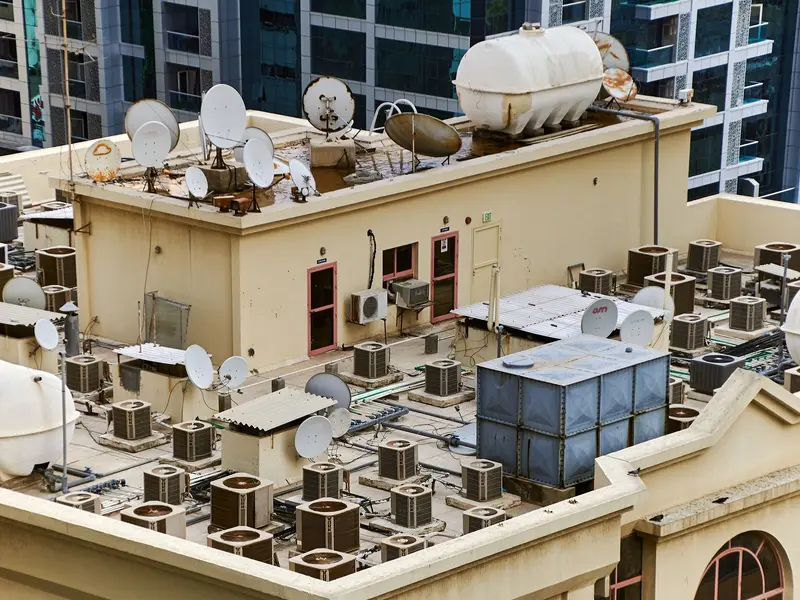
The old wall-mounted air conditioners on every facade drip water and collect dirt. Cleaning them of grime and debris comes first, then covering the drip points reduces how attractive they are to pigeons.
The nest itself
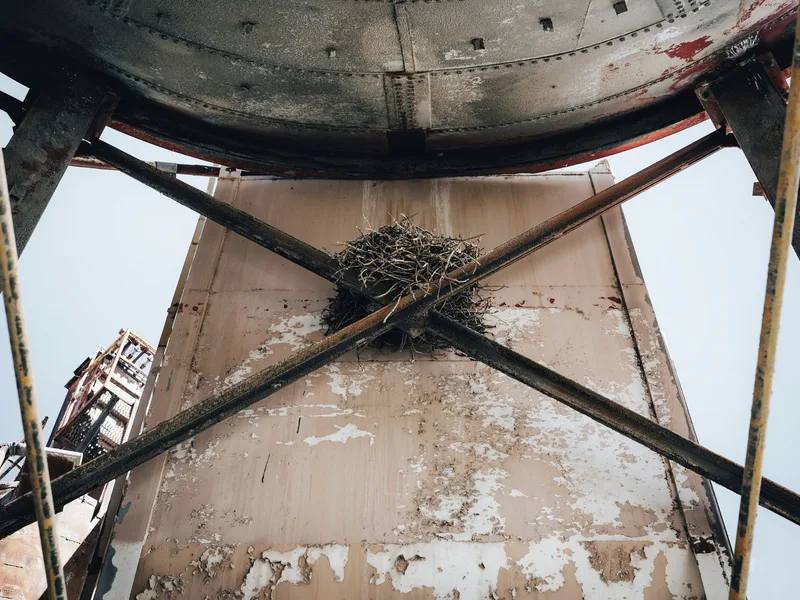
Nests in Al Thaalibah cluster thickly on ledges and pack into gaps between storeys and ventilation shafts. Removing them from the open roof is straightforward, but internal shaft nesting takes time and coordination with the building.
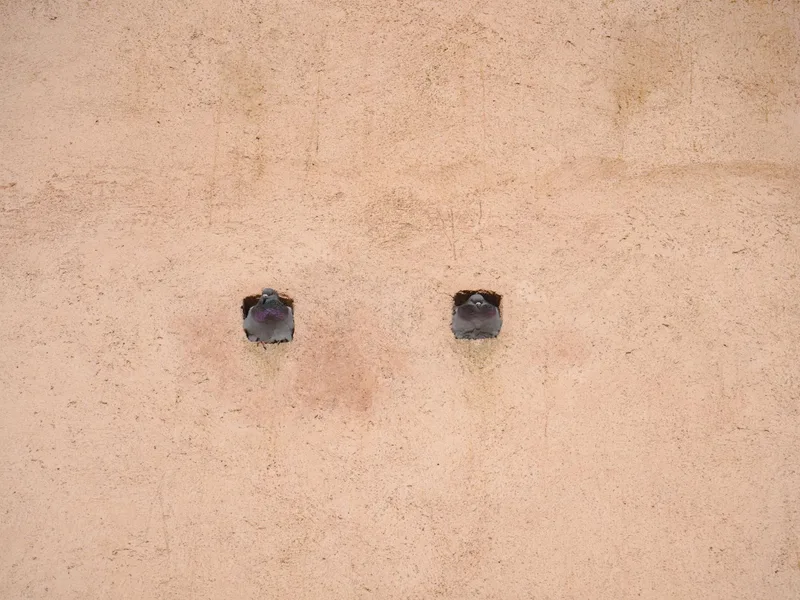
The droppings pattern
Droppings on narrow ledges pile up and attract tiny parasitic insects. Cleaning is essential before fitting deterrents, and after fitting, the barrier itself stops much of the buildup.
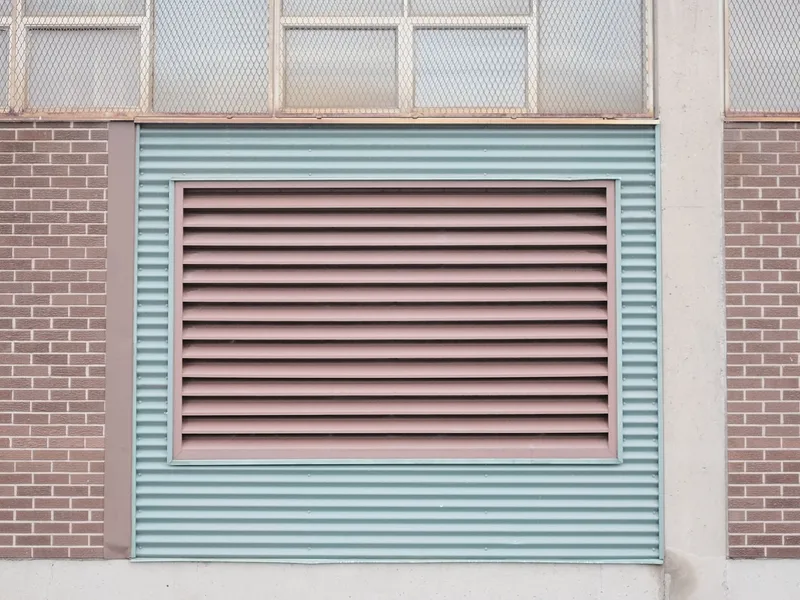
Openings and shafts
Ventilation gaps between storeys in Al Thaalibah are wide enough for birds to pass. Covering them with fine wire mesh blocks pigeons and sparrows while still allowing airflow through the shared passages.
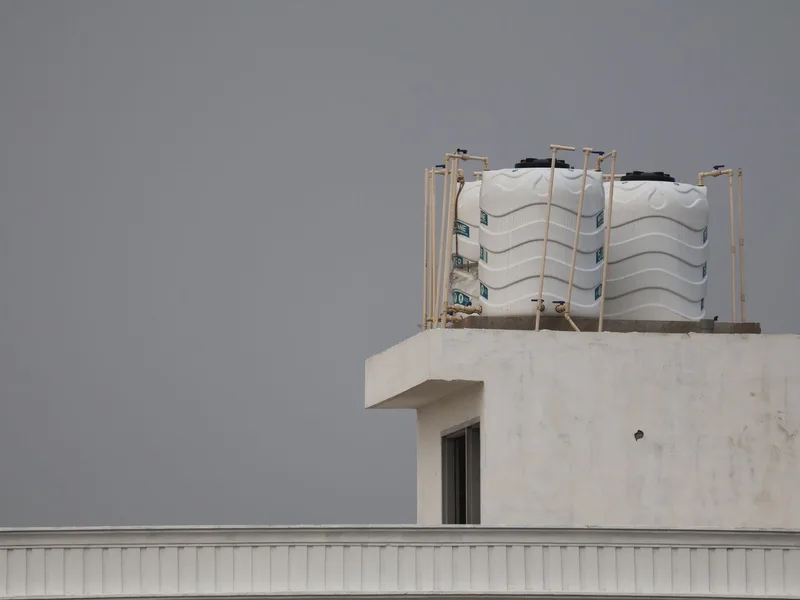
Around the roof tank
Water tanks on Al Thaalibah roofs attract flocks of pigeons. Fitting deterrents around the tank stops them from standing on it, and a sealed tank cover protects the water from droppings and debris.
How we work
-
1
Survey the roof and the facade
We walk the roof, the projections, the condenser platforms and the shafts, separate the nesting positions from the perching ones, and measure and photograph every ledge.
-
2
Strip the nests and treat the parasites
Droppings are wetted before they are lifted so nothing goes airborne dry, bagged closed, and the nest position is treated for ticks and mites before the surface is sanitised.
-
3
Close and fit
Netting tensioned on a perimeter wire with no gap at the corners, spikes or wire on the narrow projections, metal mesh across vents and shafts, and the roof drains freed of the nest material packing them.
-
4
The follow-up visit
We come back to check the tension, the corners and any position the flock has moved to, and correct what has slackened before a bird finds it.
What bird and pigeon control includes
-

A recorded survey
Every ledge, condenser platform and shaft, photographed, with nesting separated from perching before anything is chosen.
-

Nest removal and drain clearing
Lifted wet rather than swept dry, bagged closed, and the roof drains freed of the nest material packing them.
-

Parasite treatment and sanitising
The nest position treated for ticks and mites, then the surface the droppings sat on sanitised.
-

Sealing and fitting the deterrents
Netting tensioned on a perimeter wire, spikes or wire on narrow projections, and metal mesh across ventilation openings.
-

Aftercare instructions
The condensate water, food left on the roof, and what should not sit beside a ledge if the attraction is to stay gone.
-

A follow-up on tension and corners
Netting slackens and corners open over time; the visit corrects that and closes any new position.
Landmarks of Al Thaalibah
Al Thaalibah is bounded by Al Falah Road to the north and King Khalid Road on the other side, so access to work on the blocks is straightforward from both main thoroughfares. Al Thaalibah Park and Al Thaalibah Mosque mark the heart of the district where the densest blocks cluster together.
- Al Falah Road
- King Khalid Road
- Al Thaalibah Park
- Al Thaalibah Mosque
- Jeddah Islamic Port
Questions about this district
My flat is on the fourth floor with no private roof. Does pigeon reach the flat from the shared roof above?
Yes, pigeons enter through gaps between storeys and through ventilation shafts and openings. If your flat is in a high storey and birds are active on the roof above you, you need netting or covers around the openings that lead to your flat. Fitting happens on the facade and around your windows.
The water tank sits directly above my flat on the shared roof. Can anything from the pigeon reach the water?
Pigeons perch on the tank and leave droppings, but they cannot reach the water itself if the tank is sealed. However, fitting deterrents around the tank stops pigeons from standing on it and prevents the tiny parasitic insects that travel with nesting birds from settling nearby.
My neighbour has begun treatment on his flat. Must I treat mine or will the pigeon move to me?
Treatment next door may push some birds toward your flat, especially if yours has no deterrent fitted. The best course is to talk with neighbours and have everyone fit deterrents on the shared roof at the same time. One unprotected spot leaves an entry point for the whole block.
Will metal deterrents rust quickly in the damp and salt spray from the nearby port and sea?
Al Thaalibah sits very close to the port and humidity is high year round. Steel deterrents rust fast in salt air. We use galvanised or stainless steel that resists salt and damp much longer than plain iron.
Pigeon calls come from gaps between flats and from the shared passage. How do we stop that?
The gaps and shafts between flats need to be sealed and covered from inside. This requires working with the building manager or owner so we can seal the openings in the shared passage and close off ventilation shafts where birds enter.
The block has six storeys and dozens of flats. Do we treat the whole building or each flat separately?
The best solution is to treat the shared roof, ledges and interior openings all at once. If each flat is treated alone, at least one entry point remains for the pigeons. Coordination with residents and the building management is essential for treatment that actually works.
How much does bird and pigeon control in Al Thaalibah cost?
It is set after the inspection, because the price follows the type of infestation, the size of the space, how far it has spread and the number of visits it needs. Send a photo and a description on WhatsApp and we will give you an estimate before we reach Al Thaalibah.
Nearby districts we cover
Other services in Al Thaalibah
Other services we provide to residents of Al Thaalibah.
-
 Residential
Cockroach control
Residential
Cockroach control
-
 Residential
Bed bug control
Residential
Bed bug control
-
 Residential
Termite control
Residential
Termite control
-
 Residential
Rodents and mice
Residential
Rodents and mice
-
 Residential
Mosquito control
Residential
Mosquito control
-
 Residential
Fly control
Residential
Fly control
-
 Residential
Ant control
Residential
Ant control
-
 Residential
Gecko control
Residential
Gecko control
-
 Residential
Scorpion control
Residential
Scorpion control
-
 Residential
Snake control
Residential
Snake control
-
 Residential
Flea control
Residential
Flea control
-
 Residential
Preventive treatment
Residential
Preventive treatment
-
 Residential
Disinfection
Residential
Disinfection
-
 Commercial
Annual contracts
Commercial
Annual contracts
-
 Commercial
Restaurants and cafes
Commercial
Restaurants and cafes
-
 Commercial
Hotels and apartments
Commercial
Hotels and apartments
-
 Commercial
Warehouses and factories
Commercial
Warehouses and factories
-
 Commercial
Schools and nurseries
Commercial
Schools and nurseries
-
 Commercial
Retail and malls
Commercial
Retail and malls
-
 Commercial
Rest houses and farms
Commercial
Rest houses and farms
-
 Commercial
Fumigation
Commercial
Fumigation
-
 Water tanks
Water tank cleaning
Water tanks
Water tank cleaning
-
 Water tanks
Water tank sterilization
Water tanks
Water tank sterilization
-
 Water tanks
Water tank sealing
Water tanks
Water tank sealing
-
 Water tanks
Tank leak repair
Water tanks
Tank leak repair
Need bird and pigeon control in Al Thaalibah? Tell us what you saw and we will tell you what it needs
We reach Al Thaalibah at a time we agree, and you get the full cost before we start.