
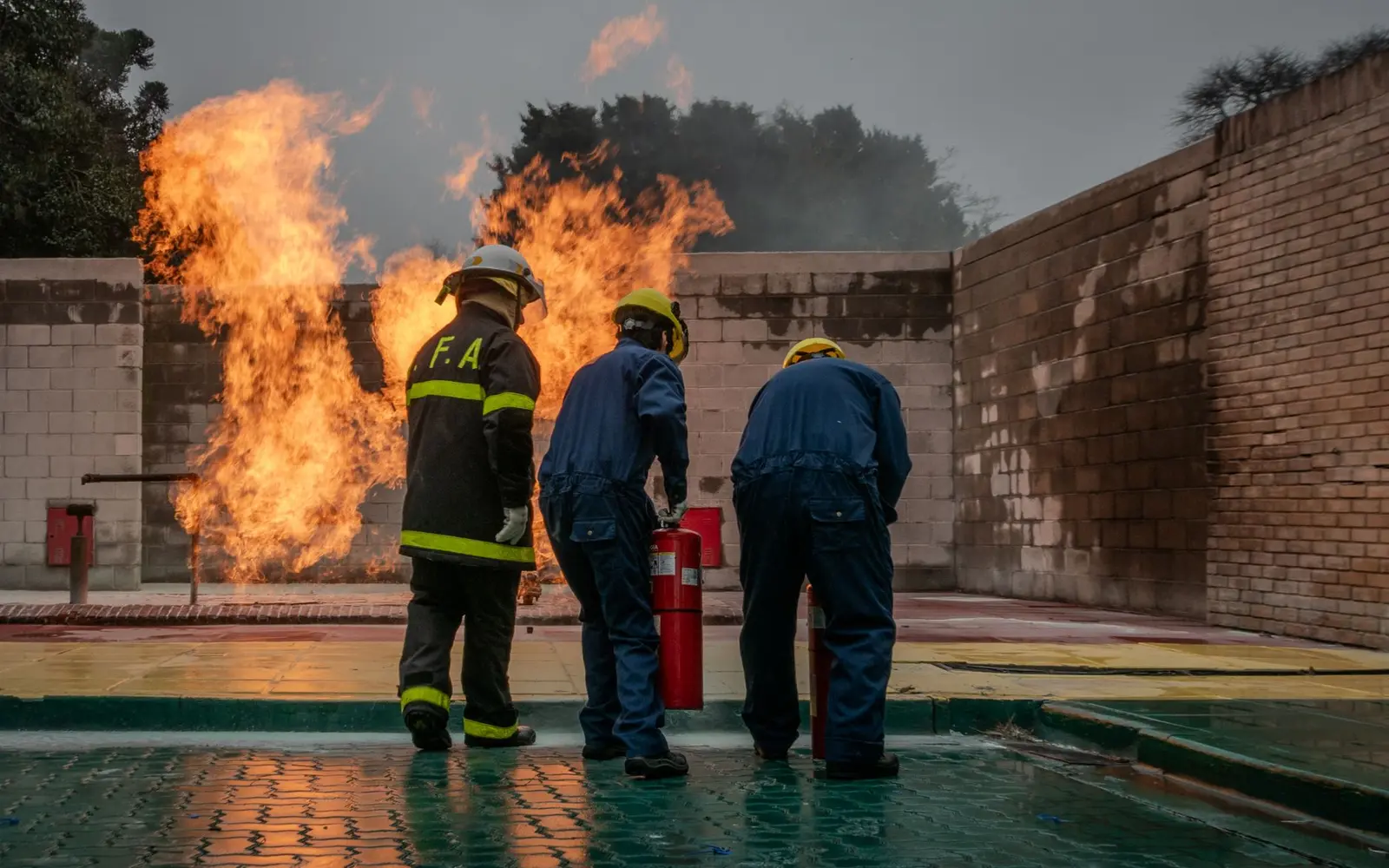
Bird and pigeon control in Mughammas Makkah
Mughammas is an industrial zone of open land east of Makkah on Wadi Al Mughammas, known today as Al Wadi Al Akhdar. Warehouses, loading yards and open ground spread across the area. The wadi holds water after heavy rain, creating humid conditions that attract insects and seeds. Pigeons settle on warehouse structures and empty yards in large flocks because predators and disturbance are minimal.
-
Targeted, not broadcast
Product goes into cracks and runways, never sprayed across open surfaces.
-
Told before we start
What we will use, where it goes, and what to cover or move before we arrive.
-
A follow-up visit
We return after the first treatment, because what survives it does not show on the day.
-
Homes and businesses
Apartments and villas, and kitchens and stores that need a record of each visit.
Why they keep coming back in Mughammas
Pigeons in Mughammas use warehouse roofs and empty yards as massive gathering points. Seasonal water makes insects abundant and draws large concentrated flocks. The method is set out in full on our Bird and pigeon control service.
Large architectural structures and vast yards
Warehouses and loading areas in Mughammas offer enormous flat roof and ledge surfaces, and pigeons face no competition or predators in this industrial setting. This makes it a primary gathering point for hundreds of birds.
Seasonal water and persistent moisture
Wadi Al Mughammas carries seasonal flow that pools in low ground and foundation digs, providing continuous drinking and a damp environment. Wet soil attracts insects, seeds and small vegetation that pigeons and other birds feed on.
Mountains and natural shelter
Jabal Al Tariqi and Jabal Al Khatm surround the area and offer night roosts and wind protection. Rodents living in the hills leave insects and parasites the birds exploit as food, making the entire area a complete ecological system.
Mughammas on the map
Mughammas sits about 2.5 km from Kawthar and about 3 km from Tarwiyah.
Open in Google MapsThe building decides which deterrent works
An industrial area of mostly bare ground through most of the year, situated on the edge of Wadi Al Mughammas which holds standing water after rainfall. Jabal Al Tariqi and Jabal Al Khatm mountains close in the area and provide shelter for rodents.
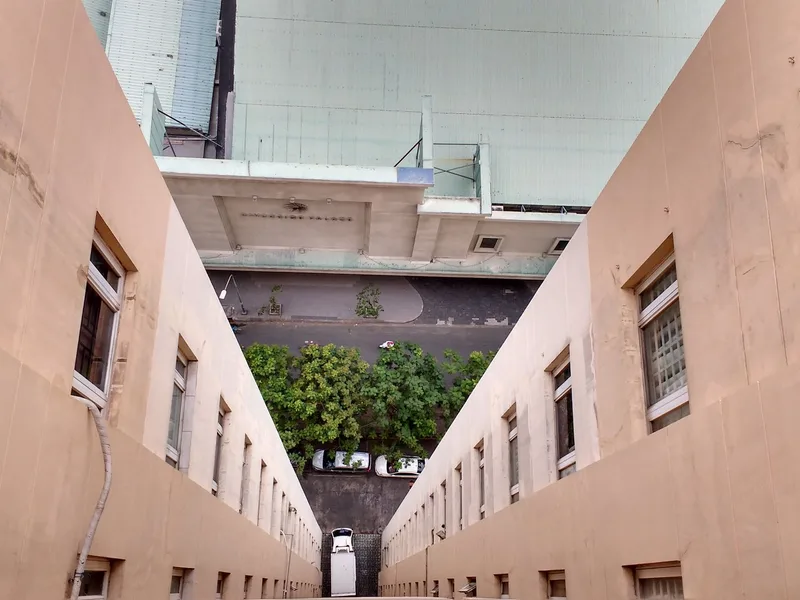
Ledge width
Warehouse building ledges are broad, flat and offer long traversal paths for pigeons moving between structures.
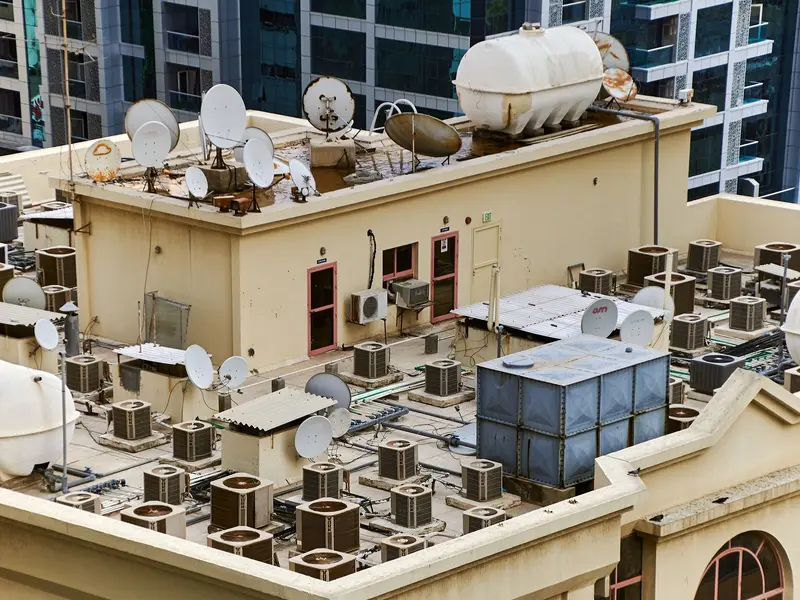
Air conditioning platforms
Bases of equipment and lifting machinery provide high vantage points pigeons use to scout and roost.
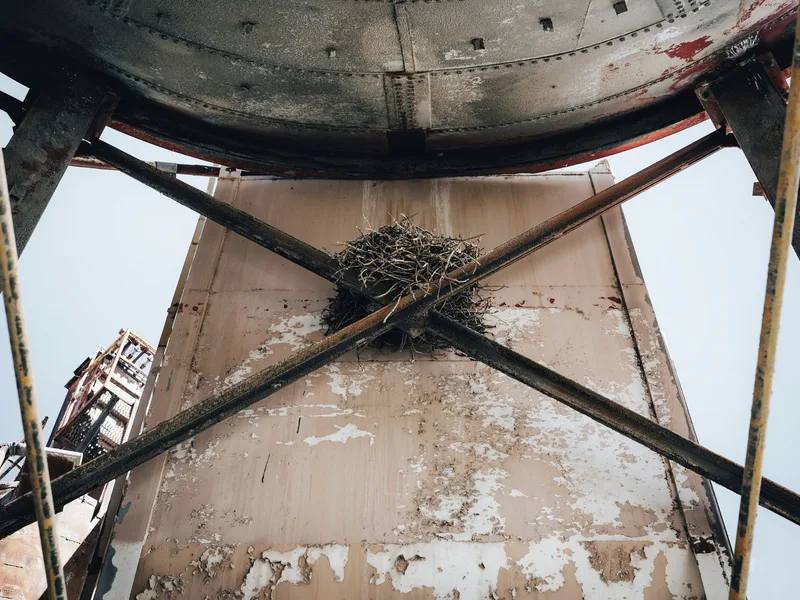
The nest itself
Nests here are built from lightweight paper, fibres and dust, and nesting frequency is high on architectural roof surfaces.
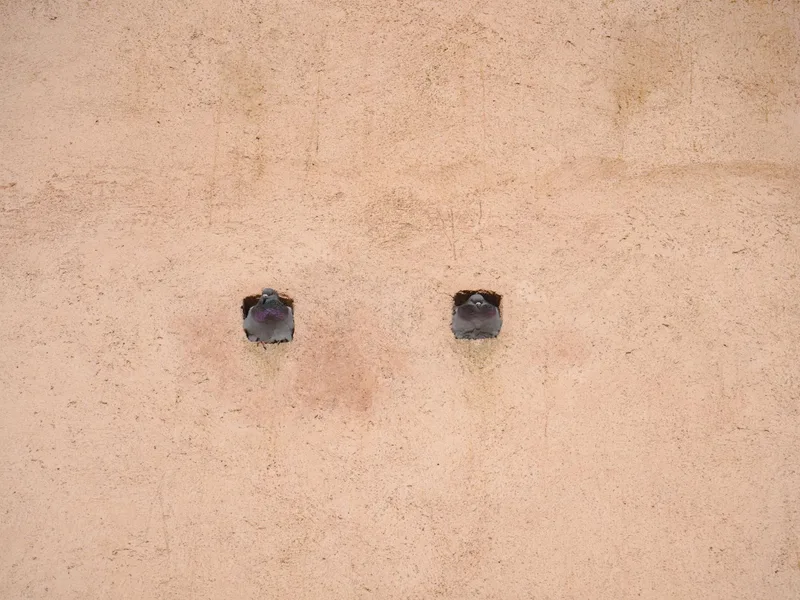
The droppings pattern
Moisture around the wadi and pooled water provide continuous drinking and support small insect populations.
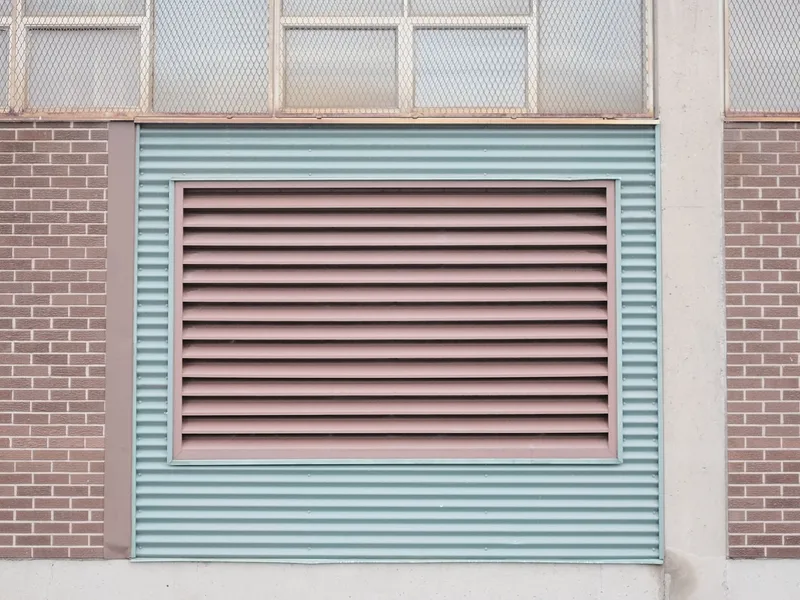
Openings and shafts
Gaps in warehouse frames and spaces beneath suspended ceilings provide damp shelters during rainfall.
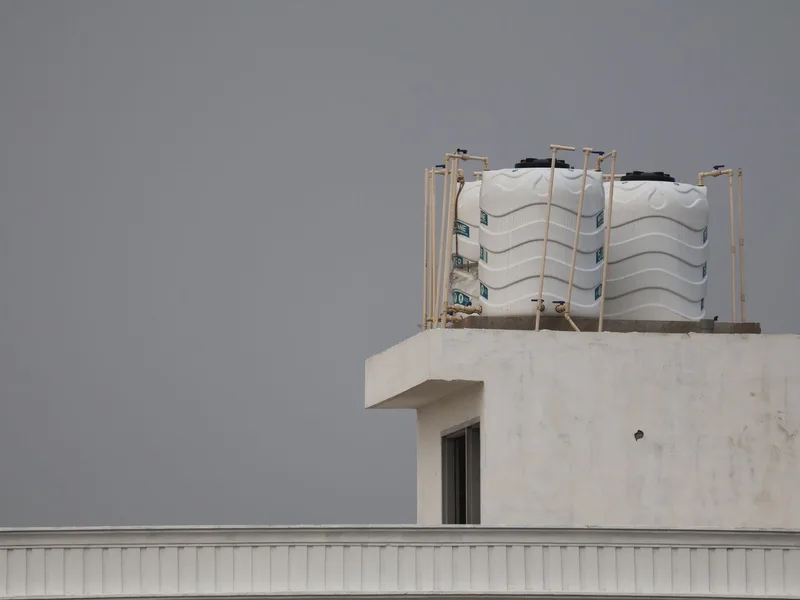
Around the roof tank
Soil moisture around the wadi rises seasonally, attracting earthworms and small invertebrates the birds feed upon.
How we work
-
1
Survey the roof and the facade
We walk the roof, the projections, the condenser platforms and the shafts, separate the nesting positions from the perching ones, and measure and photograph every ledge.
-
2
Strip the nests and treat the parasites
Droppings are wetted before they are lifted so nothing goes airborne dry, bagged closed, and the nest position is treated for ticks and mites before the surface is sanitised.
-
3
Close and fit
Netting tensioned on a perimeter wire with no gap at the corners, spikes or wire on the narrow projections, metal mesh across vents and shafts, and the roof drains freed of the nest material packing them.
-
4
The follow-up visit
We come back to check the tension, the corners and any position the flock has moved to, and correct what has slackened before a bird finds it.
What bird and pigeon control includes
-

A recorded survey
Every ledge, condenser platform and shaft, photographed, with nesting separated from perching before anything is chosen.
-

Nest removal and drain clearing
Lifted wet rather than swept dry, bagged closed, and the roof drains freed of the nest material packing them.
-

Parasite treatment and sanitising
The nest position treated for ticks and mites, then the surface the droppings sat on sanitised.
-

Sealing and fitting the deterrents
Netting tensioned on a perimeter wire, spikes or wire on narrow projections, and metal mesh across ventilation openings.
-

Aftercare instructions
The condensate water, food left on the roof, and what should not sit beside a ledge if the attraction is to stay gone.
-

A follow-up on tension and corners
Netting slackens and corners open over time; the visit corrects that and closes any new position.
Landmarks of Mughammas
Work in Mughammas is organised from natural geographical markers: we coordinate from Jabal Al Tariqi on the northern side and traverse the yards towards Wadi Al Sharai, then ascend to warehouse roofs near the green wadi valley.
- Wadi Al Mughammas (Al Wadi Al Akhdar)
- Jabal Al Tariqi
- Wadi Mudarraja
- Wadi Al Sharai
- Hamid Al Qathami Mosque
Questions about this district
Are warehouse roofs strong enough to safely fit deterrent systems on them?
Most warehouses have strong metal or concrete roofs. We coordinate with warehouse owners before installation to ensure safety and fit deterrents in ways that do not affect insulation or drainage.
Do pigeons arrive from the surrounding mountains, or are they resident flocks?
Mountains provide night roosts and wind shelter, but pigeons living in Mughammas typically stay in the yards rather than commuting back. We focus treatment on roofs and yard areas where they spend most daylight hours.
How many pigeons might gather at the warehouses on a typical day?
Hundreds of birds may concentrate during daylight, which is a very large flock. We do not provide exact counts, but the vast open space supports substantial populations.
Should we treat the open yards and ground level as well as the roofs?
We focus on roofs and ledges where pigeons roost at night, but seasonal visits after heavy rain allow us to treat damp ground areas that harbour insects and seeds the birds feed on.
Will birds leave the area permanently or attempt to return?
If area conditions remain attractive (water and abundant insects), new flocks may attempt settlement. We recommend annual follow-up visits, especially after heavy rainfall.
Will installing deterrents interfere with warehouse workers or equipment operation?
No, we fit deterrents on roof edges and high areas away from work paths. Barriers are lightweight and translucent and do not affect daily operations.
How much does bird and pigeon control in Mughammas cost?
It is set after the inspection, because the price follows the type of infestation, the size of the space, how far it has spread and the number of visits it needs. Send a photo and a description on WhatsApp and we will give you an estimate before we reach Mughammas.
Nearby districts we cover
Other services in Mughammas
Other services we provide to residents of Mughammas.
-
 Residential
Cockroach control
Residential
Cockroach control
-
 Residential
Bed bug control
Residential
Bed bug control
-
 Residential
Termite control
Residential
Termite control
-
 Residential
Rodents and mice
Residential
Rodents and mice
-
 Residential
Mosquito control
Residential
Mosquito control
-
 Residential
Fly control
Residential
Fly control
-
 Residential
Ant control
Residential
Ant control
-
 Residential
Gecko control
Residential
Gecko control
-
 Residential
Scorpion control
Residential
Scorpion control
-
 Residential
Snake control
Residential
Snake control
-
 Residential
Flea control
Residential
Flea control
-
 Residential
Preventive treatment
Residential
Preventive treatment
-
 Residential
Disinfection
Residential
Disinfection
-
 Commercial
Annual contracts
Commercial
Annual contracts
-
 Commercial
Restaurants and cafes
Commercial
Restaurants and cafes
-
 Commercial
Hotels and apartments
Commercial
Hotels and apartments
-
 Commercial
Warehouses and factories
Commercial
Warehouses and factories
-
 Commercial
Schools and nurseries
Commercial
Schools and nurseries
-
 Commercial
Retail and malls
Commercial
Retail and malls
-
 Commercial
Rest houses and farms
Commercial
Rest houses and farms
-
 Commercial
Fumigation
Commercial
Fumigation
-
 Water tanks
Water tank cleaning
Water tanks
Water tank cleaning
-
 Water tanks
Water tank sterilization
Water tanks
Water tank sterilization
-
 Water tanks
Water tank sealing
Water tanks
Water tank sealing
-
 Water tanks
Tank leak repair
Water tanks
Tank leak repair
Need bird and pigeon control in Mughammas? Tell us what you saw and we will tell you what it needs
We reach Mughammas at a time we agree, and you get the full cost before we start.