
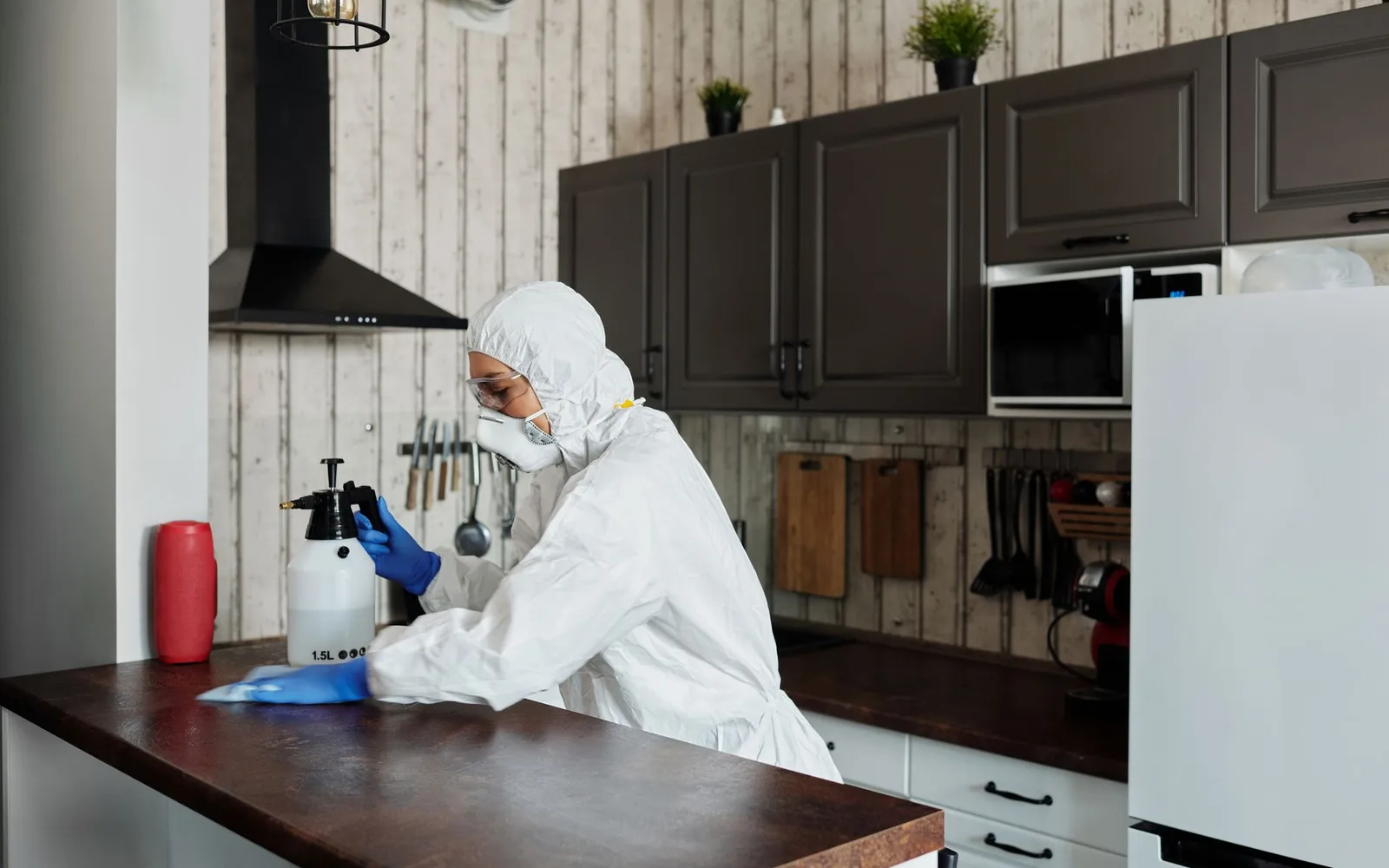
Disinfection in Al Haram Makkah
Al Haram is the commercial zone pressed directly around the Grand Mosque: offices, shops, hotels, service facilities and open courtyards. Disinfection here differs from residential districts because surfaces serve constantly shifting commercial, administrative and visitor functions. The massive flow of guests, workers and staff means the zone needs continuous protective cover.
-
Targeted, not broadcast
Product goes into cracks and runways, never sprayed across open surfaces.
-
Told before we start
What we will use, where it goes, and what to cover or move before we arrive.
-
A follow-up visit
We return after the first treatment, because what survives it does not show on the day.
-
Homes and businesses
Apartments and villas, and kitchens and stores that need a record of each visit.
Why they keep coming back in Al Haram
The zone around the Haram experiences continuous commercial and tourism movement with seasonal fluctuations. Open courtyards receive thousands daily, offices and shops run on set schedules. Handling of goods, documents and cash increases infection pressure. The method is set out in full on Disinfection in detail.
Offices handling documents, goods and cash daily
Offices around the Haram move huge volumes of paperwork, stock and cash. Staff and customers exchange documents daily. Surfaces touched in these offices carry the heaviest microbial load. Handles, furniture, desks and railings need frequent disinfection.
Open construction sites with excavated ground and exposed moisture
In the Rua Al Haram and northern expansion scheme, excavated land and open construction sites remain. These provide moisture rich and contaminated environments. Air around open projects carries dust particles that settle on treated surfaces. Standing water in excavations attracts pests.
Dense markets and eateries on the main roads running day and night
Al Masjid Al Haram Road and Umm Al Qura Road see very high commercial traffic. Markets and eateries run constantly, with water, grease and scraps left on floors. This provides ideal conditions for pests and microbes. The disinfectant must be strong yet safe for food service areas.
The character of Al Haram
Commercial area: offices, showrooms and small stores
Commercial area means surfaces serve shifting functions: offices process documents and goods, hotels welcome guests, shops trade retail goods, courtyards gather thousands. Each function creates different contamination pressure, so disinfection must be flexible, strong and disciplined.
What we look at before the product is chosen
The area surrounding the Grand Mosque directly: the northern expansion courtyards and major hotels with Abraj Al Bait rising above, Jabal Abu Qubais and Jabal Qaiqaan framing the scene, offices and administrative services, restaurants and retail, with pilgrims and visitors year round.
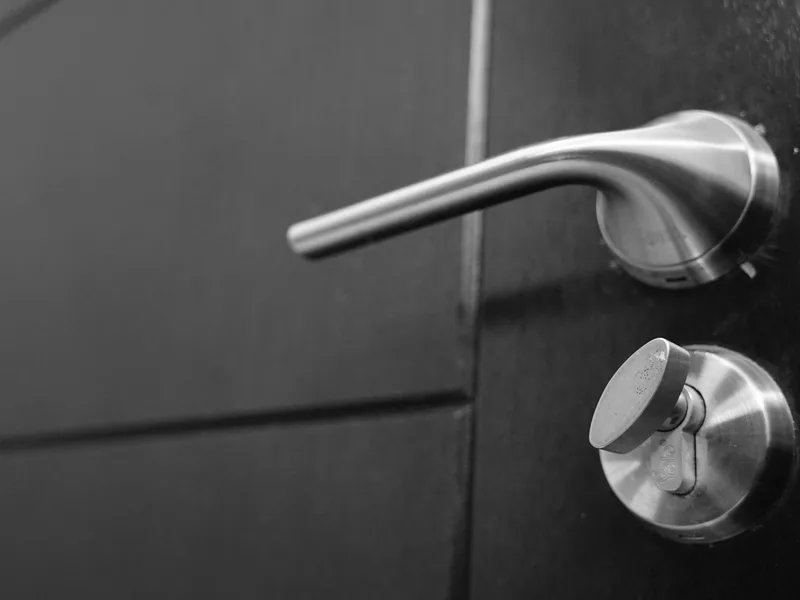
The touch points
Contact points in Al Haram are varied: office handles, lift buttons, railings in courtyards, reception furniture, corridor walls. Each is touched by people from very different backgrounds.
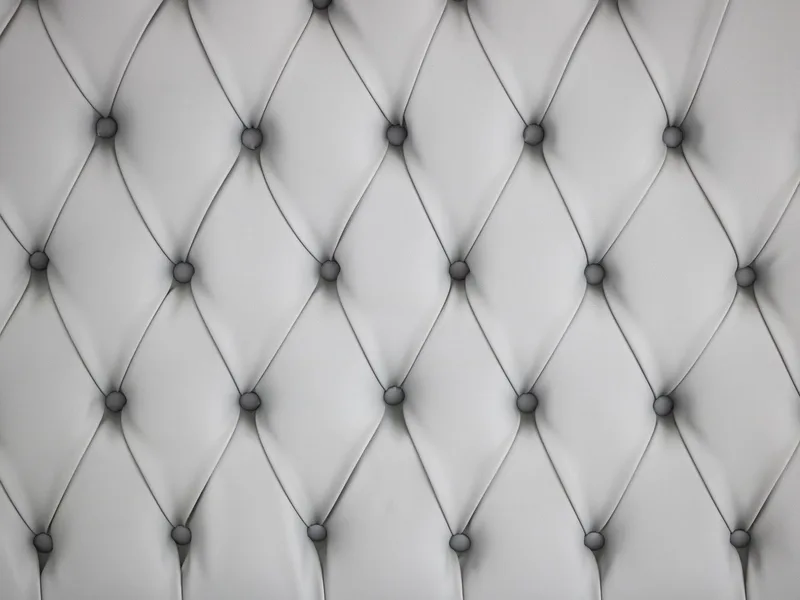
Porous surfaces
Porous surfaces in Al Haram offices and hotels are diverse: wall art, carpet, cushions, old timber in some buildings. These hold smell and moisture.
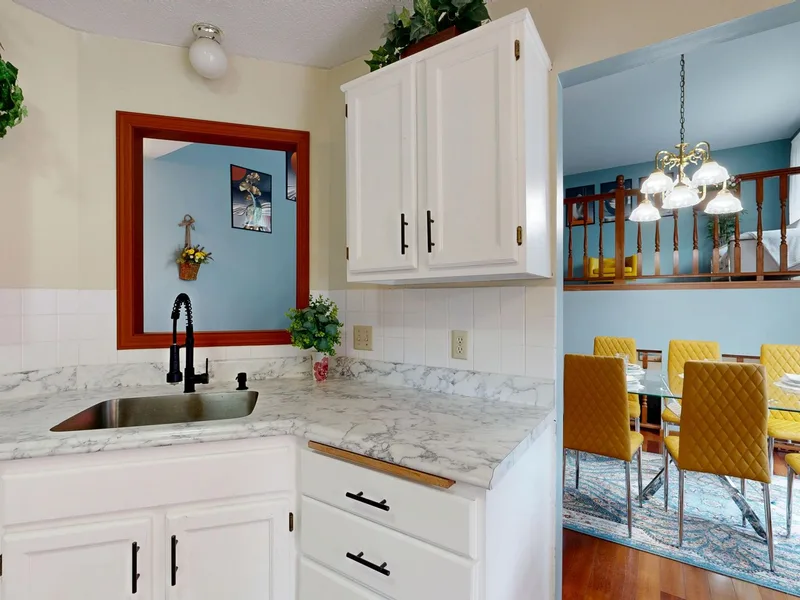
The finish itself
Finish types range from modern office to old hotel to popular shop. Each needs different handling. Modern hotels have hard floors, old shops have aged tile.
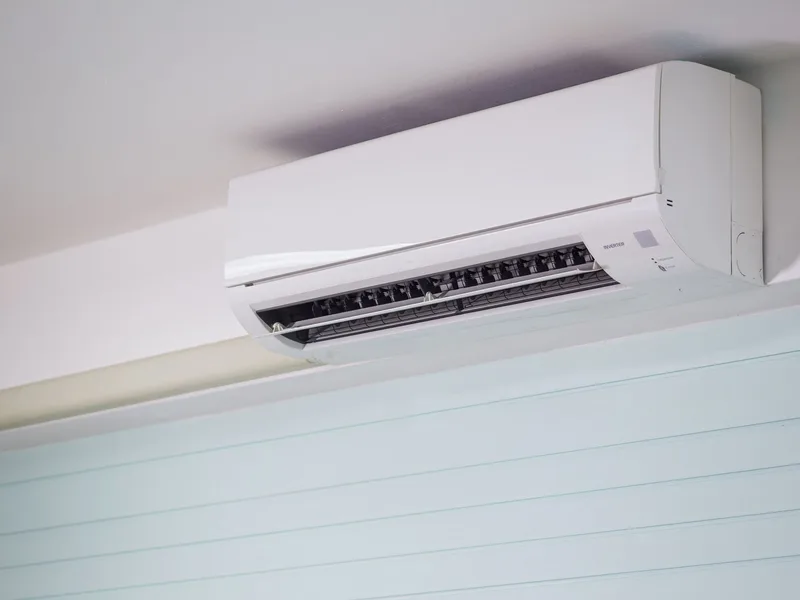
The air conditioning unit
Air conditioning units in offices and hotels are old and moisture laden with dripping drains. We clean and sterilise them separately.
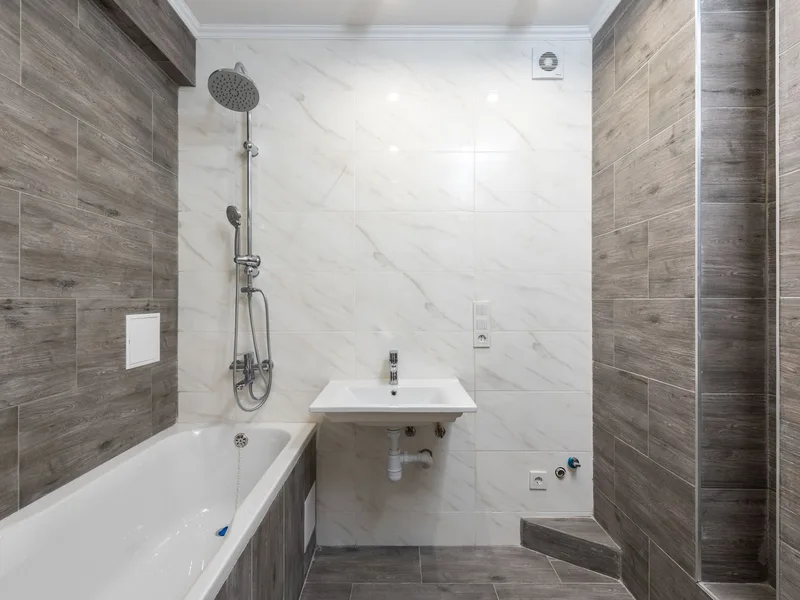
Floor traps
Floor traps in restaurants and food shops are clogged and smelly. We clear them hard first then sterilise.
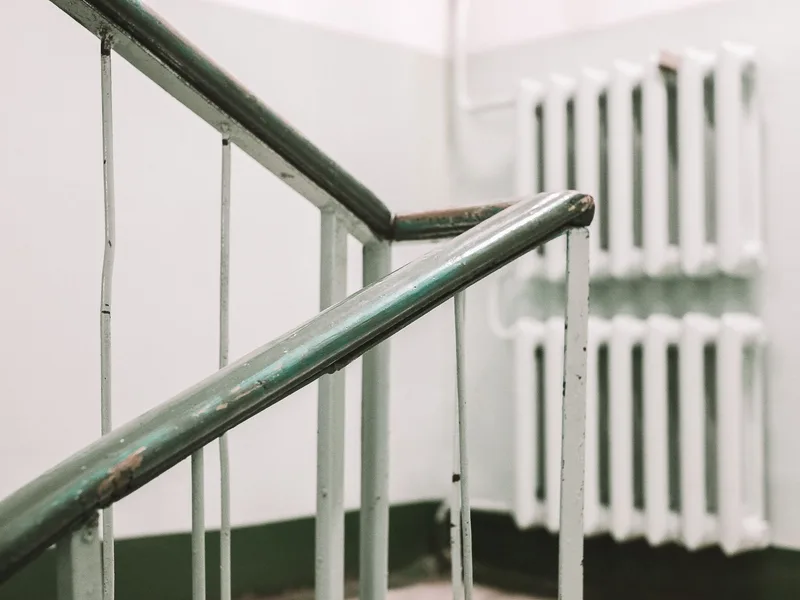
Shared entrances and stairs
Entries, stairs and lifts in buildings around the Haram see very heavy use. We disinfect them regularly and may need daily lift disinfection.
How we work
-
1
Walk the space and list the surfaces
We go through the rooms and mark the touch points, the porous surfaces and the finishes, then ask what prompted the call: illness at home, moving into a new place, building work, or a smell that arrived out of nowhere.
-
2
Clean what we are about to treat
We take the film of dust and grease off the surfaces that are in scope, so the product reaches the surface itself. This is preparation for the treatment, not general house cleaning.
-
3
Apply it, and hold the contact time
Hand work on the touch points, a product matched to each surface, and the surface left visibly wet for as long as that material needs before it is dried off. Cold fogging comes last, for what a cloth cannot reach.
-
4
Ventilate and hand back
We open the place up, rinse food preparation surfaces with water, and tell you when each room goes back into use. We give you that timing on the call, because it changes with the product and the space.
What a disinfection visit includes
-

A surface and touch point survey
What gets treated, and with what, settled before anything is opened.
-

Soil off first, then the disinfectant
The greasy film comes off first, then a product that stays wet for the contact time it needs.
-

Floor traps and the air conditioning drain
Floor traps, sink outlets and the drain tray, which is where most smells actually begin.
-
Cold fogging for the space
For upward faces and corners a cloth never reaches, done as the last thing before we leave a room.
-

Ventilation and use instructions
What gets rinsed with water, what is left alone, and when each room goes back into use.
-

A scheduled repeat when it is needed
For shared entrances and places people pass through every day, because a disinfectant leaves nothing behind to stop the next contact.
What is different about Al Ghazza Sub-Municipality
Al Ghazza sub municipality wraps around the north and west of the Grand Mosque, from Al Shamiyah, Al Qararah and Shaib Amir round to Jarwal and Al Taysir. Large tracts were cleared for the northern expansion and the Rua Al Haram scheme, leaving excavated ground and open construction sites beside ageing blocks that now serve as dense seasonal lodgings in Jarwal and Al Taysir. Old flood paths still fall from Jabal Qaiqaan and Jabal Khandamah towards the mosque, and markets and eateries crowd Al Masjid Al Haram Road and Umm Al Qura Road.
Questions about this district
Offices handling goods and documents: how often do they need disinfection?
We recommend at least weekly disinfection. If traffic is very heavy and document handling is intense, twice weekly may be needed. We focus on desks, handles, furniture and floors.
Open construction sites nearby: do they contaminate nearby treated surfaces?
Yes, dust and moisture from open sites transfer to adjacent buildings. Treated surfaces can re-contaminate from dust quickly. Buildings near construction may need more frequent disinfection.
The open courtyards around the Haram: do we disinfect them?
Open courtyards are hard to disinfect because movement is continuous. We can disinfect railings, seating, fountains and fixed surfaces. Work may need to happen very early morning or late night.
Major hotels here: is their treatment different from offices?
Yes, hotels need higher focus on bedrooms and bathrooms. Offices need high focus on work surfaces and handles. Both need regular disinfection.
Does strong disinfectant harm heritage buildings and monuments in the zone?
The zone holds heritage structures and monuments. We use heritage safe products. We may need to test on a hidden area first before full application.
Continuous movement and high flow: does disinfection fail quickly?
Yes, continuous movement re-contaminates surfaces. The disinfectant may be active for only hours in high traffic. Repeated, scheduled disinfection is therefore essential.
How much does disinfection in Al Haram cost?
It is set after the inspection, because the price follows the type of infestation, the size of the space, how far it has spread and the number of visits it needs. Send a photo and a description on WhatsApp and we will give you an estimate before we reach Al Haram.
Nearby districts we cover
Other services in Al Haram
Other services we provide to residents of Al Haram.
-
 Residential
Cockroach control
Residential
Cockroach control
-
 Residential
Bed bug control
Residential
Bed bug control
-
 Residential
Termite control
Residential
Termite control
-
 Residential
Rodents and mice
Residential
Rodents and mice
-
 Residential
Mosquito control
Residential
Mosquito control
-
 Residential
Fly control
Residential
Fly control
-
 Residential
Ant control
Residential
Ant control
-
 Residential
Gecko control
Residential
Gecko control
-
 Residential
Scorpion control
Residential
Scorpion control
-
 Residential
Snake control
Residential
Snake control
-
 Residential
Flea control
Residential
Flea control
-
 Residential
Bird and pigeon control
Residential
Bird and pigeon control
-
 Residential
Preventive treatment
Residential
Preventive treatment
-
 Commercial
Annual contracts
Commercial
Annual contracts
-
 Commercial
Restaurants and cafes
Commercial
Restaurants and cafes
-
 Commercial
Hotels and apartments
Commercial
Hotels and apartments
-
 Commercial
Warehouses and factories
Commercial
Warehouses and factories
-
 Commercial
Schools and nurseries
Commercial
Schools and nurseries
-
 Commercial
Retail and malls
Commercial
Retail and malls
-
 Commercial
Rest houses and farms
Commercial
Rest houses and farms
-
 Commercial
Fumigation
Commercial
Fumigation
-
 Water tanks
Water tank cleaning
Water tanks
Water tank cleaning
-
 Water tanks
Water tank sterilization
Water tanks
Water tank sterilization
-
 Water tanks
Water tank sealing
Water tanks
Water tank sealing
-
 Water tanks
Tank leak repair
Water tanks
Tank leak repair
Need disinfection in Al Haram? Tell us what you saw and we will tell you what it needs
We reach Al Haram at a time we agree, and you get the full cost before we start.