

Retail and malls in Al Haram Makkah
Al Haram wraps the Grand Mosque itself, where office towers, old converted apartment blocks and ground-floor shops live alongside each other in dense proximity. Year-round foot traffic from pilgrims and Umrah visitors keeps doors and corridors in constant use, and the old masonry holds a complex tangle of water lines, electrical risers and shared voids that insects use to move between units.
-
Targeted, not broadcast
Product goes into cracks and runways, never sprayed across open surfaces.
-
Told before we start
What we will use, where it goes, and what to cover or move before we arrive.
-
A follow-up visit
We return after the first treatment, because what survives it does not show on the day.
-
Homes and businesses
Apartments and villas, and kitchens and stores that need a record of each visit.
Why they keep coming back in Al Haram
Shops here shift between office use and retail to food service rapidly as tenancies turn over, and the old buildings have damp foundations coupled with exceptionally complex service runs. The method is set out in full on Retail and malls in detail.
Seasonal flood pathways and damp building bases
Ancient watercourses fall from the surrounding mountains towards the Haram, and seasonal rains penetrate old foundations. Moisture-loving insects arrive with damp, and need targeted treatment along the perimeter and floor zones where water naturally concentrates.
Old construction with complex service runs
Retrofit buildings and repurposed apartment blocks house offices and shops on mixed floors; wiring, HVAC and plumbing have been grafted into the original structure and leave widespread gaps. Insects move easily between units vertically through wall voids and around service penetrations.
Offices and shops stacked in one envelope
A single building may house administrative offices, spice retailers and small food businesses on different floors, all with their own tenant identity. Insects transit freely through ceiling voids and shared walls between uses, making isolation of infested zones difficult.
The character of Al Haram
Commercial area: offices, showrooms and small stores
A commercial zone means offices and rented blocks serving multiple occupants and uses, so insects migrate easily between units of different types and ownership. Treatment emphasises strong boundary sealing rather than treating wide-open shared spaces.
What decides the treatment in a shop
The commercial zone is hemmed in by mountains: Jabal Abu Qubais and Jabal Qaiqaan on two sides, with Jabal Omar to the west. Ancient flood paths still run from the hills towards the Haram, and seasonal rains seep through old building foundations.
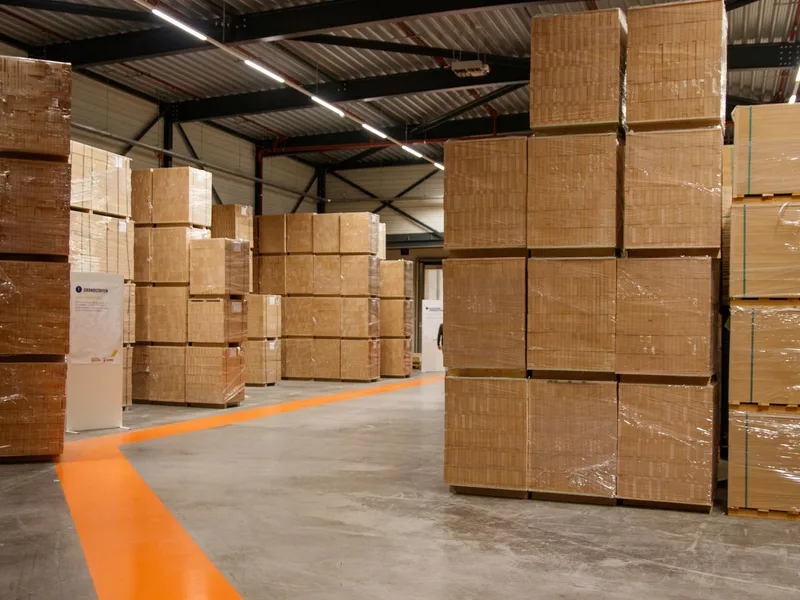
Cardboard in the stockroom
Cardboard in business offices accumulates from document and furniture shipments, and cramped storage areas prevent the regular clearance cycles that deter pests.
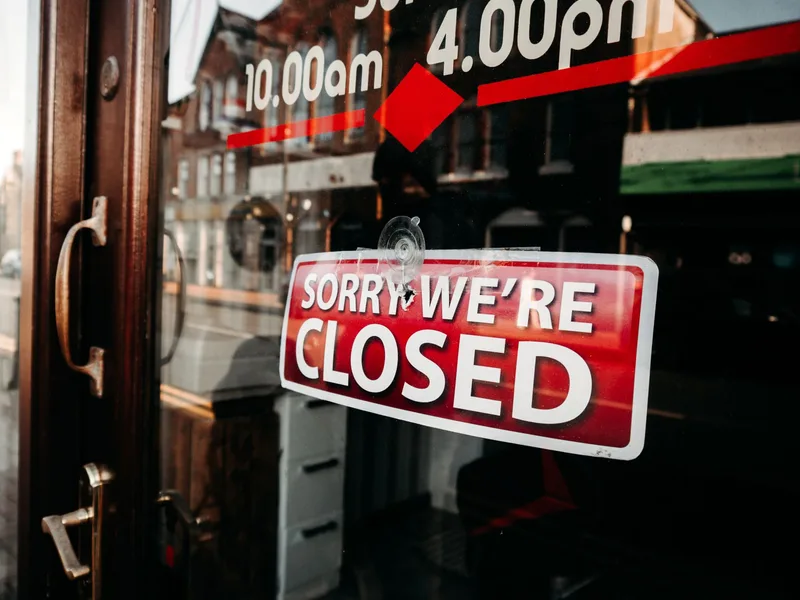
The frontage and the sliding door
Office doors are modern but shared external corridors are old with large gaps around frames, and seasonal winds funnel insects inward through every seal failure.

What the shop sells
Ground floor units stock spices and coffee; offices above house staff and visitors. Insects migrate vertically through wall cavities and service penetrations between the two.
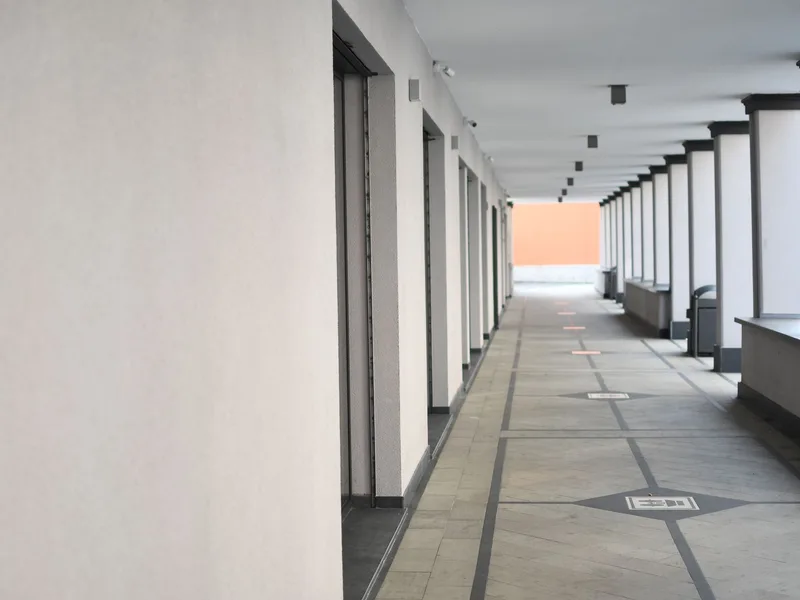
The shared back corridor
Dim shared corridors provide shelter and food waste from communal areas attracts insects; stacked boxes reduce visibility and let infestations advance unnoticed.
The ceiling void and the services
Suspended ceilings hide massive and complex HVAC and drainage networks, and the wide voids above them permit free insect movement between units on each floor.

Waste and board behind the shop
Central waste disposal behind ground floor shops overflows; restaurant refuse in particular attracts cockroach colonies and rodents for days after collection cycles.
How we work
-
1
An out-of-hours walk
We walk the floor, the stockroom, the fitting area, the back corridor and the waste route, and record what the shop sells, the delivery cycle and the boundary points with the neighbouring units before anything is applied.
-
2
Treat the stockroom and the goods route
Placed bait into racking uprights, junctions and cracks, dust into the dry voids, and nothing on merchandise or display faces.
-
3
Close the boundary of the unit
A sweep under the stockroom door, mesh on the vents and sealing at the service penetrations on the party wall, because exclusion does more to stop a return than repeating the spray.
-
4
Numbered points and a report each visit
Fixed positions on one route, read every visit and logged even when the reading is nil, with a report of what was found, what was treated and what the building needs closed, plus a copy for centre management when they ask for it.
What retail pest control includes
-

An out-of-hours inspection
A walk covering the floor, the stockroom, the back corridor and the delivery route, ending with the pest list this particular shop actually carries.
-

Bait and points on the goods route
In the stockroom, behind racking and along the goods-in route, out of any customer's reach and away from anything on sale.
-

Targeted crack and crevice work
On junctions, racking feet and the unit perimeter, never on stock, display surfaces or the open sales floor.
-

Drains and the waste area
The floor gullies in the back corridor, the ground around the containers and where the board is collected, because that is the source that renews daily.
-

Getting the shop back to trading
What gets covered before we start, what is wiped afterwards, and the ventilation time we set with you on the call, because it changes with the product and the space.
-

A follow-up visit and a written record
A set date after the first treatment, and a record carrying the date of each visit, the readings, and what was applied and where.
What is different about Al Ghazza Sub-Municipality
Al Ghazza sub municipality wraps around the north and west of the Grand Mosque, from Al Shamiyah, Al Qararah and Shaib Amir round to Jarwal and Al Taysir. Large tracts were cleared for the northern expansion and the Rua Al Haram scheme, leaving excavated ground and open construction sites beside ageing blocks that now serve as dense seasonal lodgings in Jarwal and Al Taysir. Old flood paths still fall from Jabal Qaiqaan and Jabal Khandamah towards the mosque, and markets and eateries crowd Al Masjid Al Haram Road and Umm Al Qura Road.
Questions about this district
Our office is occupied during business hours. How do you work without stopping us?
We treat wall voids, ceiling cavities and spaces behind storage during lunch breaks or after staff leave. The approach is targeted at service voids, not room air, so work continues safely around occupied areas.
The building is old and damp. Does this make pest problems worse?
Yes substantially. Damp foundations attract specific species and harbour mould. Our focus includes treatment along the building perimeter and water ingress routes, both inside and out.
Units next to us often sit empty. Do insects move from vacant spaces into ours?
Frequently. Unoccupied units are ideal shelters for insects and rodents alike. We seal shared boundaries with brush strips and one-way excluders, and monitor door frames and vents between units.
A small restaurant occupies the unit beside ours. Does the problem originate there?
Food businesses are primary sources of cockroaches and flies. If both occupy the same building, treatment focuses on your shared boundary, connecting plumbing and the ceiling void above.
One shared lift serves multiple units. Do pests move up from ground level shops?
Yes easily. The lift shaft and cable voids are a direct highway between floors. We treat all voids around the shaft on every storey, particularly those below food retail.
We are very close to the Grand Mosque. Does location change how we are treated?
The central location means continuous foot traffic and constantly opening doors. Treatment emphasises entry point control and surveillance of external passages where insect populations concentrate.
How much does retail and malls in Al Haram cost?
It is set after the inspection, because the price follows the type of infestation, the size of the space, how far it has spread and the number of visits it needs. Send a photo and a description on WhatsApp and we will give you an estimate before we reach Al Haram.
Other services in Al Haram
Other services we provide to residents of Al Haram.
-
 Residential
Cockroach control
Residential
Cockroach control
-
 Residential
Bed bug control
Residential
Bed bug control
-
 Residential
Termite control
Residential
Termite control
-
 Residential
Rodents and mice
Residential
Rodents and mice
-
 Residential
Mosquito control
Residential
Mosquito control
-
 Residential
Fly control
Residential
Fly control
-
 Residential
Ant control
Residential
Ant control
-
 Residential
Gecko control
Residential
Gecko control
-
 Residential
Scorpion control
Residential
Scorpion control
-
 Residential
Snake control
Residential
Snake control
-
 Residential
Flea control
Residential
Flea control
-
 Residential
Bird and pigeon control
Residential
Bird and pigeon control
-
 Residential
Preventive treatment
Residential
Preventive treatment
-
 Residential
Disinfection
Residential
Disinfection
-
 Commercial
Annual contracts
Commercial
Annual contracts
-
 Commercial
Restaurants and cafes
Commercial
Restaurants and cafes
-
 Commercial
Hotels and apartments
Commercial
Hotels and apartments
-
 Commercial
Warehouses and factories
Commercial
Warehouses and factories
-
 Commercial
Schools and nurseries
Commercial
Schools and nurseries
-
 Commercial
Rest houses and farms
Commercial
Rest houses and farms
-
 Commercial
Fumigation
Commercial
Fumigation
-
 Water tanks
Water tank cleaning
Water tanks
Water tank cleaning
-
 Water tanks
Water tank sterilization
Water tanks
Water tank sterilization
-
 Water tanks
Water tank sealing
Water tanks
Water tank sealing
-
 Water tanks
Tank leak repair
Water tanks
Tank leak repair
Need retail and malls in Al Haram? Tell us what you saw and we will tell you what it needs
We reach Al Haram at a time we agree, and you get the full cost before we start.